


























“Roofman” draws on the true story of Jeffrey Manchester, an ex-Army paratrooper who retools his field training into late-night roof entries at fast-food restaurants across North Carolina. The run ends with a 45-year sentence. The tale then shifts to 2004, when he slips out of custody and burrows into the hidden spaces of a Toys “R” Us in Charlotte. The time frame toggles between late 90s crime scenes and the months of improvised shelter inside a fluorescent playground.
The film’s charge comes from a simple question. Can care and deceit share the same room for long without breaking everything inside it. Under an alias, Jeff meets Leigh, a store employee and single parent, and begins to build a parallel life that aches with warmth and risk.
Crime, romance, and gentle comedy sit side by side. The humor keeps the air moving while a low hum of dread gathers as recognition inches closer. Channing Tatum centers that balance with easy charm and a bruised stillness. Kirsten Dunst brings grounded warmth that feels lived-in and wary. The hook is ingenuity meeting loneliness, and a man who reads every pattern around him while overlooking the cost of his choices.
Story, Structure, and Tone Management
The opening stretch is a brisk series of roof jobs. Late-night entries. Courteous instructions to staff. Freezer lock-ins. Quick cash pulls. The economy of staging helps the film move with purpose and sets a clear rulebook for how Jeff works. The trade-off is motive build. Domestic strain and provider anxiety flip quickly into serial robbery, which creates pace but trims the connective tissue that would deepen the leap.
Prison time arrives in concentrated beats. The script frames observation as Jeff’s skill set, then turns it into the escape engine. He studies guard habits, tracks a delivery route, and slips under a truck. The cut from planning to execution is clean and readable, with editorial rhythm that favors clarity over bravura.
The hideout chapter becomes the heartbeat. The mall turns into a maze of vents and crawl spaces. Jeff claims a concealed nook, lines it with Spider-Man bedding, and lives on candy and baby food. He reroutes cameras and watches the back office through baby monitors, which doubles as character study and low-key surveillance comedy. The store manager’s inventory paranoia adds a steady comic stinger and a clock.
The romance grows in measured steps. A chance encounter outside the store. Small acts of help. A church welcome that widens Jeff’s circle. Scenes with Leigh’s daughters give the thread texture, especially when parenting effort meets teenage resistance. Some passages lean on montage or shorthand, though key exchanges make the bond feel earned.
Tone shifts carry the film. Light caper energy gives way to melancholy when Jeff’s invented stability collides with his record. The third act raises the cost of the double life with a familiar “one last job” setup. Stakes rise, consequences land, and the film settles on accountability rather than a tidy reset.
Character Study and Performances
Channing Tatum plays Jeff as a gifted observer who keeps finding rational exits for himself. The physical looseness sells a man who can blend into any aisle. The eyes tell a different story. Tiny checks of a room, a near-imperceptible flinch when a face lingers too long, the pause before a lie.
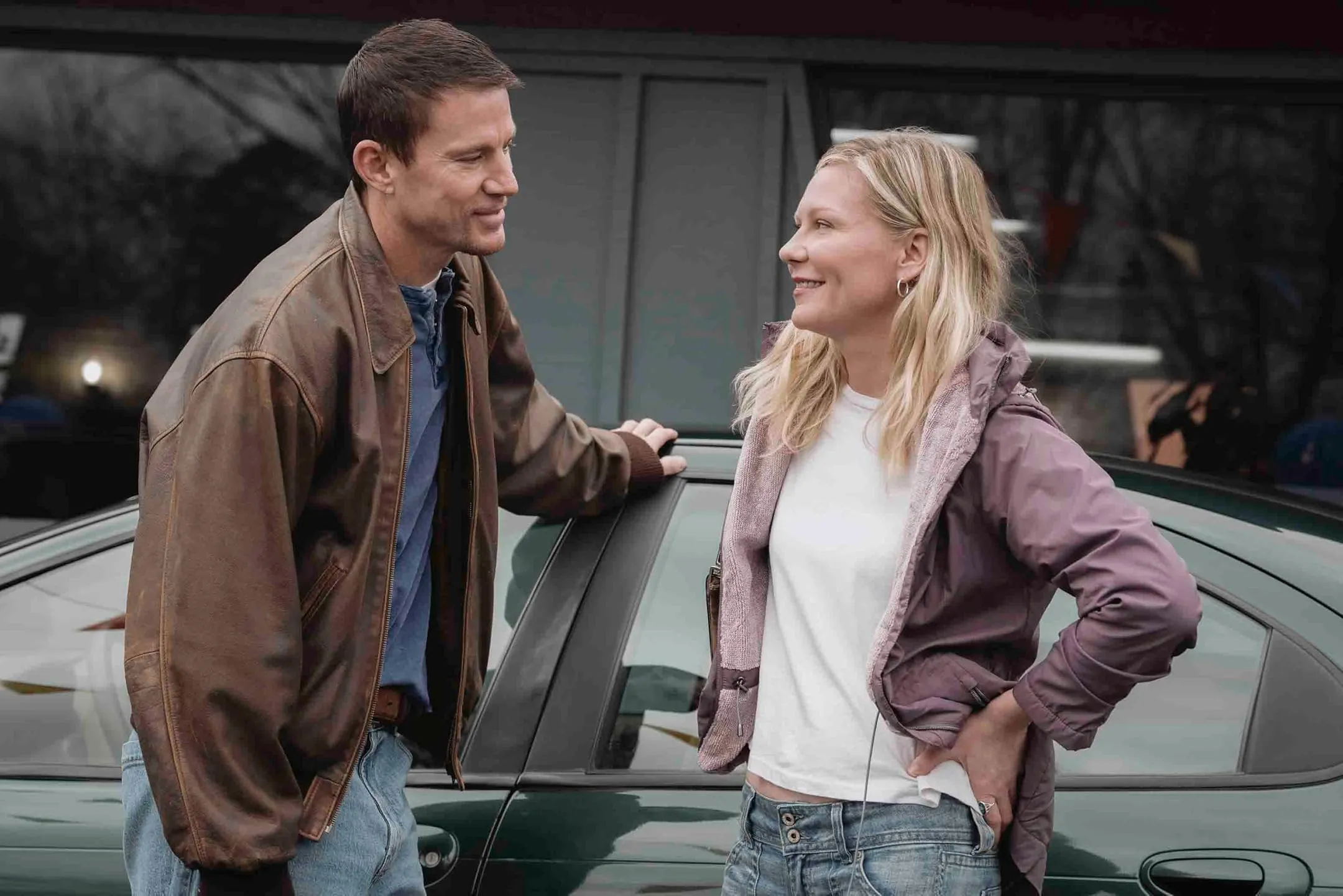
Voiceover adds intimacy without turning the film into a diary. Early beats matter: the almost courteous freezer scene, the guard rapport that reads like social chess, the quiet walks through toy aisles that look like calm and feel like hiding. The performance invites empathy, yet the script’s restraint leaves space to see the harm his choices create.
Kirsten Dunst builds a full life in small gestures. Work fatigue sits next to church commitments and stubborn hope for her kids. Caution softens into trust, then tightens again when details fail to add up. A side glance or a clipped breath does more than a speech. The pull between her need for reliability and John’s improvisation gives the romance a tender thrum.
The younger child warms quickly. The teenager resists. A standout beat at a car lot cracks the stalemate with humor and a hint of pride. It feels earned because the film lets effort precede payoff. Peter Dinklage leans into officious micro-tyranny without turning the role into a cartoon. His fixation on missing inventory makes him funny and threatening in the same breath, a useful barometer for how close Jeff is to exposure.
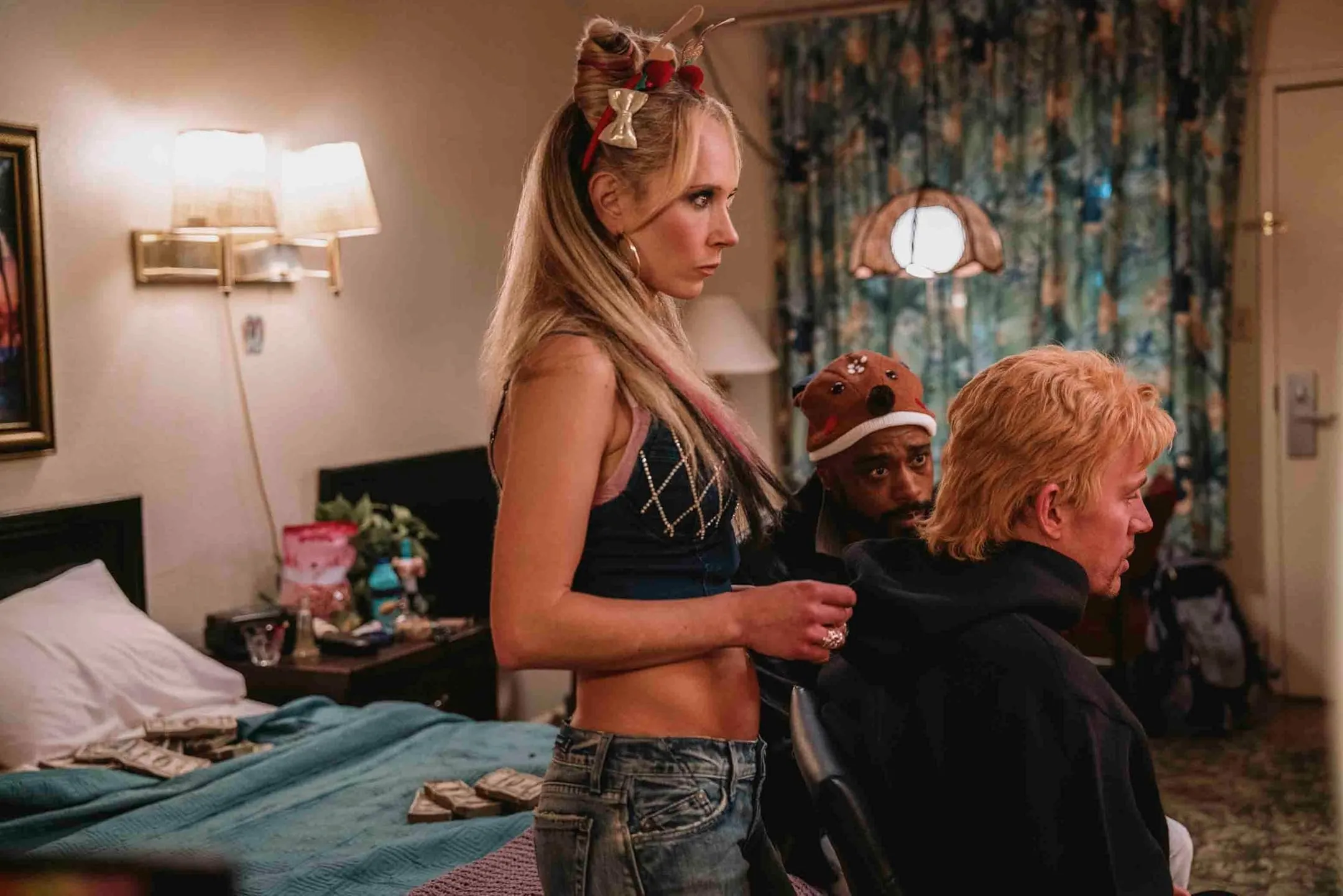
LaKeith Stanfield’s Steve is a catalyst and a mirror. Friendship arrives with strings, and the skills that once kept Jeff alive now feed an exit plan. Juno Temple’s Michelle plugs into that machine, shaping stakes for the endgame. Ben Mendelsohn and Uzo Aduba radiate welcome. Their presence reframes the moral field without sermons. Community gives Jeff cover and conscience at the same time.
Melonie Diaz appears briefly yet clearly. The boundaries around access to the children set the measure that Jeff keeps trying to buy past. Through all of this, each person exposes a blind spot in Jeff. Money as love. Attention as love. Charm as cover. The film stays close enough to feel him while keeping sight of the harm around him.
Filmmaking and Craft Choices
Derek Cianfrance shifts into a warmer register while staying rooted in character. He favors close-ups that let small moral turns register without speeches. The control is steady in intimate scenes. A few pivots feel tidy, especially when the plot needs to accelerate the final stretch, yet the focus on human scale never drifts.
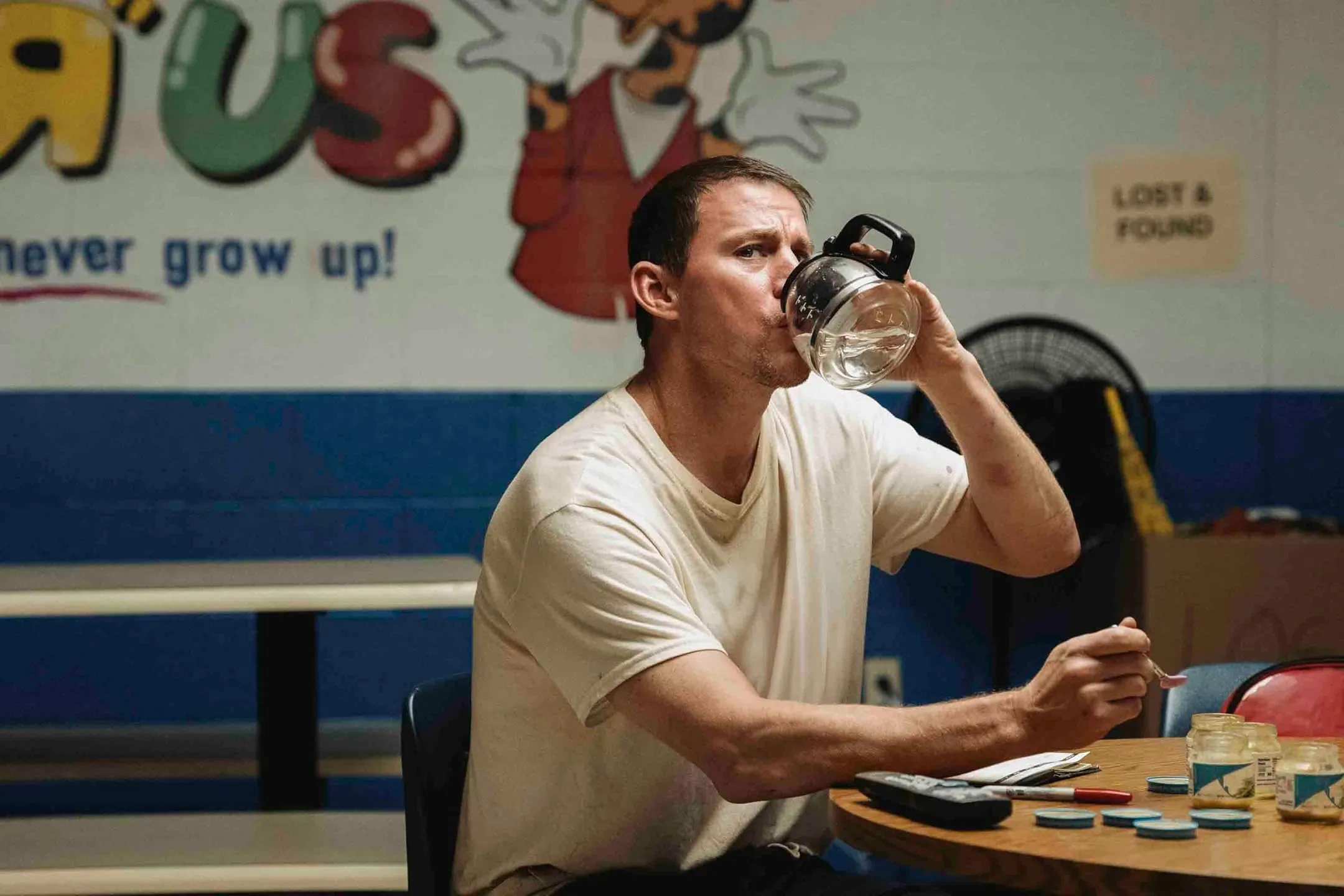
Andrij Parekh coats the world in a muted, early-2000s texture. In the store, the camera alternates between overheads that map vents and long lenses that turn aisles into lanes of watchfulness. Gentle handheld work keeps the romance immediate. Night sequences feel hushed. Daylight under fluorescent tubes flattens space in a way that suits hiding in plain sight.
Inbal Weinberg’s toy emporium rebuild has the granular truth of lived retail. Endcaps, clearance bins, break room clutter, and the secret geometry of ceiling voids create a believable playground and prison. Prop motifs carry meaning without fuss. M&Ms, baby monitors, Spider-Man bedding, and church toy drive bins operate as markers of appetite, control, longing, and public face.
Christopher Bear’s score moves with a light step and a wistful aftertaste. The sound field pays attention to tactile cues. The bite of a saw on roofing, the thud of a freezer door, ceiling crawl squeaks, the store PA that announces a world Jeff cannot fully join. The mix favors tension that simmers instead of spikes.
Robberies cut with snap and spatial clarity. Domestic and church beats breathe. Compression near the front end trims motive build, which trades depth for momentum. The overall cadence supports the film’s gentle blend of caper and ache. Blockbuster signage, retail chatter, and consumer tech fix the story in 2004 without a gloss of easy nostalgia.
Ideas and Ethical Questions
Jeff’s eye for detail found a home in the military and no obvious slot afterward. The film tracks pride and the role of “provider” as a personal script. Quick fixes feel like solutions until they turn into a trap, which gives the story its ache.
The freezer scene can read as considerate. It is still a threat with a gun and a locked door. The film often lets both feelings sit together. That tension is where the character becomes interesting, and where viewers may feel a tug to excuse what should not be excused.
Watching someone at work through a camera, then courting them under a false name, creates a romance with a crack down the middle. The script recognizes that line at key points, then relaxes it to keep the tone buoyant. The push and pull shapes how each kiss plays on screen.
Church life functions as welcome, social glue, and public face. Grace arrives quickly for Jeff, which is moving. Accountability arrives slower, which creates friction that lingers after the credits. The store becomes a study in thin margins. Petty authority, SKU counts, and the quiet humiliation of schedule requests. That landscape explains why Leigh reads as a hero long before she knows the whole story.
Jeff tries to buy his way back into belonging. A late realization says time and presence matter more than gifts. The film frames that insight with clear sentiment, and the performances help it land with feeling rather than speechmaking.
“Roofman” sings when it leans into chemistry, gentle humor, and tactile setting. It hedges when motive ramps too quickly or when the harm softens around the edges. My read is simple. The film works as a humane crowd-pleaser with a quietly uneasy aftertaste, carried by two actors who know how to play tenderness without varnish.
The film is scheduled to be released on October 10, 2025. It will be shown in theaters and is expected to be available for streaming on various services after its theatrical run.
Full Credits
Director: Derek Cianfrance
Writers: Derek Cianfrance, Kirt Gunn
Producers and Executive Producers: Jamie Patricof, Lynette Howell Taylor, Alex Orlovsky, Duncan Montgomery, Dylan Sellers, Chris Parker
Cast: Channing Tatum, Kirsten Dunst, Ben Mendelsohn, LaKeith Stanfield, Juno Temple, Melonie Diaz, Uzo Aduba, Lily Collias, Jimmy O. Yang, Peter Dinklage
Director of Photography (Cinematographer): Andrij Parekh
Editors: Jim Helton, Ron Patane
Composer: Christopher Bear
The Review
Roofman
Roofman smartly marries caper energy with a tender romance and a quietly nagging moral itch. Tatum offers openhearted work, Dunst steadies the film with lived-in precision. The craft is confident, the toy-store world tactile, the humor gentle. Motive building feels rushed and the final turn comes a bit neat, yet the film lingers as a study of charm, loneliness, and consequence.
PROS
- Tatum’s nuanced lead and delicate micro-reads
- Dunst’s grounded, expressive performance and chemistry
- Inventive hideout sequences and tactile production design
- Clear, readable staging and editing of heists
- Wistful score and attentive sound design
- Warm character focus from Cianfrance
CONS
- Compressed early motive ramp
- Third-act device feels schematic
- Limited attention to victim aftereffects
- Underused Steve and Michelle
- Occasional broad strokes in the manager character