

























![Kingdom Hearts Collection [I-III] Review](https://gazettely.com/wp-content/uploads/2026/10/Kingdom-Hearts-Collection-I-III-1-360x180.webp "Kingdom Hearts Collection [I-III] Review: KHII Holds Steady as Newer Entries Fluctuate 37")





A man dies by fire in his maximum-security prison cell. This event, under normal circumstances, would be a grim footnote in a correctional facility’s logbook. When the man is Thabo Bester, a convicted murderer and rapist of considerable notoriety, the footnote gets a little longer.
When his supposed corpse is claimed by a celebrated public figure, Dr. Nandipha Magudumana, the story migrates from the logbook to the national consciousness. Beauty and the Bester begins here, with the smoldering remains of a story that refuses to be cremated. It documents the baroque escape of the so-called “Facebook Rapist” from under the nose of the South African state, abetted by a high-society doctor.
The three-part series does not ask what happened, for the facts are largely known. Instead, it probes at the far more unsettling questions of how and why. How does a body burn beyond recognition in a prison cell, an event casually labeled “self-termination”? How does a respected professional become the accomplice to a violent felon, seemingly sacrificing her life for his? The series peels back the layers of a crime that is also a piece of absurdist theater, a national scandal, and a deeply strange love story.
Pygmalion in Reverse
The series presents Thabo Bester as a psychological black hole, a void whose gravity bends reality around him. Archival footage from a 2011 interview with a psychologist is telling. His admission, “I did not feel like a normal human being anymore,” is not a plea for sympathy but a statement of purpose, a mission statement for a life lived outside the bounds of human empathy.
His pathology is a portrait of malignant narcissism; his crimes were never just about the material gain. They were about the totalizing exertion of power, the godlike thrill of creating and then shattering realities for his victims. His use of Facebook to lure women with promises of modeling careers was a quintessentially modern tool for an ancient deception.
He operated like so many confidence men before him, identifying the deepest aspirations of his targets (for fame, for wealth, for a different life) and reflecting a perfect image of that desire back at them. His charisma, potent enough to attract admirers even while he was incarcerated for heinous crimes, was entirely untethered from morality. It was a pure, predatory magnetism.
Dr. Nandipha Magudumana appears to be his masterpiece, a subject for a kind of reverse Pygmalion. Instead of sculpting a commoner into a lady, Bester seemingly deconstructed a respected professional into a willing accomplice. The documentary carefully constructs her previous existence as a media darling and successful surgeon, a life of immense social capital built on the very idea of aesthetic perfection.
Her field, after all, is the practice of constructing and maintaining appearances. This detail feels almost too perfect, a symbolic irony of the highest order. Through interviews with stunned friends and colleagues, the series chronicles her startling transformation from a meticulous professional to an erratic, secretive figure. One could frame this as a “fall from grace,” but the more chilling possibility the series allows is that this was not a fall but a revealing.
Perhaps the highly curated public persona was the true prison, and her life with Bester, for all its criminality, was a release into a more authentic, if destructive, self. Her frantic, almost theatrical efforts to claim the burned body (an act of public mourning for a man she knew was alive) suggest a commitment to their shared fiction that transcends simple logic. She was not merely his accomplice; she was the co-author and primary audience for his grand narrative, and her performance had to be flawless.
Their partnership was less Bonnie and Clyde, with its romantic notions of rebellion, and more a toxic, codependent symbiosis. He was the architect of the fantasy, a man who needed an audience and a facilitator. She, with her credibility, social standing, and financial resources, was the one who could make his elaborate fantasy tangible in the real world, grounding his delusions in logistical reality.
An Exercise in Controlled Chaos
True-crime documentaries often follow a predictable, linear path, walking the viewer from crime to conviction in a way that provides narrative closure. Beauty and the Bester rejects this comfort entirely. Its defining feature, and what most distinguishes it from its peers, is a deliberately fragmented, non-linear timeline.
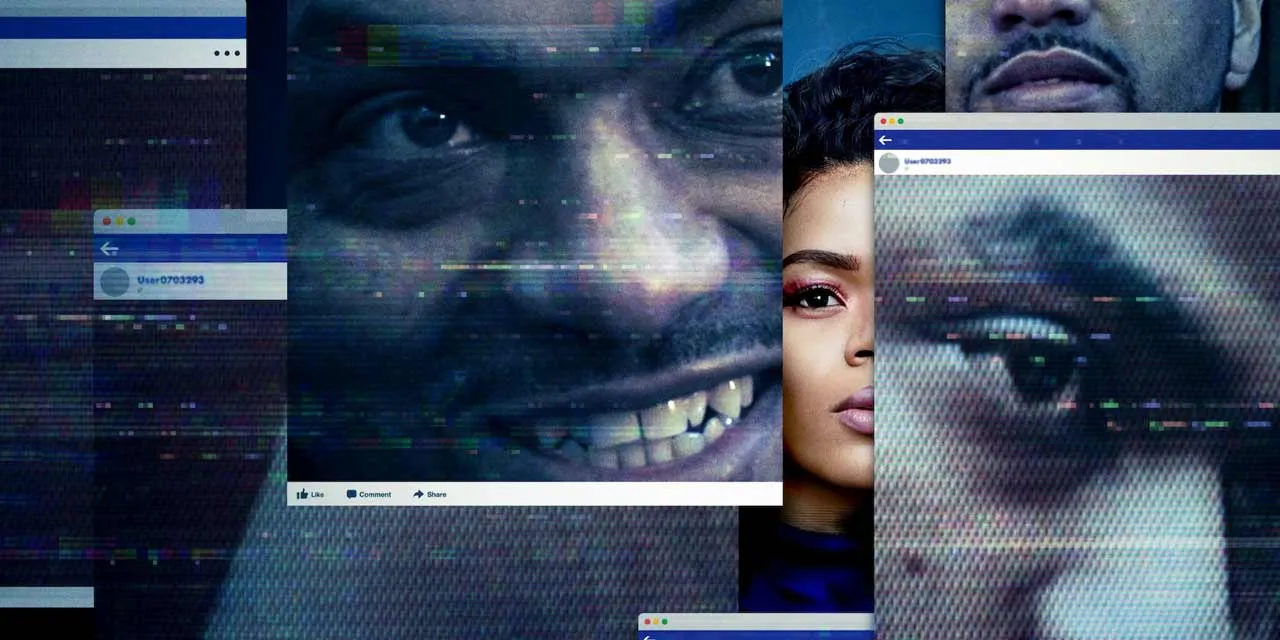
The narrative shuffles between 2011, 2022, and the present day, creating a disorienting effect that mirrors the confounding nature of the case itself. This is not poor editing; it is a conscious structural choice that serves the story in profound ways. For instance, by juxtaposing Bester’s chilling 2011 psychological assessment with the 2022 accounts of Dr. Magudumana’s sudden personality shift, the series forges a thematic link across a decade.
It suggests his pathology is not a contained event but a kind of psychic contagion that infects those who get too close. The structure forces the audience to become active investigators, piecing together a puzzle whose chronology has been purposefully scrambled to reveal deeper thematic truths.
This cerebral approach stands in stark contrast to the more emotionally driven narratives of shows that aim to build empathy or suspicion towards a single subject over time. This series is less interested in making you feel for anyone and more interested in making you think about the mechanics of a grand deception.
The story is told through a conventional array of talking heads and archival clips, but the selection of voices is remarkably sharp. Judge Edwin Cameron emerges as an unexpected hero, an embodiment of institutional integrity whose old-fashioned skepticism prevents the absurd official narrative from setting. His character feels like a throwback to a different era of public service, a man operating on principles that seem almost quaint in a system so easily gamed.
His deliberate leak to the press is itself a fascinating ethical gray area (a breach of judicial protocol undertaken for a greater good), adding a welcome layer of complexity to his “hero” status. The documentary’s overall tone is sober and journalistic, resisting the lurid reenactments and emotional string-pulling that characterize so many streaming crime series. It trusts the inherent madness of the facts to hold the viewer’s attention.
This approach affects the pacing and the management of suspense. The series understands that many viewers will know the central reveal, that Bester is alive, before they press play. The tension, then, is not in the what, but in the meticulous, unbelievable how. The predictability of the “twist” is almost a directorial wink, letting us in on the secret so we can better appreciate the sheer audacity of the scheme as it unfolds minute by painstaking minute.
The Rot Within the Walls
At its core, this story is a brutal indictment of institutional competence, or the lack thereof. A maximum-security prison is supposed to be a fixed point in society, a symbol of the state’s ultimate control over chaos. Bester’s escape reveals the Mangaung Correctional Centre as merely a stage, its protocols and personnel little more than unwitting props in his personal production.
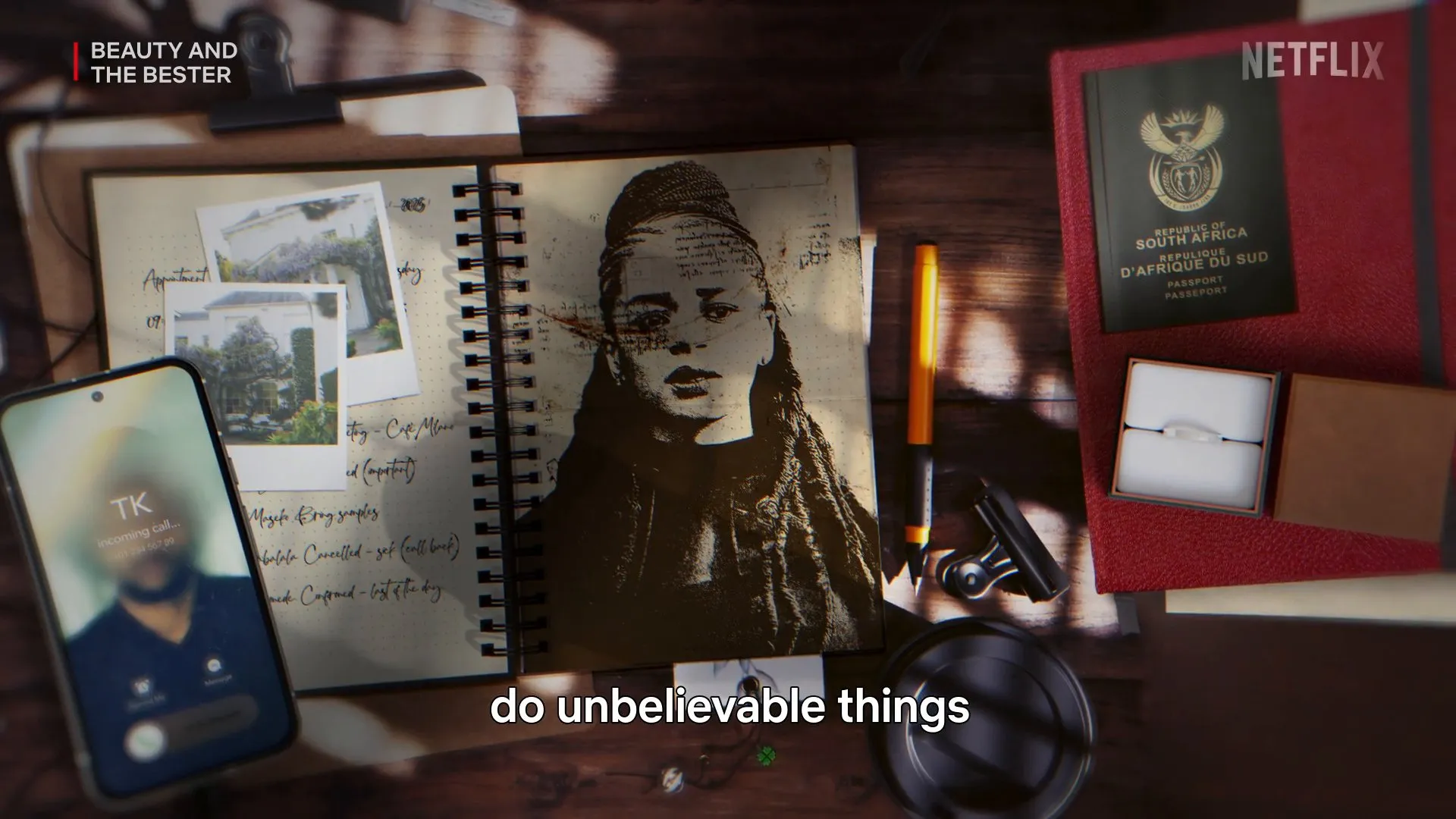
The initial, shockingly swift acceptance of his fiery “suicide” points to a systemic rot, a compound of negligence, bureaucratic inertia, and perhaps outright corruption that made the impossible possible. The series suggests the system failed because of a profound lack of imagination. Its procedures were designed to handle ordinary criminals, not a manipulator of Bester’s caliber who treated the prison’s rulebook as a list of vulnerabilities to be exploited.
Bester and Magudumana did not just break the rules; they used the system’s own internal logic against it. Dr. Magudumana’s status as a respected medical professional likely granted her a veneer of credibility, a password that allowed her to bypass firewalls of skepticism that might have stopped anyone else. Her professional authority was the perfect social engineering tool to pry open the cracks in a rigid, unthinking bureaucracy.
Against this institutional failure, the series elevates the individuals who pushed back. Judge Cameron’s decision to question the official report becomes a pivotal act of defiance. His intervention, along with the persistent digging of investigative journalists, showcases the vital role of skepticism in holding power accountable. In an environment where official channels are compromised or simply fail, the press (and by extension, a documentary like this) must become a de facto investigative body.
It is a messy but necessary check on institutional power. This theme is sharpened by a fascinating meta-narrative: the real-life legal challenge by Bester and Magudumana to block the documentary’s release. He, a man whose entire criminal career was built on constructing false narratives, appealed to the court to protect the “truth” of his trial from being tainted by another narrative. It is a stunning act of projection, attempting to use the very system he defrauded to shield himself from public scrutiny.
The Unknowable Core
Beauty and the Bester is a successful documentary because it has the courage to leave its central mystery unsolved. While it meticulously chronicles the mechanics of the escape, it refuses to offer a simple, digestible explanation for the human element, particularly the enigma of Dr. Nandipha Magudumana. This restraint is its greatest virtue.
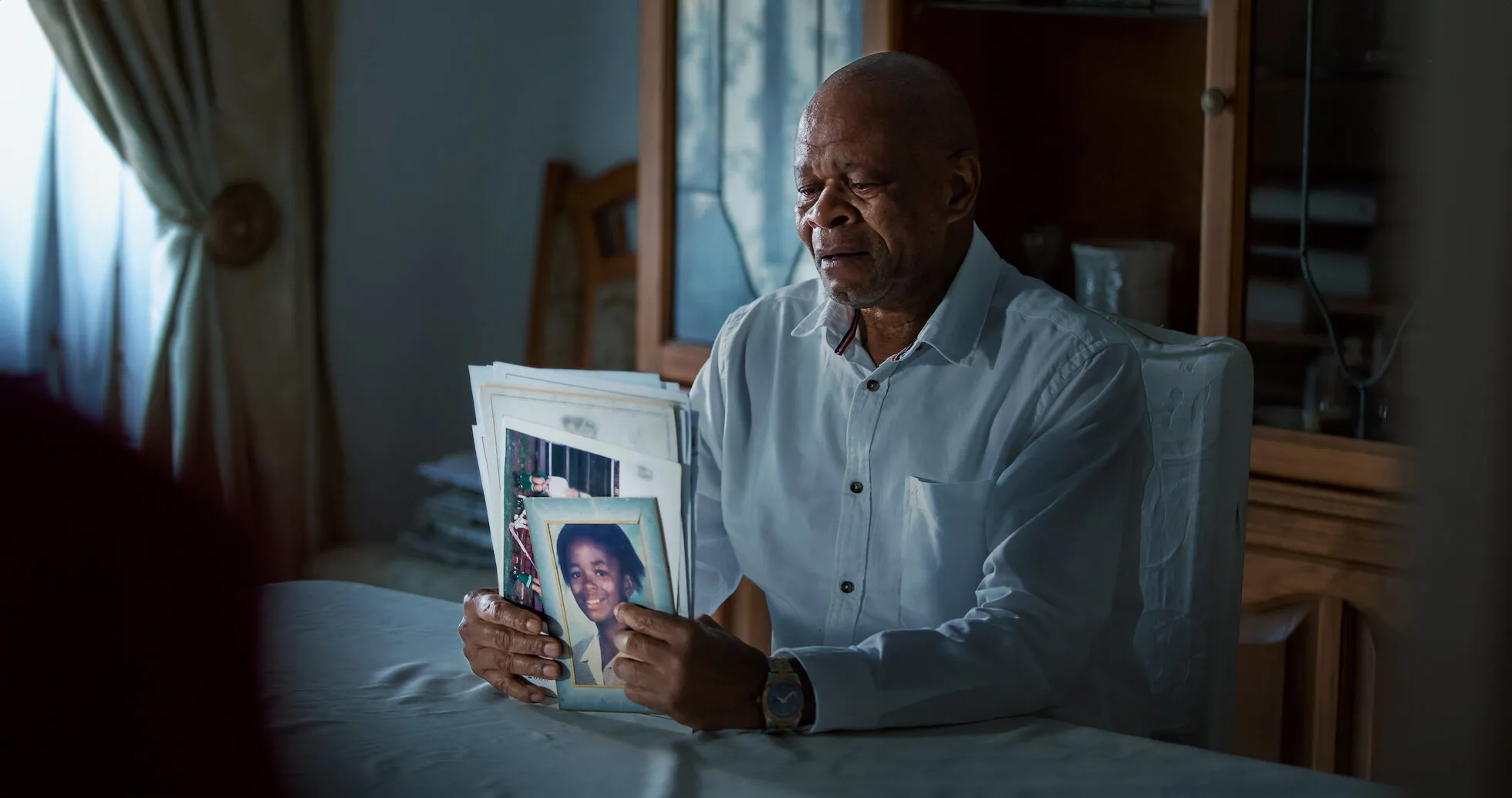
In an age of true-crime content that provides easy answers and clear villains to satisfy the audience’s need for moral clarity, this series presents a situation mired in a deeply uncomfortable ambiguity. It understands that some motivations are too complex, or perhaps too terrifyingly banal, to be satisfyingly explained. Its primary function is not to solve, but to curate the known facts of the case into a coherent, unsettling timeline that exposes the fragility of our institutions and our identities.
The series leaves a spectator wrestling with nagging, essential questions. What truly happened to Dr. Magudumana’s psyche? Was she brainwashed, or was she a willing participant from the very start, an outlaw spirit trapped in a respectable life? To what extent were prison officials actively complicit? The documentary presents the evidence but leaves the final verdict on human nature to the viewer.
This is required viewing for students of psychology, sociology, and institutional studies. It is less a “whodunit” and more a “what-is-this-society-that-it-could-happen.” It is a story perfectly suited for the 21st century, a tale of fabricated online identities, the seductive allure of transgression, and the catastrophic collision of digital fantasy with brutal, physical reality.
“Beauty and the Bester” is a new three-part Netflix true crime documentary series. It was released on September 12, 2025. The documentary series explores the connection between a renowned doctor, Nandipha Magudumana, and convicted rapist and murderer Thabo Bester, who faked his death to escape from prison. The series can be watched on the streaming platform Netflix.
Full Credits
Cast: Dr Nandipha Magudumana, Thabo Bester, judge, Chriselda Lewis
The Review
Beauty and the Bester
Beauty and the Bester is less a conventional true-crime documentary and more a sharp, clinical dissection of a grand deception. Its fragmented timeline and journalistic restraint create a cerebral viewing experience, focusing on the systemic rot and psychological complexities that allowed for such an audacious crime. While it may not offer shocking new revelations for those familiar with the case, its intelligent construction and refusal to provide simple answers make it a superior, thought-provoking entry in a crowded genre. It is a chilling portrait of how easily reality can be rewritten.
PROS
- Intelligent, non-linear narrative structure that enhances thematic depth.
- Sober, journalistic tone that avoids sensationalism and respects the viewer's intelligence.
- Examines the wider systemic and institutional failures behind the escape.
- Offers a complex psychological portrait of its central figures.
CONS
- Offers few new revelations for those already familiar with the case.
- The central "mystery" of the escape is predictable by design.
- Its deliberate ambiguity regarding motivations may leave some viewers wanting clearer answers.







