
























![Kingdom Hearts Collection [I-III] Review](https://gazettely.com/wp-content/uploads/2026/10/Kingdom-Hearts-Collection-I-III-1-360x180.webp "Kingdom Hearts Collection [I-III] Review: KHII Holds Steady as Newer Entries Fluctuate 37")




A large spider is gently scooped up and carried outside, an act of quiet reverence for the natural world. Moments later, a phone call shatters the calm, and Helen’s world collapses. The sudden death of her father, a charismatic photojournalist who was the singular person to truly understand her, leaves a void that polite condolences cannot fill.
Helen, a Cambridge academic, reacts not with tears but with a stoic withdrawal, a brittle shield against a grief too large to articulate. Her response is to seek a different kind of connection, something far from the comforts of human sympathy.
She decides to acquire and train a goshawk, one of nature’s most ferocious and unforgiving predators. This endeavor becomes less a hobby and more a complete absorption, a radical and desperate attempt to manage an internal chaos by confronting the wildness of the world head-on.
The Woman and the Hawk: A Primal Connection
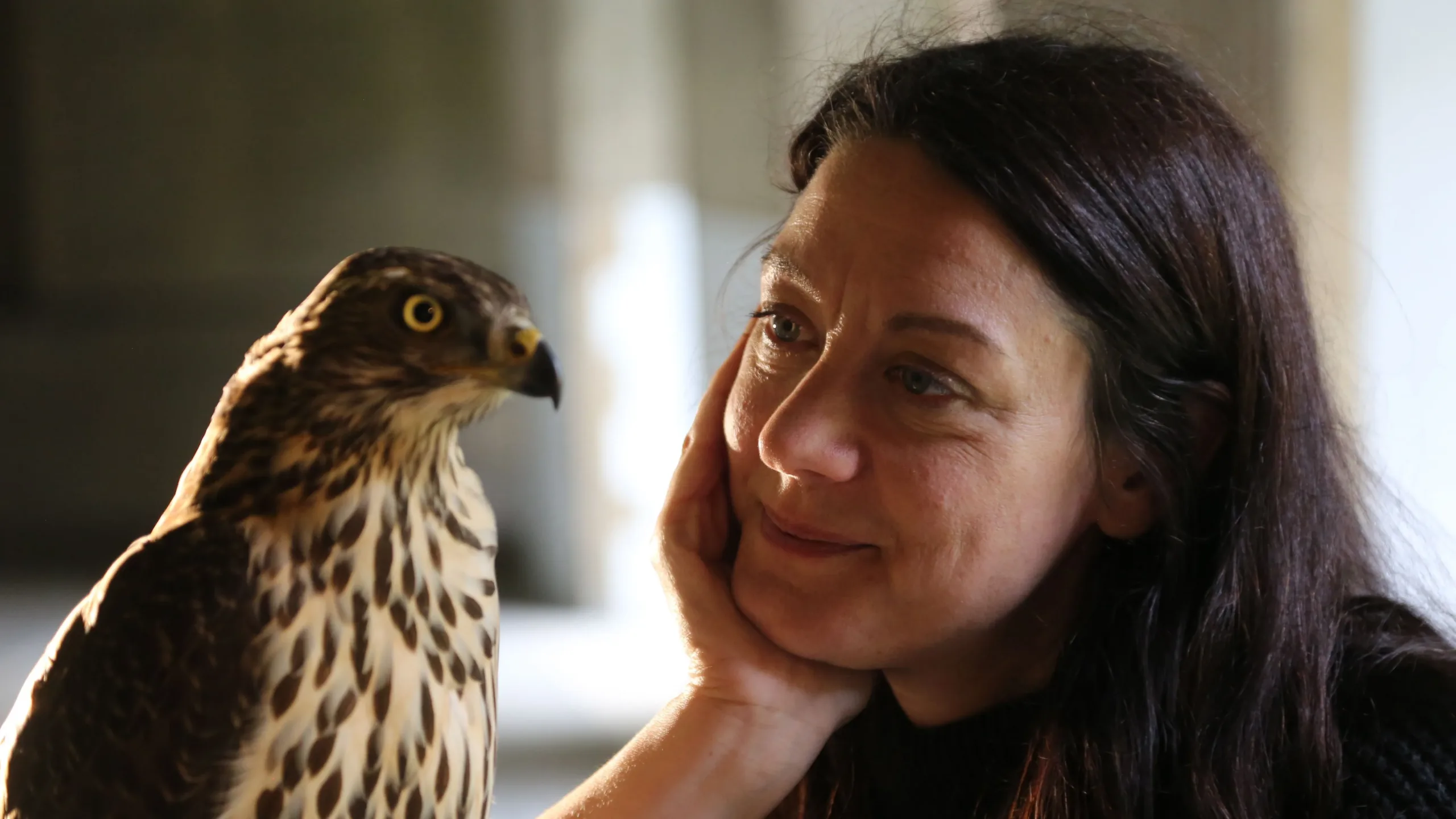
The goshawk, Mabel, is no creature of comfort. She is a bundle of instinct and predation, a feathered engine of death whose gaze is devoid of sentiment. This is precisely what draws Helen to her. In the hawk’s amoral, predatory existence, Helen finds a reflection of the raw indifference of her own loss. Where a simpler pet might offer solace, Mabel offers a severe and honest mirror.
Helen does not wish to be soothed; she wants to confront the brutal truth of a world where a beloved father can suddenly vanish. The hawk is that truth made manifest. The demanding process of training Mabel, a painstaking ritual of patience and control, provides a necessary focus that walls her off from the amorphous pain of mourning. Each small victory, from coaxing the bird to the fist to its first successful hunt, is a structured achievement in a life that has lost its structure.
Mabel becomes a powerful, living symbol. She is the physical form of Helen’s grief: wild, beautiful, and lethally dangerous. The bird’s existence as both a captive and a predator, tethered yet free, speaks directly to Helen’s own state.
As Helen devotes herself to the hawk, her connections to the human world fray. Friends and family are pushed away, their concerns feeling like meaningless noise. She grows more isolated and feral, her behavior mirroring the creature on her fist and blurring the line between the tamer and the wild.
Performance and Presence: The Soul of the Film
Claire Foy’s performance is a study in controlled devastation. She embodies Helen’s grief not through histrionics, but through a tightly coiled physicality that speaks volumes. The pain is visible in her rigid posture, her guarded expressions, and the way she dismisses a stray tear as a mere physical annoyance rather than an emotional release.
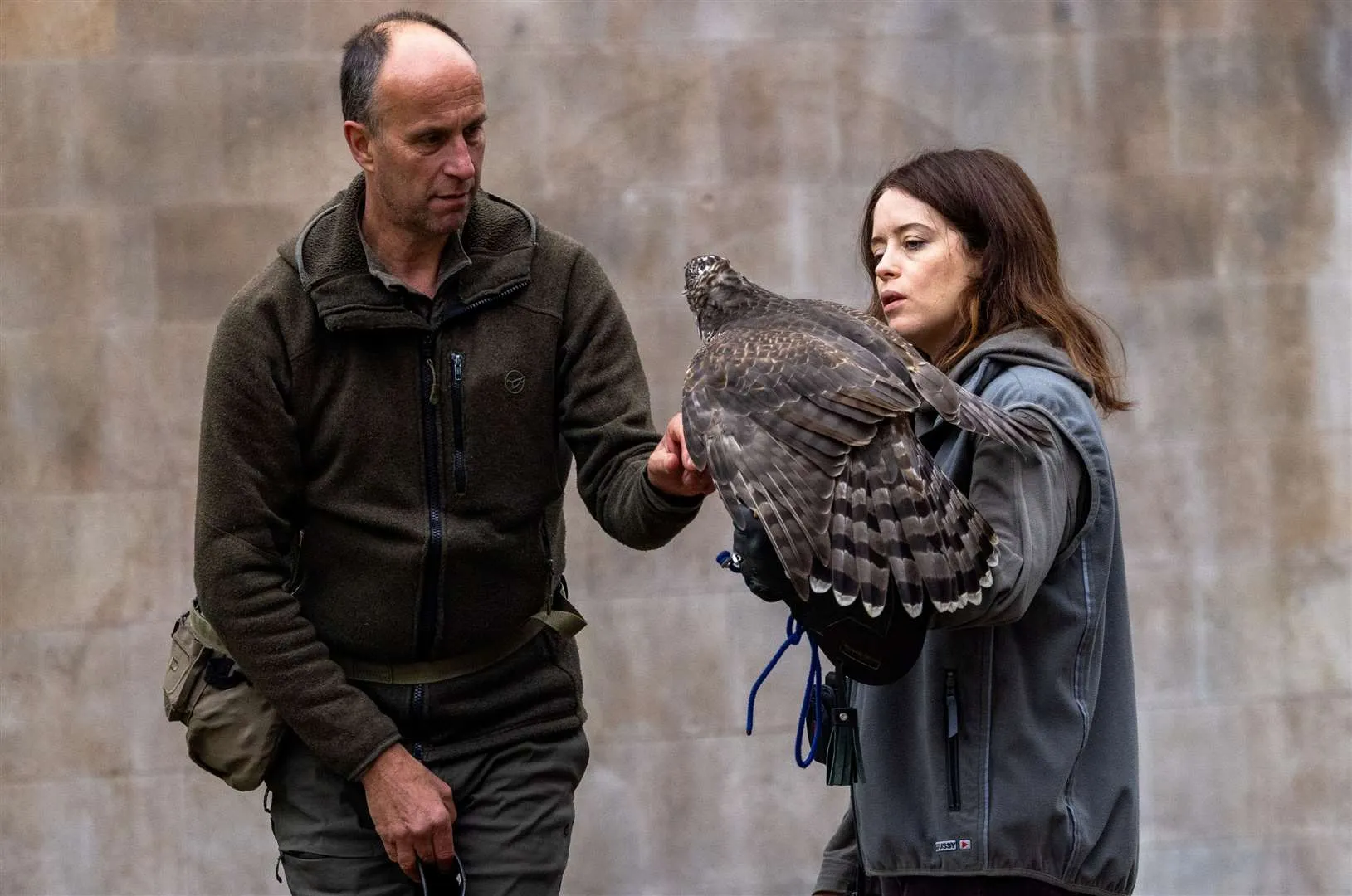
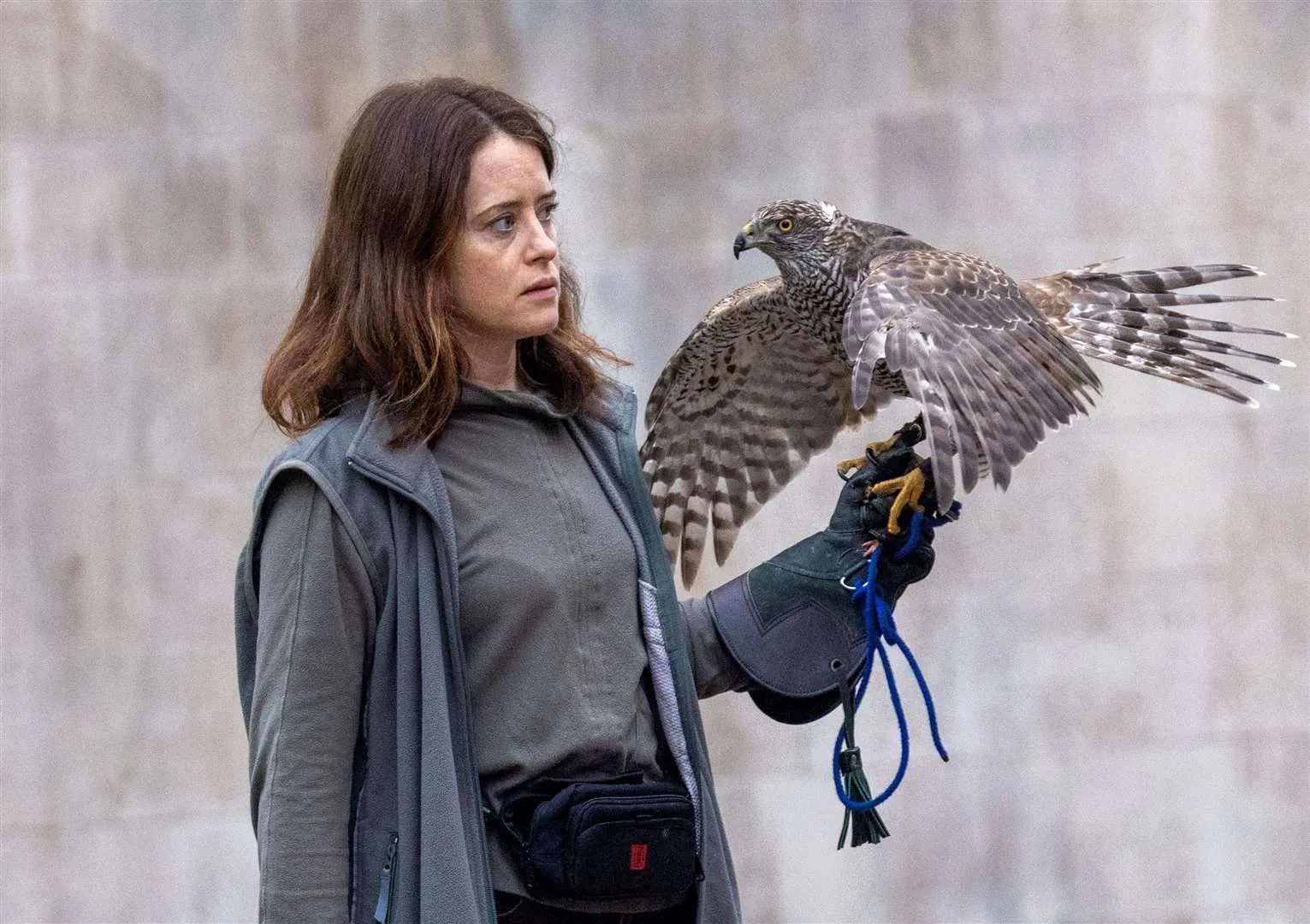
Foy makes Helen prickly and difficult, a character who resists easy sympathy while earning a deep sense of understanding. It is a performance of immense restraint, where sorrow becomes a palpable weight within the body, a cage of her own making. This portrayal is given a visceral authenticity by Foy’s real work with her avian co-star. The tangible danger and the earned trust between the actor and the bird ground the film’s central relationship in an undeniable reality.
One feels the weight of the hawk on her arm, the tension in her shoulders, the mix of fear and reverence in her eyes. In sharp contrast, Brendan Gleeson appears in flashbacks as Helen’s father, radiating a warmth and charm that makes the depth of her loss immediately palpable. He is so full of life and curiosity that his absence feels like a physical law has been broken. His vibrant presence makes the void he leaves behind concrete, giving Foy’s portrayal of that void its heartbreaking shape and power.
Visual Language and Emotional Tone
The film’s cinematography creates a constant dialogue between confinement and release. Vast, sweeping shots of the English countryside and of Mabel soaring against an open sky offer breathtaking moments of freedom. These images of natural grandeur are set against the tense, often claustrophobic interiors of Helen’s home, visually articulating her internal struggle.
The rooms are often dimly lit, cluttered spaces that feel like an extension of a mind turned inward. The expansive beauty of the wild world represents a potential escape, while the enclosed spaces reflect the suffocating nature of her sorrow. The camera’s patient, observant gaze often mimics the act of birdwatching, inviting the audience to look closer and find meaning in subtle shifts of light or the flick of a feather.
This visual style elevates the landscape to the level of a character, a silent witness to Helen’s unraveling. Director Philippa Lowthorpe adopts a patient, observant style, refusing to indulge in easy sentimentality. The film’s deliberate pacing is essential, mirroring the slow, arduous, and non-linear process of healing itself. The result is a quiet, meditative, and unflinching examination of loss.
Its power resides not in dramatic crescendos but in small, keenly observed moments: the intense focus of a hawk’s eye, the weight of a shared memory, and the slow, uncertain return of a person to the world of the living.
“H Is for Hawk” is a biographical drama based on the 2014 memoir by Helen MacDonald. The film premiered on August 29, 2025, at the Telluride Film Festival. It has not yet been released for streaming or general viewing, but is scheduled for future screenings at the BFI London Film Festival.
Full Credits
Director: Philippa Lowthorpe
Writers: Emma Donoghue, Philippa Lowthorpe, Helen MacDonald
Producers and Executive Producers: Lena Headey, Dede Gardner, Jeremy Kleiner, Film4, Saturnia, Kliff Capital Entertainment, Calculus Media, City Hill Arts, Desmar, Protagonist Pictures, Peephole Productions
Cast: Claire Foy, Brendan Gleeson, Sam Spruell, Josh Dylan, Denise Gough, Emma Cunniffe, Arty Froushan, Lindsay Duncan
Director of Photography (Cinematographer): Charlotte Bruus Christensen
Editors: Nico Leunen
The Review
H Is for Hawk
H Is for Hawk is a demanding, deeply felt examination of loss, anchored by a masterful performance from Claire Foy. Its patient direction and stunning cinematography create an unforgettable portrait of one woman’s unconventional path through sorrow. While its deliberate pace requires commitment, the film offers a raw and profound exploration of the connection between the human heart and the wild world.
PROS
- A powerful and nuanced central performance by Claire Foy.
- Exquisite cinematography that captures both the beauty of nature and the interiority of grief.
- An honest and unsentimental portrayal of the grieving process.
- Strong supporting work from Brendan Gleeson that grounds the film's emotional core.
CONS
- The deliberate, slow pacing may be challenging for some viewers.
- Its intense inward focus can create a sense of emotional distance at times.







