



























LEGO Voyagers arrives as an unexpected meditation on cooperation and discovery, wrapped in the familiar comfort of plastic bricks. Light Brick Studio, following their acclaimed LEGO Builder’s Journey, has crafted something that feels both intimately personal and universally approachable. This mandatory co-op puzzle-platformer strips away the typical LEGO game formula of licensed characters and slapstick humor, replacing them with something quieter and more profound.
You and your partner become two simple LEGO pieces: red and blue blocks, each adorned with a single googly eye that somehow conveys boundless personality. The premise emerges wordlessly as you witness a rocket launch gone wrong, setting you on a journey across diorama-like worlds built entirely from authentic LEGO elements. At $25 for a 3-5 hour experience, Voyagers positions itself as a premium indie experience that prioritizes emotional resonance over content volume.
What makes this adventure special lies in its understanding that the most meaningful games often emerge from the simplest foundations. The Friend’s Pass feature allows one player to invite another online for free, demonstrating the developers’ commitment to shared experiences over individual purchases.
Mechanics That Mirror Meaning
The control scheme in LEGO Voyagers exemplifies how technical systems can reinforce thematic elements. Your brick characters roll through the world with physics that feel authentically chunky and deliberate, never quite precise enough for pixel-perfect platforming yet perfectly suited for collaborative problem-solving. The jump button launches you skyward while the snap mechanism lets you attach to any available LEGO stud, creating a movement language that speaks directly to anyone who’s ever built with physical bricks.
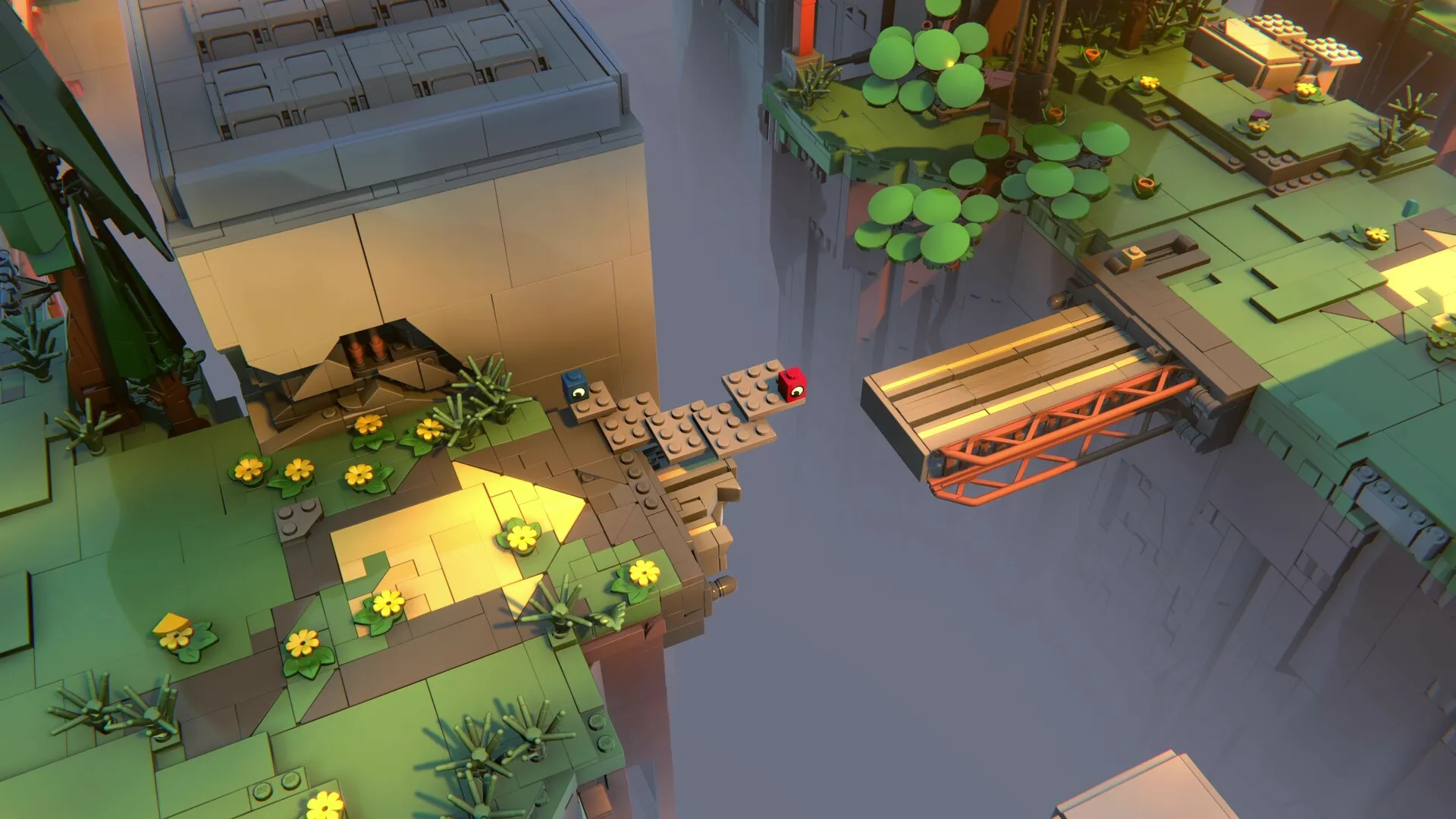
This snap-to-stud system becomes the foundation for the game’s most engaging puzzles. When you encounter a gap too wide to cross, scattered LEGO pieces around the environment invite experimentation. The game refuses to dictate a single correct solution, instead allowing players to construct wildly inefficient but functional bridges that would horrify an engineer and delight a child. This design philosophy extends throughout the experience, creating moments where creativity matters more than optimization.
The building mechanics work because they embrace the inherent messiness of collaborative creation. When two players grab different pieces and attempt to construct something together, the result often looks haphazard yet serves its purpose. The game captures that essential LEGO experience where the joy comes from the process of building together, rather than achieving perfect architectural symmetry.
Vehicle sequences introduce divided responsibilities that test communication skills. Operating a dump truck requires one player to steer while another controls acceleration, creating moments of delightful chaos as partners learn to synchronize their inputs. These mechanics expand the cooperative requirements beyond simple puzzle-solving into genuine teamwork exercises.
The instant respawn system eliminates frustration while preserving challenge. When you inevitably roll off a platform or miss a crucial jump, you immediately return to safety with any collected pieces still in hand. This forgiving approach keeps the focus on exploration and experimentation rather than precision execution.
Visual Poetry in Plastic
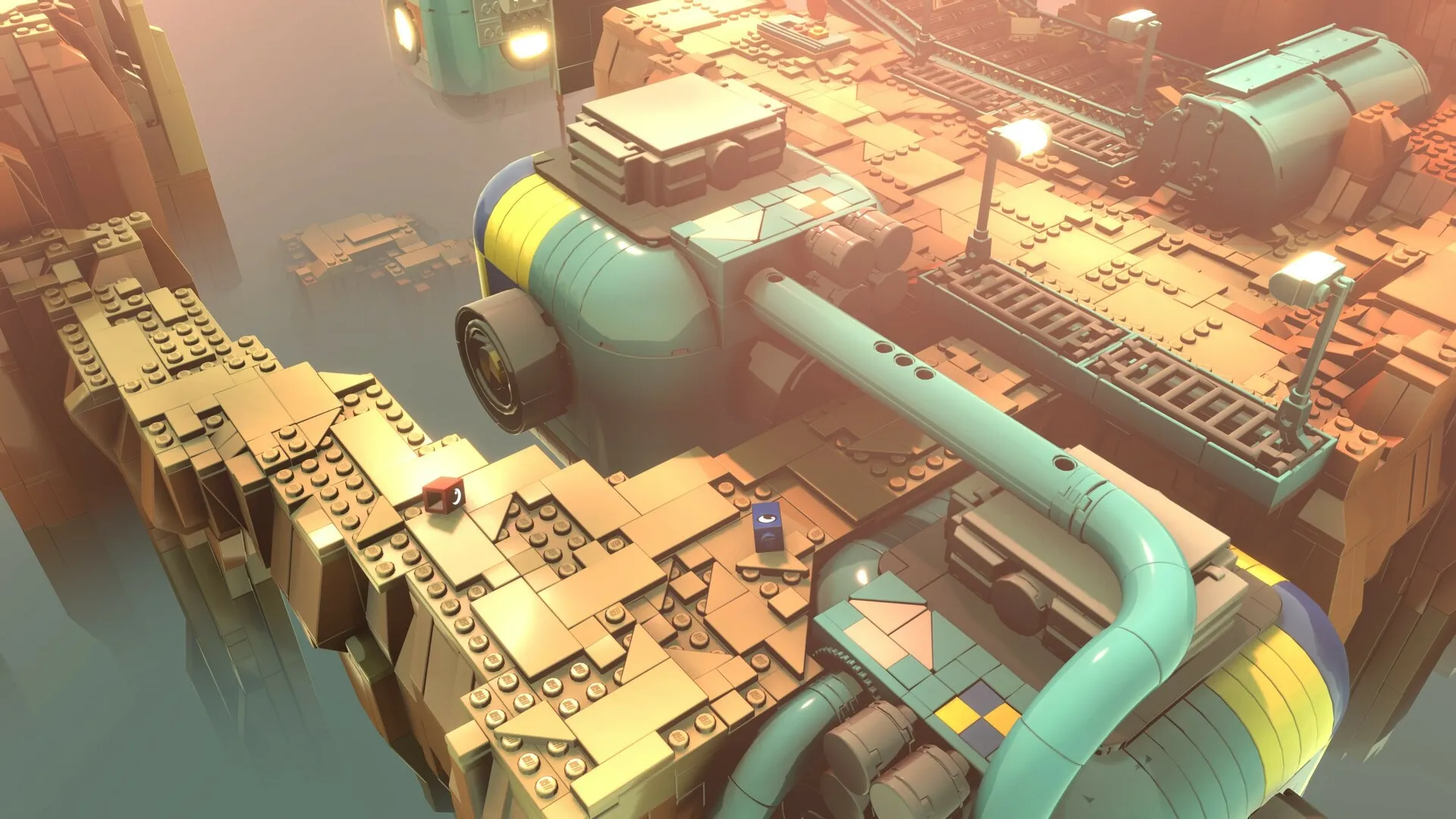
LEGO Voyagers achieves something remarkable in its visual presentation: it makes digital LEGO pieces feel more authentic than many physical sets. Every brick bears the official LEGO wordmark, surfaces gleam with convincing plastic sheen, and the tilt-shift camera effects create the illusion of peering into actual miniature dioramas.
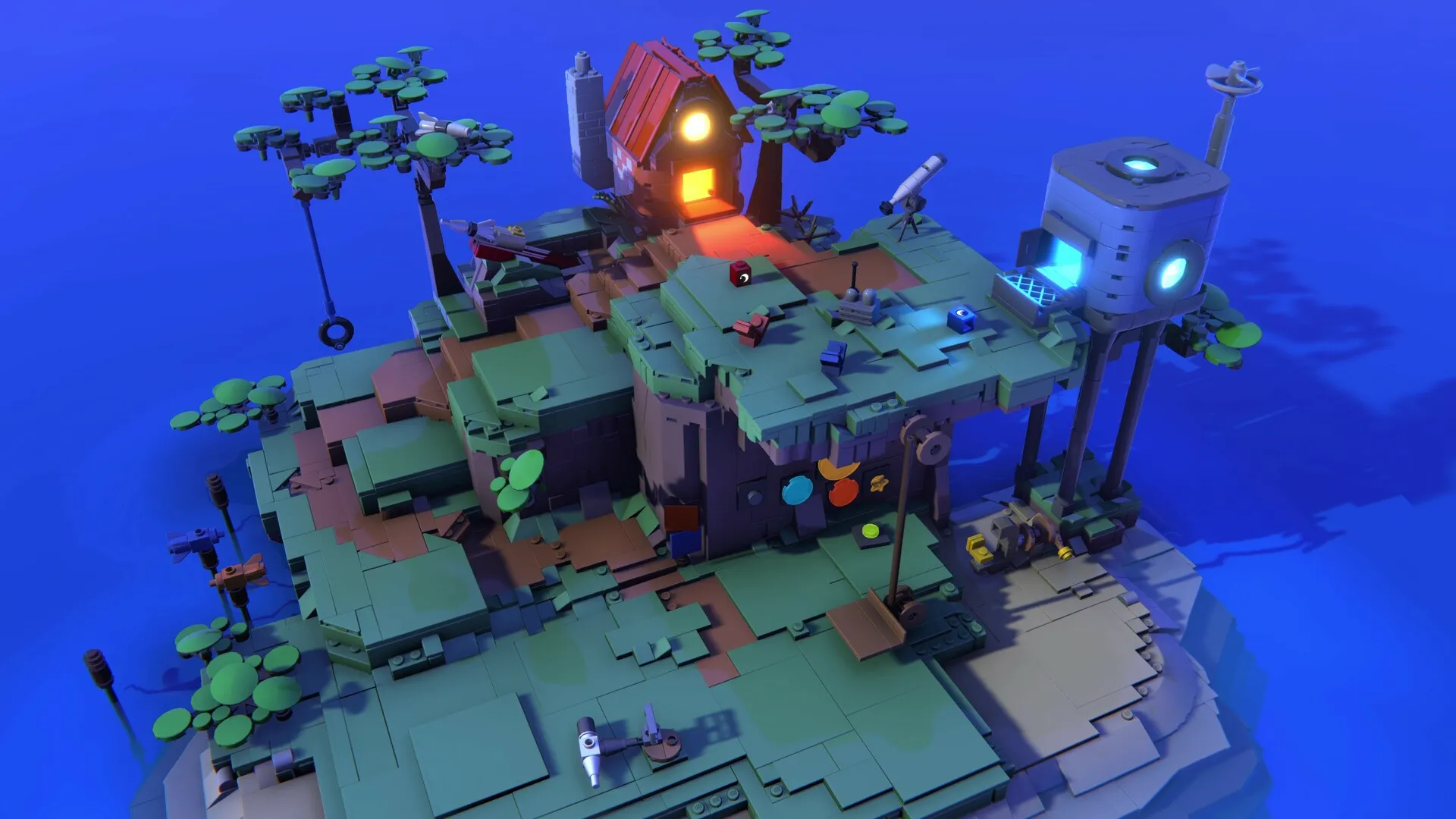
The art direction draws clear inspiration from real LEGO photography, with soft lighting that bathes each scene in warm, inviting tones. Early environments showcase autumnal nature settings where water flows around and through LEGO structures, creating a sense of worlds that exist independently of player interaction. These aren’t sterile puzzle chambers but lived-in spaces that happen to contain challenges.
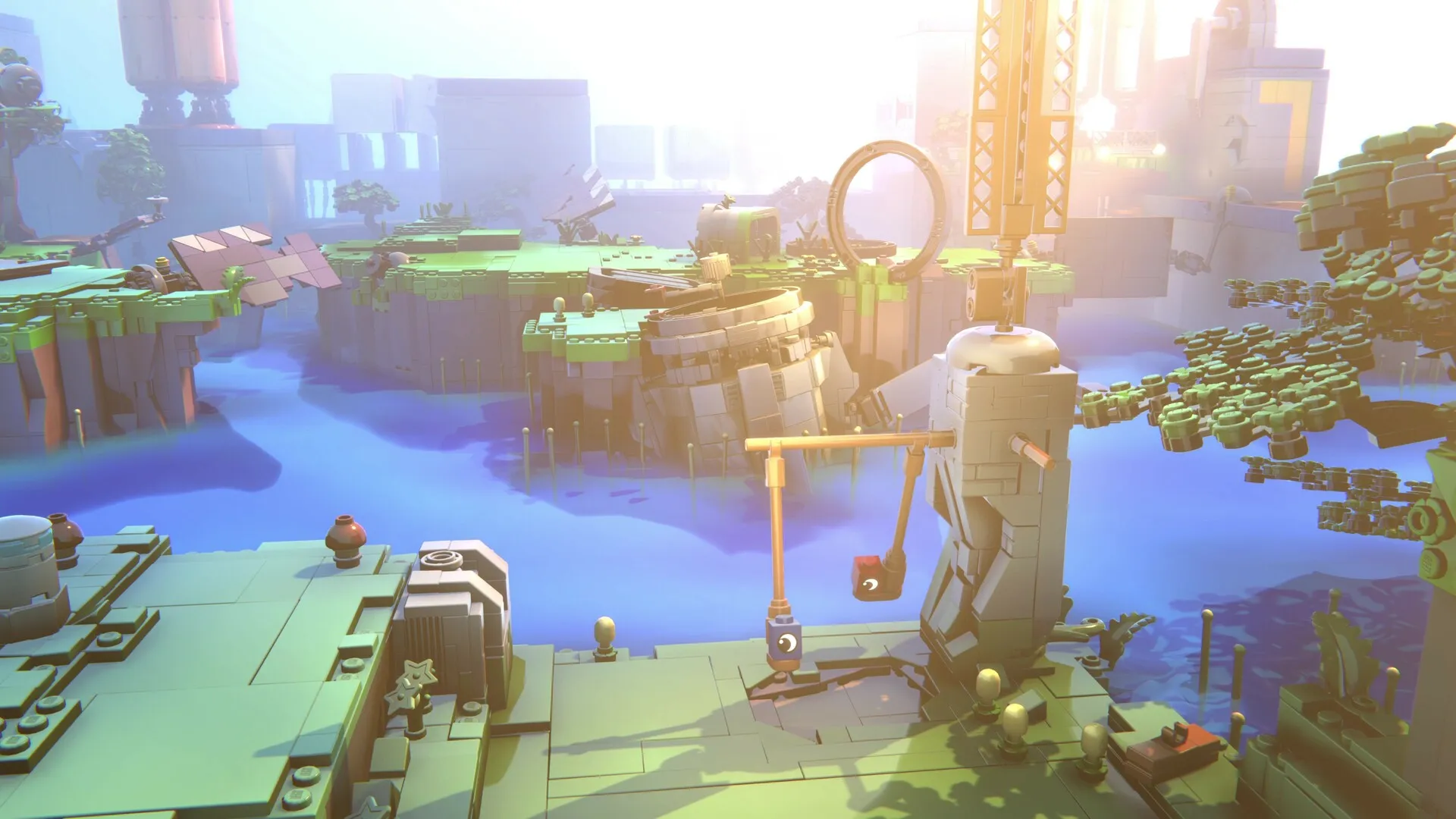
Environmental storytelling reaches its peak in the industrial sections, where massive machinery built from recognizable LEGO elements creates a sense of scale and purpose. Train tracks, foundries, and mechanical contraptions all feel plausible within the LEGO universe while serving the narrative’s themes of ambition and exploration.
The isometric camera perspective occasionally creates depth perception issues during platforming sequences, but these moments feel minor compared to the visual achievements elsewhere. Small details like interactive flowers that react to touch or crabs that can be accidentally attached to demonstrate the developers’ attention to organic world-building.
Technical performance remains solid throughout, with only brief frame rate drops during major environment transitions. The visual consistency never wavers, maintaining the illusion that you’re manipulating real LEGO pieces within carefully constructed sets.
Soundscapes for Silent Stories
The audio design in LEGO Voyagers demonstrates restraint and purpose in equal measure. Rather than filling every moment with music, the soundtrack appears strategically, using mellow synthesizer compositions that enhance contemplative moments without overwhelming the experience. These tracks would feel at home on a meditation playlist, supporting the game’s emphasis on relaxed collaboration.
Context-sensitive sound effects add layers of personality to the simple brick characters. The basic vocalization system allows players to communicate through adorable chirps and babbles, with sounds changing based on environmental context. During train sequences, these vocalizations transform into locomotive-style “choo choo” sounds, creating moments of shared discovery and delight.
Environmental audio supports the illusion of authentic LEGO worlds. Water bubbles convincingly around plastic structures, mechanical elements whir and click with satisfying precision, and the subtle sound of bricks connecting provides tactile feedback for building actions.
The strategic use of silence proves equally important. Quiet moments between puzzles allow the ambient sounds of each environment to create atmosphere, while the absence of constant musical accompaniment makes the appearance of the soundtrack feel more impactful.
Cooperation as Core Design
LEGO Voyagers builds its entire identity around mandatory cooperation, creating an experience that fundamentally changes based on who shares the journey with you. The absence of solo play or AI partners forces players to engage with the social dynamics of collaborative problem-solving, making every puzzle a negotiation between different approaches and personalities.
The Friend’s Pass system removes economic barriers to shared play, allowing one purchase to enable two-player online sessions. However, the game clearly favors local co-op, where players can communicate naturally and share reactions in real-time. Online play without voice chat becomes an exercise in patience and interpretive dance, as players attempt to communicate complex intentions through limited in-game vocalizations.
Difficulty scaling proves thoughtful across age ranges. Six-year-olds can successfully participate in most puzzles with patient partners, while the mechanical complexity provides enough engagement for experienced gamers. The forgiving respawn system allows younger players to take risks without fear of permanent failure, creating an environment where experimentation thrives over caution.
However, occasional difficulty spikes disrupt this accessibility. A few late-game challenges require precise timing and coordination that can frustrate players accustomed to the gentle pacing elsewhere. These moments feel less like natural progression and more like temporary lapses in design philosophy.
The game’s approach to “cheating” through the respawn system creates interesting emergent solutions. Players sometimes discover they can bypass complex puzzles by strategically falling off platforms to respawn in more advantageous positions. Rather than feeling like exploitation, these moments reinforce the game’s emphasis on creative problem-solving over rigid adherence to intended solutions.
Emotional Architecture
The wordless narrative in LEGO Voyagers achieves something that many story-heavy games struggle with: genuine emotional investment through minimal means. The opening sequence establishes motivation through pure visual storytelling, as two brick friends witness a rocket launch failure and decide to investigate. This simple setup provides enough narrative momentum to carry the entire experience.
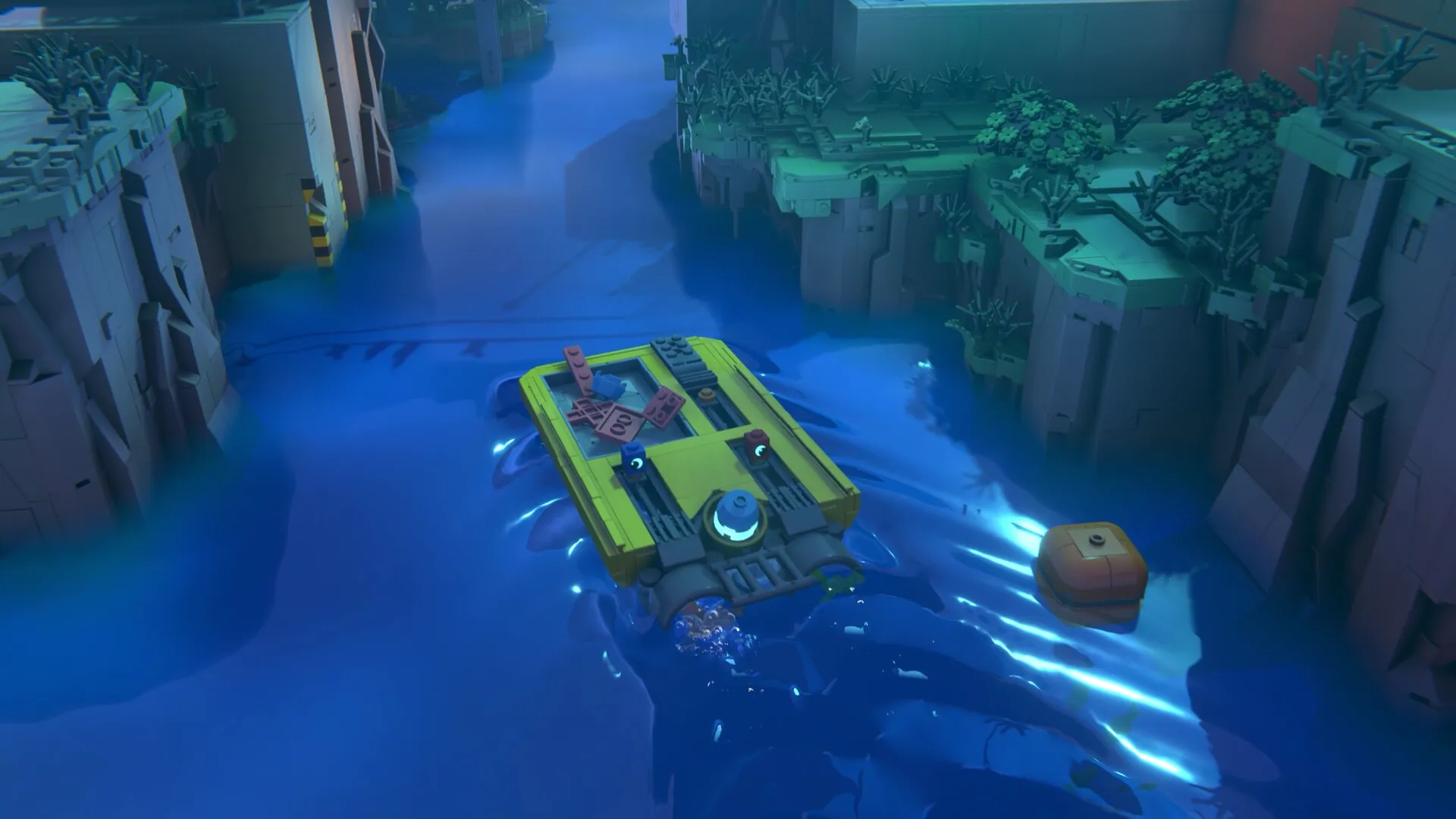
Character development occurs through shared experiences rather than dialogue or cutscenes. The blue brick’s beach bucket accessory becomes a endearing detail that helps players distinguish their roles while adding personality to an otherwise minimal avatar. These tiny characters develop emotional weight through player projection and collaborative experiences.
The journey structure mirrors classic adventure narratives while maintaining LEGO’s emphasis on construction and creativity. Each environment presents both obstacles to overcome and opportunities for creative expression, reinforcing themes of friendship, exploration, and scientific curiosity.
The game’s conclusion provides emotional payoff that feels earned despite the brief runtime. Without spoiling specifics, the ending recontextualizes earlier gameplay elements in ways that add thematic depth and emotional resonance. The final moments demonstrate how simple mechanics can carry profound meaning when properly integrated with narrative intent.
Thematic elements of cooperation and building serve as metaphors for real-world relationship dynamics. The act of constructing solutions together becomes a reflection of how partnerships function, with success requiring communication, compromise, and shared vision.
Weighing the Investment
At $25 for a 3-5 hour experience, LEGO Voyagers asks players to value quality over quantity. The brief runtime leaves many feeling that the experience ends just as it reaches full stride, with mechanical concepts that feel capable of supporting much more elaborate challenges.
Replay value remains limited beyond sharing the experience with new partners. Unlike longer RPGs or games with branching narratives, Voyagers tells its story once and provides little incentive to return. The lack of features like Photo Mode feels like a missed opportunity to encourage players to document their creative building solutions.
The target audience fit proves nearly perfect for families seeking quality co-op experiences. Parent-child gaming sessions will find exceptional value in the accessible mechanics and thoughtful design. LEGO enthusiasts will appreciate the authentic presentation and building-focused gameplay, while puzzle game fans will enjoy the collaborative challenges.
For players seeking lengthy adventures or complex mechanical depth, Voyagers may disappoint through its brevity rather than its execution. The experience functions more like an interactive short film than a traditional video game, prioritizing emotional impact over content volume.
The foundation established here feels ripe for expansion. The mechanics, visual style, and cooperative framework could easily support additional content or a full sequel. Whether Light Brick Studio chooses to build upon this foundation remains to be seen, but the potential clearly exists.
LEGO Voyagers succeeds by understanding its limitations and working within them to create something genuinely special. While the brief runtime may leave players wanting more content, the emotional journey provides lasting value that extends well beyond the final credits. This is cooperative gaming distilled to its essential elements, proving that the best shared experiences often emerge from the simplest building blocks.
The Review
LEGO Voyagers
LEGO Voyagers transforms simple mechanics into profound cooperative storytelling. Light Brick Studio has crafted an experience that prioritizes emotional connection over content volume, creating genuine moments of shared discovery through accessible building challenges. The authentic LEGO presentation and thoughtful design make this essential for families, though the brief runtime limits broader appeal. This succeeds as interactive poetry rather than traditional gaming.
PROS
- Authentic LEGO aesthetic with exceptional visual presentation
- Meaningful cooperative mechanics that enhance relationships
- Accessible to all ages with forgiving difficulty design
- Emotionally resonant wordless storytelling
- Creative building solutions with no single correct approach
- Friend's Pass enables free online co-op sharing
CONS
- Very short 3-5 hour runtime leaves players wanting more
- Limited replay value beyond introducing new partners
- Occasional difficulty spikes disrupt gentle pacing
- Online play challenging without voice communication
- Missing features like Photo Mode for sharing creations
- Isometric camera creates depth perception issues