




















![Kingdom Hearts Collection [I-III] Review](https://gazettely.com/wp-content/uploads/2026/10/Kingdom-Hearts-Collection-I-III-1-360x180.webp "Kingdom Hearts Collection [I-III] Review: KHII Holds Steady as Newer Entries Fluctuate 37")



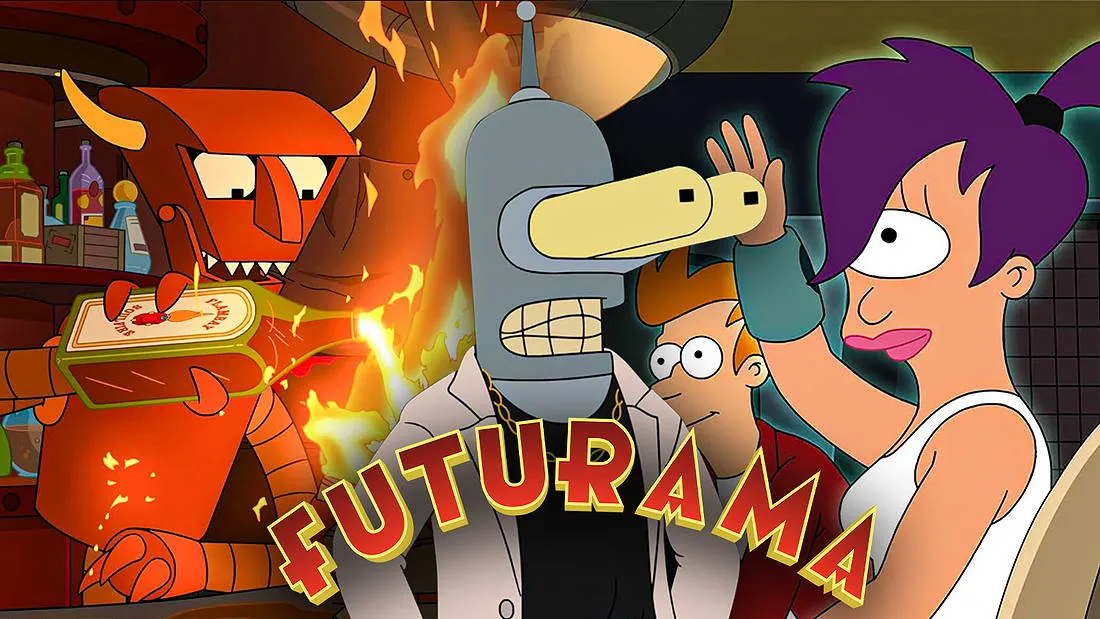

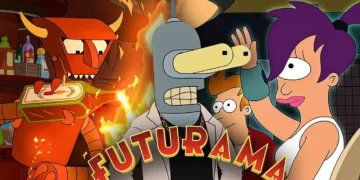
A television series with more lives than a cat in a particle accelerator, Futurama has once again defied cancellation to deliver another season. The animated sci-fi sitcom from Matt Groening has long been the little engine that could, chugging along through network changes and decade-long gaps.
Its return to Hulu for a third revival season feels less like a surprise and more like an inevitability, a fixed point in the chaotic TV timeline. The premise remains beautifully simple: 20th-century pizza boy Philip J. Fry gets cryogenically frozen and wakes up in the 31st century.
He finds work at Planet Express, a delivery company owned by his brilliant and ancient descendant, Professor Farnsworth. Alongside him are the competent one-eyed captain Leela, the kleptomaniac robot Bender, and a motley crew of aliens and bureaucrats. This new batch of episodes continues their adventures, building on the foundation of the current streaming-era run.
The Freezer Burn Is Gone
After two revival seasons that sometimes felt like they were straining to prove their relevance, Season 13 feels comfortably self-assured. The writing has settled, shaking off the rust to recapture the rhythm of the show’s classic years. Where the initial Hulu episodes sometimes leaned on of-the-moment tech references that felt dated almost immediately, this season exhibits a renewed confidence.
The humor feels less like a checklist of modern buzzwords and more like the organic, character-driven chaos we expect. The creative team is no longer just borrowing the keys to the Planet Express ship; they are flying it with the casual mastery of old pros.
The show’s comedic engine is a finely tuned machine, capable of shifting from groan-worthy puns to heady scientific principles in a single scene. This dynamic is its greatest strength. An episode can build an entire plot around a complex mathematical concept, like nested infinities, and make it hilarious through the crew’s reactions.
Professor Farnsworth confronts the topic with academic terror, Bender immediately tries to figure out how to steal an infinite number of wallets, and Fry reduces the cosmic quandary to a simple question about whether it affects his TV reception. This ability to make the esoteric accessible is a rare gift. The comedy operates on multiple levels, rewarding viewers who catch the scientific nod while providing ample physical comedy and sharp one-liners for everyone else. It is a balancing act that few shows even attempt.
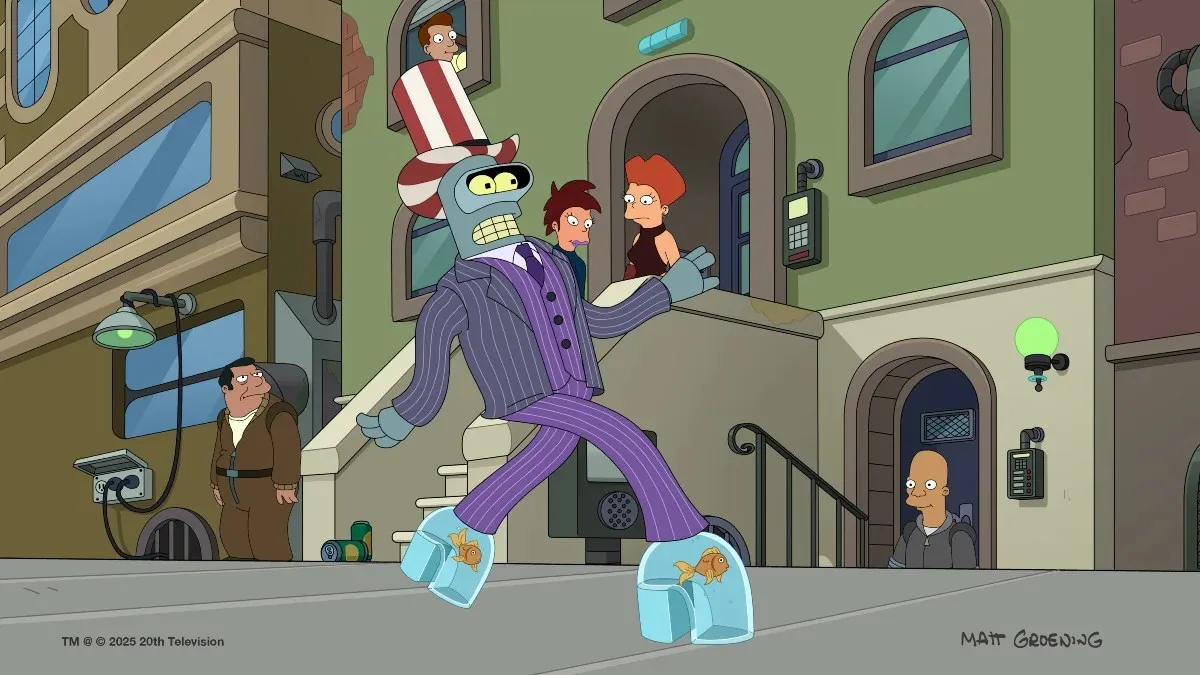
This new confidence extends to how the season handles nostalgia. It uses callbacks to its own dense history as a springboard for fresh material, not a safety net. An episode might revisit Bender’s old anxieties about his height, but it does so with a fresh perspective.
Instead of merely repeating old jokes, the story uses that established character trait to explore new comedic territory, creating a narrative that feels like a natural continuation. This approach respects the audience’s memory, treating the show’s long history as established lore that can be built upon. It rewards long-time viewers for their investment without alienating anyone who just started watching.
A Viciously Funny View from the Future
Futurama’s satirical scalpel has lost none of its sharpness over the years. The 31st-century setting remains a perfect perch from which to dissect 21st-century absurdities with surgical precision. The season takes aim at a broad swath of modern life, from the gig economy and our collective dependence on technology to the maddening logic of bureaucracy.
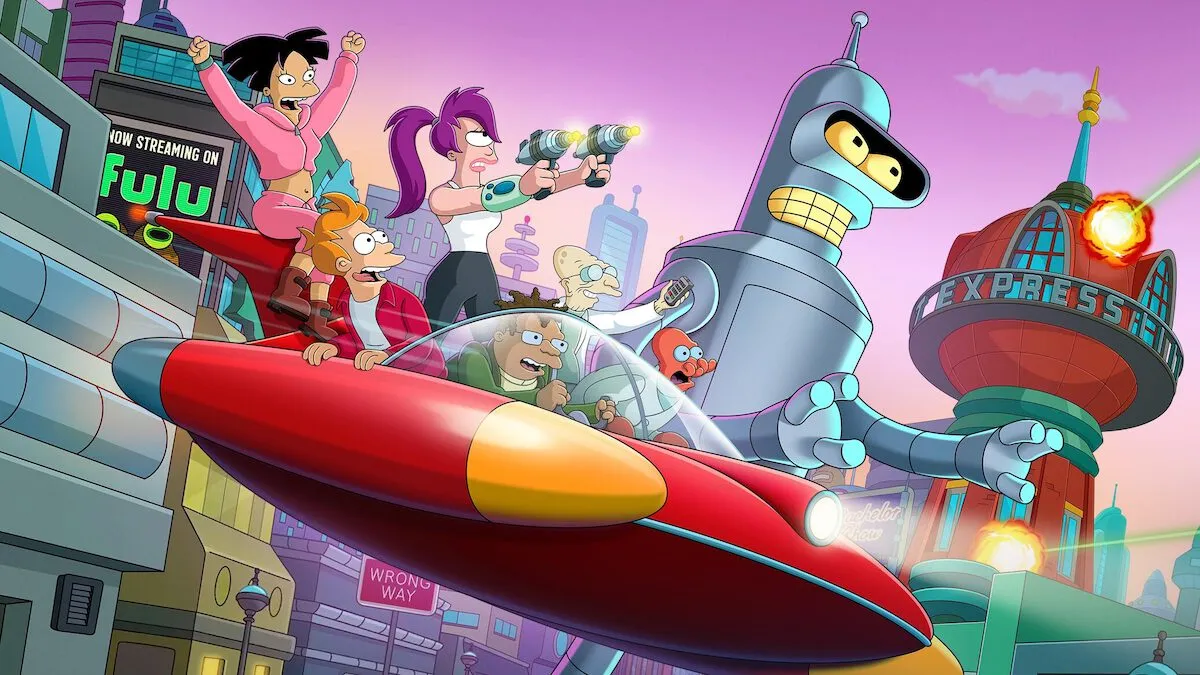
The show’s commentary on our environmental crisis is particularly pointed. The long-running gag of dropping a giant ice cube into the ocean is finally shown to be unsustainable, a perfect metaphor for our own inadequate climate solutions.
The Professor’s new plan is even more disastrous: triggering the eruption of Mount Vesuvius to create a “volcanic winter.” This is Futurama at its best, presenting our real-world blunders through a lens of futuristic indifference and comically shortsighted fixes. The message is cynical yet hilarious: humanity’s talent for creating bigger problems to solve smaller ones is a timeless trait.
The high-concept science-fiction plots are never just for spectacle. They are intricate vehicles for this social critique. An episode about a dating app might evolve into a story where the crew must deliver a package to the algorithm itself, personified as a fickle, insecure deity who controls the love lives of billions.
These imaginative scenarios allow the show to explore complex themes without ever feeling preachy. The thematic undercurrent of societal apathy runs deep, lampooning a future that has solved interstellar travel but still cannot figure out basic logistics or fairness.
This commitment to big ideas is what elevates the show. It uses comedy to do what the best science fiction has always done: ask profound “what if” questions. The series cheerfully explores existential quandaries about consciousness, free will, and the meaning of existence, all while maintaining its comedic rhythm. It is a philosophical treatise disguised as a workplace sitcom, posing deep questions about the universe and then immediately undercutting them with a perfectly timed belch from Bender.
The Crew You’d Follow to the Edge of the Universe
For all its high-concept sci-fi and social satire, the show’s durability comes from its characters. Season 13 continues to honor the series’ own continuity, allowing its crew to grow and change in meaningful ways. This is most apparent in Fry and Leela’s relationship, which has moved past the classic “will-they-won’t-they” tension into something more stable, nuanced, and interesting.

Their dynamic is now about the strange, everyday challenges of a committed partnership in a bizarre future. The writing reflects this maturity; a plot that might have triggered a massive fight in an earlier season is now navigated with the weary patience and shorthand communication of a long-term couple.
This evolution feels earned, a victory for long-form storytelling within a traditionally episodic format. Their bond is the emotional anchor that keeps the show grounded, no matter how wild the sci-fi shenanigans get.
The season also wisely gives its supporting cast room to breathe, preventing the show from feeling stale. Dedicated episodes that spotlight the ensemble add welcome depth to the world. A story about Hermes, a man defined by rigid order, trying to parent his chaotic teenage son challenges his core identity in hilarious ways.
Similarly, watching the perpetually timid Kif Kroker find a new kind of strength as a father provides a heartwarming and funny character arc. These B-plots enrich the series, reminding us that even in a world of space whales and alien invasions, some problems are universal.
Of course, Bender’s selfish schemes still ignite much of the weekly chaos, and his metallic ego remains a reliable agent of mayhem. Yet even his antics reinforce the central theme of found family. The crew always comes together to fix his mistakes, not just because they have to, but because they are a unit. Fry lost his entire world in the 20th century. The Planet Express team became his replacement for everything. This emotional foundation is what allows the zany, often cynical, humor to work so effectively.
An Analog Sitcom in a Digital Streaming World
Futurama remains a classic 22-minute episodic sitcom, a structure that feels almost rebellious in today’s landscape of serialized, binge-worthy epics. This format is a double-edged sword. Its accessibility is a definite strength; anyone can jump into a random episode and enjoy a complete, satisfying story. The show makes very few demands on its audience, which is a refreshing change of pace.
At the same time, this self-contained nature works against the grain of modern streaming habits. It lacks the narrative hooks and cliffhangers that pull viewers through an entire season in a single weekend. Compared to animated contemporaries that use serialization to tell complex, evolving stories, Futurama’s resistance to this trend makes it a different kind of viewing experience.
This season focuses on delivering excellent standalone adventures without pushing an overarching story forward. This is a departure from previous revival seasons that introduced significant status quo shifts, like Amy and Kif’s children. The lack of a major new development raises questions about the show’s long-term trajectory.
Can a series built on resetting the board every week truly evolve? Or is its static nature part of its enduring appeal? The creators seem hesitant to risk the delicate formula, and it’s a valid concern. Marrying Fry and Leela or introducing a child would fundamentally alter the workplace sitcom dynamic that defines the show.
What remains unshakable is the show’s technical excellence. The voice cast is a well-oiled machine, an ensemble of performers who inhabit their roles with incredible range and impeccable timing after more than two decades. The animation retains its iconic clean-line aesthetic, a distinctive style that blends classic cartooning with wonderfully detailed futuristic designs.
The show is a reliable delivery service for comedy, always on time and always satisfying. But with its classic format and lack of a driving serialized plot, one has to wonder: how long can a delivery company stay in business when the landscape of its entire industry is changing around it?
Futurama is an animated science fiction sitcom created by Matt Groening and David X. Cohen. It first aired on March 28, 1999. The series has had multiple runs on different platforms, including Fox, Comedy Central, and most recently, Hulu, where the newest seasons are available.
Full Credits
Director: Matt Groening, David X. Cohen
Writers: Matt Groening, Bill Odenkirk, David X. Cohen, Ken Keeler, Michael Rowe
Producers and Executive Producers: Not found
Cast: Billy West, Katey Sagal, John DiMaggio, Tress MacNeille, Maurice LaMarche, Phil LaMarr, Lauren Tom, David Herman
Director of Photography (Cinematographer): Not found
Editors: Paul D. Calder, Danik Thomas, Chris Vallance
Composer: Christopher Tyng
The Review
Futurama Season 13
Futurama's latest season is a confident and hilarious return to form. The writing feels sharper and more relaxed, delivering the classic blend of high-concept science fiction, pointed satire, and genuine character warmth that made the show a classic. While its episodic structure feels like a throwback in the age of serialized streaming, each episode is a brilliantly crafted package of comedy and ideas. It is a welcome delivery for long-time fans and a perfect jumping-on point for newcomers. The Planet Express crew has never been more vital.
PROS
- Witty, multi-layered humor that blends smart concepts with silly gags.
- Sharp and relevant satire of contemporary societal issues.
- Strong character development that builds on the show's history.
- Excellent voice acting from the entire ensemble cast.
- Consistent and expressive animation style.
CONS
- Strictly episodic format may not satisfy viewers accustomed to serialized stories.
- Lacks a major, season-long narrative arc to create forward momentum.
- Doesn't aim for the powerful emotional peaks of the series' most iconic episodes.