

























![Kingdom Hearts Collection [I-III] Review](https://gazettely.com/wp-content/uploads/2026/10/Kingdom-Hearts-Collection-I-III-1-360x180.webp "Kingdom Hearts Collection [I-III] Review: KHII Holds Steady as Newer Entries Fluctuate 37")



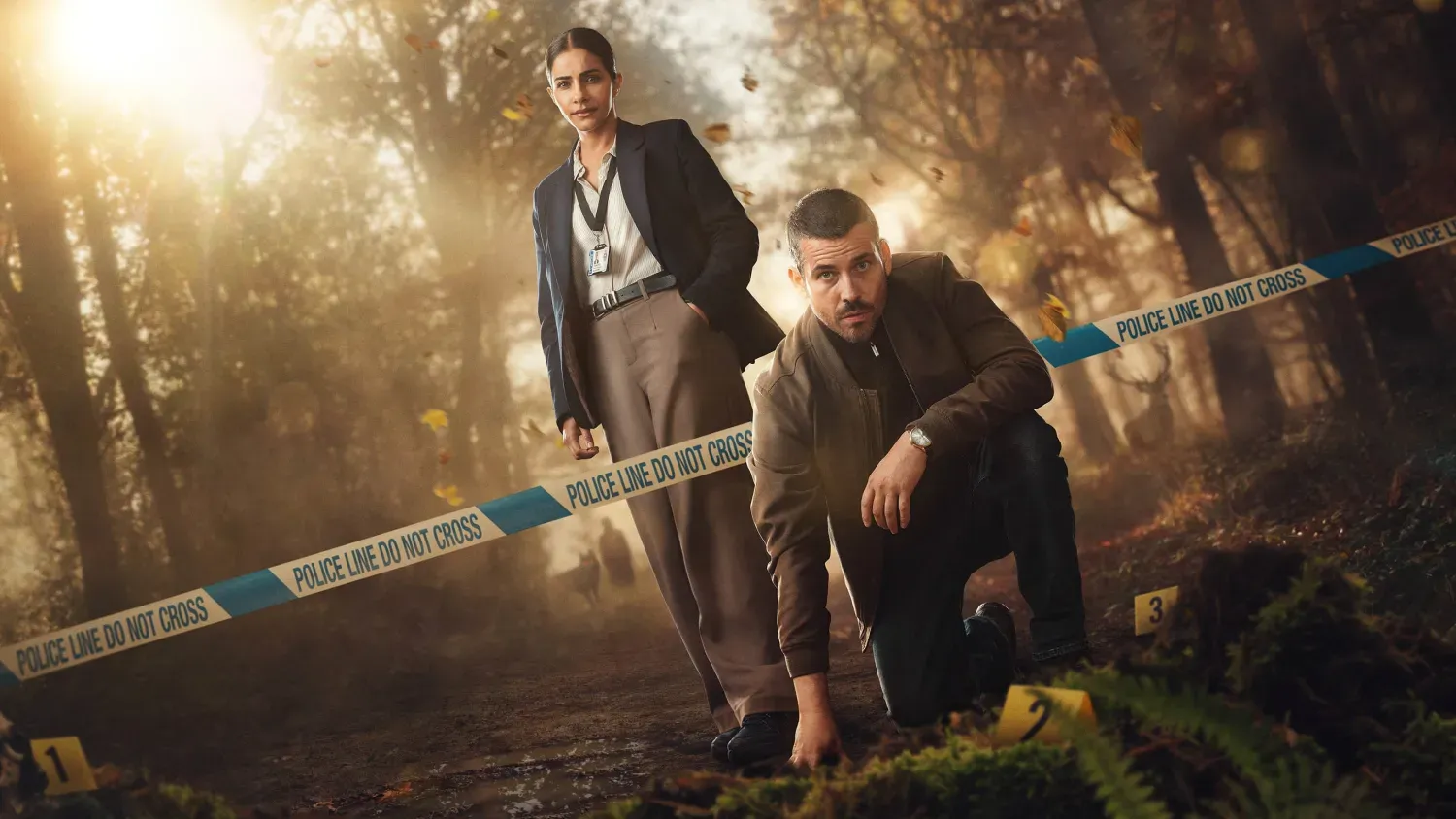

Cooper & Fry arrives on Channel 5 as a crime drama adapted from Stephen Booth’s extensive novel series, staking a claim in a crowded British crime landscape. Its first run consists of four feature-length episodes of 120 minutes each, a format that signals commitment to long-form, serialized detective storytelling.
Set in the Derbyshire Peaks, in and around the fictional town of Edendale, the show uses its landscape as both attraction and critique. Scenic hills sit beside rural deprivation, and that tension shapes the mood. Local folklore and shadowy rural beliefs carry real influence, while modern policing procedures represent official authority. The series works in the space where entrenched customs and institutional power collide.
The Social Subtext of a Mismatched Partnership
The drama organises itself around the friction between its lead detectives. DC Ben Cooper, played by Robert James-Collier, is the rooted local figure who follows a family line of policing through his late father, a legendary fallen officer whose death still shadows the community. Cooper’s detailed knowledge of the area, its back roads, and its families functions as investigative tool and social privilege.
Arriving from Leeds is DC Diane Fry, portrayed by Mandip Gill, a city officer whose presence is designed to interrupt that familiarity. The script introduces her as clinical and procedural, sceptical of the gossip-led working rhythms of rural Derbyshire. A colleague remarks that she has been brought in to “expand the gene pool,” a line that exposes the smallness of this closed community. Fry’s casting places a British Asian woman in a leading detective role opposite a white, deeply regional male partner, and the pairing signals a quiet shift in how British crime drama presents authority in rural spaces.
Their dynamic follows the familiar “chalk-and-cheese” setup. Fry’s urban expectations initially clash with local habits, and the tension softens over time into wary respect. The creative team steers their interactions toward sibling-like banter and avoids the usual “will-they-won’t-they” template for a man-woman detective pairing. That choice reflects a move toward professional partnerships built on mutual regard and platonic energy and avoids enforced romance.
James-Collier gives Cooper a strong, commanding presence. Gill’s Fry initially seems muted by comparison, and some responses framed her early work as underpowered, while others recognised a “sparky, flinty edge” that hints at something sharper. The writing team has acknowledged that they simplified Fry’s backstory for the adaptation, stripping out her karate skills and earlier trauma to keep the focus on plot and to reserve room for future development, including her experience in foster care.
This streamlining serves pacing but risks turning a complex figure into a more generic procedural lead. To secure longer-term investment, the show plants unresolved questions around both detectives, tying Cooper to the unsolved murder of his father and Fry to unclear reasons for her exit from Leeds.
Pacing and Thematic Ambition
The debut case focuses on a skeleton discovered on a remote farm and introduces unsettling detail. The investigation circles folkloric elements, including a missing hand, pagan charms, and occult sigils, and the script plays these against clinical evidence.
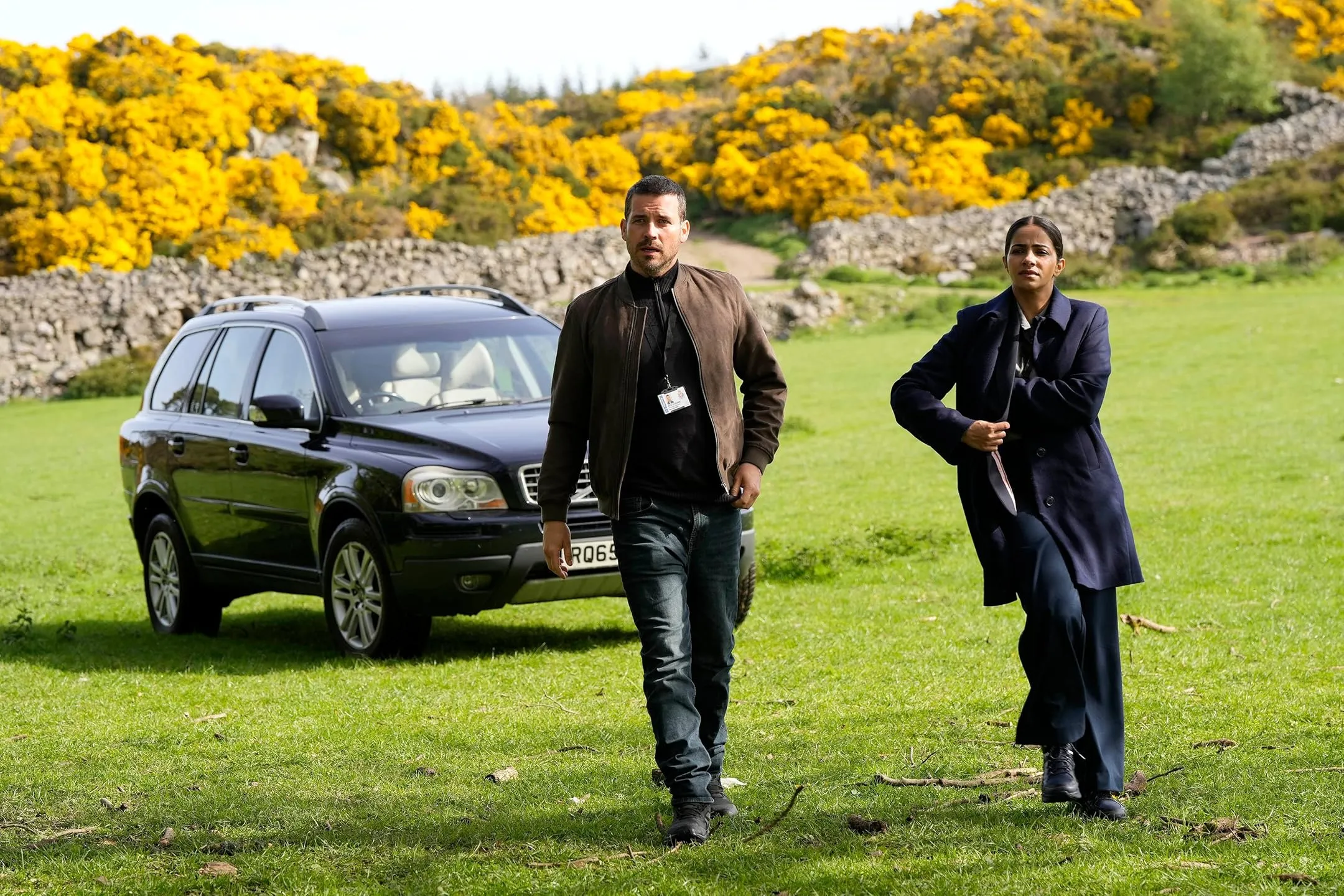
The series sets up a pull between evidence-based policing and local superstition. Cooper & Fry supplies expected procedural beats of suspect lineups, evidence sifting, and red herrings, and aims to avoid the lightness of the “cozy crime” wave. It seeks a darker, more unsettling tone that places it within the more serious wing of British crime television.
The two-hour opener draws criticism for its tempo. The plot progresses at a speed likened to “glacial meltwater,” a slow burn that may reflect budget limits or the need to introduce a wider ensemble. The result is a thin suspect pool, and the final twist relies on one character undergoing a sudden, extreme change in behaviour to make the resolution work. The occult elements, including corn dollies, feel conceptually ambitious yet can appear to distract from structural weaknesses in the mystery design.
The visuals reinforce the socio-economic themes. The production uses the grandeur of the Peak District sparingly and spends significant time in cramped incident rooms and a particularly uninviting pub. These settings keep focus on worn-down infrastructure and rural hardship rather than tourism imagery, aligning the show with depictions of the countryside that connect crime to deprivation and isolation.
Industry Echoes and Adaptation Choices
Cooper & Fry reflects contemporary pressures around adaptation and franchise building. The writers work with dense literary material and reshape it for a television format that demands clear hooks and repeatable engines. They have confirmed significant changes, including the reduction of Fry’s layered backstory and the elevation of the murder of Cooper’s father into a central, series-spanning arc. That structure concentrates narrative attention on a single investigation that can run alongside case-of-the-week plotting.
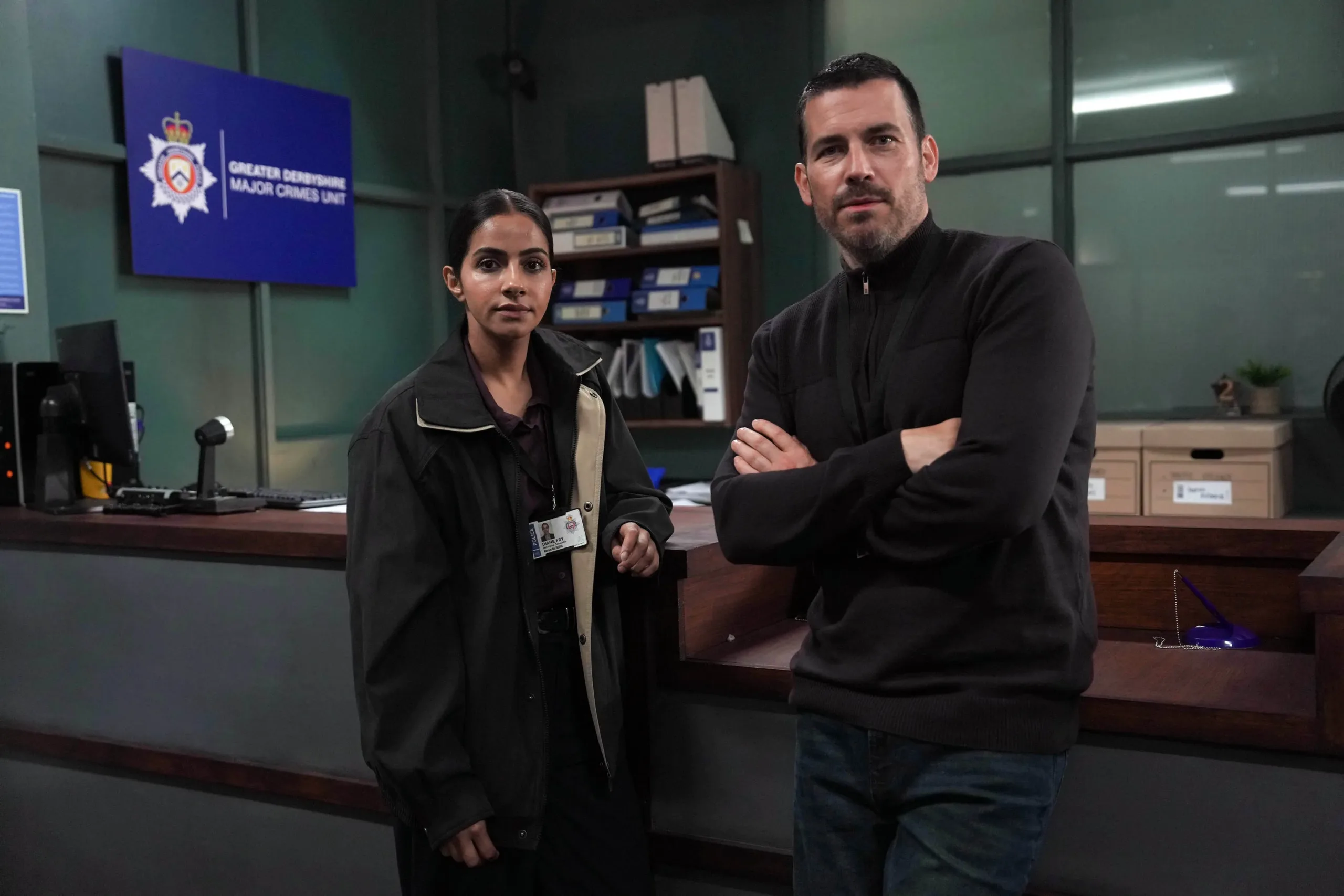
Adjustments to the core partnership reveal similar calculations. An initially sharper, more combative relationship has been softened into banter after the producers saw the chemistry between James-Collier and Gill. Performance energy becomes the organising force for tone, and the show leans into that choice.
The supporting cast receives less detailed writing. Compared with ensembles in high-profile crime dramas, the secondary characters feel thin, echoing the original critique that this ensemble lacks the depth associated with sophisticated streaming-era television. One sleazy detective with a prominent man bun functions mainly as visual shorthand for character failing, demonstrating an oversight in the development of secondary roles.
Under Ryan Tohill’s direction, the production holds together cleanly. The series mimics the feel of established crime hits, which suggests competence while leaving its longer-term impact dependent on rising above emulation.
Trajectory for a Franchise
Cooper & Fry joins discussions of British crime drama as a capable procedural rooted in an oppositional central pairing and a defined regional setting. The series distances itself from sugary “cozy” formats and pursues a darker form of rural authenticity that ties criminal cases to isolation, scarcity, and deep-seated attitudes.
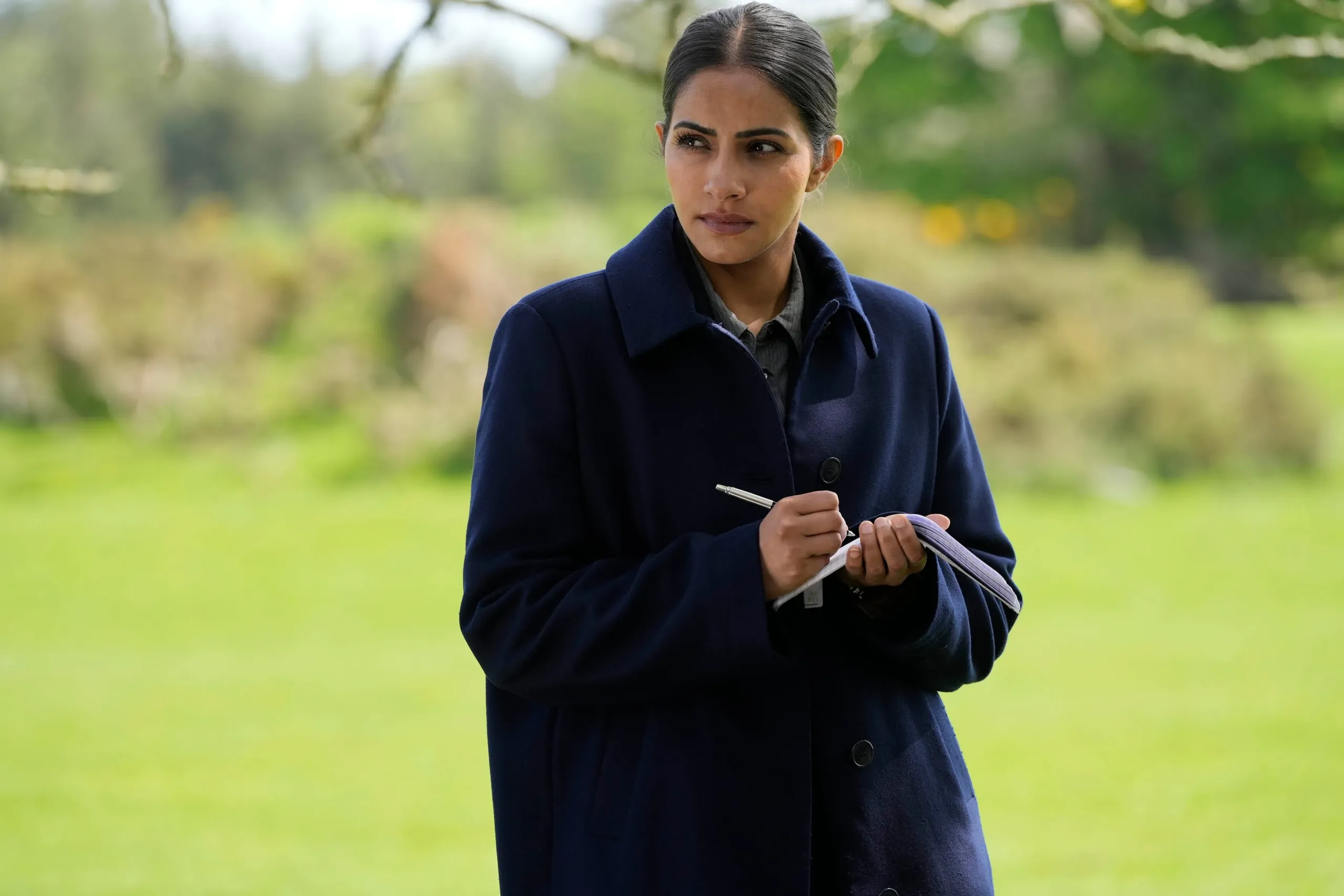
Its Derbyshire Peaks setting and fictional Edendale provide room to examine the friction between a traditional, insulated community and modern social dynamics, including the presence of a British Asian detective who arrives as both colleague and symbol of change.
The show’s future depends on how it addresses its early structural issues. The pacing needs greater precision, and the mystery resolutions require stronger construction for viewers to stay with multiple 120-minute instalments. The source material extends across 18 novels, which offers scope for further cases and character arcs.
If the creative team builds on the seeded threads around Fry’s past and Cooper’s search for answers about his father while maintaining attention to local hardship and cultural unease, Cooper & Fry can grow into a flagship presence within British crime television.
Cooper & Fry premiered on Tuesday, November 18, 2025, on Channel 5 in the UK, with episodes airing weekly. The British crime drama, based on the popular Stephen Booth novels, is set in the fictional town of Edendale in the Peak District. It follows the mismatched detective duo DC Ben Cooper, a local cop, and DC Diane Fry, a guarded newcomer from Leeds, as they investigate a series of mysterious deaths often rooted in local folklore and rural tension. The first season is composed of four feature-length episodes, each adapting one of Booth’s early novels.
Credits
Title: Cooper & Fry
Distributor: Channel 5, STUDIO TF1
Release date: Tuesday, November 18, 2025
Rating: TV-MA
Running time: 4 episodes, 120 minutes each (Feature-length episodes)
Director: Ryan Tohill, Jesse Quinones
Writers: Ben Court, Caroline Ip, Stephen Booth (Novels)
Cast: Robert James-Collier, Mandip Gill, Lorcan Cranitch, Barry O’Connor, Charlotte Bradley, Niamh McCann, Clara Simpson
The Review
Cooper & Fry
Cooper & Fry offers a solid, dark regional procedural built on a promising, yet predictable, mismatched partnership. Its commitment to an unsettling, non-cozy tone is a strength, highlighting important themes of rural deprivation and cultural tension. However, the initial slow pacing and structural flaws in its central mystery need refinement. The series possesses the essential components—strong source material and intriguing character arcs—to become a long-running franchise if it elevates its narrative consistency and develops its supporting cast.
PROS
- The central "chalk-and-cheese" relationship between Cooper and Fry is engaging, offering chemistry that avoids romantic clichés.
- Engages with compelling issues like rural deprivation, cultural isolation, and the friction between modern procedure and deep-seated folklore.
- Maintains a genuinely dark and unsettling atmosphere, positioning it in the serious, gritty end of the crime spectrum.
- Features Mandip Gill in a lead detective role, signaling important casting progress in regional British dramas.
- Based on a large, established novel series, providing a rich, vast resource for future seasons.
CONS
- The initial episodes suffered from notably slow pacing, which challenged engagement.
- The first major mystery concluded with a strained, abrupt resolution that lacked credibility.
- The supporting cast often felt one-note and lacked the depth necessary to support a top-tier drama.
- DC Fry's character was intentionally simplified in the adaptation, potentially sacrificing depth for future plot development.







