

























![Kingdom Hearts Collection [I-III] Review](https://gazettely.com/wp-content/uploads/2026/10/Kingdom-Hearts-Collection-I-III-1-360x180.webp "Kingdom Hearts Collection [I-III] Review: KHII Holds Steady as Newer Entries Fluctuate 37")



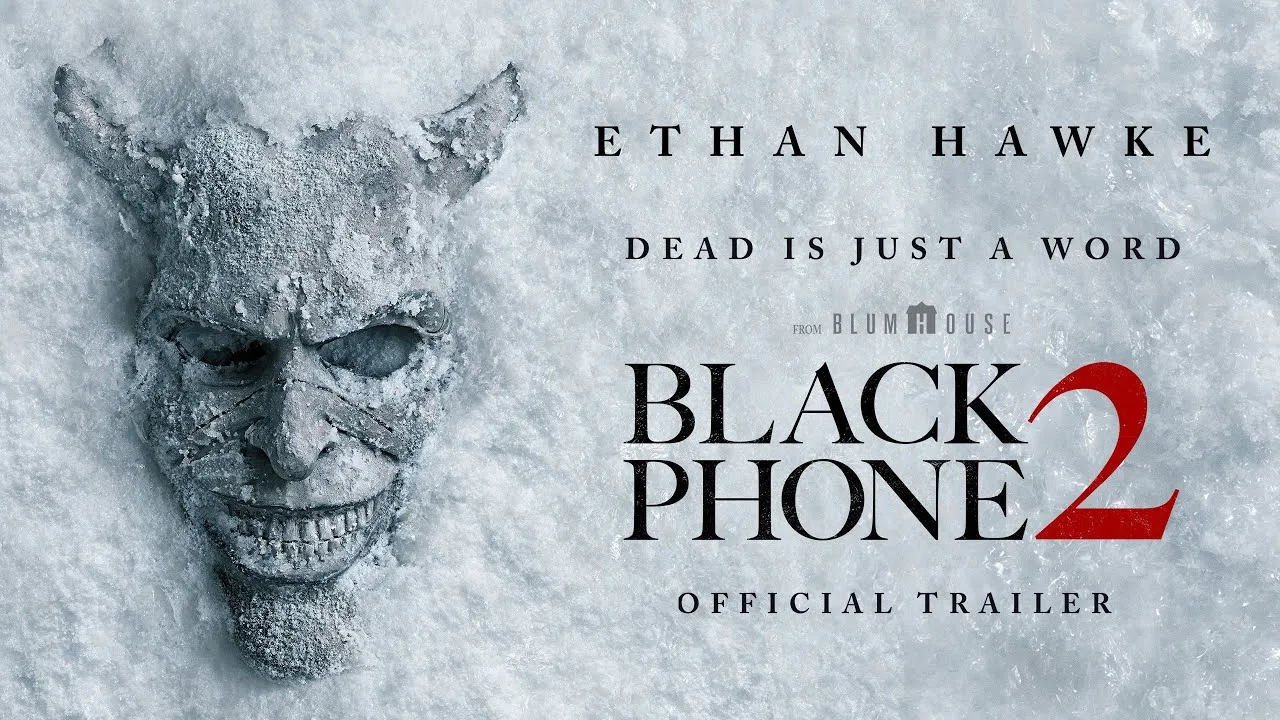

The ring of a disconnected telephone is a specific kind of impossibility. It is a sound out of place and time, a signal from a circuit that no longer exists. The first story of the Grabber was built on a closed circuit, a horrifyingly simple loop of abduction and murder that was decisively broken. Black Phone 2 begins with the premise that some lines can never truly be cut.
Set in the winter of 1982, the film abandons the sealed basement for the wind-scoured emptiness of Alpine Lake, a defunct Christian camp built on frozen ground and old secrets. Here, the Grabber returns not as a man but as a malevolent frequency, an entity that has learned to dial into the dreams of the Blake siblings. The film is a bold and necessary escalation, transmuting the physical terror of captivity into a far stranger and more unpredictable psychological horror.
The Survivor’s Inheritance
The story’s center of gravity has shifted to Gwen Blake. Her psychic abilities, once a lifeline, have grown into a tormenting inheritance she fears will lead her down the same dark path as her mother. These visions are no longer cryptic hints but immersive, sleepwalking episodes that bleed into her waking hours, forcing her to confront the possibility that her gift is a form of generational sickness.
Madeleine McGraw portrays this conflict with a startling maturity. Her Gwen is a study in contrasts, deploying a sharp, profane wit as a defense against a profound vulnerability. She is a girl waging a two-front war: one against a supernatural predator and another against her own genetic history.
Across this divide stands her brother, Finney, a survivor remade by his ordeal. No longer a victim, he now performs a brittle, aggressive version of masculinity, a hollow imitation of his lost friend, Robin. Mason Thames captures the deep tragedy of this transformation; his anger is not a source of strength but a symptom of his profound damage.
He is a ghost wearing another ghost’s armor, his survival a daily act of defiance against the quiet that threatens to consume him. The bond between the siblings is the film’s unwavering emotional core. They are co-dependent survivors, fluent in a language of shared trauma that no one else can fully comprehend. Their new friend Ernesto, played with an easy charm by Miguel Mora, offers crucial support, but he remains an outsider to the unique darkness they share. He is a source of light, yet the film understands that some shadows are cast from within.
Waking Nightmares in Super 8
Scott Derrickson’s direction excels in creating an atmosphere of cold, agoraphobic dread. The vast, empty snowfields of the camp are as psychologically confining as the previous film’s basement. The film’s most potent stylistic choice is its rendering of the nightmare world through degraded Super 8 footage. This is more than a simple visual tic; it is the film’s thematic engine.

The grainy, unstable images, with their washed-out colors and soft focus, make the past feel like a volatile, infectious agent. These sequences are not flashbacks but incursions, moments where a corrupted history physically imposes itself upon the present. The crisp, clean look of the real world creates a jarring contrast, making the transitions into the dream state feel like being pulled into a cursed artifact.
This is the aesthetic of the 80s, an era when horror sequels had to evolve or die. Black Phone 2 aligns itself with the most ambitious follow-ups of that decade, films that escalated their premises by radically changing the rules. Like A Nightmare on Elm Street 3: Dream Warriors, it transforms a grounded killer into a supernatural manipulator of reality.
This is a creative gamble that many sequels of the era avoided, opting instead for repetition. Here, the choice to pivot from a thriller into a full-blown supernatural slasher feels like a necessary evolution. The Grabber’s new form, a dream demon who attacks with surreal, logic-defying violence, is a direct product of this tradition. The imagery is potent and gruesome, a face sliding down a windowpane, a visual that is both physically impossible and psychologically scarring.
Faces in the Blizzard
The young cast navigates this difficult emotional terrain with remarkable skill. Madeleine McGraw carries the narrative with a wariness that feels years beyond her age, her eyes communicating a history of pain that the script only hints at.
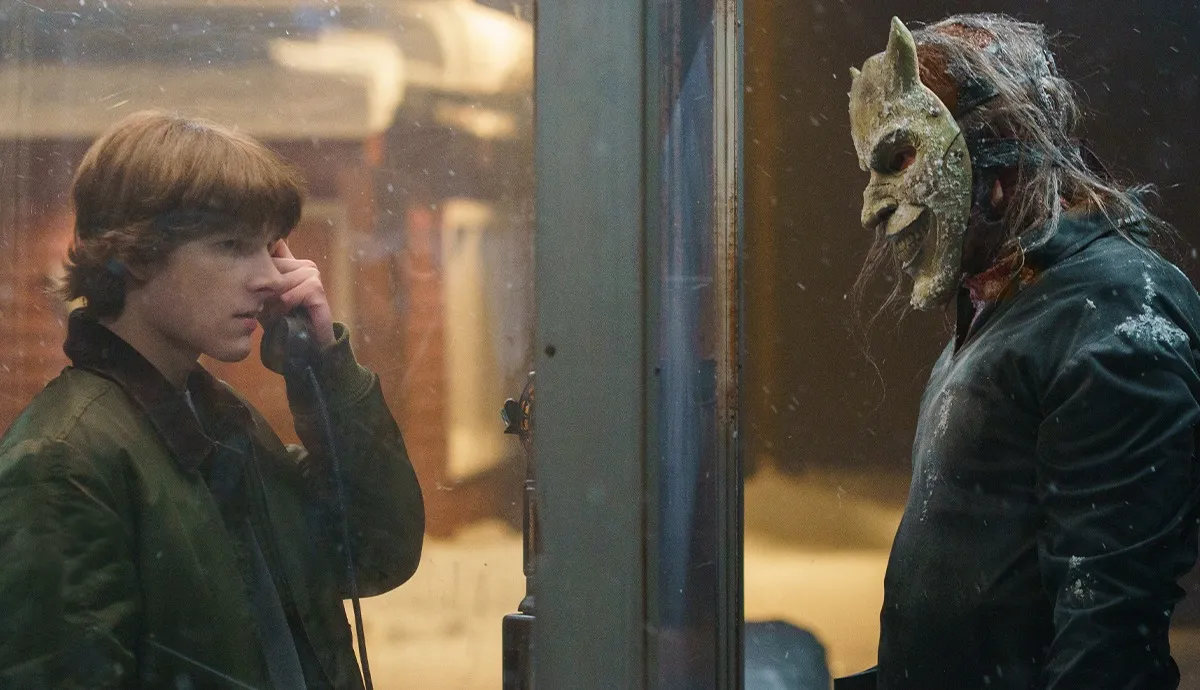
Mason Thames’s performance is intensely physical; he embodies Finney’s trauma in a clenched jaw and a guarded posture, a boy trying to hold himself together. Their chemistry makes the sibling relationship the film’s believable anchor. Miguel Mora, as Ernesto, provides a necessary counterpoint of warmth and stability, his performance preventing the story from collapsing under its own grim weight.
Ethan Hawke faces the unique challenge of playing a villain who is often little more than a disembodied voice. He turns this limitation into a strength, his performance a masterclass in vocal menace. His whispers have a chilling intimacy, his cadence and breath control creating a presence that is more unnerving than any physical monster. He is a poison poured directly into the ear.
Grounding the supernatural chaos is Demián Bichir as Armando, the camp supervisor and keeper of its dark history. He elevates the role of the lore-bearer, giving the film’s exposition a sense of lived-in sadness and gravitas. He is the story’s human anchor, a representative of an adult world that is both a source of knowledge and tragically helpless against the nightmare unfolding.
Ghosts in the Machine
For all its creative bravery, the screenplay occasionally falters. Its most significant flaw is a recurring tendency toward heavy-handed exposition. The narrative momentum grinds to a halt in scenes where characters meticulously explain the rules of the supernatural, a failure of nerve that breaks the immersive spell of the horror. When a film stops to lecture, fear evaporates.

The script also over-stuffs its dialogue with 80s slang, feeling less like authentic period detail and more like a checklist. The film introduces a potent thematic layer of Catholic theology, framing the conflict as a spiritual war. Gwen’s faith becomes a weapon, and the Grabber is positioned as a demonic soul-collector.
This situates the story within the rich tradition of religious horror, yet the exploration feels surface-level. It uses the iconography of Catholicism, its symbols of good and evil, without engaging with its deeper theological complexities. It is a toolbox of potent imagery left not fully unpacked.
A Call Worth Answering?
This is a wild, strange, and bloody creature, a film that bears only a familial resemblance to its predecessor. It has shed the skin of a tense thriller to become a full-throated supernatural slasher, and it is a more interesting film for it.

Those who expect a simple repeat of the original’s tone will surely be disappointed. Yet, for viewers who appreciate the go-for-broke imaginative spirit of 80s horror, the film is a rewarding and often terrifying ride. Black Phone 2 justifies its existence with a rare and admirable courage.
It argues that a story is never truly over, that the psychic wounds of the past can fester, and that sometimes, the dead find new ways to make their voices heard across a silent, static-filled line.
The film premiered at Fantastic Fest on September 20, 2025, and is scheduled to be released in the United States by Universal Pictures on October 17, 2025. It will be released in theaters. It is in the horror and thriller genres.
Full Credits
Director: Scott Derrickson
Writers: Scott Derrickson, C. Robert Cargill, Joe Hill
Producers and Executive Producers: Jason Blum, Scott Derrickson, C. Robert Cargill, Adam Hendricks, Ryan Turek
Cast: Ethan Hawke, Mason Thames, Madeleine McGraw, Jeremy Davies, Miguel Mora, Demián Bichir, Arianna Rivas
Director of Photography (Cinematographer): Pär M. Ekberg
The Review
Black Phone 2
Black Phone 2 is a rare sequel that justifies its existence by refusing to repeat the past. It bravely trades grounded terror for a strange and ambitious supernatural horror that channels the spirit of 80s slashers. While a clunky script sometimes over-explains its own mythology, the film is anchored by powerful performances from its young cast and a genuinely unsettling dream-world aesthetic. It is a weirder, bloodier, and more imaginative film than its predecessor; a worthy successor for those willing to follow it into its bizarre and frightening new territory.
PROS
- An ambitious narrative that boldly shifts genres from the original film.
- Emotionally resonant and commanding performances from the young cast.
- A distinct and effective visual style for its Super 8 dream sequences.
- Successfully captures the creative and expansive spirit of 80s horror sequels.
- A palpable atmosphere of cold, isolating dread.
CONS
- The screenplay often relies on heavy exposition that can stall the film's momentum.
- Its theological themes are introduced but not fully developed.
- Period-specific dialogue can sometimes feel forced or artificial.
- The radical change in tone might not appeal to all fans of the first movie.







