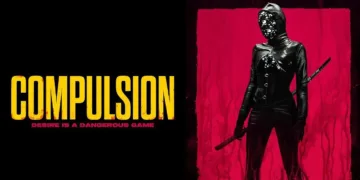




























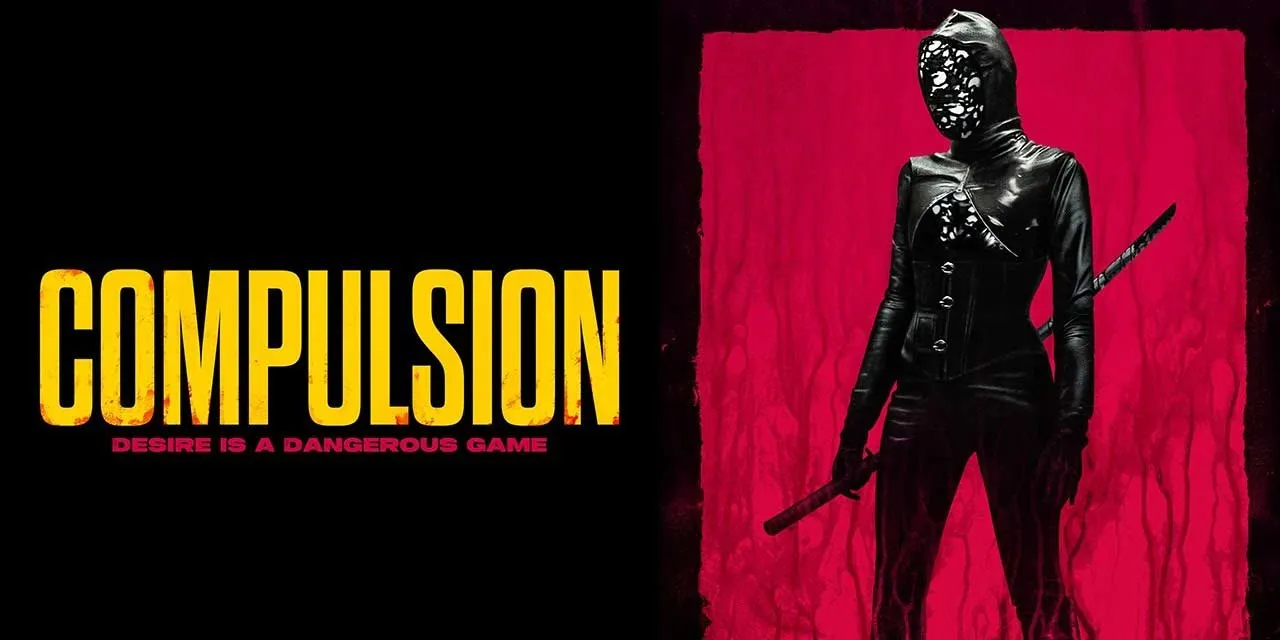

A cinematic homage can be a conversation with the past, a way to build upon the foundations of a genre. When done poorly, it becomes an echo in a canyon, a hollow imitation that only reminds the audience of the superior original. Neil Marshall’s Compulsion is a stark example of the latter.
This is a film from a director who once commanded visceral terror in the subterranean depths of The Descent, now lost in a glossy, passionless exercise. The movie attempts to fuse the stylized brutality of Italian giallo with the sultry mind games of 90s erotic thrillers, but it only manages a superficial copy of their aesthetics.
Set on the beautiful island of Malta, the story follows Evie, a young woman who becomes the fixation of her manipulative neighbor Diana while a killer in a bondage mask stalks the streets. It is a film built from borrowed parts that never assemble into a functioning machine, a hollow affair that misunderstands the very genres it seeks to celebrate.
A Narrative Built on Sand
The script for Compulsion is not one story but three, each competing for screen time and none receiving the attention needed to become effective. The central plot should be the psychosexual game between the vulnerable Evie and the predatory Diana, who uses seduction as a means to access a safe in Evie’s villa.
This storyline, however, is constantly interrupted by a separate murder mystery involving a killer dubbed the “Maltese Phantom.” This killer’s actions have little to no bearing on the main characters for most of the runtime, making the threat feel abstract and dramatically weightless. A third thread involves Diana’s boyfriend, Reese, and his debt to violent gangsters.
This subplot appears for a single, gratuitously violent scene before vanishing, a jarring detour that highlights the script’s lack of focus. Because these narratives are so poorly integrated, suspense is impossible to build.
The police investigation into the murders is shown as so incompetent that the detectives never feel like a genuine threat to the killer or our main characters. The film lurches towards its climax, a series of increasingly nonsensical twists that feel improvised and unearned, resolving a mystery no one was invested in.
The Absence of Heat
A thriller’s success often rests on its performances and the atmosphere created by its director. Compulsion fails profoundly on both counts. The acting is uniformly wooden, with line readings so robotic they drain every scene of life. Charlotte Kirk’s Diana is meant to be a classic femme fatale, yet her performance is a collection of broody pouts and cold stares that convey no genuine danger or allure.

The supposed chemistry between her and Anna-Maria Sieklucka’s Evie is nonexistent; their interactions are physically and emotionally awkward, making the central seduction plot feel forced and unbelievable. This lack of passion extends to the direction. Marshall presents nudity and sex not as an extension of character or plot, but as a series of clinical, voyeuristic images.
It is a sterile approach that feels disconnected from human desire. His homage to the giallo genre is equally superficial. He includes the requisite black gloves and a straight razor but misses the genre’s essential dreamlike atmosphere and psychological depth. The great gialli of Dario Argento or Mario Bava used vibrant, expressionistic visuals to explore twisted minds. Compulsion is shot with a flat, bright look that feels more like a travel advertisement, a visual style completely at odds with its dark subject matter.
A Technically Flawed Finish
Beyond the conceptual failures, Compulsion is undone by its technical sloppiness. The dialogue is consistently unnatural, often serving as clumsy exposition where characters flatly state their intentions. This problem is amplified by a jarring collection of accents—Polish, British, American, and Italian—that clash within scenes, creating a disorienting effect.

The poor sound mixing frequently makes this awkward dialogue difficult to hear. The film’s pacing is perhaps its most damning flaw. It manages the strange feat of feeling both rushed and agonizingly slow. Scenes that require tension are allowed to linger without purpose, while important plot points are glossed over. The editing lacks rhythm, creating a start-and-stop momentum that prevents any sustained sense of dread or excitement.
Moments of graphic violence are used as punctuation, but they feel unearned and desperate without a compelling narrative to support them. Compulsion is a comprehensive failure, a film whose script is incoherent, whose direction is misguided, and whose performances are lifeless. The lovely Maltese scenery serves only to highlight the emptiness at the film’s core, a cautionary tale about a filmmaker who has forgotten the ingredients that once made his work so potent.
Full Credits
Director: Neil Marshall
Writers: Neil Marshall, Charlotte Kirk
Producers: Neil Marshall, Kristyna Sellnerova
Executive Producers: Emily Corcoran
Cast: Anna-Maria Sieklucka, Charlotte Kirk, Zach McGowan, Matthew Camilleri, Giulia Elettra Gorietti, Cinzia Monreale, Antonella Axisa, Harvey Dean, Rebecca Dimech
Director of Photography: Ali Asad
Editors: Catriona Delbridge, Neil Marshall
Composer: Paul Lawler
The Review
Compulsion
Compulsion is a hollow and technically inept film that fails to generate a single spark of tension or desire. It is a misguided homage that understands the superficial look of its influences but none of their substance. With a fractured narrative, lifeless performances, and sluggish pacing, the movie is a tedious affair from beginning to end. The attractive Maltese scenery is the only positive element in an otherwise empty and profoundly boring picture.
PROS
- The film showcases beautiful Maltese locations.
CONS
- An incoherent script with multiple disconnected storylines.
- Stiff, unconvincing performances from the entire cast.
- A complete lack of chemistry between the lead actors.
- Misguided direction that feels sterile and passionless.
- Poor sound design and awkward, unnatural dialogue.
- Excruciatingly slow pacing that destroys any potential for suspense.