
























![Kingdom Hearts Collection [I-III] Review](https://gazettely.com/wp-content/uploads/2026/10/Kingdom-Hearts-Collection-I-III-1-360x180.webp "Kingdom Hearts Collection [I-III] Review: KHII Holds Steady as Newer Entries Fluctuate 40")
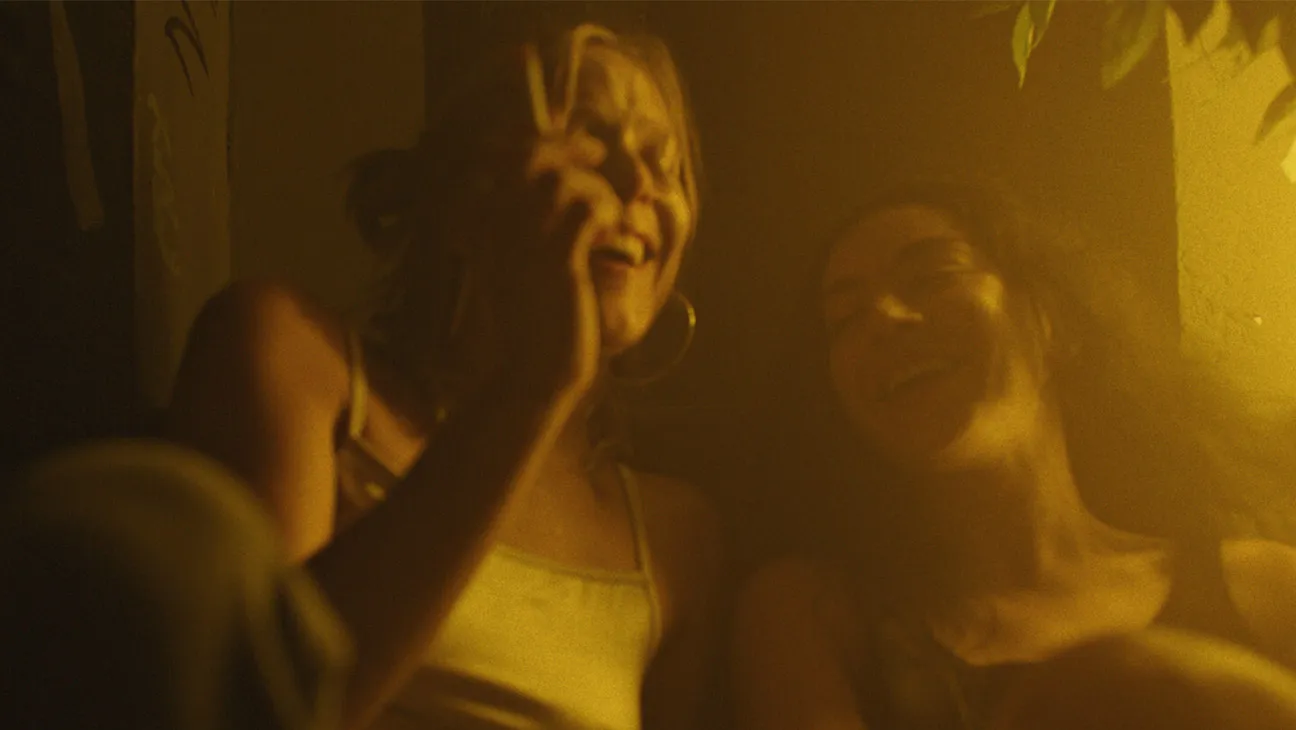

A personal mythos governs Pete Ohs’ Erupcja. Its protagonist, Bethany, operates under the belief that a volcano erupts each time she and an old friend, Nel, reunite. It is a whimsical, if solipsistic, premise. She coaxes her boyfriend Rob away from a Parisian getaway to Warsaw, a city of stark concrete planes and bright slashes of graffiti.
The camera captures its chilly beauty, a fittingly neutral ground for the brewing internal conflict. Rob, earnest and unsuspecting, arrives with an engagement ring. Bethany arrives seeking the familiar chaos of Nel. When Mount Etna predictably blows its top, trapping them in Poland, Bethany takes it as a geological permission slip.
She walks away from a stable future and toward a potent, possibly corrosive past. The film frames this choice not as melodrama, but as a quiet study in human gravity, exploring the orbits characters create and the bodies they pull in or push away.
A Trinity of Avoidance
The film’s psychological weight rests on its central trio, each a study in distinct forms of evasion. As Bethany, Charli XCX weaponizes the vacant stare of her party-girl persona into a tool of emotional distance, creating a character whose motivations are a purposeful blank.

Her performance is a fascinating exercise in surface-level action concealing a deep internal void; she moves through Warsaw on a private quest for self, treating her dutiful boyfriend with a casual cruelty that is all the more chilling for its lack of malice. He is simply an obstacle in her self-created narrative.
Will Madden plays Rob with a perfect pitch of sympathetic frustration, the classic sap left to wander rain-slicked streets. His performance is painfully physical, capturing Rob’s dejection in slumped shoulders and a gaze fixed on a phone that will not ring. He becomes a ghost in his own romantic getaway.
The true enigma is Lena Góra’s Nel. She is the film’s quiet center of gravity, the fixed point to which Bethany is chaotically drawn. Góra gives a complex, internalized performance, her silence and subtle gestures holding more meaning than Bethany’s scattered pronouncements.
Is their bond a latent romance, a shared folie à deux, or simply the comfort of mutual, unspoken damage? The film wisely never says. Their connection, built on hazy nights and fractured history, is the titular eruption: a selfish and magical force.
The supporting players sharpen this central dynamic. Jeremy O. Harris’s Claude is a sociable expat, an observer who offers a stage for the drama. More pointedly, Agata Trzebuchowska’s Ula provides a sharp counterpoint to Rob’s patience. As Nel’s spurned love interest, she refuses to accept poor treatment, a small but vital anchor of self-respect in a film awash with emotional drift.
Warsaw Nocturne
Pete Ohs directs with an improvisational looseness that gives the film its unique, fragile texture. At a brisk 71 minutes, the experience feels appropriately slight, a captured moment rather than a grand statement. With the cast sharing writing credits, the dialogue has a naturalistic, unvarnished quality, as if overheard during a long, aimless afternoon.
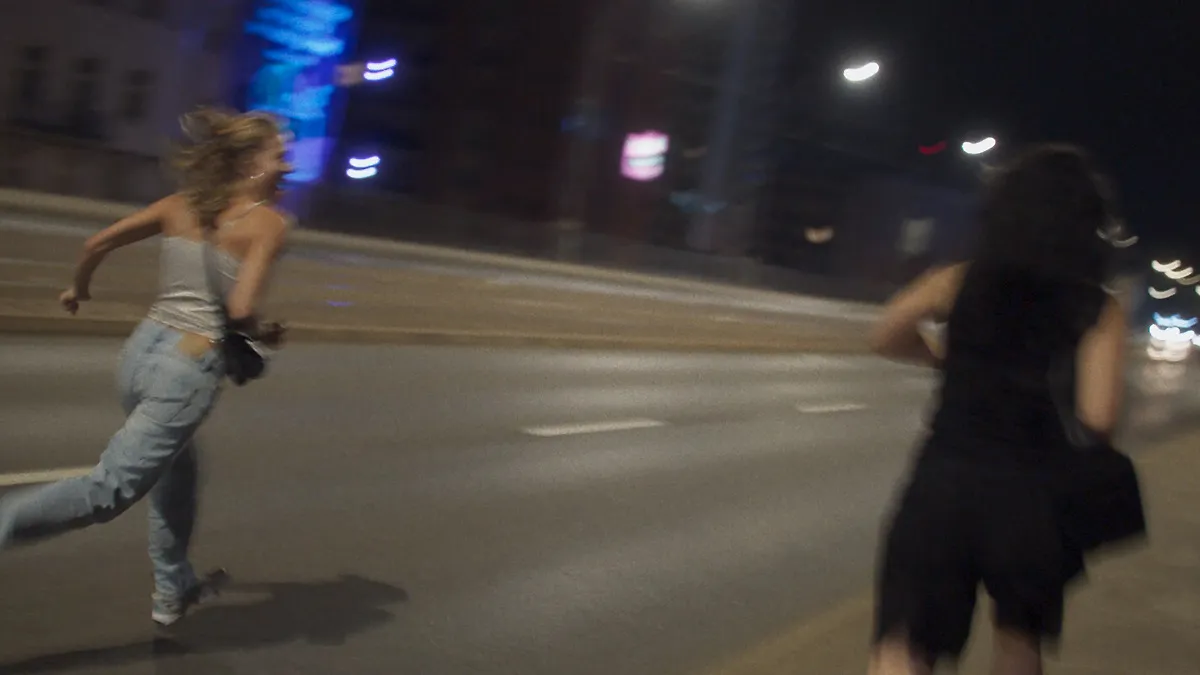
This collaborative process mirrors the characters’ own searching quality. Ohs, serving as his own cinematographer, frames Warsaw with an eye for emotional temperature. He often shoots Bethany from behind or deliberately out of focus, subverting the expected gaze on a pop star and visually reinforcing her unknowable inner state. The city’s stark architecture and the washed-out light create a kind of urban chiaroscuro, contrasting the cold exteriors with the overheated, temporary intimacy of clubs and apartments.
The entire affair is filtered through a Polish-language narrator, a storybook device that transforms Bethany’s selfish choices into something resembling a fable. His dispassionate, non-judgmental tone creates a sense of clinical observation, turning the viewer into a psychologist studying specimens.
This choice enhances the film’s dreamlike state, forcing an English-speaking audience into the same position as the characters: navigating a space where meaning is layered and sometimes inaccessible. The sound design is equally critical.
A low, subterranean rumble, the ghost of the volcano, surfaces in key moments of decision. It is a masterful manipulation of audience psychology, an auditory manifestation of the pressure building inside Bethany, a threat she cannot or will not acknowledge.
The Solipsist’s Getaway
The film’s narrative is slight, yet its thematic concerns are substantial. It is a carefully rendered portrait of youthful solipsism, of a person so absorbed in her own vision quest that others become mere props for her development. Bethany’s journey through Warsaw is less about connection and more about using a foreign space as a mirror to see herself anew.
This dislocation becomes a moral gray zone, a place where routine obligations dissolve and selfishness can be rebranded as self-discovery. The film is built on unspoken feelings and emotional avoidance. The powerful charge between Bethany and Nel is never defined, existing in glances and shared silences instead of words.
This ambiguity is the source of the film’s quiet power. It lingers not because of what happens, but because of what fails to happen. It captures a recognizable state of emotional paralysis and the collateral damage that often follows a painful search for self.
The film “Erupcja” had its world premiere at the Toronto International Film Festival on September 4, 2025. It is not currently available in theaters or on streaming platforms, as distribution rights are typically secured after a festival premiere. A wider public release date has not yet been announced.
Full Credits
Director: Pete Ohs
Writers: Pete Ohs, Charli XCX, Jeremy O. Harris, Lena Góra, Will Madden
Producers and Executive Producers: Luke Arreguin, Josh Godfrey, Jeremy O. Harris, Pete Ohs, Charli XCX, Alexandra Tynion, Olivia Tyson
Cast: Charli XCX, Lena Góra, Jeremy O. Harris, Will Madden, Agata Trzebuchowska, Zofia Chlebowska
Director of Photography (Cinematographer): Pete Ohs
Editors: Pete Ohs
Composer: Isabella Summers, Charles Watson
The Review
Erupcja
Erupcja is a brief, atmospheric study of emotional immaturity. Its improvisational style and strong performances, particularly from Lena Góra, create a memorable mood. While its narrative is thin and its protagonist purposefully hollow, the film succeeds as a chilly, hypnotic portrait of a soul in selfish transit. It’s a whisper of a film, but one whose quiet disturbance lingers.
PROS
- Strong, atmospheric direction and cinematography.
- Nuanced and naturalistic performances, especially from Lena Góra.
- Intelligent use of Charli XCX's persona.
- Creative aesthetic choices, including the narrator and sound design.
CONS
- The narrative is intentionally slight and may feel insubstantial.
- Its emotionally cold tone can keep the audience at a distance.
- The characters are self-absorbed, making them difficult to connect with.
- A meandering pace that will not work for all viewers.