



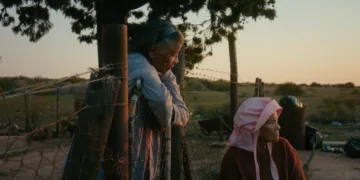
























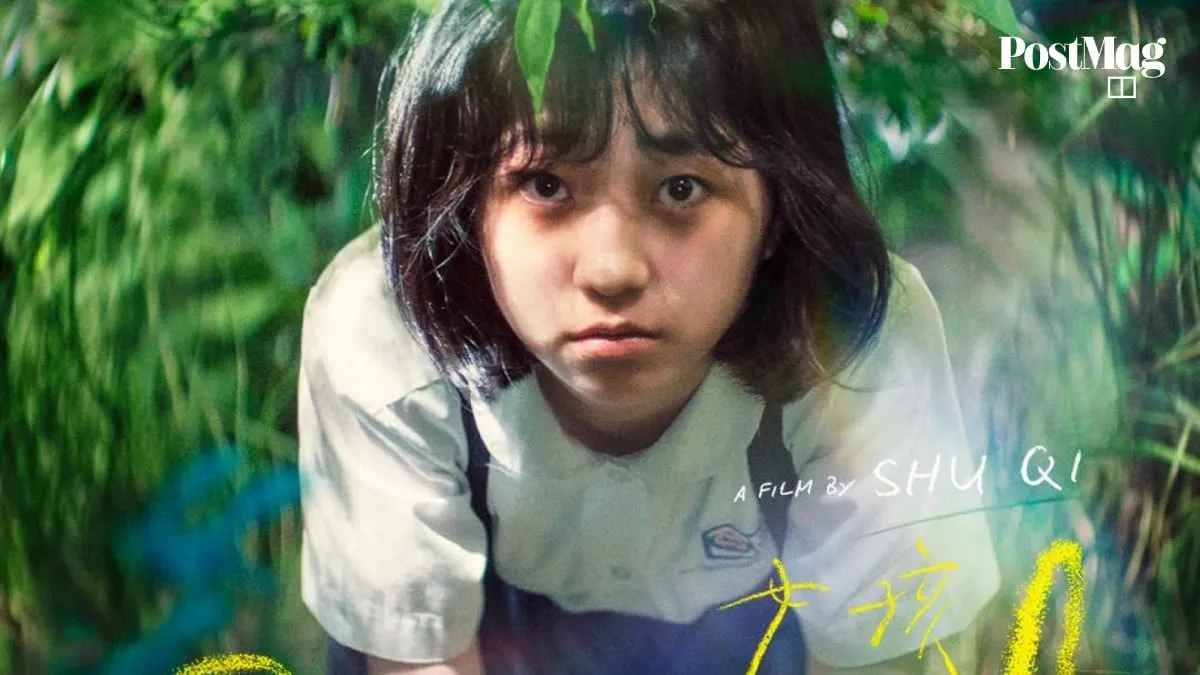

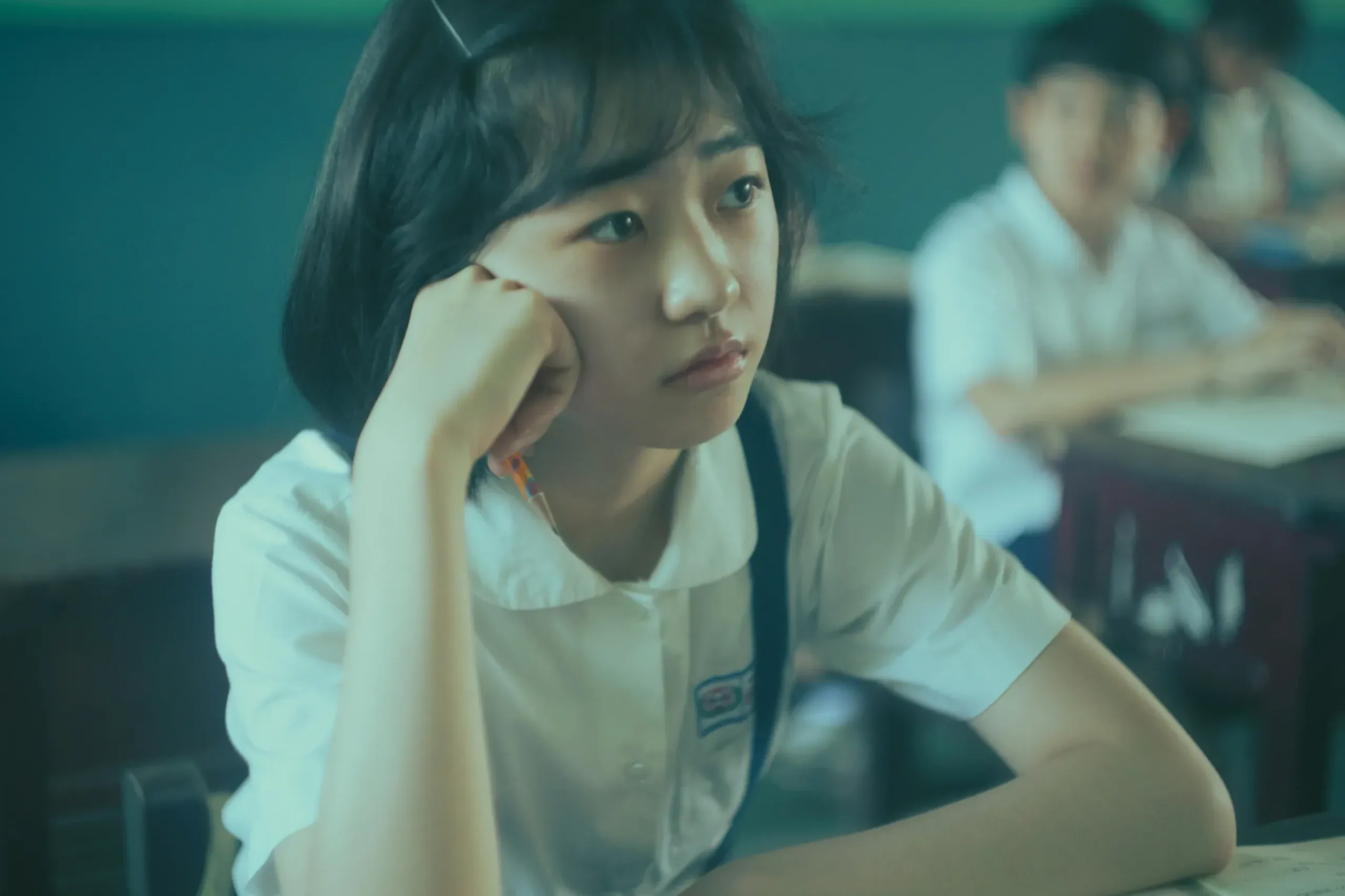
Shu Qi’s directorial debut, Girl, is set in the port city of Keelung, Taiwan, in 1988, a place of both humid confinement and distant promise. Its protagonist is Hsiao-lee (Bai Xiao-Ying), a quiet schoolgirl who observes her world with a guarded stillness. Much like the social-realist works of India’s Parallel Cinema, the film finds its power in the particulars of a life lived under pressure.
Hsiao-lee’s home is a crucible of misery, ruled by a volatile, alcoholic father and an embittered mother. The central tension is drawn between the oppressive silence of her family’s apartment and the vibrant possibilities of the city outside. The film is an unflinching look at the cycles of domestic trauma, exploring one girl’s search for identity and escape from suffocating circumstances.
The Four Walls of a Family
The family home in Girl is a pressure cooker of resentment and fear, a space where silence offers the only refuge. The father, Chiang (Roy Chiu), is a menacing presence whose character is defined by his alcoholism. The diegetic sound of his sputtering motorcycle becomes a nightly harbinger of dread, signaling a shift in the apartment’s atmosphere from tense to terrifying.
His abuse is not just physical; it is a constant psychological weight that suffocates everyone. This unromanticized portrayal of a domestic tyrant, a flawed product of a restrictive system, recalls the complex antagonists of Indian Parallel Cinema who are stripped of heroic artifice. The mother, Chuan (9m88), is a more tragic figure. Trapped in a violent marriage, she displaces her agony onto her elder daughter, creating a painful dynamic of neglect and hostility that she does not extend to the younger sister.
Her life is a study in contrasts: she works in a beauty salon and makes artificial flowers at night, creating illusions of beauty while living a grim reality. This echoes the plight of female protagonists in films by Aparna Sen or Mira Nair, who navigate similarly constrained social spheres. The apartment itself, cluttered with the materials of her piecework, becomes a physical manifestation of their poverty and inability to escape.
The World Outside the Door
A ray of light penetrates Hsiao-lee’s bleak existence with the arrival of a new student, Li-li (Audrey Lin). Confident, worldly, and rebellious after living in the United States, Li-li is Hsiao-lee’s complete opposite and acts as a cultural disruptor.
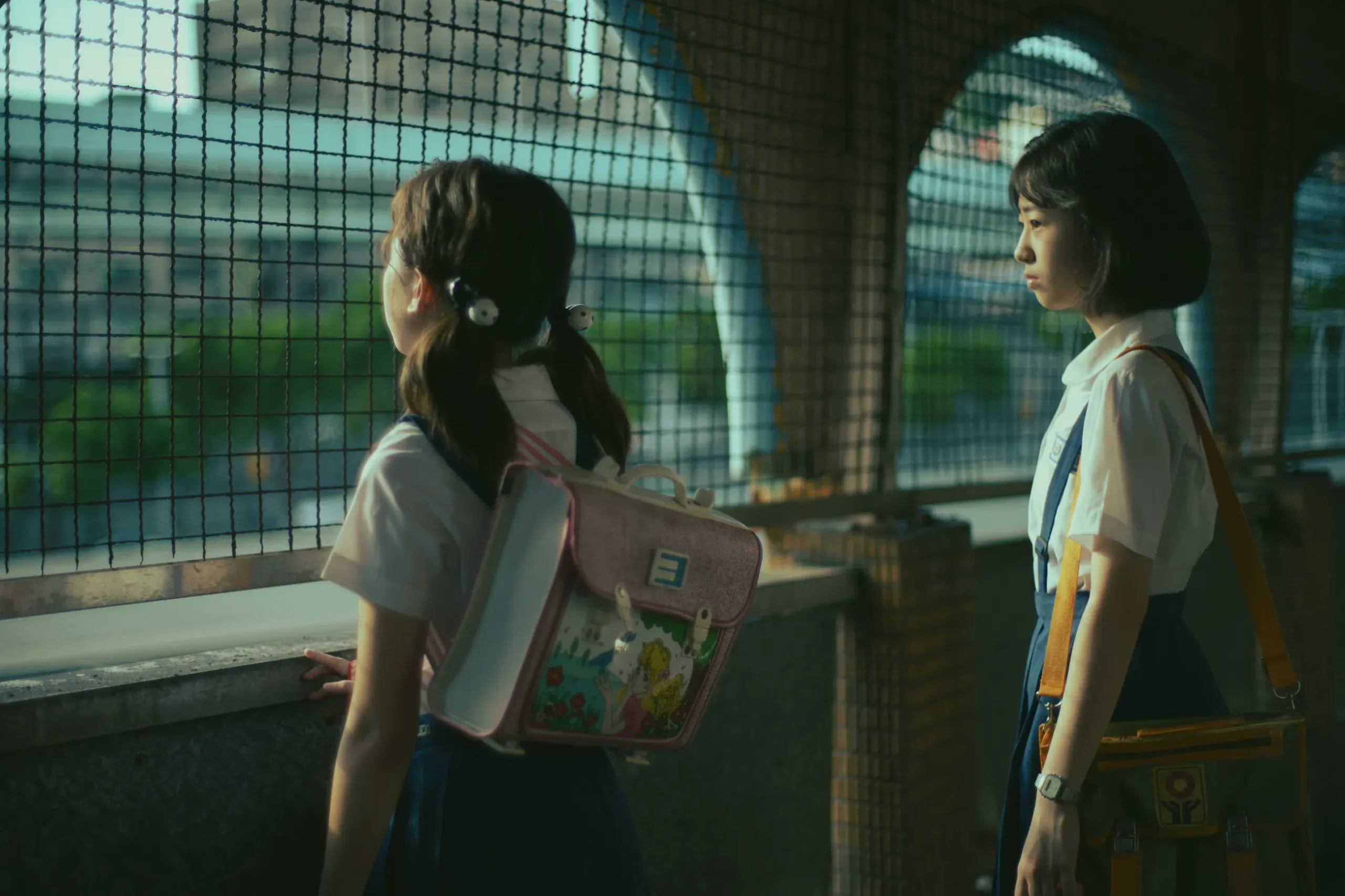
Her Americanized perspective introduces Hsiao-lee to concepts of individualism and personal freedom that are alien in her repressive home. This dynamic, where an external influence challenges a traditional mindset, is a recurring theme in global cinema, including modern Indian films exploring the friction between youth culture and local tradition. Their shared acts of rebellion are small yet feel monumental.
Stealing denim skirts gives them a new uniform; riding on the back of boys’ scooters offers a thrilling, if precarious, taste of freedom. The private booth in a video club becomes their sanctuary, a temporary autonomous zone where they can smoke cigarettes and dance to pop music, performing a version of girlhood unavailable to them elsewhere.
Li-li’s friendship is more than a simple escape. It provides Hsiao-lee with the tools to build an inner life and cultivate a sense of self-worth, the first necessary steps toward imagining a future for herself beyond her family’s painful legacy.
A Language of Silence and Color
As a first-time director, Shu Qi demonstrates a remarkably assured hand, crafting a film that speaks in a precise visual language. Her style shows the influence of her mentor Hou Hsiao-Hsien, favoring an immersive atmosphere over a plot-driven narrative.
The cinematography often uses tight, intimate shots that lock the viewer into Hsiao-lee’s subjective experience of claustrophobia. The film’s saturated color palette, rich with teals and golds, feels almost dreamlike and stands in stark contrast to the sordid reality of the story. This sophisticated use of color to convey psychological states elevates the film beyond observational realism.
The deliberate, methodical pacing is another key choice, forcing the audience to inhabit the monotony and dread of Hsiao-lee’s daily life. Much like in the works of Satyajit Ray, time is allowed to stretch, letting unspoken emotions register in the quiet moments.
Shu’s narrative ambition is also clear in her use of elliptical flashbacks to the mother’s childhood. This structural choice, while challenging, powerfully illustrates how the past actively bleeds into and shapes the present. Girl is a demanding picture, a moving and artfully made portrait of survival that establishes its director as a potent new voice.
“Girl” premiered at the 82nd Venice International Film Festival on September 4, 2025. Information on where to watch the film is not yet available, as it has only been screened at the film festival.
Full Credits
Director: Shu Qi
Writers: Shu Qi
Producers: Yeh Jufeng
Cast: Roy Chiu, 9m88, Bai Xiao-Ying, Esther Liu, Yu-Fei Lai, Bamboo Chu-Sheng Chen, Lin Pin-Tung
Director of Photography (Cinematographer): Yu Jing-Pin
Editors: William Chang Suk-Ping, Lai Kwun-Tung
Composer: Lim Giong
The Review
Girl
Shu Qi’s debut is a powerful, artfully crafted film that confronts the brutal realities of domestic abuse with unflinching honesty. Its deliberate pacing and raw subject matter make for a demanding watch, but the sensitive performances and stunning visual language create a deeply moving portrait of a young girl’s fight for survival. It is a potent and memorable work.
PROS
- Assured and confident direction from Shu Qi in her debut.
- A stunning, saturated visual style that enhances the emotional tone.
- Powerful, sensitive performances that convey deep emotional truth.
- An honest and unflinching exploration of generational trauma.
CONS
- The deliberate, slow pacing may be challenging for some viewers.
- Its relentlessly bleak subject matter can be difficult to watch.
- The ambitious narrative structure can occasionally complicate the timeline.