


















The true-crime genre is typically concerned with finding a culprit. Leonardo Di Costanzo’s Elisa begins with the culprit already found. Elisa has been in prison for ten years for murdering her sister in a manner both brutal and baffling. The film’s narrative engine is not a question of guilt, but of memory.
Elisa claims to recall almost nothing of the event, a psychological block that makes her a cipher to herself. Her story begins to unspool when a compassionate criminologist, Alaoui, arrives at her facility to conduct a series of interviews. He is less an interrogator than a guide. The film immediately signals that it is not a whodunnit. It is a slow, methodical excavation of a single, damaged mind, asking how one reconstructs a self shattered by an incomprehensible act.
The Face of Remorse
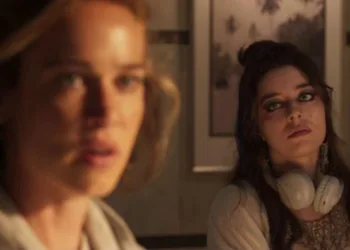
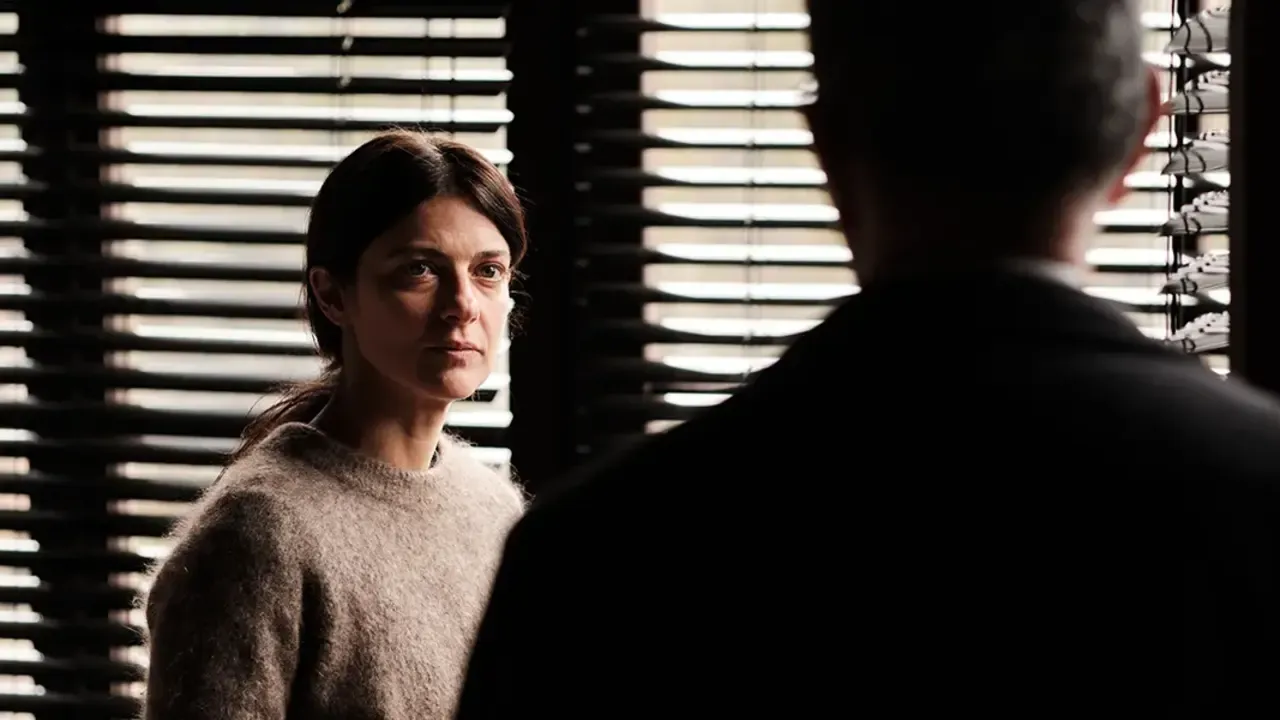
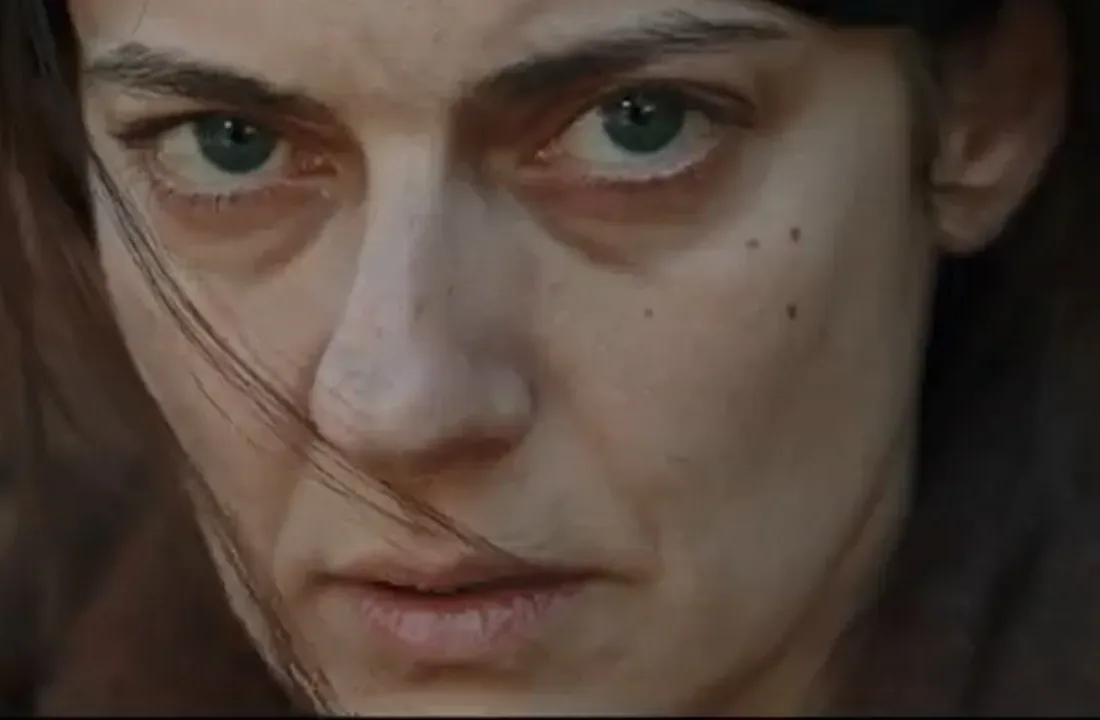
The film rests almost entirely on the shoulders of Barbara Ronchi, whose portrayal of Elisa is a masterclass in quiet intensity. Her performance is the anchor, grounding a story that could easily drift into abstraction. Ronchi communicates Elisa’s decade of guilt, confusion, and deep-seated anxiety through the smallest of gestures: a downturned gaze, a nervous twitch of her hands, a flicker of guardedness in her eyes.
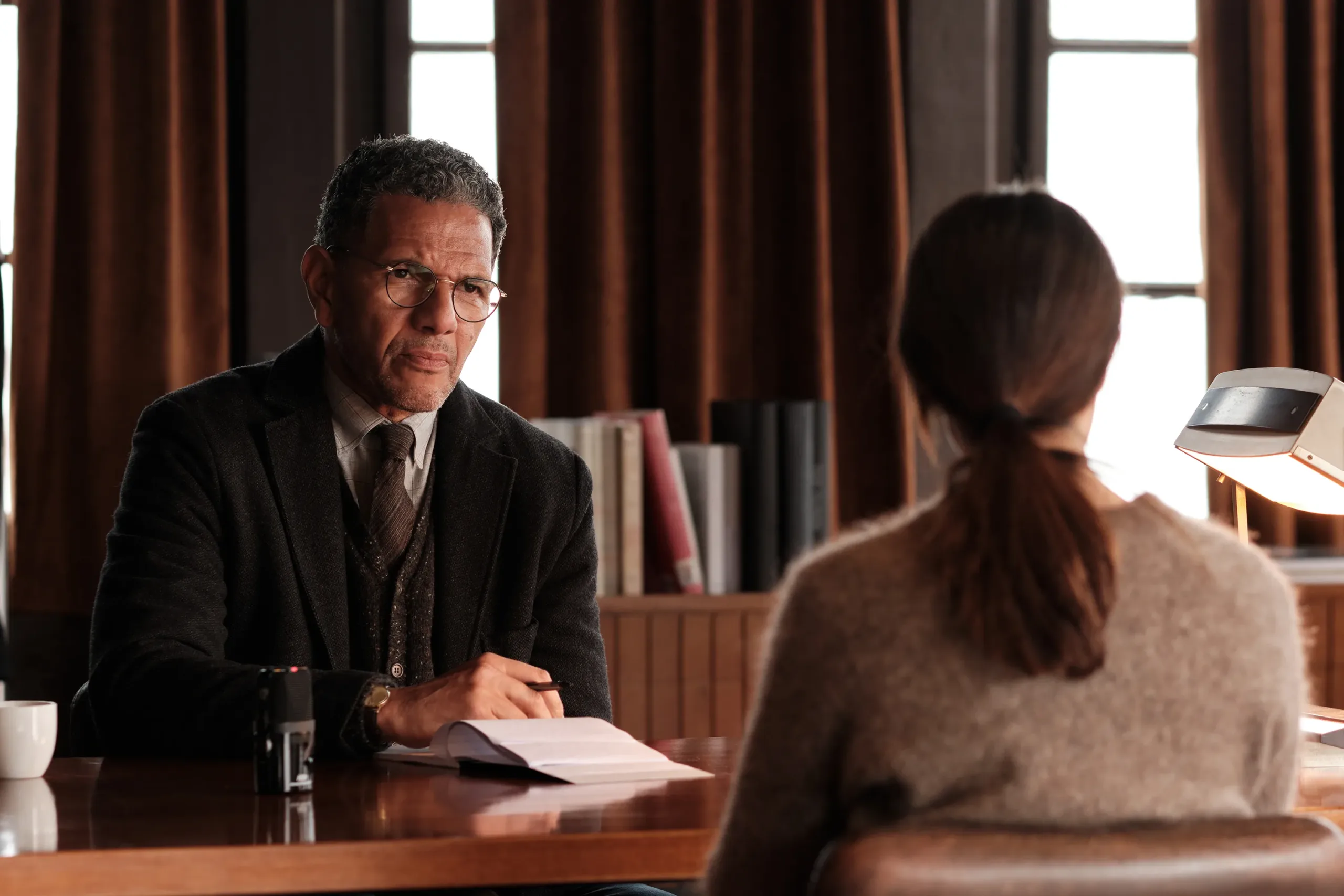
There is a weight to her silence. When a fragment of a memory surfaces, Ronchi allows a brief, almost imperceptible shift in her expression before the defensive wall returns. The character she builds is profoundly ambiguous. We are never quite sure if her amnesia is genuine trauma, a calculated defense mechanism, or a form of psychological self-preservation. This uncertainty is the film’s greatest strength and its primary source of tension.
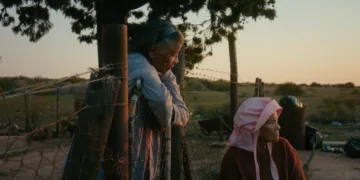
Roschdy Zem’s Alaoui functions mainly as a calm, patient sounding board, a necessary tool to draw out Elisa’s story. His character is not meant to be a personality; he is a function of the narrative, a human key designed to unlock a closed room. Other figures in Elisa’s life, such as her loyal father whose weekly visits are a ritual of unspoken pain, exist on the periphery. Their thin characterizations are a deliberate choice, serving to sharpen the intense focus on Elisa herself and mirror her deep isolation.
A Serene Prison
A film about a grisly murder could be expected to look bleak. Elisa looks anything but. Di Costanzo, who began his career in documentaries, places his story in an unconventional Swiss correctional facility that resembles a modern Alpine retreat.
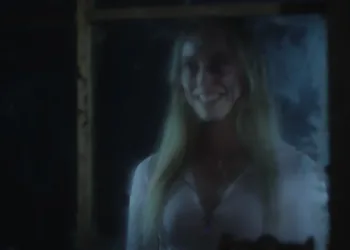
Inmates wander through snowy forests and live in small wooden chalets, a serene setting that creates an unsettling contrast with the violent crime at the film’s core. This visual dissonance is a key narrative choice, suggesting that the most formidable prisons are internal. The film’s aesthetic aligns with a certain tradition in European cinema that values observation over manipulation.
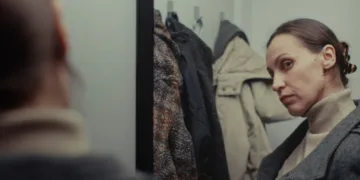
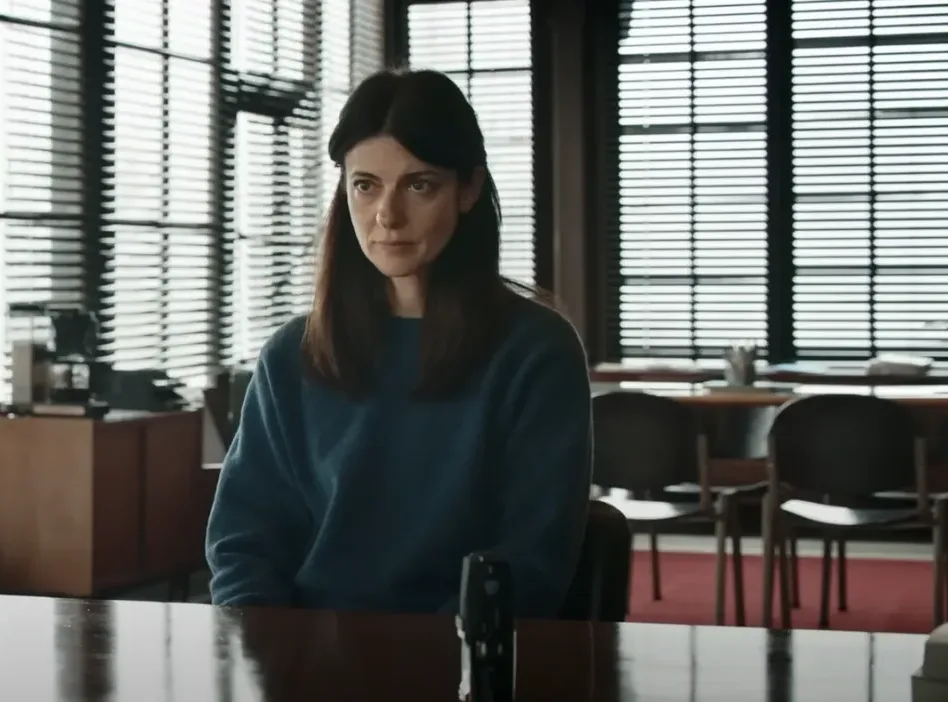
The cinematography by Luca Bigazzi enhances this effect, employing wide, static shots of the landscape that suggest a profound sense of isolation and coldness. These open vistas are juxtaposed with the tight, claustrophobic framing of the interview sessions, where the camera holds steady on Elisa’s face, forcing the viewer to scrutinize her for every clue.
The spartan interiors, filmed with clean lines and natural light, add to the clinical feel. The sound design is equally restrained, prioritizing the rhythm of dialogue and the ambient noise of the environment over a musical score that might tell the audience how to feel. This disciplined, formal style positions the viewer as another observer, watching this psychological experiment unfold with a measured, almost scientific detachment.
A Study in Slowness
Elisa is a film that demands a great deal of patience. Its narrative is built on dialogue and introspection, choosing to explore its philosophical ideas intellectually instead of dramatically. It examines the concept of restorative justice, not as a simple cure, but as a difficult, painstaking process.
A brief but vital subplot involving a grieving mother, played by Valeria Golino, directly questions Alaoui’s methods, providing a necessary counterpoint that acknowledges the deep wounds that defy easy psychological analysis. The film’s structure is repetitive, cycling through interviews and fragmented flashbacks. This creates a hypnotic rhythm that mirrors the circular, obsessive nature of trauma.
This methodical pacing is central to the film’s purpose; it reflects the slow, arduous process of therapy and self-reckoning. Key events, including the murder itself, are kept off-screen. This decision firmly prioritizes psychological insight over visceral suspense. The most dramatic moment in Elisa’s life is treated as an inconvenient piece of data to be carefully unpacked.
This approach, however, makes for a challenging viewing experience. The film’s refusal to provide easy narrative momentum will reward viewers interested in a deep, contemplative character study. Others may find its deliberate, static quality to be frustratingly inert. It is a thoughtful work, but one that values its intellectual rigor far more than conventional entertainment.
The film “Elisa” premiered at the 82nd Venice International Film Festival on September 4, 2025, where it competed for the Golden Lion. It was subsequently released in theaters in Italy on September 5, 2025, by distributor 01 Distribution. Information about its release on streaming platforms or in other countries is not yet widely available.
Full Credits
Director: Leonardo Di Costanzo
Writers: Leonardo Di Costanzo, Bruno Oliviero, Valia Santella
Producers and Executive Producers: Carlo Cresto-Dina, Manuela Melissano, Michela Pini, Amel Soudani
Cast: Barbara Ronchi, Roschdy Zem, Diego Ribon, Valeria Golino, Giorgio Montanini, Hippolyte Girardot, Monica Codena, Roberta Da Soller, Marco Brinzi, Jasmin Mattei, Roberta Fossile
Director of Photography (Cinematographer): Luca Bigazzi
Editors: Carlotta Cristiani
Composer: Giorgio “Aki” Matteo Oliviero
The Review
Elisa
Elisa is a demanding piece of cinema, operating more as a clinical psychological study than a conventional drama. Its deliberate, slow pace and emotional restraint will test the patience of many. For those willing to engage with its methodical rhythm, the film offers a thoughtful exploration of memory and guilt, anchored by a masterful, quietly devastating performance from Barbara Ronchi. It is a work of intellectual rigor that rewards patient observation but offers little in the way of narrative propulsion or emotional release.
PROS
- A powerful and subtle lead performance from Barbara Ronchi.
- A thoughtful exploration of memory, guilt, and restorative justice.
- Meticulous, atmospheric cinematography and direction.
- An intelligent narrative that prioritizes psychological depth.
CONS
- Extremely slow pacing that may feel tedious to some viewers.
- A lack of traditional dramatic tension or emotional catharsis.
- Underdeveloped supporting characters.