






![Kingdom Hearts Collection [I-III] Review](https://gazettely.com/wp-content/uploads/2026/10/Kingdom-Hearts-Collection-I-III-1-360x180.webp "Kingdom Hearts Collection [I-III] Review: KHII Holds Steady as Newer Entries Fluctuate 33")







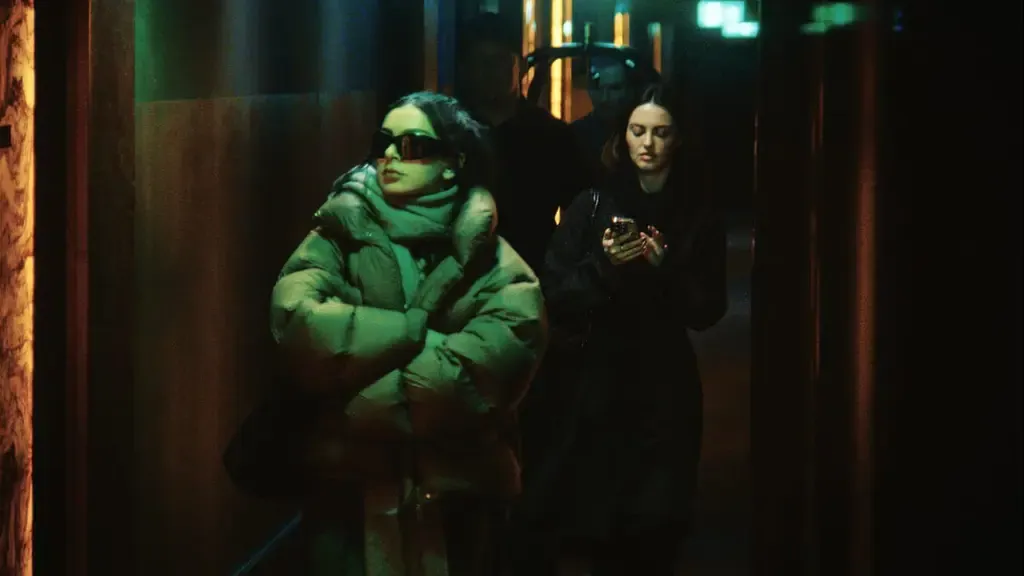

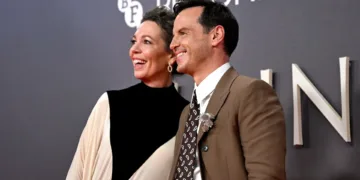
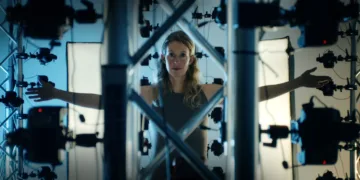
The Moment bottles the frantic pulse of late 2024, right as that neon-green fog of a specific pop-cultural phase starts thinning into something shinier and more market-ready. Directed by Aidan Zamiri, the mockumentary casts pop figure Charli xcx as a fictionalized version of herself, suspended between the raw creative spark that birthed her sixth studio album and a corporate machine determined to keep that spark profitable.
The film tracks her through the weeks before her world tour, keeping its attention on the pressure points that appear once a subculture turns into a global product. Record executives and social media managers crowd her inner circle, and the movie keeps returning to the strain of holding a persona in place while facing the plain reality of creative burnout.
It sketches a star at a turning point, trying to define relevance while the people around her translate identity into branded transactions. The result plays like music-industry parody with the close attention of a character study, watching a woman fight to keep authorship over her own story.
The Pop Star as a Fraying Nerve
Charli xcx gives a performance that stays grounded inside the film’s satirical wrapper. Her on-screen self reads as a bundle of frayed nerves, carrying the weight of global fame while moving through a sharp, private isolation. Her comedic timing lands, and the quieter beats of desperation land too.
The characterization refuses the easy shortcut of caricature; it stays locked on the specific choices that make this Charli feel lived-in. She’s constantly smoking Parliaments. She hits certain tour locations, like Ibiza, with particular pronunciations that feel strangely intimate, like muscle memory slipping out in public. Those small gestures do a lot of work, keeping the joke tethered to something human.
There’s real vulnerability in how she seems to read an elegy for her own success before the tour even starts. The script gives her room to let those moments breathe, and Charli plays them without a protective wink. She also treats herself like the engine of her own chaos, willing to come off selfish around the staff who keep her functioning. That selfishness tracks as a symptom of celebrity’s isolation, not a cartoon villain beat.
With her team, she moves between dependence and distance, and that push-pull makes the character feel dimensional. The film sheds the glossy sheen that so many music documentaries chase, because Charli commits to looking messy and unsure. She carries the portrait of a star in doubt while the outside world demands a permanent icon.
I keep thinking about the music documentaries I watched as a kid, that feeling that the camera had smuggled me behind a curtain. The Moment taps that same “secret world” sensation, then twists it into something harder to sit with. This Charli feels painfully human, caught in a loop she helped build, staring at the image she made and wondering if she can ever step away. Her anxious self-awareness holds the film together. It gives the satire its weight.
The Collision of Art and Commerce
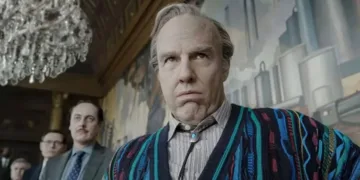
The movie’s conflict gains energy from clashing creative instincts. Alexander Skarsgård stands out as Johannes, a director brought in by the label to oversee the concert film. He plays Johannes as a passive-aggressive professional who wants to sand down anything sharp until it reads as mass-appeal safe.
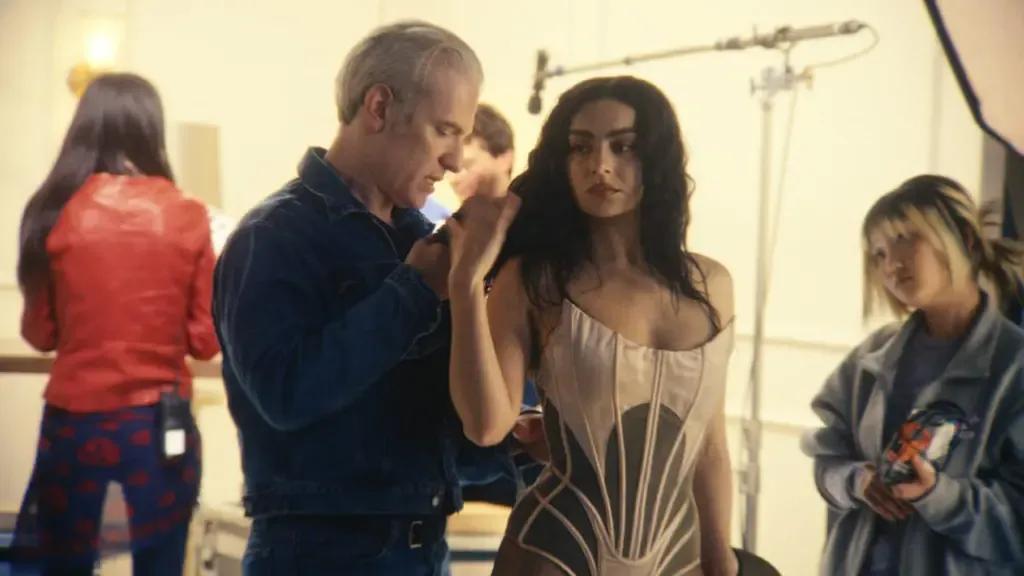
His PG-rated stunt ideas land as pure absurdity: suspension cables, flower petals dropped onto the crowd, a whole set of gestures meant to soften the album’s gritty aesthetic into something sellable. The film keeps these pitches close to the story’s emotional spine, because every “note” Johannes gives also feels like a small attempt to rewrite the artist.
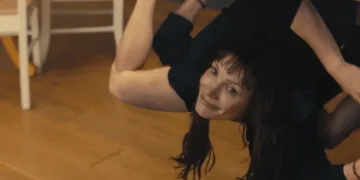
Hailey Benton Gates provides a steady emotional counterweight as Celeste, the creative director guarding the project’s artistic integrity. She watches a close friend lose pieces of herself under industry pressure, and Gates plays Celeste with restraint that still hits hard. Rosanna Arquette, playing the record executive, brings an unforgiving edge that fits the film’s view of profit-first thinking. The industry, in her presence, feels like a room that never stops counting.
The film also sprinkles in celebrity appearances, with Kylie Jenner and Rachel Sennott showing up as themselves. These cameos help place the story inside a very specific social ecosystem of fame. They also pull focus sometimes, drawing attention away from the central thread. Still, they function like a reminder that the protagonist’s world has its own gravitational rules, with status and proximity treated like currency.
Johannes drives many of the funniest scenes, largely because he keeps missing the point of the artist’s work. That mismatch keeps the plot moving and keeps the film’s satire pointed at how corporate priorities can reshape a creative vision. The supporting cast builds a hectic perimeter around Charli, each person angling for a share of the success. Skarsgård nails a particular species of vain filmmaker, the self-declared visionary who tunes out everyone else. His friction with Celeste creates the film’s most believable drama, because their arguments make the cost of compromise feel concrete.
A Grainy Vision of Sensory Overload
Zamiri’s music-video background shows up in the film’s structure and texture. The Moment plays like a chain of vignettes, steering away from a traditional linear track. That fragmented design matches the protagonist’s scattered daily reality, where every moment feels interrupted by a demand, a note, a meeting, a phone buzzing again.
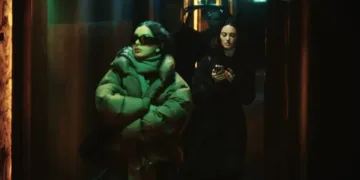
Sean Price Williams shoots the film with high contrast, grainy textures, and a shaky-cam immediacy that makes scenes feel caught on the run. Zamiri layers in abrasive strobe lights and flashing title cards, turning the image into a physical expression of sensory overload. It’s a visual language that keeps echoing the idea of life lived in public, where nothing stays quiet for long.
The mockumentary framing wobbles in a few spots. Some scenes act like the camera crew has disappeared. Other scenes look straight at the crew and acknowledge the setup. One sequence, involving the cutting of lines of cocaine, ends with someone asking to delete the footage, a fourth-wall break that calls attention to the act of filming and controlling the record of what happened.
Sound and music carry equal weight. A Bittersweet Symphony needle drop during a low point plays as a deliberate choice, aiming for a specific kind of ironic sadness. The editing moves fast, cutting like a mind that can’t stop racing. It can test viewer patience, and that friction reads as part of the point: the film wants the exhaustion to seep across the screen. The audiovisual design builds a world of high-speed fame, then refuses to smooth the edges.
While watching, I kept thinking about the gritty look of seventies New York films, that dirty texture that makes a city feel abrasive under your skin. The Moment taps a similar grime and drags it across a pop palette. The lighting shifts from green to blue to red, and the full experience can feel like being stuck inside a nightclub for 100 minutes. The sound design stays loud and intrusive, pushing against comfort at every turn.
Branded Identities and the End of an Era
The film takes a sharp swing at how celebrity gets consumed and processed. One central subplot revolves around a branded credit card marketed toward a specific queer demographic, presented as an example of identity harvested for financial gain. The screenplay treats “selling out” as a modern condition, with corporate influence presented as a force that keeps closing in. The star survives the pressure and manages it moment to moment, yet escape never feels available.
A run of scenes puts her in banal meetings about skincare and wine endorsements, capturing the grind of staying relevant through deals and appearances. The film leans into the absurdity of these conversations, letting them play long enough to feel like work. The final shot carries a cynical charge, leaving the protagonist’s role open to interpretation: victim, participant, or a mix that shifts depending on the day. That ambiguity suits the story, because the movie keeps showing how fame turns agency into a negotiation.
I also found myself thinking about who this film speaks to. It plays like a private time capsule for dedicated fans, tuned to a cultural moment with a specific texture and language. Viewers who missed that moment could feel shut out, and the film seems aware of that gap. It treats the era as fleeting, with trends moving too fast to build lasting mythology. The script gestures toward capitalism in broad strokes and sometimes frames fans as faceless masses, widening the distance between star and audience. Fame, here, becomes a sequence of branded moments, each one packaged for sale before the next arrives.
The film captures the exhaustion of that cycle and treats the end of the era with a quiet shrug. I remember watching a trend die in real time, feeling the temperature drop before anyone admitted it had happened. The Moment bottles that sensation. It records a particular peak and the mess behind the neon, reading like a kiss-off to a very specific summer while asking if anyone is ready to move forward.
The Moment arrived at the Sundance Film Festival on January 23, 2026. It premiered in United States theaters through A24 on January 30, 2026. Viewers can find this project in selected cinemas across the country. The film follows a fictionalized version of pop star Charli xcx. She manages her career during a period of immense industry pressure. This production serves as the first feature film for its director.
Full Credits
Title: The Moment
Distributor: A24
Release date: January 23, 2026, January 30, 2026
Rating: R
Running time: 103 minutes
Director: Aidan Zamiri
Writers: Aidan Zamiri, Bertie Brandes, Charli xcx
Producers and Executive Producers: Charli xcx, David Hinojosa
Cast: Charli xcx, Rosanna Arquette, Kate Berlant, Jamie Demetriou, Arielle Dombasle, Hailey Benton Gates, Kylie Jenner, Trew Mullen, Mel Ottenberg, Isaac Powell, Rachel Sennott, Rish Shah, Alexander Skarsgård, Michael Workéyè
Director of Photography (Cinematographer): Sean Price Williams
Editors: Bill Sneddon, Neal Farmer
Composer: A.G. Cook
The Review
The Moment
The Moment is a stylish and self-aware look at the friction between artistic identity and industrial greed. It captures a specific cultural peak with a cynical eye. While the pacing stutters and the format feels inconsistent, the performance from the lead remains a magnetic anchor. It is a sharp character study of a woman fighting to reclaim her narrative. This film offers a gritty and entertaining peek into the machinery of modern fame.
PROS
- Strong acting from the lead and Alexander Skarsgård.
- Distinct visual style using grainy textures and high contrast.
- Biting satire of corporate branding and celebrity culture.
CONS
- Uneven pacing in the second act.
- Confusing mockumentary rules that break immersion.
- Shallow exploration of the large secondary cast.