






















Evan Matthews’ “Motherland” presents a chilling premise wrapped in the sterile corridors of institutional care. In this alternate present, the government has eliminated the traditional family structure entirely, whisking newborns away from their mothers at birth to be raised in state-run facilities. The policy, sold as liberation from the “burden” of child-rearing, promises equality and freedom for women while ensuring uniform upbringing for all children.
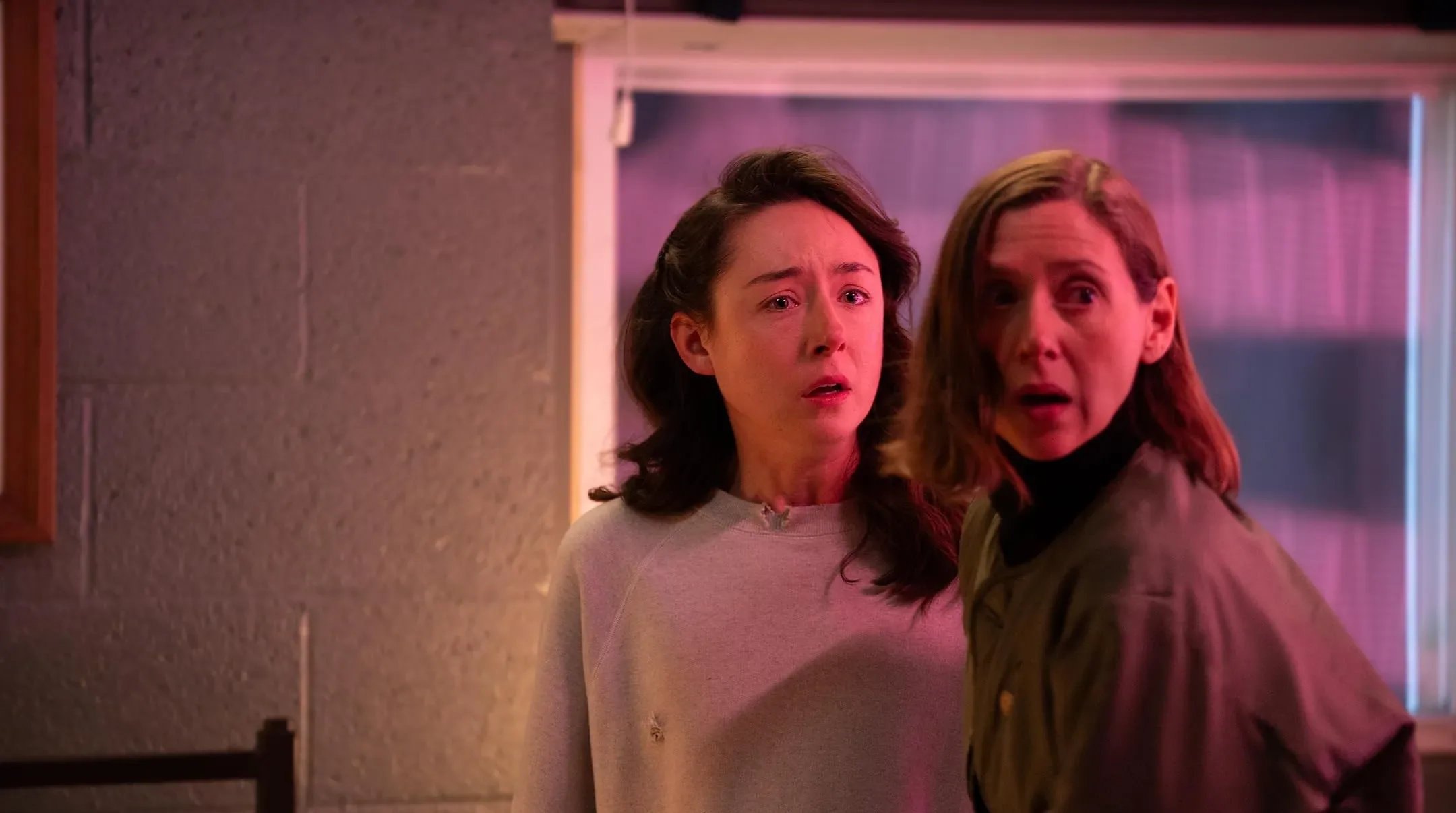
What makes Matthews’ dystopian vision particularly unsettling is how reasonable it initially sounds. The film doesn’t present this system as obviously monstrous but rather as a well-intentioned social experiment gone wrong. Cora, played by Miriam Silverman, works as an evaluator at Women’s Center #8, dutifully scoring children for their future job assignments. She’s internalized the system’s logic so completely that she barely remembers the pain of losing her own child years earlier. The story finds its emotional core when Cora recognizes a birthmark on young Zinnia and realizes she’s looking at her own daughter, now a teenager preparing to enter the state’s breeding program.
This setup immediately places the film within the current cultural conversation about reproductive rights, though Matthews wisely avoids heavy-handed political messaging. Instead, he focuses on the deeply personal cost of removing individual choice from the equation of parenthood.
The Quiet Revolution of a Mother’s Heart
The film’s narrative structure follows a deliberately measured pace that mirrors Cora’s gradual awakening to her own suppressed emotions. Matthews and screenwriter Nicole Swinford craft Cora’s transformation with careful restraint, showing how decades of indoctrination can’t entirely erase the biological and emotional bonds of motherhood.
Miriam Silverman delivers a performance that balances stoic compliance with growing internal rebellion. Her Cora moves through the institutional spaces with practiced efficiency until small moments of recognition begin to crack her facade. The film finds its most powerful scenes in these quiet revelations, particularly when Cora begins secretly watching Zinnia from afar.
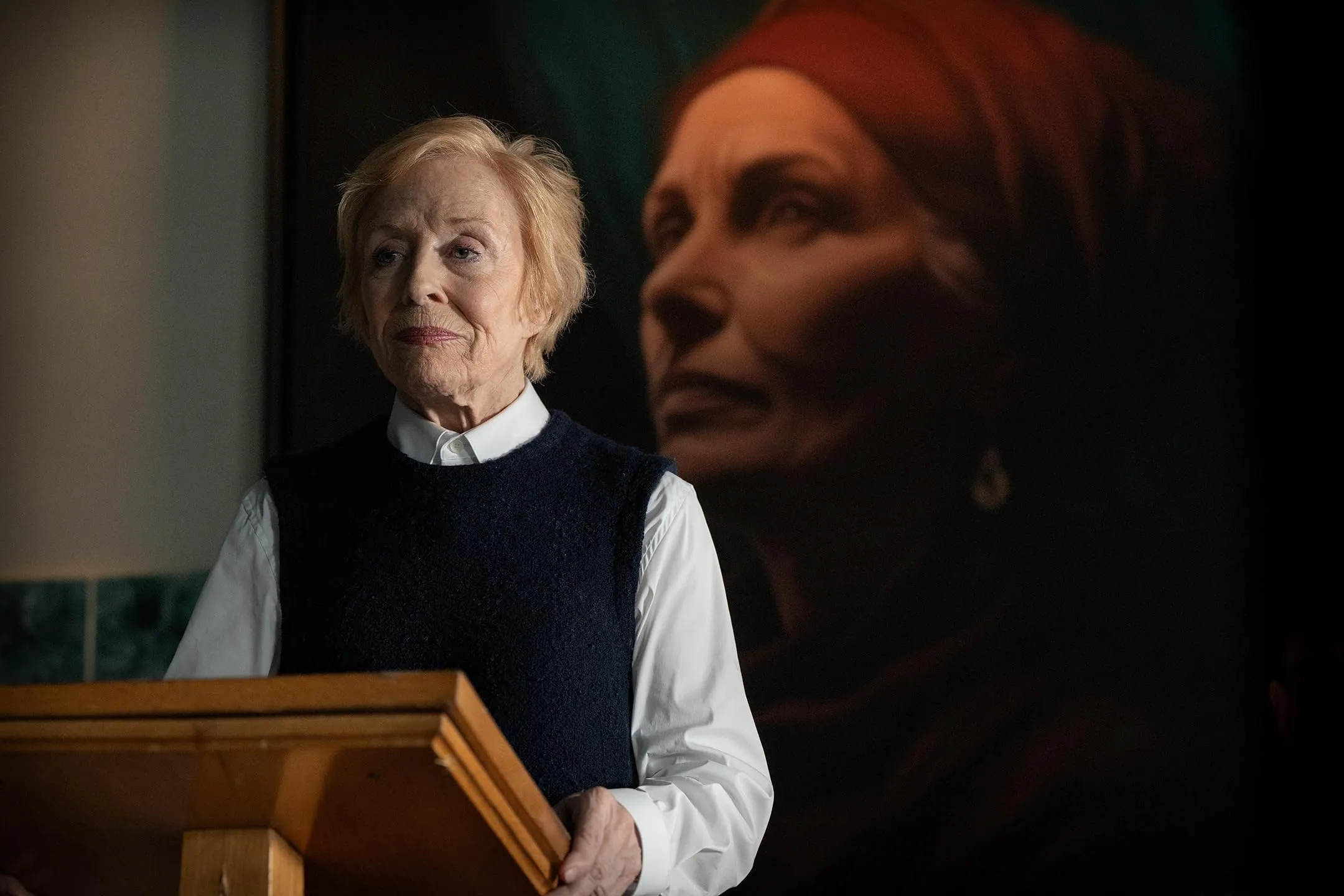
Holland Taylor commands every scene as Toni, the facility director who embodies the system’s seductive rationality. Taylor’s performance reveals how true believers can be both caring and terrifying, genuinely convinced they’re saving people from themselves. Her character becomes particularly compelling when she reveals her own history, explaining how she never wanted children but was pressured into motherhood before the new system emerged.
The supporting cast, including Emily Arancio as the unknowing Zinnia and Nestor Carbonell as security guard Mateo, creates a believable ecosystem of people trying to find humanity within an inhuman system. Arancio brings natural charisma to her film debut, while Carbonell suggests depths of feeling beneath his character’s professional demeanor.
The film occasionally stumbles with plot conveniences that feel too neat, and some character decisions seem designed more to advance the story than reflect genuine human behavior. Yet these moments don’t derail the central emotional journey.
Creating a World Through Absence
Cinematographer Ksusha Genenfeld creates a visual language that emphasizes what’s missing rather than what’s present. The film’s palette favors muted blues and grays, creating spaces that feel more like hospitals than homes. The production design cleverly uses the mundane architecture of government buildings to suggest a world where bureaucracy has replaced intimacy.
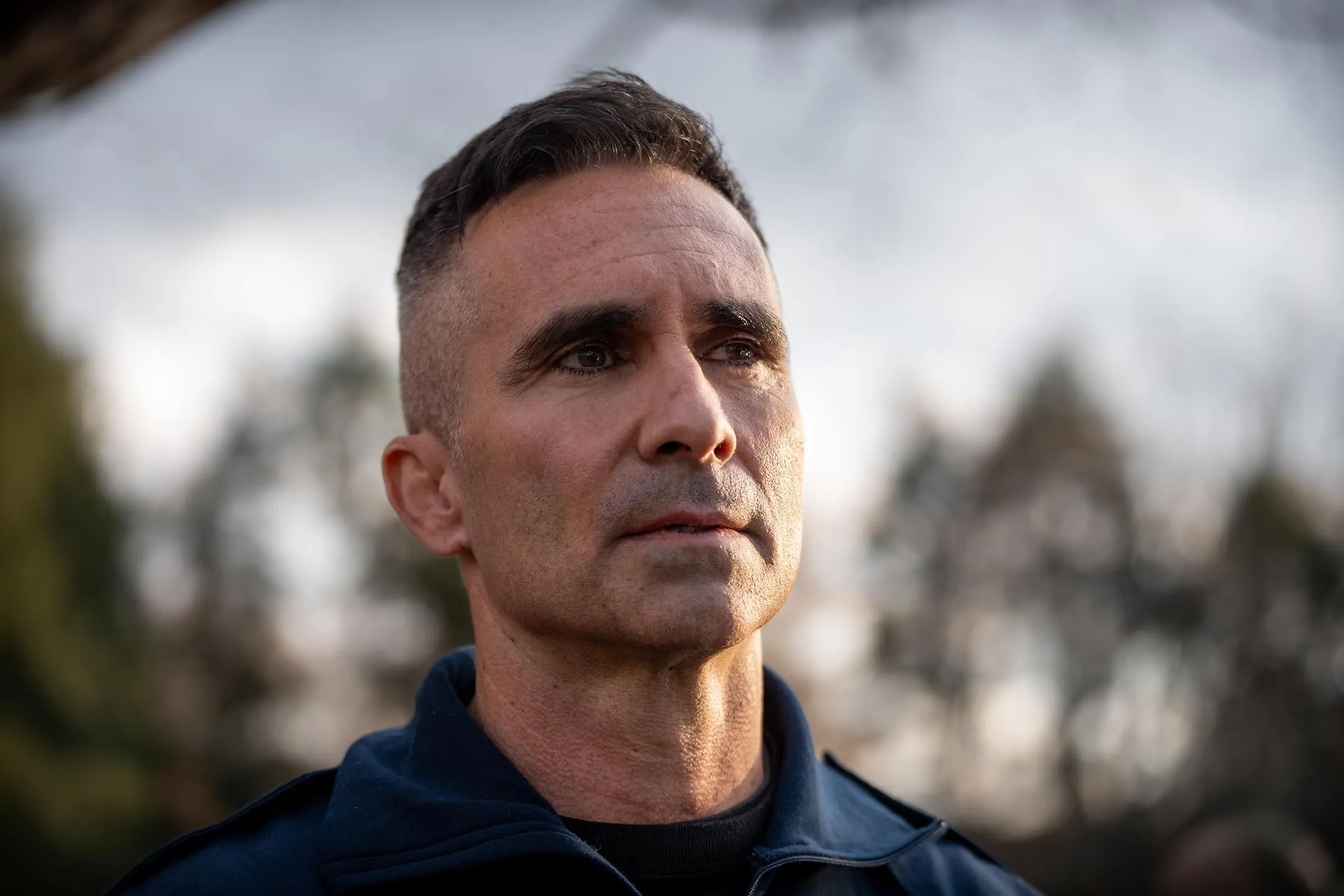
The film’s technological aesthetic deliberately recalls the late 1970s or early 1980s, with clunky computers and analog equipment that gives the world a slightly retro-futuristic feel. This choice serves the story well, suggesting a society that achieved its social reorganization decades ago and has settled into institutional routine.
Matthews’ direction maintains steady control over the material without flashy stylistic flourishes. The camera work emphasizes isolation, frequently showing characters separated by doorways, windows, or institutional barriers. These visual choices reinforce the emotional distance the system has created between people.
The score provides subtle support, building tension through minimalist arrangements that mirror the institutional sterility while hinting at the emotional currents running beneath the surface. The music never overwhelms the performances but adds layers of unease that accumulate throughout the film.
What struck me about the technical approach is how it resists the typical dystopian tendency toward obvious visual spectacle. Instead of towering monuments to state power, we get cramped offices and fluorescent lighting, creating oppression through banality rather than grandeur.
Finding Humanity in Systematic Inhumanity
“Motherland” succeeds most when it examines how people adapt to systems that deny fundamental human connections. The film explores reproductive autonomy from multiple angles without settling into easy ideological positions. Some characters genuinely thrive under the new system, while others suffer in ways they’re not allowed to acknowledge.
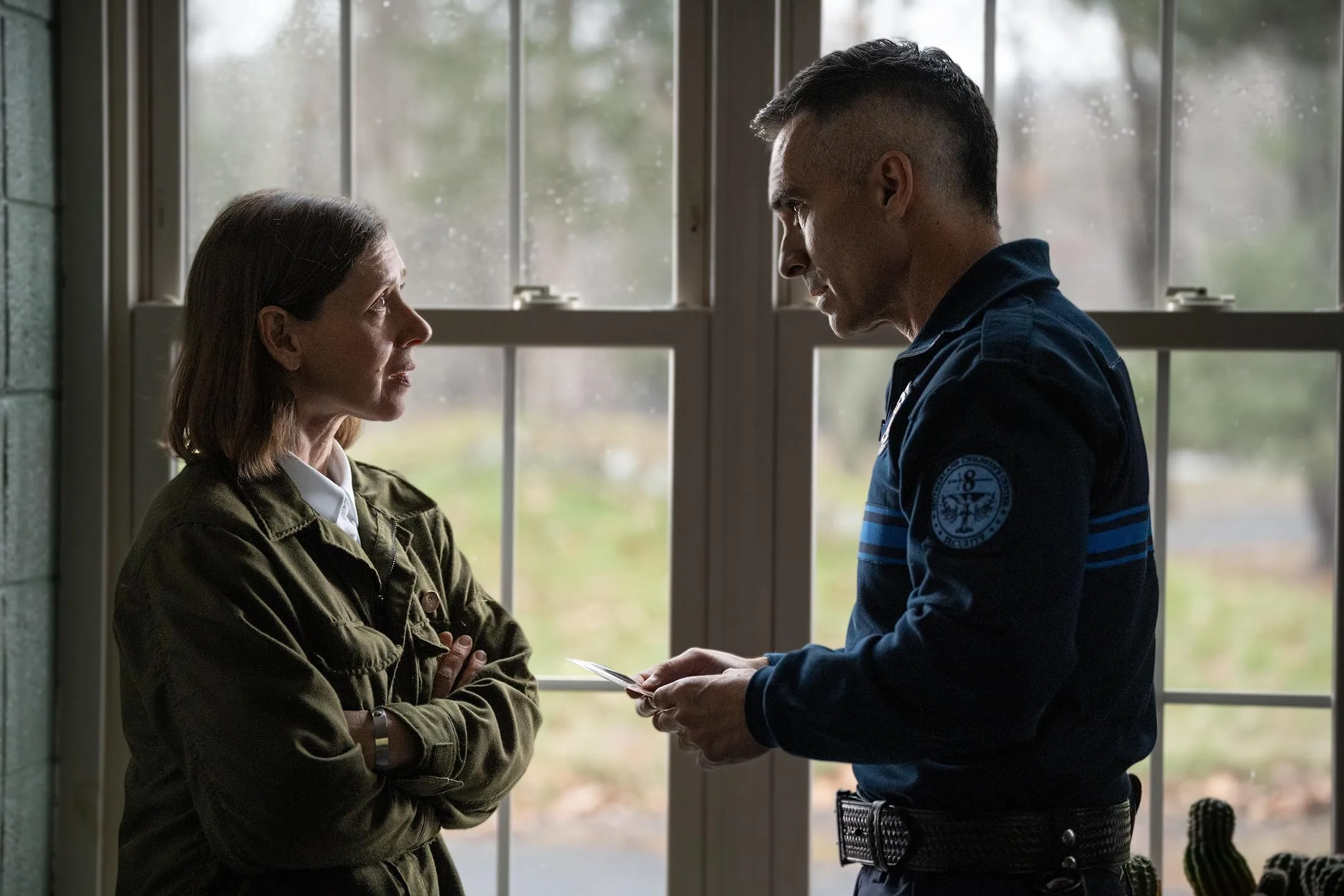
The film’s treatment of motherhood acknowledges different experiences and desires while still asserting the fundamental importance of choice. Toni’s backstory reveals someone who genuinely didn’t want children but was forced into motherhood by social pressure, making her belief in the new system psychologically complex rather than simply villainous.
Matthews avoids the trap of creating a simple allegory for contemporary political debates. Instead, he focuses on the human cost of removing agency from such deeply personal decisions. The film asks what happens when good intentions become tyrannical through their absolute implementation.
The pacing can feel sluggish at times, particularly during the middle section where Cora’s internal struggle plays out through extended scenes of observation and reflection. Some viewers may find the deliberate tempo frustrating, especially when the film promises thriller elements it doesn’t always deliver.
Yet “Motherland” rewards patient viewers with a thoughtful exploration of themes that resonate beyond its specific dystopian scenario. The film works best as a conversation starter about the relationship between individual freedom and collective welfare, raising questions without providing easy answers.
For fans of cerebral science fiction and dystopian drama, “Motherland” offers solid performances and provocative ideas executed with competent craft. While it may not achieve the visceral impact of genre classics, it earns respect for tackling complex themes with nuance and restraint.
Motherland is a film that premiered at the Omaha Film Festival in 2025. It was theatrically released by Vertical on March 14, 2025. The story is set in an alternate society where the government raises children. It follows a rule enforcer who discovers a secret that makes her question the system and begin a rebellion.
Full Credits
Director: Evan Matthews
Writers: Nicole Swinford
Producers and Executive Producers: Rob Pfaltzgraff, Lana Link, Summer Crockett Moore, Tony Glazer, Nick Reid
Cast: Miriam Silverman, Holland Taylor, Nestor Carbonell, Emily Arancio, Molly Hager, Doug Harris, Julia Blanchard, Arica Himmel
Director of Photography (Cinematographer): Ksusha Genenfeld
Editors: Josie Azzam
Composer: Jackson Greenberg
The Review
Motherland
"Motherland" succeeds as thoughtful dystopian cinema that prioritizes ideas over spectacle. Matthews delivers a competent debut that generates meaningful discussion about reproductive autonomy and state control. The film's measured pace and institutional setting create authentic unease, while strong performances from Silverman and Taylor anchor the emotional stakes. Despite occasional plot conveniences and sluggish pacing, the film rewards viewers seeking substantive science fiction that trusts their intelligence.
PROS
- Compelling dystopian premise with contemporary relevance
- Strong performances, especially Holland Taylor
- Thoughtful exploration of complex themes without heavy-handed messaging
- Effective production design and cinematography
- Nuanced character development
CONS
- Slow pacing that may frustrate some viewers
- Limited world-building beyond the central facility
- Occasional plot conveniences
- Lacks visual distinction of genre standouts
- Some narrative choices feel contrived