

























Fear, like technology, evolves. The anxieties of one generation become the quaint relics of the next. Night of the Reaper is an archeological dig into a specific stratum of fear: the analog dread of the 1980s. This film posits that true horror once had a physical form, a weight in your hand. It could be a telephone receiver, a garage door opener, or, most potently, a videocassette.
The movie’s central conceit is built around these magnetic ribbons of captured time. They are not merely recordings; they are sacraments of violence, delivered to the doorstep of the town’s sheriff, Rod. Each tape is a grainy revelation, a rewriting of the recent past from accident to atrocity.
This sinister scavenger hunt unfolds while another, more immediate horror story plays out. A college student named Deena, drawn back into her hometown’s orbit, takes a babysitting job at the sheriff’s house. She is a figure of modern pragmatism dropped into a diorama of past dangers.
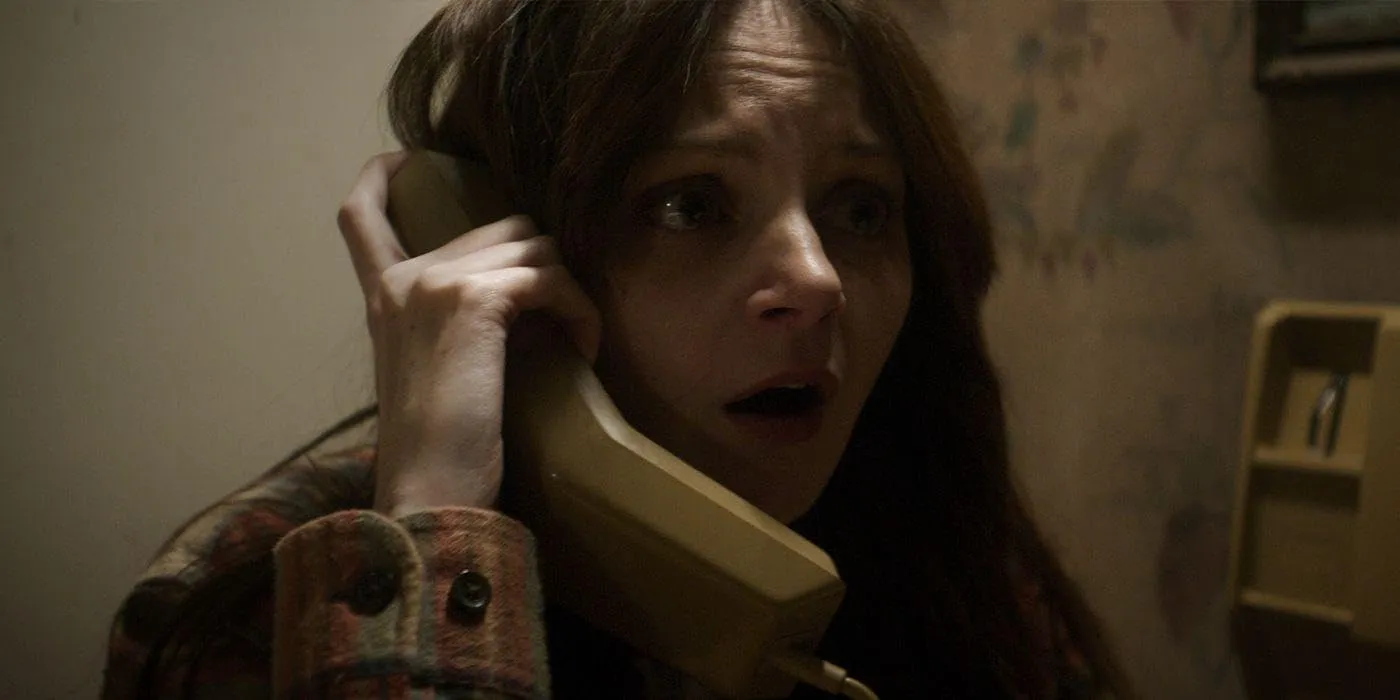
The film is not about what happens to her, but about the suffocating atmosphere that envelops her. It’s a space where the phone cord is a tether, not a lifeline, and every shadow feels curated. The two narratives exist in a state of quantum entanglement, separate yet intrinsically linked by the evil that saturates the town.
The Anxious Splice
The film’s architecture is its most potent weapon. Director Brandon Christensen constructs a “narrative parallax,” showing the same impending doom from two distinct perspectives. The cross-cutting between Deena’s immediate, insular terror and Sheriff Rod’s procedural investigation is relentless. This technique creates a symphony of suspense, where one storyline’s discovery becomes the other’s present danger.
The structure denies the audience any rest. Just as we settle into the rhythm of the police work, we are yanked back into the cavernous, quiet house where every floorboard’s creak is a potential death sentence. It’s a masterful manipulation of pacing that keeps the film’s heart rate elevated.
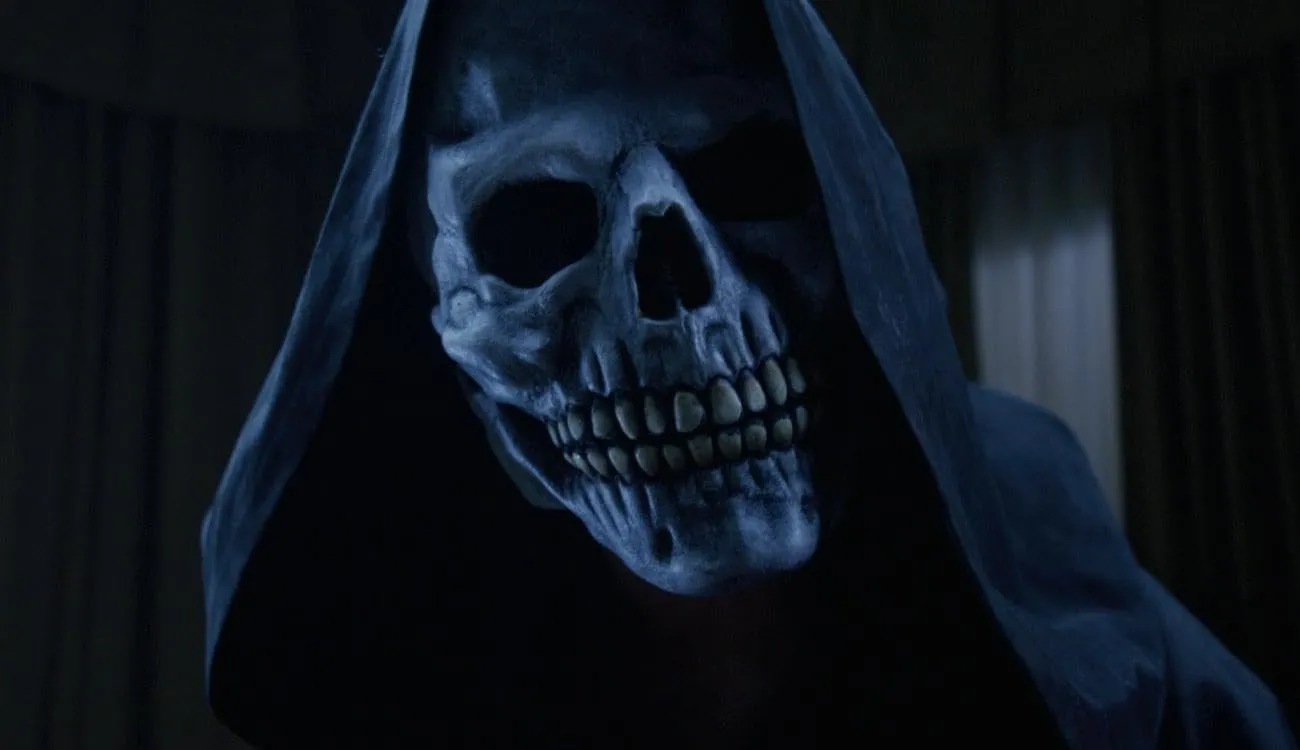
Christensen also demonstrates a commitment to psychological horror, a welcome restraint in a genre often defined by excess. The film operates on a principle of suggestion. The true scares are found in the periphery, in details that are slightly wrong. The camera will linger on a Grim Reaper lawn decoration, and for a split second, you are certain its head moved.
The horror is atmospheric, built from unnerving sound design and the effective use of deep, impenetrable shadows. The 1980s setting is the key that unlocks this particular brand of fear. This is a world untroubled by the omniscience of the internet or the safety net of a cell phone. Help is not a click away. This technological vacuum creates a genuine sense of isolation, making the house a veritable island in a sea of darkness.
Portraits in Pragmatism
In a genre populated by archetypes, Deena is a welcome anomaly. As portrayed by Jessica Clement, she is a “Final Girl” whose defining characteristic is a refreshing intelligence. She is not a collection of tropes but a person who acts with a discernible logic.
This grounded performance is crucial; it provides an emotional anchor in a story that becomes increasingly unmoored from reality. Clement’s expressive face, particularly her wide eyes, becomes a canvas for the film’s terror. She channels a palpable sense of dread, making the audience a participant in her ordeal rather than a mere observer. The film wisely avoids saddling her with a convoluted tragic backstory, trusting that her present peril is conflict enough.
Counterbalancing her is Ryan Robbins as Sheriff Rod, who gives a performance of weary, simmering intensity. He anchors the film’s investigative plotline with a grounded sense of duty that is slowly eroded by personal grief. The character could have been a simple procedural cutout, a man just doing his job. Robbins infuses him with a quiet sorrow that makes the stakes feel deeply personal.
In one remarkable, wordless scene, he watches a particular tape, and the storm of anger and pain that crosses his face is more powerful than any scripted monologue. While these two pillars are strong, the supporting cast feels intentionally thin. They are sketches rather than portraits, a choice that reinforces the profound isolation of the two leads, trapping them alone in their respective nightmares.
The Logic of a Nightmare
The film’s final act is a calculated act of narrative sabotage. It initiates a “reality-implosion,” a sudden, violent twist that fundamentally alters the story’s DNA. This is not a simple reveal of a killer’s identity; it is an epistemological assault that forces a complete reappraisal of every preceding scene. The turn is audacious, asking the audience to question the very foundation of the reality the film has so carefully constructed. It is the movie’s most ambitious and controversial maneuver.
Whether this gamble succeeds is a matter of personal taste. The logic of the twist is intricate, and for some, it will stretch credibility past its breaking point. The reveal is delivered with a dizzying speed that feels both rushed and overwhelming, a cascade of information that challenges the viewer’s trust in the filmmaker.
It transforms the movie from a straightforward thriller into a philosophical puzzle about perception. Night of the Reaper is a film that demands a post-viewing debrief, a mental inventory of clues missed and moments misread. It’s a challenging piece of work that risks alienating its audience for a moment of genuine shock. The final, fitting notes of Blue Öyster Cult play over the credits, a perfect, cynical punctuation mark on the chaos.
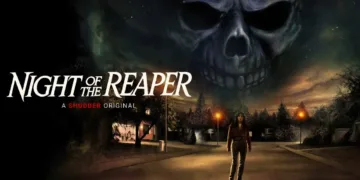
Night of the Reaper premiered on September 19, 2025. This film is a horror and thriller movie you can watch on the streaming service Shudder. It follows a college student who takes a babysitting job and gets caught in a deadly game with a masked killer. The story runs parallel to a sheriff’s investigation into a series of murders.
Full Credits
Director: Brandon Christensen
Writers: Brandon Christensen, Ryan Christensen
Producers and Executive Producers: David Hiatt, Matt Manjourides, Justin A. Martell, and Michael Peterson
Cast: Jessica Clement, Ryan Robbins, Matty Finochio, Summer H. Howell, Ben Cockell, Max Christensen, Huxley Fisher, Bryn Samuel, Savannah Miller, Susan Serrao
Director of Photography (Cinematographer): Clayton Moore
Editors: Brandon Christensen, Blair Drover
Composer: David Arcus, Terry Benn, and Michelle Osis.
The Review
Night of the Reaper
Night of the Reaper is an intelligent, atmospheric thriller for most of its runtime, anchored by compelling lead performances and a masterful sense of tension. It trades slasher spectacle for a more cerebral, psychological dread that is highly effective. Its bold, reality-bending finale is a divisive gamble that re-contextualizes the entire film. This twist will either fascinate or infuriate, positioning the movie as a challenging, if flawed, puzzle box. It is a confident piece of filmmaking that respects its audience's intelligence, for better or worse.
PROS
- Builds exceptional psychological tension and atmosphere.
- Strong, grounded lead performances from Jessica Clement and Ryan Robbins.
- The dual-narrative structure is used effectively to create a brisk pace.
- Clever utilization of the 1980s setting to heighten isolation and vulnerability.
CONS
- The third-act twist is rushed and may strain credibility for many viewers.
- Supporting characters and the antagonist are underdeveloped.
- Its slow-burn, psychological approach may disappoint those expecting a traditional slasher.