

























![Kingdom Hearts Collection [I-III] Review](https://gazettely.com/wp-content/uploads/2026/10/Kingdom-Hearts-Collection-I-III-1-360x180.webp "Kingdom Hearts Collection [I-III] Review: KHII Holds Steady as Newer Entries Fluctuate 37")



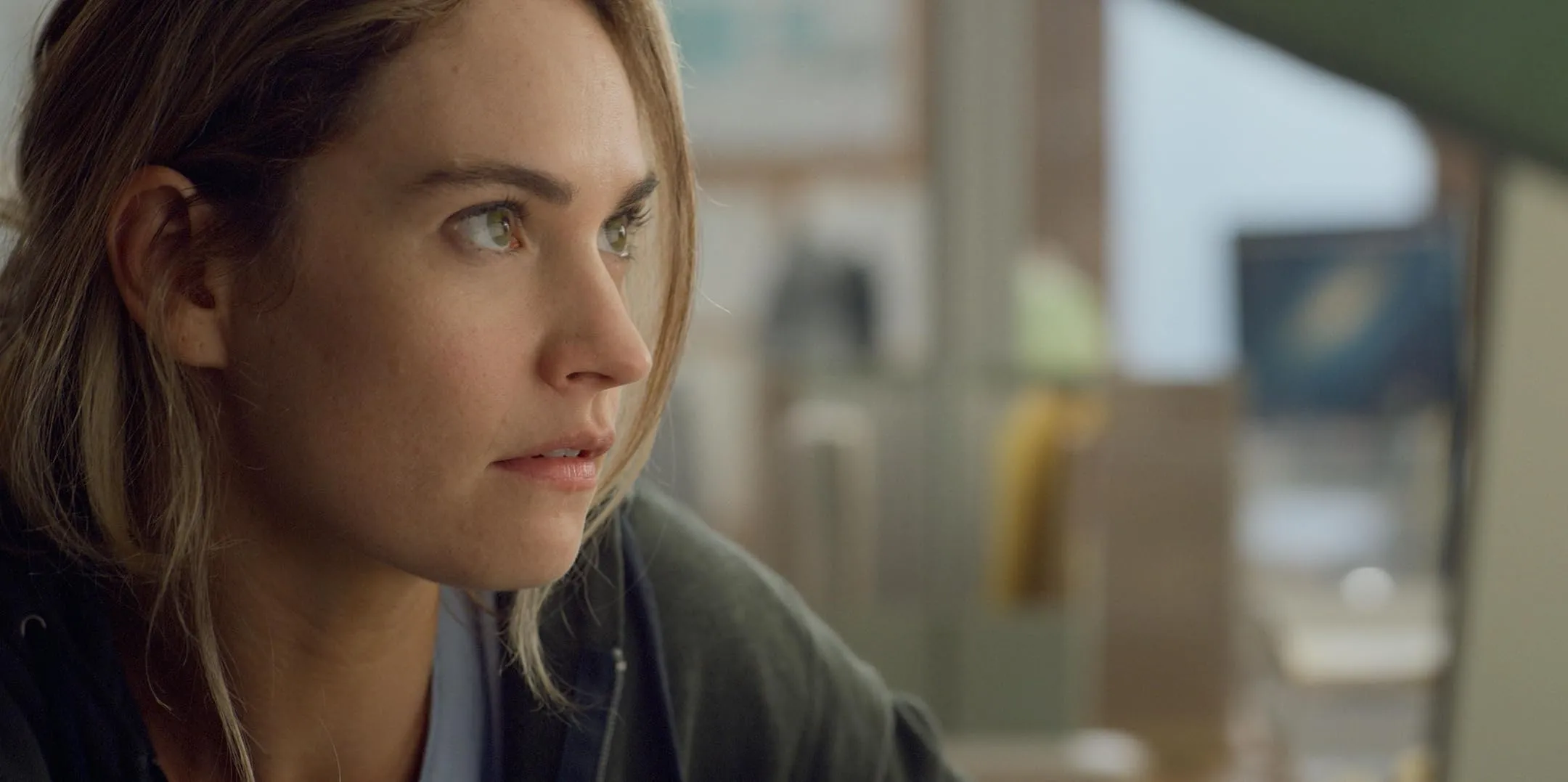

It is difficult to recall a time when courtship was not mediated by a screen and a swipe. Dating applications have fundamentally rewired modern social interaction, a shift engineered by a handful of key figures. The new film Swiped attempts to tell the story of one such architect, Whitney Wolfe Herd.
As a biopic, it charts her path from an ambitious upstart in the tech world to a primary force in the creation of Tinder. The narrative follows her subsequent forced departure from the company amid a toxic environment and her eventual triumph with the founding of Bumble, an app designed to give women more control. The film positions itself as the origin story of a prominent female entrepreneur whose work has had a lasting impact on millions.
Anatomy of a Toxic Workplace
The film finds its most stable footing when documenting the misogynistic culture of the early 2010s tech scene. Tinder’s office is presented as an adult playground, a space of tube slides and ever-present beer taps where professional boundaries are treated as mere suggestions. The production design effectively captures an era when corporate culture was mistaken for a permanent fraternity party. This environment is where the story’s central conflict brews.
The screenplay meticulously illustrates how this atmosphere fosters casual sexism, showing executives talking over female colleagues in meetings and casually objectifying the very users whose data fuels their platform. Whitney’s initial attempts to assimilate into this “bro” culture, a necessary survival tactic, add a layer of complexity that the film unfortunately sheds as the plot progresses. The tension escalates significantly after Whitney’s relationship with her co-founder, Justin Mateen, dissolves.
His professional jealousy curdles into a campaign of open harassment and sabotage, a descent the film depicts with chilling accuracy. In stark contrast, the narrative presents the creation of Bumble as a nearly utopian endeavor. The workplace is clean, collaborative, and staffed almost entirely by supportive women. This binary portrayal of good and evil workplaces makes for a clear narrative, though it sacrifices the untidy reality of building any major enterprise. It transforms a complex business and legal battle into a simple morality play.
Performance Against the Algorithm
Lily James delivers a performance that provides the film with a much-needed human center. She charts Whitney Wolfe Herd’s evolution from bright-eyed ambition to the hardened anxiety brought on by ceaseless harassment, giving the character a believable inner life that the script often neglects to write. She infuses Whitney with a determined energy that keeps the audience invested, successfully anchoring the story.

Her work is supported by a nearly unrecognizable Dan Stevens, who makes a memorable impression as the Russian investor Andrey Andreev, a character who possesses a strange charm and ambiguous motives. These performances work against a screenplay that feels disappointingly formulaic. It follows the standard biopic blueprint, complete with contrived “eureka” moments where app names and features are born from sudden, dramatic inspiration.
We learn very little about Whitney’s life, her deeper motivations, or any character flaws that might complicate her heroic depiction. Secondary characters exist less as people and more as narrative functions, appearing only to offer a lecture or move the plot forward. This structural weakness is amplified by the hurried pacing.
The narrative rushes through significant events like the lawsuit against Tinder and the launch of Bumble, condensing years of struggle and strategy into brief montages. This acceleration prevents the story from earning its emotional payoffs, making her eventual success feel more like a summary of events than a lived experience.
Swiping Past the Substance
Swiped had the opportunity to explore the revolutionary and disruptive legacy of the apps at its center. It could have asked difficult questions about how the gamification of dating has altered human connection, or what it means to turn potential partners into a deck of cards to be sorted. Instead, the film retreats into the safety of a simple empowerment story.

It presents a sanitized “girlboss” fable where challenges are overcome and victory is assured, making its message feel programmatic rather than earned. This approach feels particularly hollow because the film avoids any serious examination of Whitney’s own complicity or the negative consequences of the industry she helped build. The narrative’s shallowness is likely a result of Wolfe Herd’s inability to participate in the production, leaving the filmmakers to construct a story from public records. The result feels less like a portrait and more like well-researched speculation.
The story introduces substantial ideas like corporate accountability and the meaning of female solidarity, only to treat them as plot points to be resolved quickly. The real story of Whitney Wolfe Herd is one of industry-shaking innovation and messy, human conflict. Swiped offers a watchable but disappointingly shallow account, a film that captures the timeline of events but misses the profound complexity of its subject’s influence on the world.
The movie Swiped premiered at the Toronto International Film Festival on September 9, 2025. It will be released in the United States on September 19, 2025, and will be available to watch on Hulu.
Full Credits
Director: Rachel Lee Goldenberg
Writers: Rachel Lee Goldenberg, Bill Parker, Kim Caramele
Producers and Executive Producers: Lily James, Jennifer Gibgot, Andrew Panay
Cast: Lily James, Dan Stevens, Myha’la, Jackson White, Ben Schnetzer, Pierson Fodé, Clea DuVall, Pedro Correa, Ian Colletti, Coral Peña
Director of Photography: Doug Emmett
Editors: Julia Wong
Composer: Chanda Dancy
The Review
Swiped
Swiped is a film buoyed by a strong central performance from Lily James, who capably portrays the ambition and resilience of Whitney Wolfe Herd. Yet, her work cannot fully redeem a screenplay that trades narrative depth for biopic clichés. While the movie effectively captures the toxic atmosphere of the early tech industry, it rushes through key events and offers a simplified, emotionally unearned story of empowerment. It is a watchable but ultimately superficial account of a complex and influential figure, missing the opportunity for a more meaningful examination of its subject’s legacy.
PROS
- A compelling and energetic lead performance from Lily James.
- An effective and unsettling depiction of the toxic "tech bro" culture.
- A memorable supporting role from Dan Stevens.
CONS
- The screenplay is formulaic and lacks narrative depth.
- Pacing feels rushed, glossing over significant events with montages.
- Characters beyond the protagonist are underdeveloped.
- Fails to explore the complex societal impact of dating apps.







