


























![Kingdom Hearts Collection [I-III] Review](https://gazettely.com/wp-content/uploads/2026/10/Kingdom-Hearts-Collection-I-III-1-360x180.webp "Kingdom Hearts Collection [I-III] Review: KHII Holds Steady as Newer Entries Fluctuate 40")
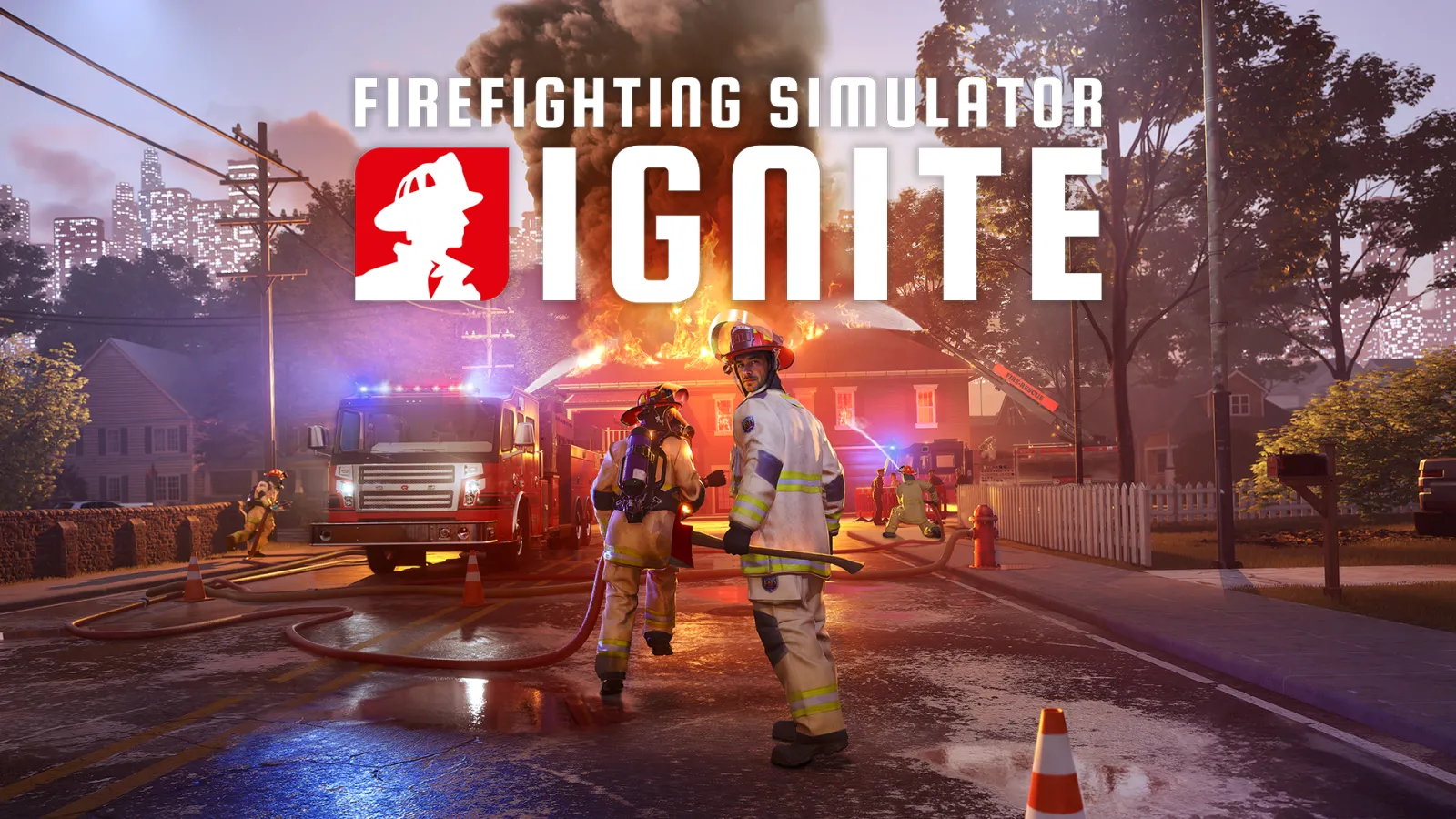

Firefighting Simulator: Ignite presents a very direct proposition: it gives you the tools of a firefighter and challenges you to save the city of Oakridge from countless blazes. From developer Weltenbauer and publisher Astragon Entertainment, both veterans of the simulation space, the game builds on a foundation of mechanical authenticity.
After using a simple character creator and selecting licensed HAIX gear, you are placed into a world of emergencies. The game seeks a careful equilibrium between the complex procedures of real-world firefighting and the accessibility needed for a compelling experience. It trades branching narratives for the procedural stories that emerge from each unique fire, asking players to read situations and react with precision. It is a game focused entirely on its systems and the tactical choices they enable.
Tools of the Trade
The game’s core systems are built around a loop of response and resolution across its nearly 40 missions. These incidents are selected from a central map and are categorized by severity, leading to a performance grade from bronze to gold. The initial part of any mission involves the drive to the scene in one of several authentically recreated Rosenbauer America trucks. Navigating the streets of Oakridge is its own preliminary challenge.
The large vehicles handle with a believable weight, making tight corners a deliberate exercise in control. While civilian traffic generally yields to the wailing sirens, cars can sometimes behave erratically, creating minor obstacles that add to the sense of urgency. The city itself feels functional, providing a believable backdrop for the emergencies that unfold within it.
Once on location, the game transforms into a systematic, tactical puzzle that demands methodical execution. The first order of business is always situational assessment. Is the fire contained to one floor? Are there visible hazards like downed power lines or leaking barrels? Your first actions set the stage for the entire operation.
This might involve locating the nearest fire hydrant and having a crew member connect a supply line to the truck’s pumper. From there, you begin the process of entry and suppression. Forcing a locked door with a Halligan bar is a physical, deliberate action, while an axe is needed for more stubborn barricades. Each tool serves a specific function, and learning which to apply is part of the game’s vocabulary.
The game effectively paces the introduction of complexity. Early missions involve straightforward structural fires in small residences, where the main task is to apply water to the flames. Soon, the challenges escalate. You will face electrical fires in commercial buildings that require you to find and shut down a fuse box before applying foam or a C02 extinguisher, as water would be dangerously ineffective.
Gas fires introduce the risk of explosions, forcing you to locate and close a valve before tackling the source. These variables prevent the missions from becoming rote. The environment itself becomes an antagonist. Backdrafts can erupt from a prematurely opened door, engulfing the room in a deadly fireball. Flashovers can cause an entire space to ignite in an instant.
Floors can weaken and collapse under the stress of the fire and the weight of the water, creating new dangers for your crew. The game’s systems ensure that you must think before you act, turning each fire into a unique problem with life-or-death stakes. The fire station’s training center provides a necessary sandbox to learn these mechanics without the pressure of a live mission, allowing you to experiment with equipment and scenarios at your own pace.
Working the Scene
Teamwork is the central pillar of the experience, and the game offers two distinct avenues to achieve it. In single-player mode, you are the chief of a three-person AI crew. The system for managing them is quite flexible, offering a meaningful layer of tactical choice. You can set your partners to be fully autonomous, and in this mode, they perform with surprising competence.
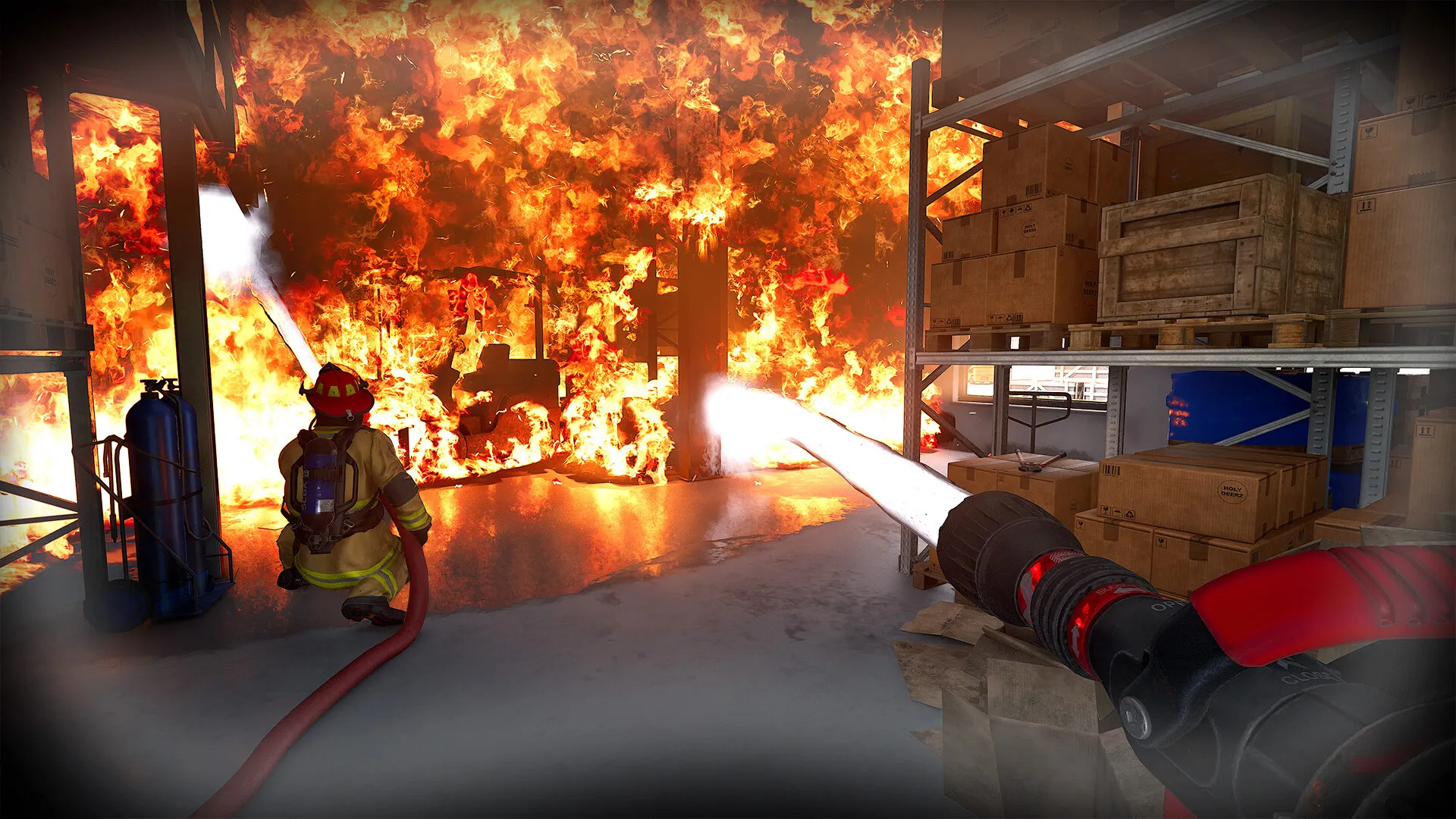
They will independently run hoses, vent rooms, carry victims to safety, and attack the fire’s source. For players who want more direct control, the AI can be set to a preparatory mode where they will stage equipment but await specific orders. A third option makes them entirely dependent on your commands, turning the game into a more direct real-time strategy experience. Issuing these commands is handled through a straightforward radial menu that allows you to direct individual members or the entire squad to specific tasks or locations.
This AI system is a significant success, allowing a solo player to feel like they are managing a real incident. The AI understands how to prioritize tasks and will often act logically, such as having one member search for civilians while others begin suppression.
There are, however, occasional and frustrating lapses in their programming. An AI firefighter might get stuck on a piece of furniture while carrying a victim, or continue to spray water on a section that has already been extinguished. These moments break the immersion but are infrequent enough to be minor annoyances rather than critical flaws.
The four-player online co-op, with full cross-platform support, is where the game’s design truly shines. Coordinating with other human players elevates the experience from a simulation to a collaborative challenge. The satisfaction of a well-executed plan—one player operating the truck’s pump, two advancing with an attack line, and a fourth performing a search and rescue—is immense.
This mode allows for specialization and communication that the single-player experience cannot replicate. Unfortunately, the multiplayer is undermined by severe technical instability. Players joining a host’s game are subject to frequent freezes and crashes.
A mission can be progressing perfectly for ten or fifteen minutes only to have a teammate suddenly disconnect, forcing the AI to take their place. This unreliability creates a significant barrier to what should be the game’s premier mode, turning what could be thrilling sessions into exercises in frustration.
The Sights and Sounds of the Inferno
The game’s presentation effectively sells the danger and intensity of its subject matter. Leveraging Unreal Engine, the visuals are strong for a simulation title, marked by a clean aesthetic and detailed assets. The fire is the undeniable star of the show. It is not a static texture but a dynamic, growing entity that licks across surfaces, belches thick black smoke, and throws off glowing embers.
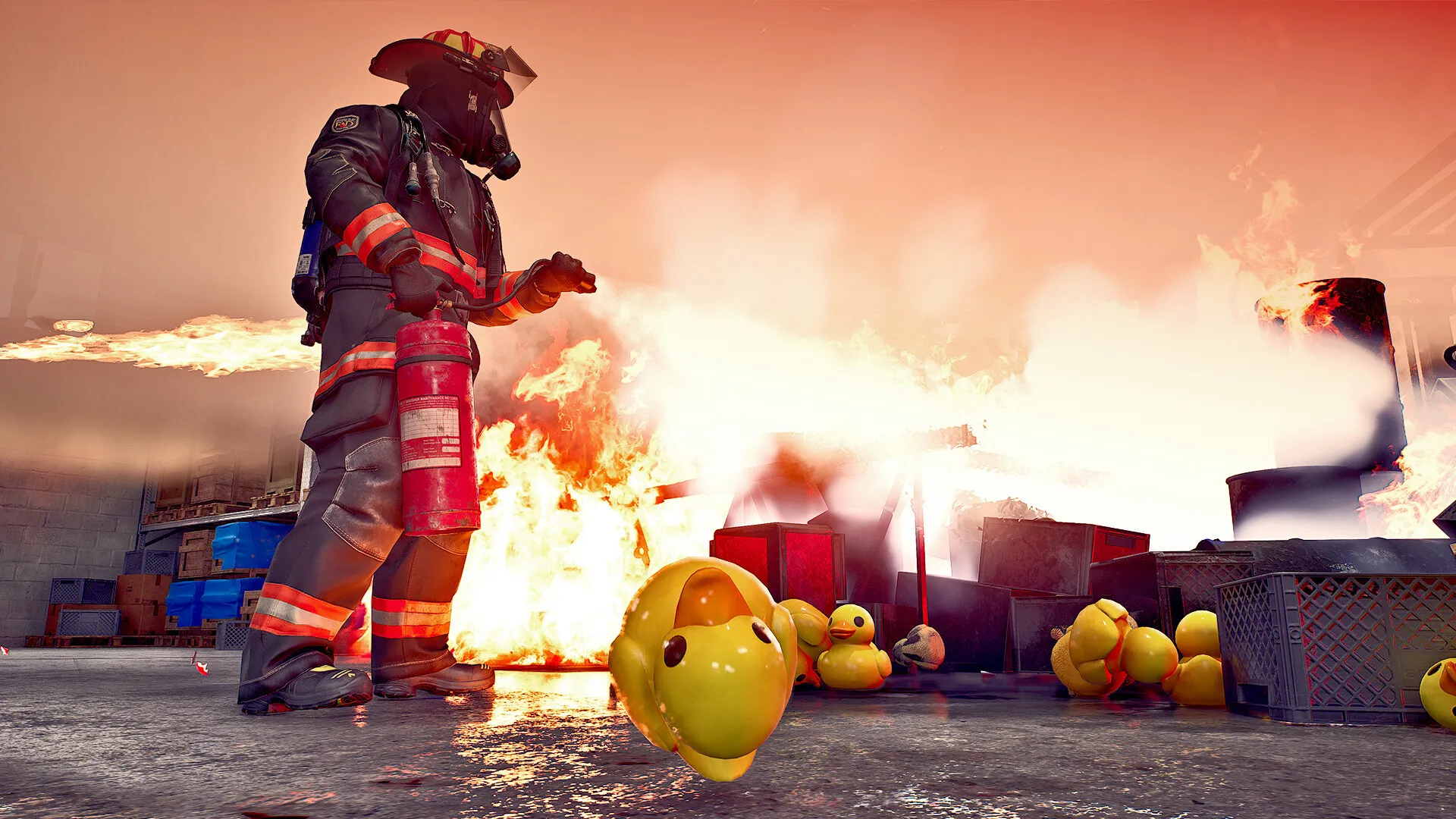
The physics of the water from your hose interacting with the flames feel impactful, and the way smoke pours from a newly ventilated window adds to the realism. The fire trucks and licensed equipment are meticulously modeled, lending a strong sense of authenticity to the proceedings. On consoles, the choice between a “Quality” mode for higher resolution and a “Performance” mode for a smoother framerate allows players to tailor the experience to their preference.
The sound design is equally crucial in building the atmosphere. The world inside a burning building is a chaotic cacophony of the roar and crackle of the fire, the hiss of the water hose, and the groan of the straining structure.
Overlaid on this is the constant radio chatter from your squad mates announcing their actions and the muffled sound of your own breathing through your SCBA mask. This soundscape creates a palpable sense of tension and immersion. The effect is sometimes diminished by repetitive voice lines from the AI crew, but the overall audio package is effective.
Despite these presentational strengths, the game suffers from a lack of polish in several areas. Minor bugs can disrupt the experience, such as audio occasionally cutting out entirely or certain equipment controls feeling finicky and unresponsive, especially the aerial ladder. The user interface can also be a problem, with menu text that is uncomfortably small and cannot be resized. Beyond these small issues, certain design elements feel incomplete.
The large, multi-level fire station that serves as your home base is mostly empty space. Outside of selecting a mission or walking through the training area, it serves no functional purpose, feeling like a missed opportunity for customization or deeper interaction. The ability to switch between a first-person view for close-up tasks and a third-person view for better situational awareness is a welcome feature, allowing players to adapt their perspective to the immediate needs of the situation.
The Review
Firefighting Simulator: Ignite
Firefighting Simulator: Ignite is a strong simulation at its core, with deep mechanics and impressive fire technology that create tense, tactical challenges. The single-player experience is well-supported by competent AI, but the game is severely let down by its unstable multiplayer, which is plagued by crashes. This technical instability, combined with a general lack of polish, prevents a very good game from achieving its full potential.
PROS
- Engaging and authentic firefighting mechanics.
- Excellent fire, smoke, and water physics.
- Competent and customizable AI partners for solo players.
CONS
- Online co-op mode is unstable with frequent crashes.
- General lack of polish, including minor bugs and underused areas.
- Repetitive voice lines from AI teammates.