

















![Kingdom Hearts Collection [I-III] Review](https://gazettely.com/wp-content/uploads/2026/10/Kingdom-Hearts-Collection-I-III-1-360x180.webp "Kingdom Hearts Collection [I-III] Review: KHII Holds Steady as Newer Entries Fluctuate 33")




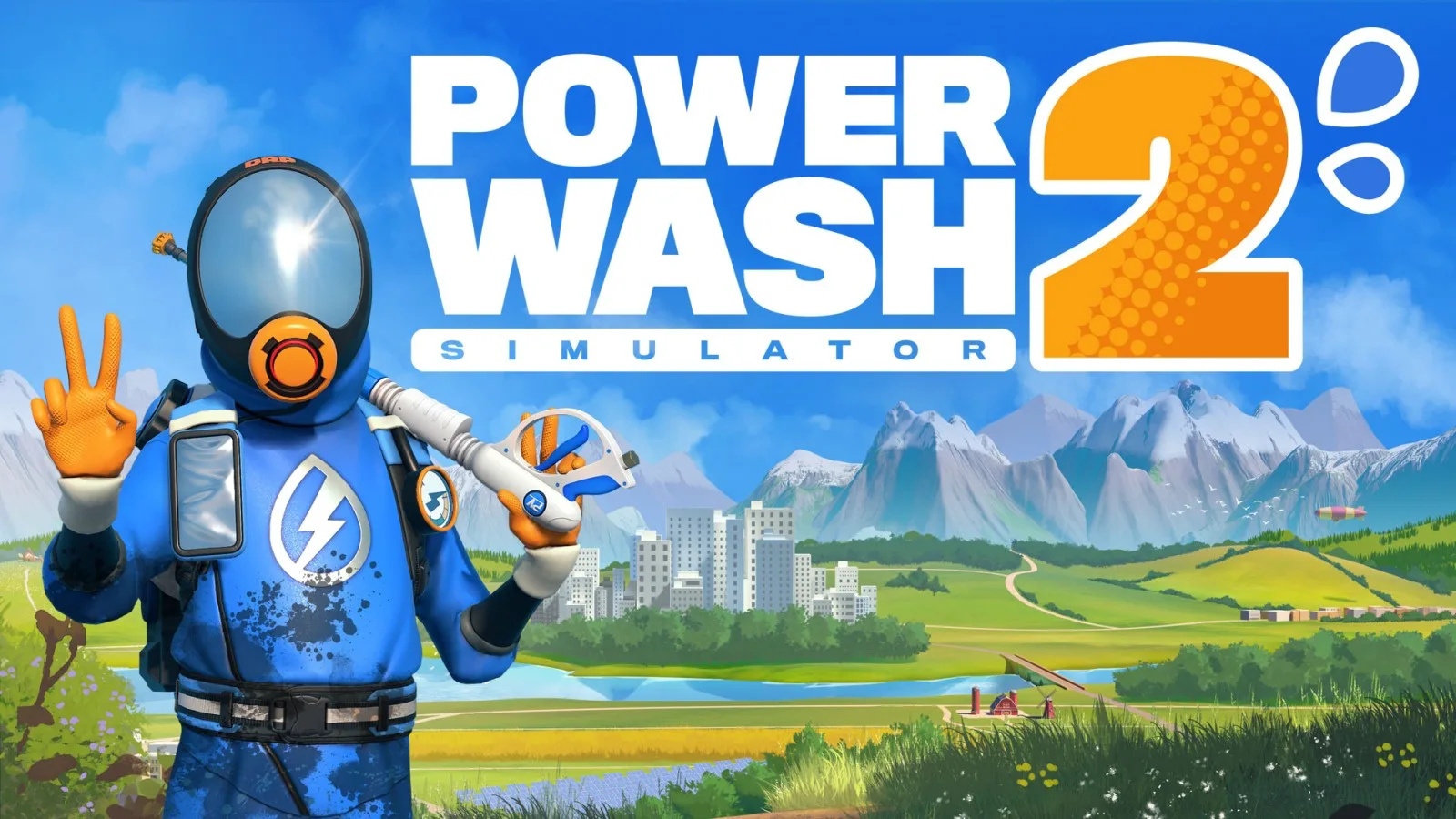

FuturLab’s PowerWash Simulator became an unexpected phenomenon in 2022, capturing players who craved something different from the usual gaming fare. The sequel arrives with a straightforward mission: refine what worked while expanding the canvas. This is a game about pointing a pressure washer at filthy surfaces and methodically blasting away grime until everything gleams. The premise sounds mundane, yet the execution taps into something primal about restoration and visible progress.
PowerWash Simulator 2 delivers nearly 40 jobs across a campaign that spans 50-60 hours, with both split-screen and online co-op for up to four players. The core experience remains unchanged, which will either sound like exactly what you need or a reason to skip the sequel entirely. This is refinement, not reinvention. The developers understood that their audience wanted improvements to the framework rather than a radical overhaul, and they’ve delivered precisely that.
The Rhythm of Restoration
PowerWash Simulator 2 operates from a first-person perspective where your primary interaction involves aiming a spray nozzle and holding down the trigger. Different power washers offer varying strength levels, creating a simple progression system where earning money from completed jobs unlocks better equipment.
The nozzle system creates a fundamental trade-off between power and coverage area. A green nozzle provides wide coverage for broad strokes, yellow delivers focused pressure for detail work, and white splits the difference. This isn’t a game where skill determines success. Patience does. Point water at dirt long enough and everything eventually becomes clean.
The genius lies in how the game tracks your progress. Every structure breaks down into micro-segments, each with its own cleanliness meter. A bathroom doesn’t register as a single entity. Instead, you clean the sink base, the faucet, individual hot and cold levers, the toilet seat, toilet base, light switch, floor tiles, ceiling panels, and wall sections separately. The game only displays the meter for whatever segment you’re currently aiming at, keeping the interface clean while providing constant feedback. Each completed segment triggers a satisfying ding, creating a Pavlovian loop that transforms tedious labor into a series of small victories.
The progression system encourages experimentation through a buying and selling system that lets you test different gear combinations without penalty. Starting with basic equipment, you gradually unlock stronger washers and specialized attachments that extend your reach. The SwirlForce Surf Ace represents the sequel’s most notable addition to your toolkit.
This disc-shaped floor cleaner spins rapidly across large flat surfaces, offering a third approach alongside the traditional power versus coverage trade-offs. It excels at what it’s designed for, though transitioning between floors and other surfaces can feel awkward. The tool works best as an opening move in multi-step cleaning processes, letting you quickly cover ground before switching to precision work.
Soap Opera: A System Reborn
The original game’s soap system created unnecessary friction. Players had to purchase soap in limited quantities, with different types required for different surfaces. This inventory management felt at odds with a game designed around meditative repetition. Running out of soap mid-job meant either muscling through with water alone or abandoning progress to restock.
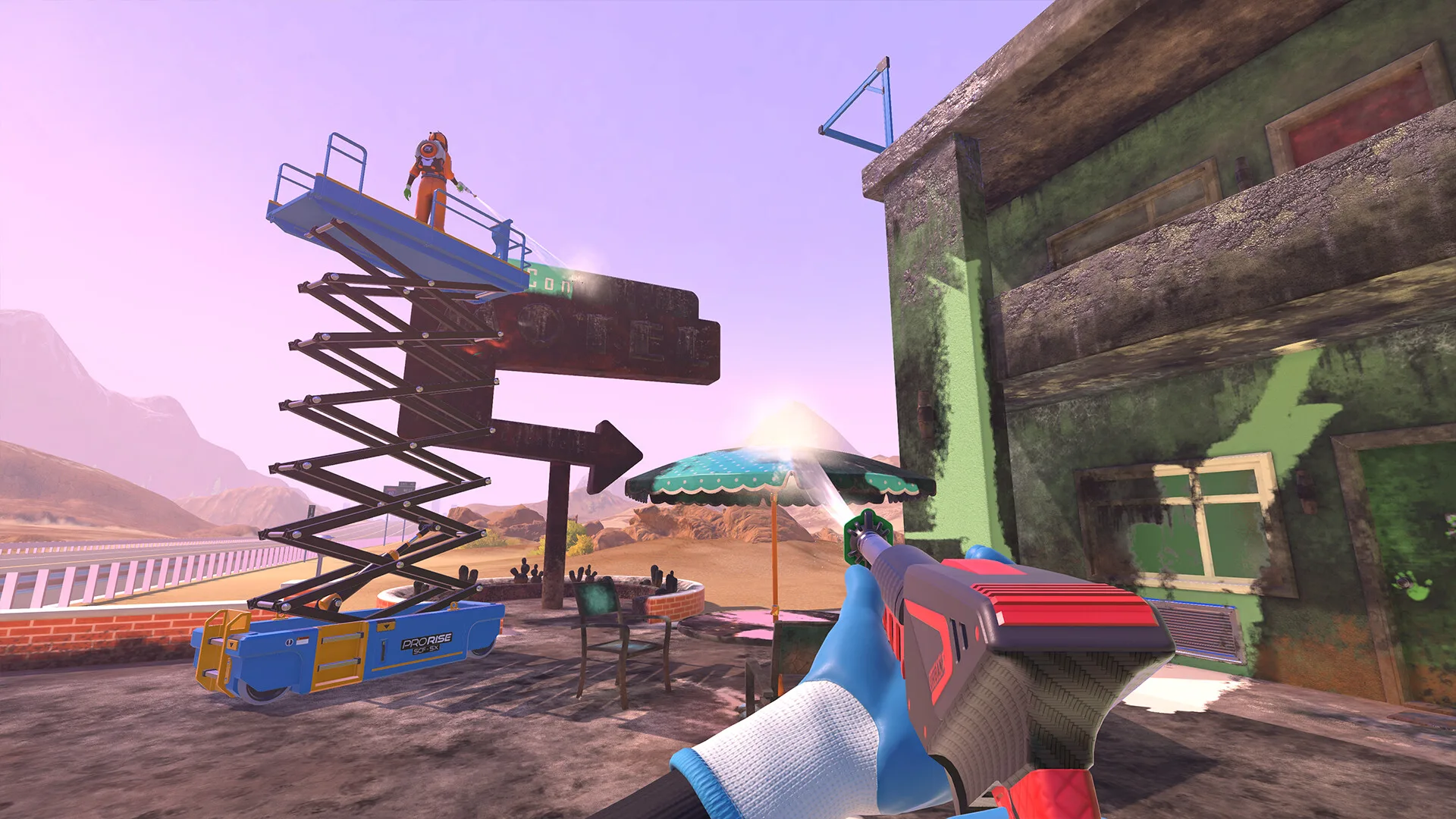
PowerWash Simulator 2 strips away this complexity with an elegant solution: a single soap attachment that works on any surface with unlimited supply. The soap refills automatically after brief use, eliminating resource management entirely. The process now involves coating stubborn stains with foam, then rinsing everything away with water. Watching soap slide off surfaces adds visual variety to an experience that could otherwise feel monotonous.
The change encourages liberal use where the original game trained players to hoard their limited supply. Soap becomes a standard tool rather than a precious resource, making the cleaning process feel more complete. You can only apply soap with the main washers rather than the floor cleaner, creating situational decision-making about which tool to deploy. This overhaul represents the kind of quality-of-life improvement that justifies a full sequel rather than a major update to the existing game.
Structures and Surprises
The job selection balances large buildings that demand hour-long sessions with smaller vehicles offering quick bursts of satisfaction. You’ll clean bandstands, public toilets, grand houses, mobility scooters, and cars decorated to look like dogs. Parade floats and solar system exhibits hide dirt in unexpected nooks. One memorable assignment suspends you over a desert highway while you clean a massive billboard, combining the game’s American aesthetic with its distinctly British sensibility. A fairground shooting gallery features miniature versions of landmarks from the previous game, rewarding longtime players with visual callbacks.
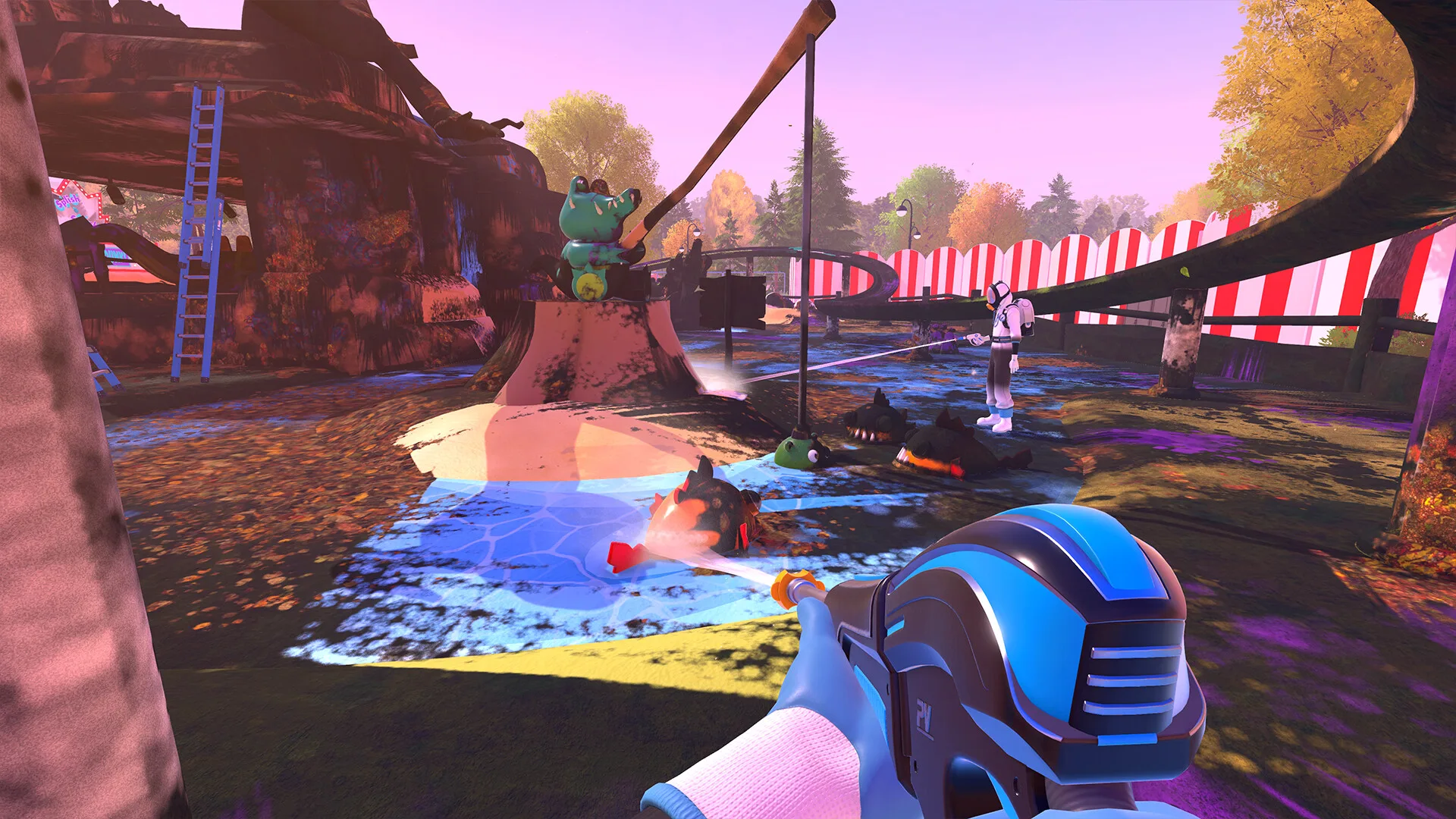
The level design has matured into a recognizable formula. Each job breaks naturally into sections requiring different approaches: high areas needing climbing equipment, flat expanses suited for the floor cleaner, and intricate details demanding precision work. This variety within individual jobs prevents the repetition from becoming numbing, though extended play sessions inevitably blur together.
The sequel introduces multi-stage levels where completing one section reveals new areas to clean. An early job demonstrates this perfectly: you clean what appears to be a sidewalk surface, only to discover it’s actually a retractable public toilet. Once pristine, the structure rises from the ground, revealing walls that need attention. Complete those, and the bathroom doors open to expose the interior. The progress bar hints at these reveals before they happen, but watching structures transform still provides pleasant surprises.
These staged reveals add variety without fundamentally changing the core mechanics. You’re still spraying water at dirt, but the pacing shifts from straightforward tasks to graduated challenges. Outside-then-inside building structures create natural breaks in longer jobs, giving players clear milestones before tackling the next phase.
Reaching difficult spots no longer requires awkward maneuvering thanks to improved climbing equipment. Traditional ladders now feature external access on tall scaffolding, eliminating the need to zigzag up and down. Stepladders handle medium heights, while scissor lifts provide vertical reach to roofs and second floors. The bosun’s chair lets you move up, down, and side-to-side on large vertical surfaces like billboards and rock-climbing walls. This dangling seat occasionally feels janky when dismounting, but it beats balancing precariously on ladders while trying to aim precisely.
Each piece of equipment appears on specific jobs where it makes sense, keeping the learning curve gentle. The additions prioritize convenience without removing the work itself. You still need to cover every surface, but the tools make positioning yourself less frustrating.
An improved dirt highlight system addresses one of the original game’s most persistent frustrations. On-screen indicators now show remaining dirty spots, with customizable highlight duration and adjustable colors for different surfaces. This helps tremendously when hunting down that final one percent of grime on a huge structure.
The system isn’t perfect. Some surfaces still register as clean despite visible dirt remaining, while others demand you find invisible specs before completion. These instances occur less frequently than in the first game but haven’t been eliminated entirely. Individual segment tracking for complex objects helps mitigate the issue, breaking seemingly impossible searches into manageable chunks.
Home Base Improvements
A new base of operations replaces the original game’s menu system with a physical space. A large wall map displays job locations while a shelving unit showcases miniature dioramas of completed levels. These elements provide more intuitive navigation than scrolling through lists, creating a tangible sense of progress as the shelves fill with tiny representations of your cleaned structures. Newspaper clippings on a corkboard expand the game’s lore between jobs, and the space functions as a gathering point for multiplayer sessions.
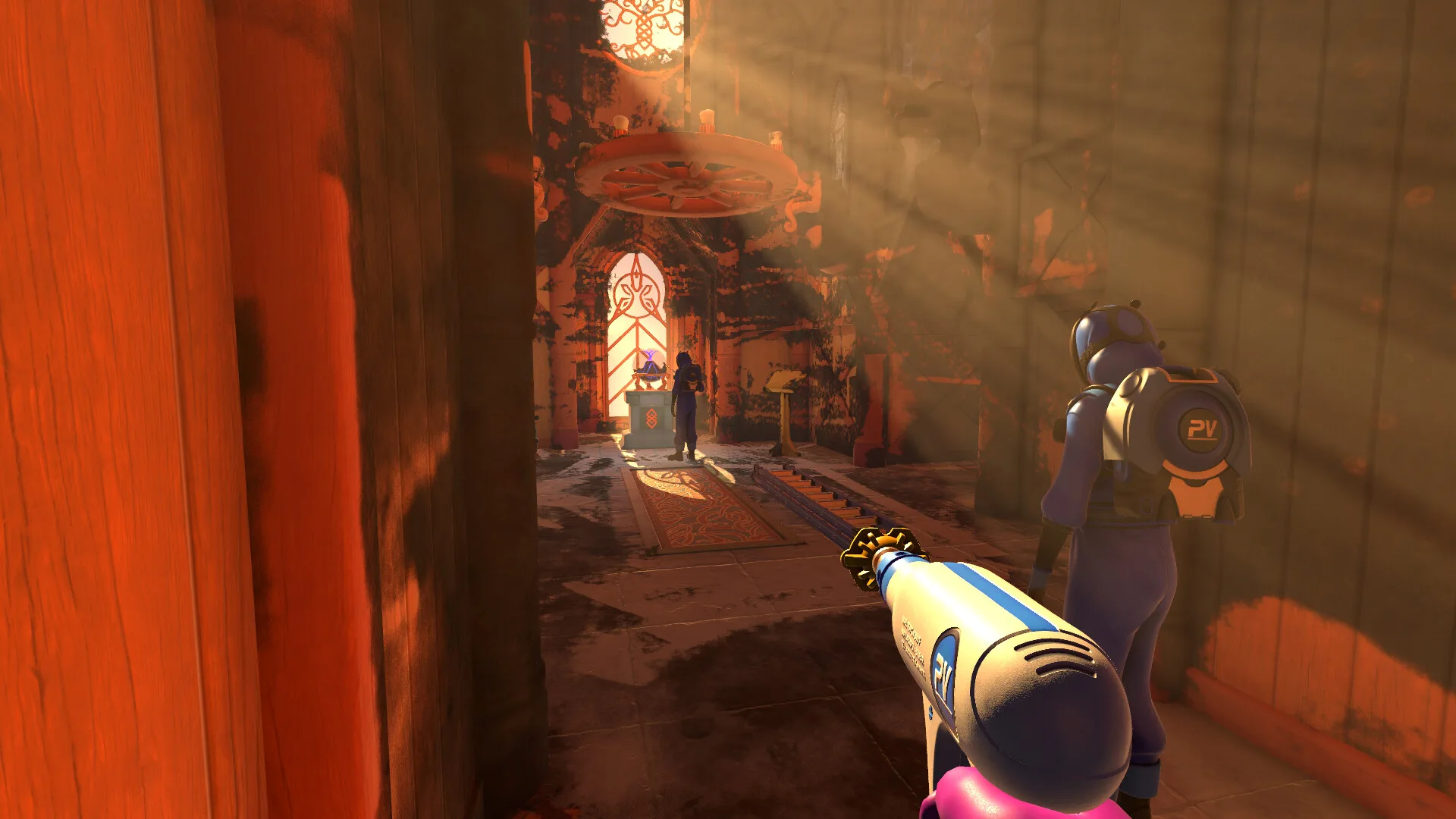
The hub adds visual polish without fundamentally changing how you access content. It’s essentially a prettier menu, but one that makes achievements feel more substantial. Seeing your work represented physically creates better cohesion for the game world, transforming abstract completion percentages into something you can observe and appreciate.
You can purchase furniture items with earned currency, though you must clean them first before placement. The game tends to provide excess currency for these purchases, suggesting the system anticipates future expansion. Free placement throughout the space sounds appealing in theory, but the execution stumbles. Furniture pieces don’t always align squarely with walls, requiring multiple adjustments to position items where you want them. The process feels less intuitive than it should for a game otherwise focused on smooth, meditative experiences.
Van, outfit, and washer customization options exist but suffer from poor interface choices. Washer selection hides in a radial menu, and equipment sometimes resets to default settings between levels. These annoyances rarely ruin the experience, but they represent rough edges in an otherwise polished package.
Whimsy and Water
Text messages deliver narrative context during jobs, with various characters chatting through group messages complete with pictures. The format explains why you’re cleaning a street sweeper covered in huckleberry jelly or provides background on fairground grudges and local drama. You can skip everything without losing gameplay value, making the story entirely optional for players who prefer pure cleaning meditation.
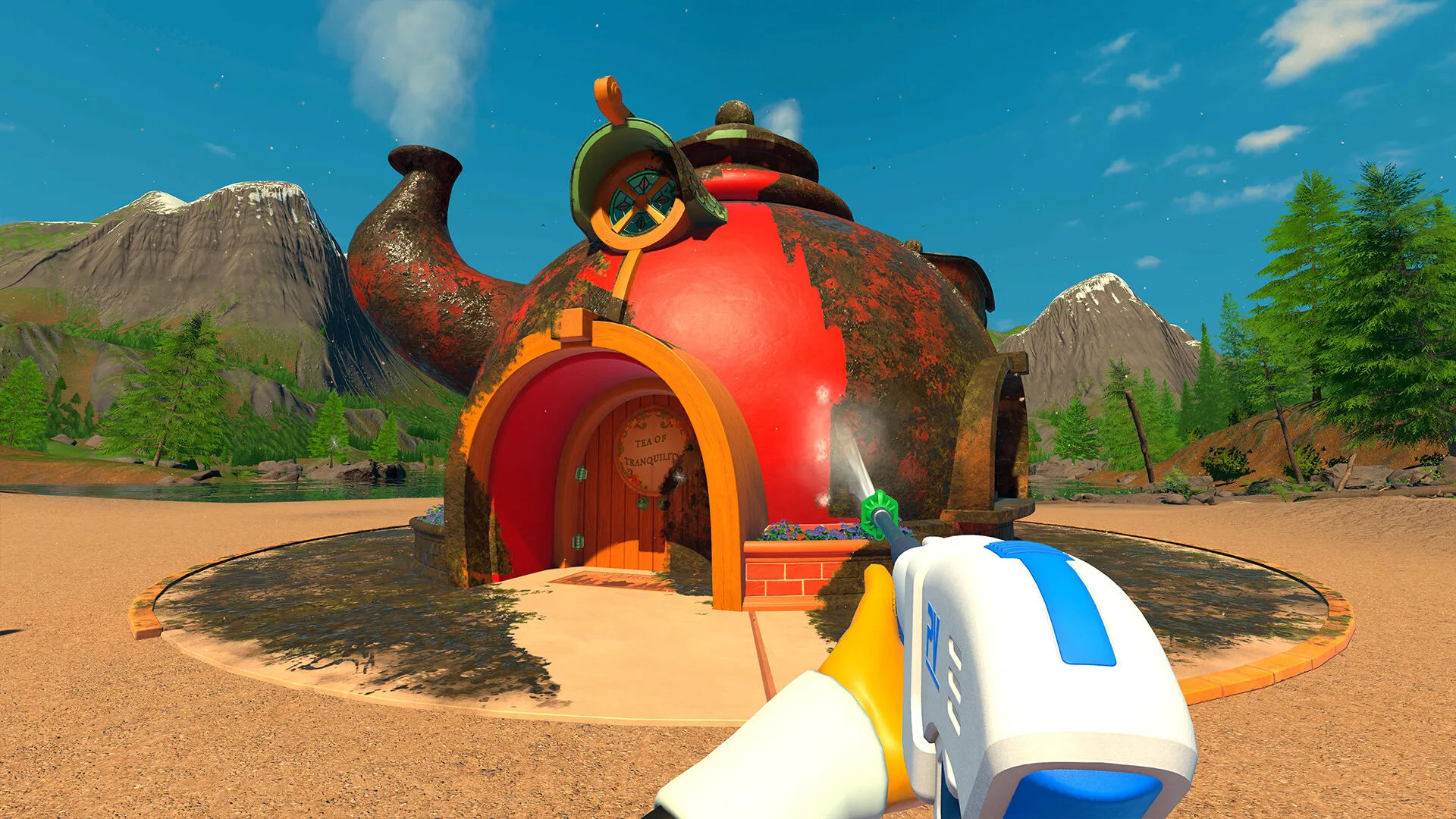
The writing embraces absurdity, weaving together petty grudges, corrupt politicians, missing cats, time-traveling aliens, lost civilizations, and erupting volcanoes into a surprisingly elaborate tapestry for a game about pressure washing. Callbacks to the first game’s merman statue and strange temple reward longtime fans, while the shooting gallery’s miniature landmarks create visual connections to previous locations. The whimsical tone permeates everything without demanding your attention.
The cartoonish art style emphasizes vibrant colors: oranges, yellows, and baby blues that pop brilliantly as grime disappears. Improved glass rendering adds realistic shimmer to windows and surfaces. Primary-hued details hide sight gags throughout each level, creating before-and-after satisfaction that goes beyond simple cleanliness. Time-lapse recap videos play after completing jobs, compressing hours of work into seconds of rapid transformation. Elaborate background environments establish a sense of place, suggesting these locations exist as part of a lived-in world rather than isolated cleaning puzzles.
The audio design commits fully to minimalism. Water produces an ASMR-style hiss during constant use, while completed segments trigger that Pavlovian ding. Visual cues accompany every audio alert, meaning you lose nothing essential by playing on mute. The absence of voice acting or music transforms PowerWash Simulator 2 into a perfect multitasking game. Want to catch up on podcasts, audiobooks, or music while playing? The game accommodates this completely, becoming a platform for whatever else demands your attention.
Working Together
Split-screen support for two local players and online multiplayer for up to four players would mean little without the sequel’s most important improvement: shared career progression. The original game let you join other players’ missions without receiving credit in your own campaign, forcing repetition if you wanted to complete everything. PowerWash Simulator 2 fixes this completely. Finish a job with friends and your solo progress updates accordingly.
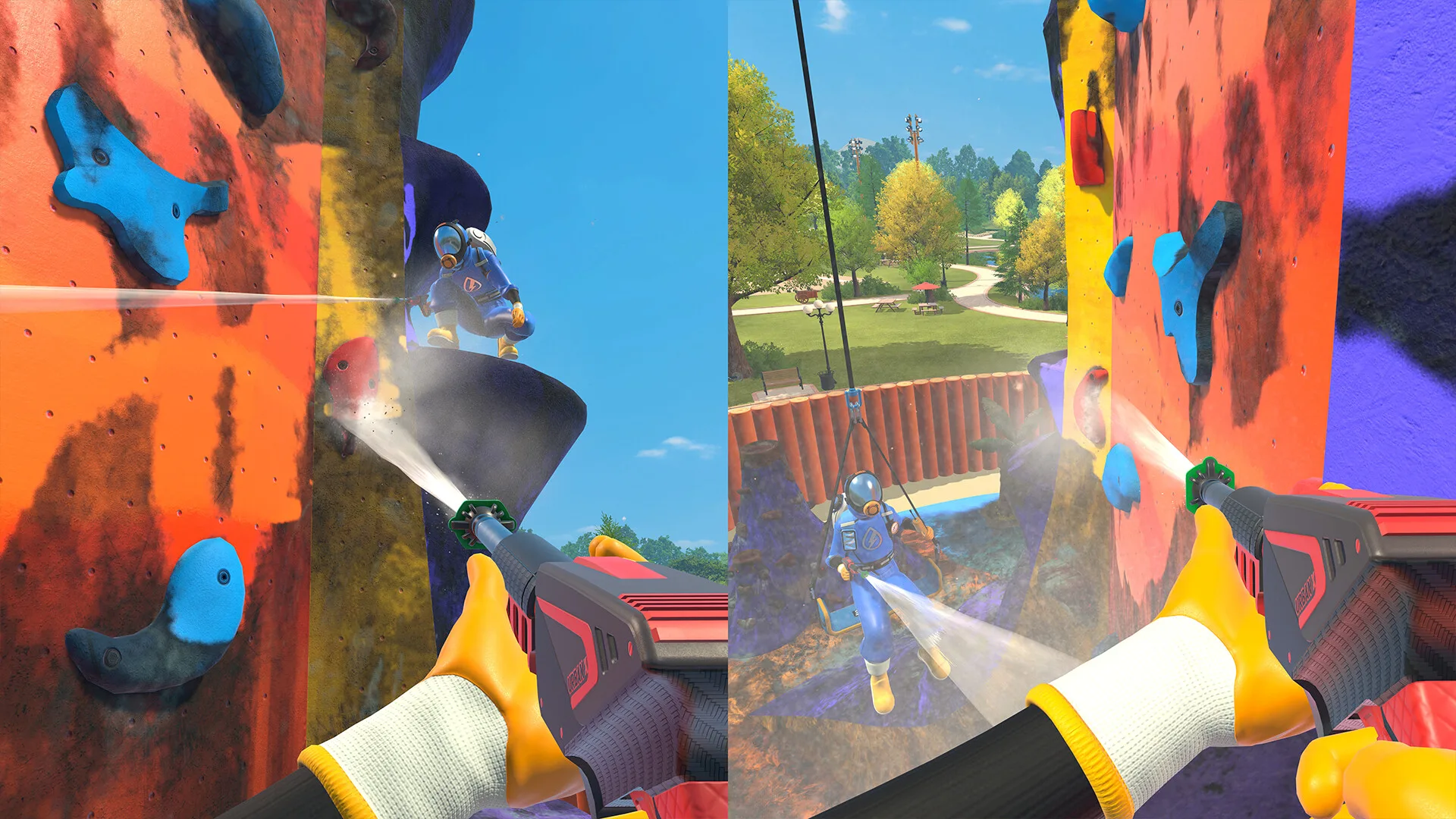
This change transforms how the game functions in co-op. Manual labor feels better with a team, both thematically and practically. Large structures that might take an hour solo become manageable group projects. The hub space serves as a gathering point between jobs, providing opportunities for coordination and casual socializing. Dividing tasks efficiently turns tedious work into collaborative problem-solving, where one player tackles the roof while another handles ground-level details.
Solo mode demands 50-60 hours to complete the main campaign, with individual levels sometimes exceeding an hour each. That’s substantial for any game, but especially for one built around repetitive actions. Co-op significantly reduces the time commitment while preventing the burnout that can set in during extended solo sessions. The game clearly anticipates both play styles, structuring content to work whether you’re methodically working alone or dividing labor with friends.
The line between game and work blurs during marathon sessions. What starts as satisfying progress can transform into something closer to actual labor, particularly when hunting down final dirt specs on massive structures. Taking breaks helps, and the game saves your position within jobs, letting you return without starting over. Playing with others provides natural variety through conversation and coordination, making it easier to sustain interest across the full campaign.
PowerWash Simulator 2 is a first-person simulation game where players manage a power-washing business, focusing on the meditative and satisfying loop of blasting away layers of dirt and grime from various objects and environments. Expanding on its predecessor, this sequel features a brand-new Career Mode that takes the player beyond Muckingham to new locations like Sponge Valley and Lubri City, all while uncovering more of the town’s lore. The game introduces new equipment, quality-of-life improvements, and a customizable home-base. It was released on October 23, 2025, and is available on Windows (PC/Steam, Epic Games Store), PlayStation 5, Xbox Series X/S, and Nintendo Switch 2. The game supports both single-player mode and various multiplayer options, including online co-op with shared progression and local split-screen co-op.
Full Credits
Director (Creative/Game Director): Dan Chequer
Writers (Lead Writer/Narrative Designer): Mark Ginbey
Producers/Studio Leadership (Producers, Executive Producers, and Key Studio Heads): Chris Mehers, Kirsty Rigden, Ang Tyler, Toby Adam-Smith
Art Director/Lead Artist: Torger Naerland, Ant
Key Engineering/Technical Leads: Peter Hansen, Martin
Composer/Sound Director: Dan Bibby
Developer, Publisher: FuturLab, FuturLab
Release Date: October 23, 2025
The Review
PowerWash Simulator 2
PowerWash Simulator 2 refines rather than reinvents, delivering exactly what fans craved. The soap overhaul, shared co-op progression, and multi-stage levels address specific frustrations while preserving the meditative core. FuturLab understood that this audience wanted improvements, not transformation. The 40-job campaign provides dozens of hours of satisfying repetition, though the line between game and labor blurs during extended sessions. This won't convert skeptics, but for players who found zen in pressure washing, the sequel offers polished, expanded meditation.
PROS
- Overhauled soap system eliminates tedious resource management
- Shared co-op progression means no repeated jobs
- Multi-stage levels add pleasant surprises to familiar mechanics
- Improved climbing equipment makes navigation less frustrating
- 40 diverse jobs balance quick sessions with hour-long challenges
- Customizable dirt highlight system aids final cleanup
CONS
- Fundamentally identical to the original game
- Furniture placement system feels clunky and imprecise
- Equipment customization interface hides options poorly
- Extended solo play can feel like actual work