













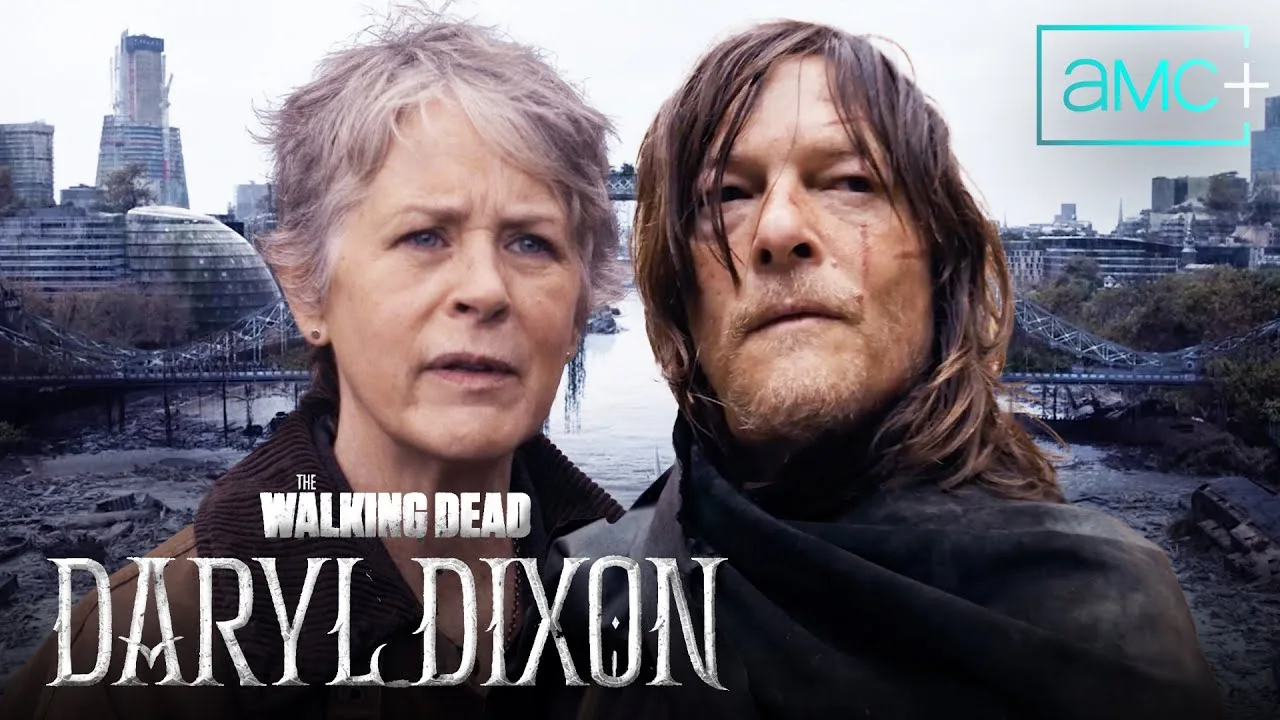

The logic of a post-apocalyptic world should, in theory, be one of contraction. Horizons shrink, ambitions simplify to sustenance, and the map of one’s life becomes a small, fiercely defended patch of earth. Yet the peripatetic existence of Daryl Dixon and Carol Peletier continues to defy this. Their long, bloody road home from France takes an entirely predictable turn for the disastrous, washing them ashore in Spain.
This is not merely a change of venue. It is a forced pilgrimage. Stranded on the Iberian Peninsula, their singular goal of repatriation is immediately complicated by the discovery of a society caught in its own particular feudal stasis. The season establishes its central drama quickly: the tension between the magnetic pull of home and the moral gravity of a new injustice demanding their attention. It is a familiar conflict, placed in a crucible that feels anything but.
A Fistful of Cadavers
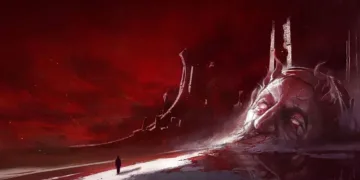
The greatest asset of this new chapter is, without question, the dirt under its fingernails. Spain provides an immediate and profound atmospheric overhaul, trading the gothic refinement of France for a landscape that feels scorched, ancient, and unforgiving. The cinematography leans into an ochre-toned palette, rendering the world in shades of baked earth and dried blood. On-location shooting in places like the ruins of Belchite, a town left skeletal by the Spanish Civil War, lends the scenery a haunting authenticity.
This is not a simple backdrop; it is a physical monument to a society that already tore itself apart once, a historical echo chamber for the current apocalypse. The effect is one of layered collapse, where the zombie outbreak is just the most recent catastrophe to befall a place long acquainted with ruin. This visual tension between the vast, agoraphobic freedom of the countryside and the candle-lit, almost medieval claustrophobia of the surviving towns becomes a central visual motif.
This aesthetic is no accident. The season reconstructs itself as a full-throated Spaghetti Western, a genre born from repurposing American myths on Spanish soil. It is a perfect, almost uncannily appropriate, fit. Daryl, ever the laconic knight-errant, becomes an even clearer descendant of Clint Eastwood’s nameless avengers.
He is the quiet stranger who materializes from the heat haze, his motorcycle a modern steed, his crossbow a six-shooter for a quieter age. Directorially, the show embraces the grammar of Sergio Leone. We are given vast, empty frames where a lone figure is dwarfed by the landscape, tense standoffs punctuated by the strum of a lone guitar, and a morality that is brutal and absolute.
The soundscape is just as important, with oppressive silence used as a weapon, broken only by the wind or the rasp of a nearby walker. This is the apocalypse as a frontier myth, a “necro-western” where the vultures are already dead and walking. The transnational origins of the genre itself—Italian directors in Spain telling American stories—perfectly mirror the show’s own circumstances, creating a rich, self-aware dialogue with film history.
The Archaeology of Scars
For characters who have endured fifteen years of broadcast calamity, finding new psychological territory to excavate is a monumental task. This season succeeds by turning its protagonists inward, making the Spanish landscape a backdrop for their own internal geographies.
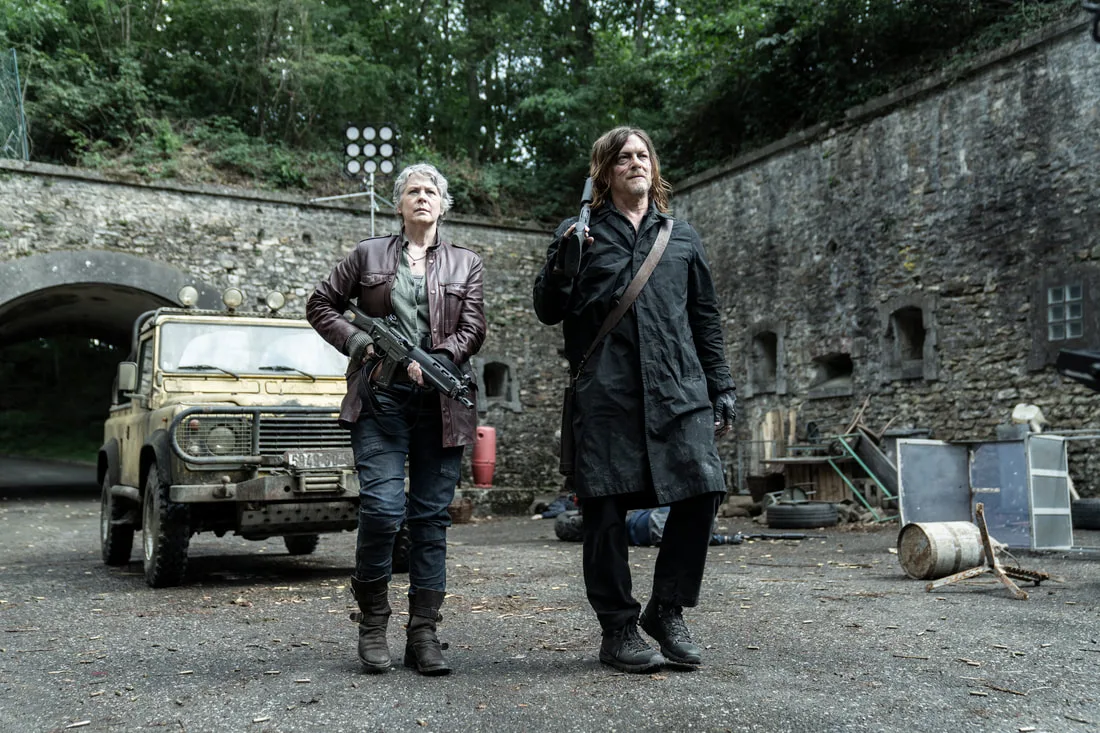
Daryl’s arc is one of regression in the service of progression. The loss of Isabelle in France has calcified his emotional armor. He is more determined than ever to get home, viewing any new human connection as a potential liability, another wound waiting to happen. The season probes this instinct not as simple cynicism but as a deep-seated trauma response rooted in a specific type of masculine conditioning.
His abusive childhood taught him that self-reliance is the only true form of safety. His solitude in Spain is a return to that familiar, if agonizing, state of being. The stark, empty landscape functions as a mirror to his internal state: beautiful, dangerous, and profoundly lonely. Norman Reedus has perfected a performance of immense density; his grunts and weary gazes contain a whole history of pain, a language unto themselves. He conveys a man not just grieving a recent loss, but perpetually processing the wreckage of his entire life.
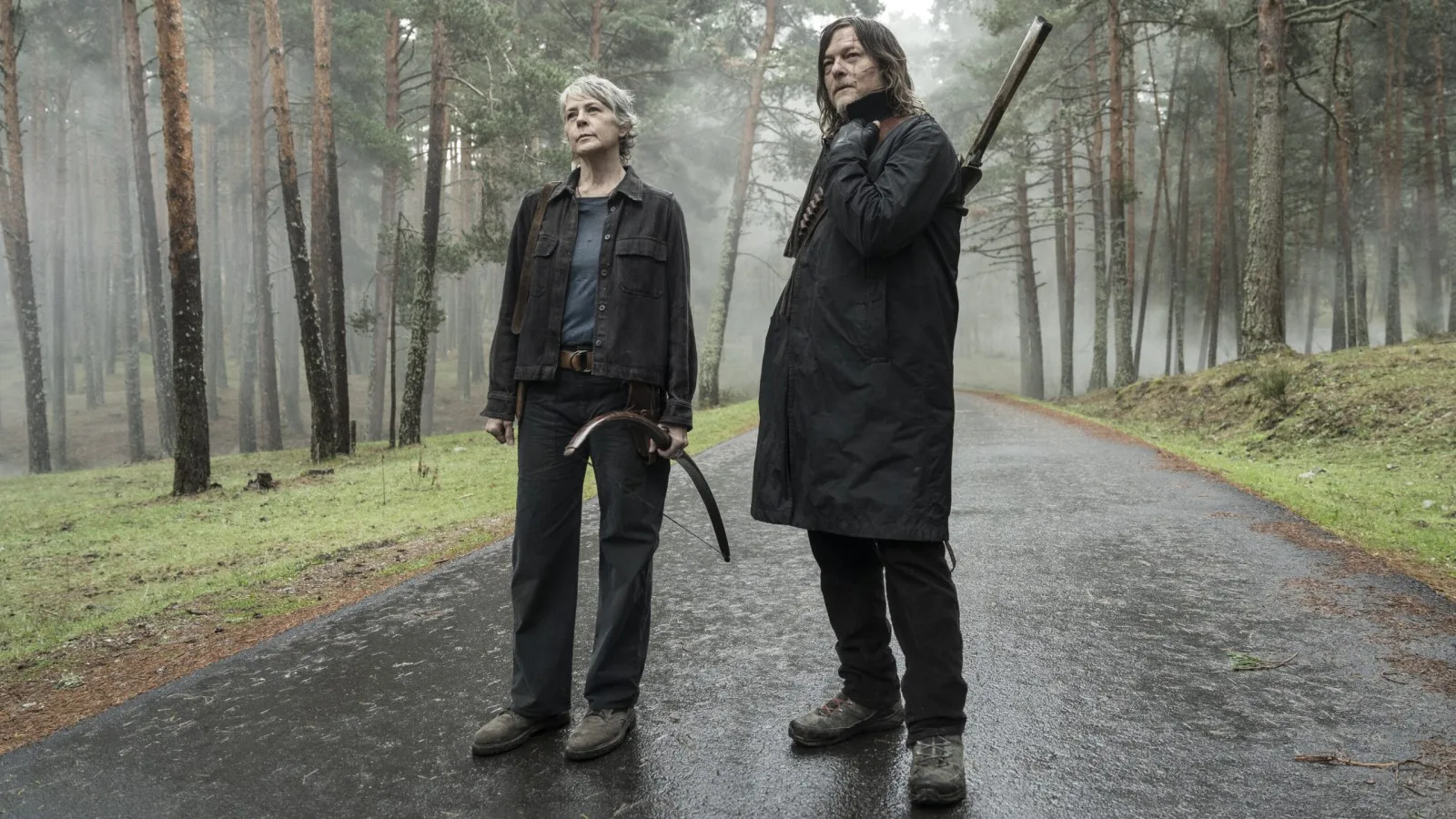
Carol, conversely, walks a path of cautious reconstruction. Having seemingly made a fragile peace with the ghost of her daughter, she arrives in Spain more open to the world. It is a profound philosophical shift. For years, her operating system was a brutal form of pragmatism, a willingness to do the unthinkable for the greater good (one need only whisper “look at the flowers”). Her new openness is a conscious, terrifying gamble. It is a rejection of the very hardness that kept her alive.
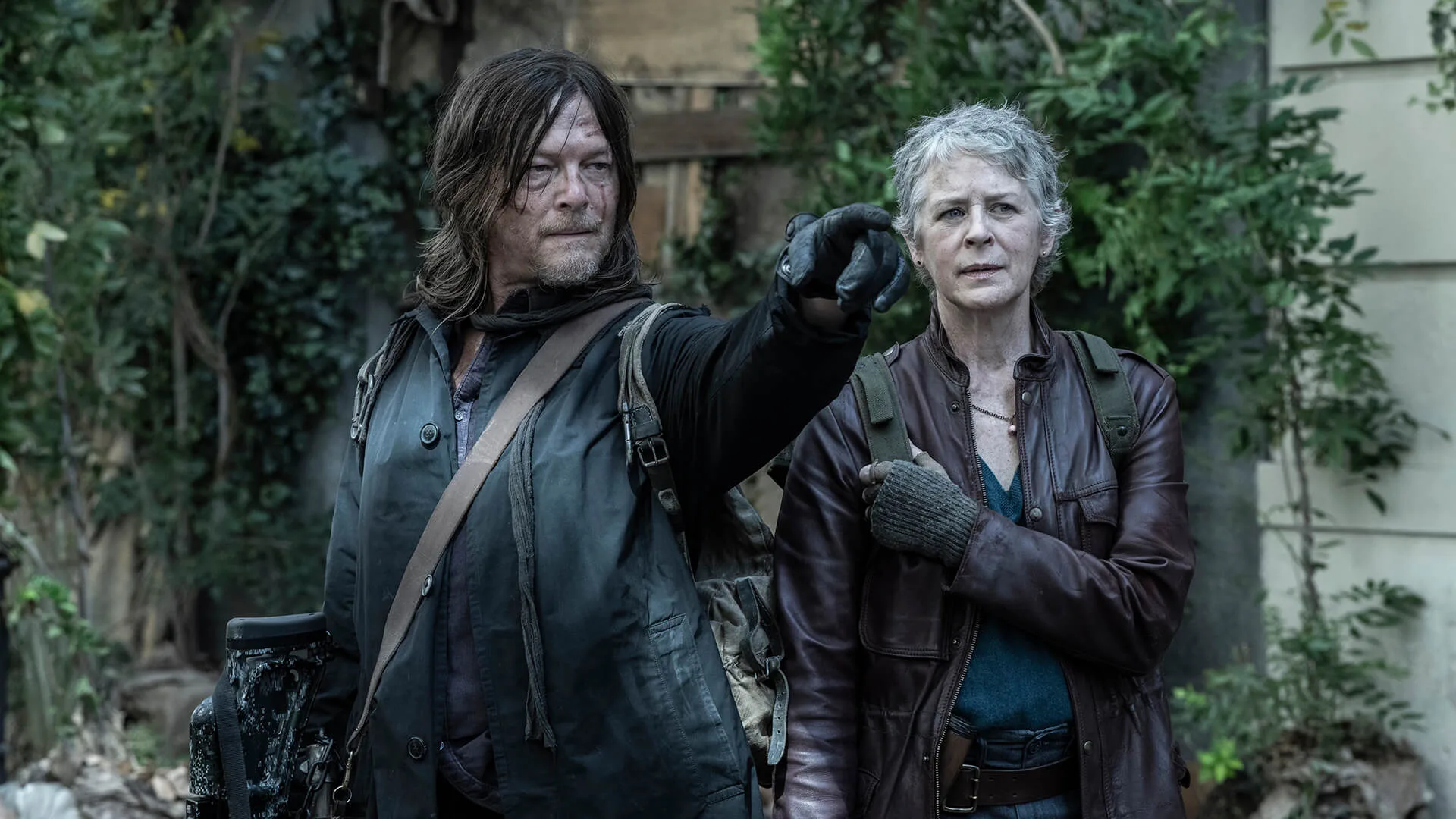
Where Daryl sees a problem to escape, Carol sees people to save. She becomes the architect of community, the nurturer whose empathy is both a strategic tool and a genuine impulse. Her tentative steps toward a new romance with a local leader are less a subplot and more a radical act of faith. It is a testament to Melissa McBride’s immense talent that this shift feels earned, a portrayal of a woman deciding that survival is not the same as living. Her old skills of observation and manipulation are now deployed not for destruction, but for the delicate work of building trust.
Their bond is the show’s unshakable foundation, the central dialectic of the entire franchise. Their disagreements this season are philosophical. It is a debate between principled isolationism and compassionate interventionism, played out by two people who know each other’s arguments before they are spoken. Their friendship is a long, intricate conversation, and their shared history allows for a depth of interaction that needs little dialogue to be understood. Their silences are laden with fifteen years of shared trauma and unspoken loyalty.
Fresh Blood, Stale Motives
A new country means a new population of survivors and predators, and the season’s offerings are a decidedly mixed bag. The bright spots are genuinely bright, suggesting what is possible when the show allows its world to produce something truly new. Alexandra Masangkay’s Paz is an instantly iconic creation, a Spanish vaquero with a quiet confidence and a duster coat that feels destined for cosplay immortality.
She is not a redux of a previous character; she is a product of her own specific apocalypse, a new model of survivor. Eduardo Noriega brings a gentle gravity to Antonio, Carol’s potential suitor, while Stephen Merchant’s brief cameo as a delightfully eccentric Englishman provides a welcome dose of droll, Beckett-like absurdity at the start. Even the young, star-crossed lovers who serve as the plot’s primary catalyst manage to function, despite their characterization feeling like a well-worn page from the post-apocalyptic playbook.
The problems arise, as they so often do, with the antagonists. The season suffers from a pronounced case of Antagonist Déjà Vu. The ruling body, El Alcázar, is a pale echo of threats past, a rehash of Negan’s Saviors without the electrifying charisma. They are a patriarchal monarchy demanding tribute (in this case, the town’s daughters) in exchange for protection. It is a system of exploitation so familiar within this franchise that it suggests a universe folding in on itself, a snake eating its own tail.
The villains are avaricious, well-dressed gluttons whose evil is so absolute and uncomplicated that it feels dramatically inert. The use of fine clothes in a world of rags is a tired visual shorthand for corruption. In a setting so rich with unique historical potential—villains modeled on the Inquisition, on fascist holdouts, on separatist factions—we are instead given apocalyptic boilerplate. It is a staggering failure of imagination that makes the world feel smaller, not larger.
A Beautiful, Bloody Layover
Whatever its narrative shortcomings, the season is executed with formidable skill. The action is frequent, brutally elegant, and coherently staged, favoring a kind of intimate viciousness over large-scale warfare. This is the violence of a knife in a dusty alley, not a machine gun emplacement. A massive town siege midway through the story is a particular highlight, a symphony of logistical mayhem that demonstrates the show’s confidence in orchestrating complex set pieces.
There remains a laudable creativity in the smaller moments of violence too. The series continues to find novel ways to dispatch the undead, often weaponizing the environment itself, ensuring the foundational threat of the walker does not become rote. The seven-episode run enforces a merciful bit of narrative compression, keeping the story moving at a brisk, purposeful clip that the mothership series often lacked.
One could argue this entire season is a pitstop, a beautifully rendered holding pattern before the inevitable final act of this long-running saga. The story mechanics are, after all, the same old song: our heroes find a community, identify its oppressors, and burn the system to the ground. Yet, the argument can be made that this repetition is the point. In the world of The Walking Dead, when civilization collapses, it always rebuilds itself along the same brutal, feudal lines.
The season’s triumph is in taking that cynical, deterministic worldview and making it feel specific, vital, and emotionally resonant. The macro-plot is a retread, but the execution—the acting, the cinematography, the atmospheric specificity—is so strong that it elevates the whole endeavor. It suggests the franchise’s best path forward is not in inventing wholly new plots, but in finding new cultural lenses through which to view its core, unchanging questions. This bloody layover in Spain, against all odds, feels like a destination in itself.
Full Credits
Director: David Zabel
Writers: David Zabel, Jason Richman, Shannon Goss
Producers and Executive Producers: Scott M. Gimple, Robert Kirkman, David Alpert, Gale Anne Hurd, Angela Kang, Greg Nicotero, Norman Reedus, Melissa McBride, David Zabel, Brian Bockrath, Jason Richman, Daniel Percival, Steven Squillante, Silvia Aráez, Jesús de la Vega, Coline Abert, Raphaël Benoliel, Augustin De Belloy, Ryan DeGard, Cory Hubbard, John Marler
Cast: Norman Reedus, Melissa McBride, Eduardo Noriega, Óscar Jaenada, Alexandra Masangkay, Candela Saitta, Hugo Arbués, Gonzalo Bouza, Hada Nieto, Yassmine Othman, Cuco Usín, Stephen Merchant, Greta Fernández
Composer: David Sardy
The Review
The Walking Dead: Daryl Dixon Season 3
A stunning change of scenery and a masterful Spaghetti Western aesthetic breathe new life into a familiar formula. While the season is hampered by one-dimensional villains and a plot structure that feels like a franchise rerun, it is triumphantly elevated by its confident direction, brutal action, and most importantly, the deeply resonant character work for its two iconic leads. This Spanish detour proves to be an unexpectedly beautiful and worthwhile chapter, finding new emotional depth on a well-trodden apocalyptic road.
PROS
- Provides deep, evolving character arcs for both Daryl and Carol.
- The Spanish setting is visually stunning and atmospherically rich.
- Effectively reimagines the show's aesthetic as a classic Spaghetti Western.
- Features well-choreographed action sequences and a brisk, focused pace.
- Strong, nuanced lead performances carry the emotional weight.
CONS
- Antagonists are underdeveloped and feel derivative of past series villains.
- The central plot follows a repetitive formula of finding and liberating a community.
- Missed opportunity to create a conflict more unique to the new location's history.