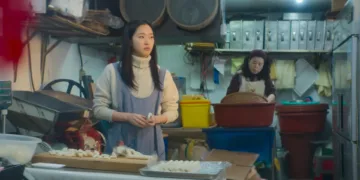













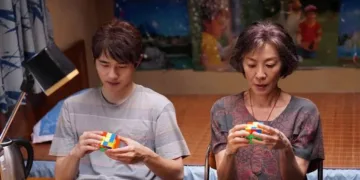














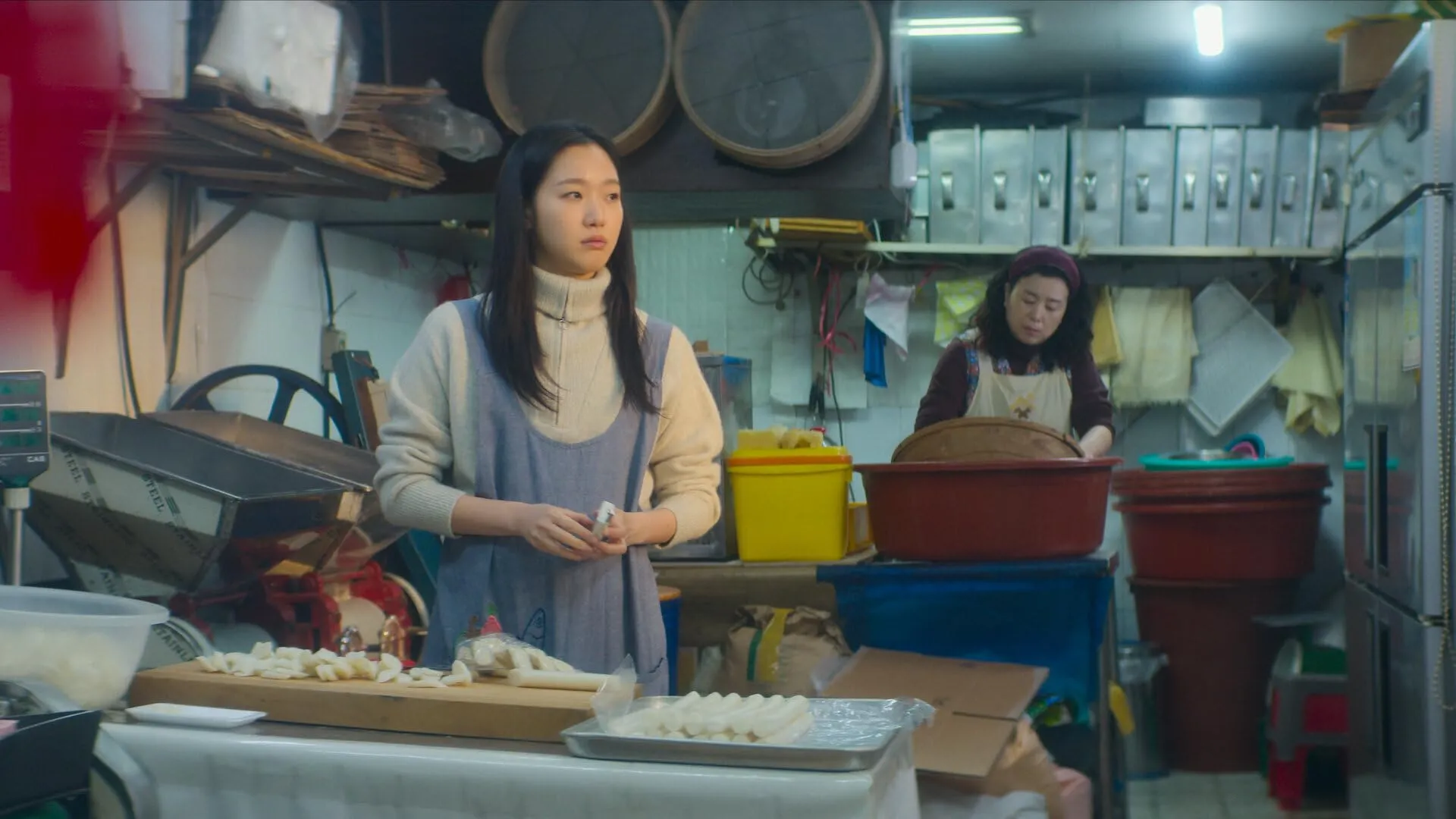

Some friendships feel like they are etched into your DNA. They are the ones that shape you, the ones whose memories surface unexpectedly when you hear a certain song or pass a familiar street corner. You And Everything Else understands this profound connection. The series introduces us to Ryu Eun-jung, a writer, and Cheon Sang-yeon, a highly successful film producer.
They were once inseparable friends, but now they exist in a state of cold estrangement. Their dormant history is violently reawakened when Sang-yeon, after accepting a major award, publicly thanks Eun-jung. This strange olive branch leads to a reunion filled with tension and a devastating revelation.
Sang-yeon has terminal cancer and wants Eun-jung to accompany her for an assisted death when the time comes. This monumental request becomes the key that unlocks decades of memories, forcing both women to sift through the wreckage of their past to understand their present.
Anatomy of a Difficult Friendship
At the center of this story is a relationship that defies easy categorization. The bond between Eun-jung and Sang-yeon is a thirty-year cycle of intense affection, sharp rivalry, and deep betrayal. The series meticulously dissects the psychological mechanics of their connection, showing how they repeatedly wound each other yet cannot seem to stay apart.
Their dynamic is built on a foundation of co-dependency so deep that their individual identities feel blurred. Eun-jung herself admits she cannot speak about her life without Sang-yeon’s name appearing, suggesting that her personal history is inseparable from her friend’s.
They have defined themselves in relation to one another for so long, whether as allies or adversaries, that the idea of existing independently seems impossible. This creates a powerful, if toxic, gravity that continually pulls them back into orbit.
A significant driver of their conflict is a potent, mutual envy. The series smartly portrays this not as a simple case of jealousy, but as a complex mirroring of insecurities. Eun-jung, who grew up with financial struggles in a cramped basement apartment, harbored a quiet resentment for Sang-yeon’s beautiful, sunlit home and the opportunities her family’s wealth provided.
It was a tangible difference that colored their entire adolescence. Sang-yeon, in turn, coveted the things money could not buy: Eun-jung’s natural warmth, her easy eloquence, and the effortless way she could charm people. This is most apparent in how Sang-yeon’s own mother, a teacher, openly praised Eun-jung’s writing and spirit, a slight that planted a seed of jealousy early on.
This mirroring of desire and resentment creates a persistent friction, a quiet competition that simmers beneath every interaction. The show does not shy away from their immaturity; many of their problems stem from a stubborn refusal to communicate.
We watch them make frustrating choices, but the narrative provides enough context about their shared history and personal tragedies to explain, though not excuse, their flawed behavior. Their actions are often selfish and their words are frequently cruel, yet the story frames these failings as the scars left by a long, shared, and difficult past.
Memory as a Narrative Device
The series abandons a linear plot for a structure that mimics the chaotic nature of memory itself. I am often reminded of how my own mind works when I think of the past; it is never a straight line, but a collection of vivid scenes that jump across the years. The story uses this same associative logic, shifting between the present day and pivotal moments in the past.
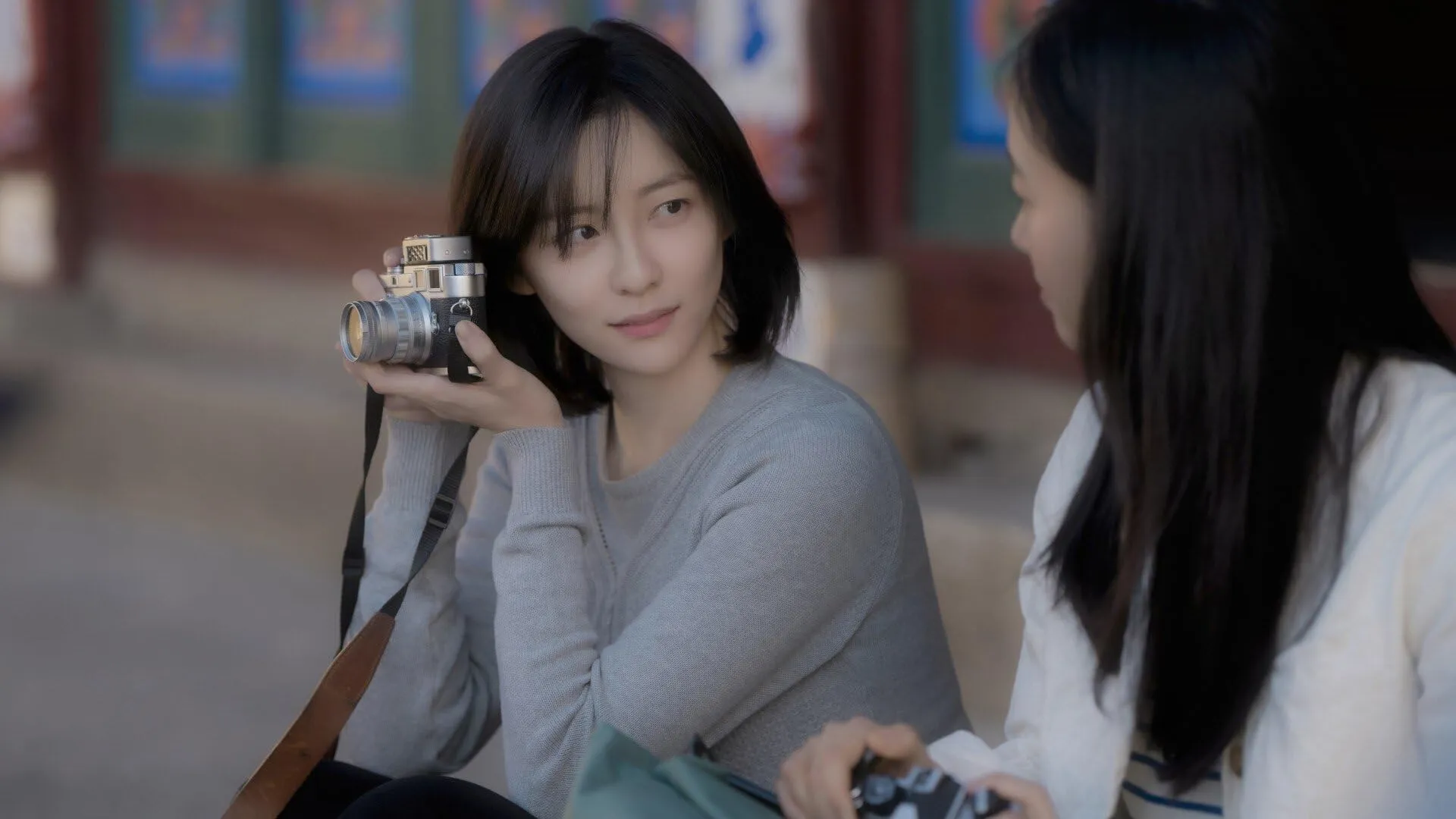
This non-linear approach is highly effective, allowing each flashback to reframe our understanding of the present-day dilemma. A scene of fourth-grade animosity gives way to teenage bonding, which is then contrasted with a bitter professional betrayal years later.
This technique builds a rich, layered portrait of their relationship, showing us not just what happened, but how the accumulation of small moments and major heartbreaks shaped who they are. The production design does an excellent job of grounding us in each time period. The shift from the clunky pagers and color-blocked fleeces of their youth to the sleek, monochromatic apartments of their adult lives is a clear visual shorthand for the passage of time.
This ambitious structure is held together by the phenomenal work of its lead actors. Their performances are the anchor in this temporal storm. Kim Go-eun gives Eun-jung an expressive vulnerability, capturing the spirit of a woman who is both fiercely defensive and deeply sensitive.
Her face can register a lifetime of hurt in a single glance, and she perfectly embodies the character’s internal conflict between pride and a desperate need for connection. Park Ji-hyun portrays Sang-yeon with a precise, controlled stillness that is fascinating to watch.
Her performance is a study in restraint, suggesting a deep well of inner turmoil beneath a polished, almost impenetrable facade. In her quietest moments, small flickers of pain or regret cross her face, giving us a glimpse of the person she might have been.
The supporting cast adds further dimension. Seo Jung-yeon is quietly heartbreaking as Sang-yeon’s mother, a woman caught between her daughter and the student she adores. The story also introduces two young men named Kim Sang-hak, a narrative choice that creates further complications and forces the women to confront their ideas of love and ownership.
The Friction in the Melodrama
For all its emotional power, the series is a demanding watch that tests a viewer’s patience. The pacing often slows to a crawl, particularly during an extended love triangle subplot in their university years that feels both drawn out and repetitive. This section of the story, which dominates several episodes, sees the characters circling the same arguments and misunderstandings.
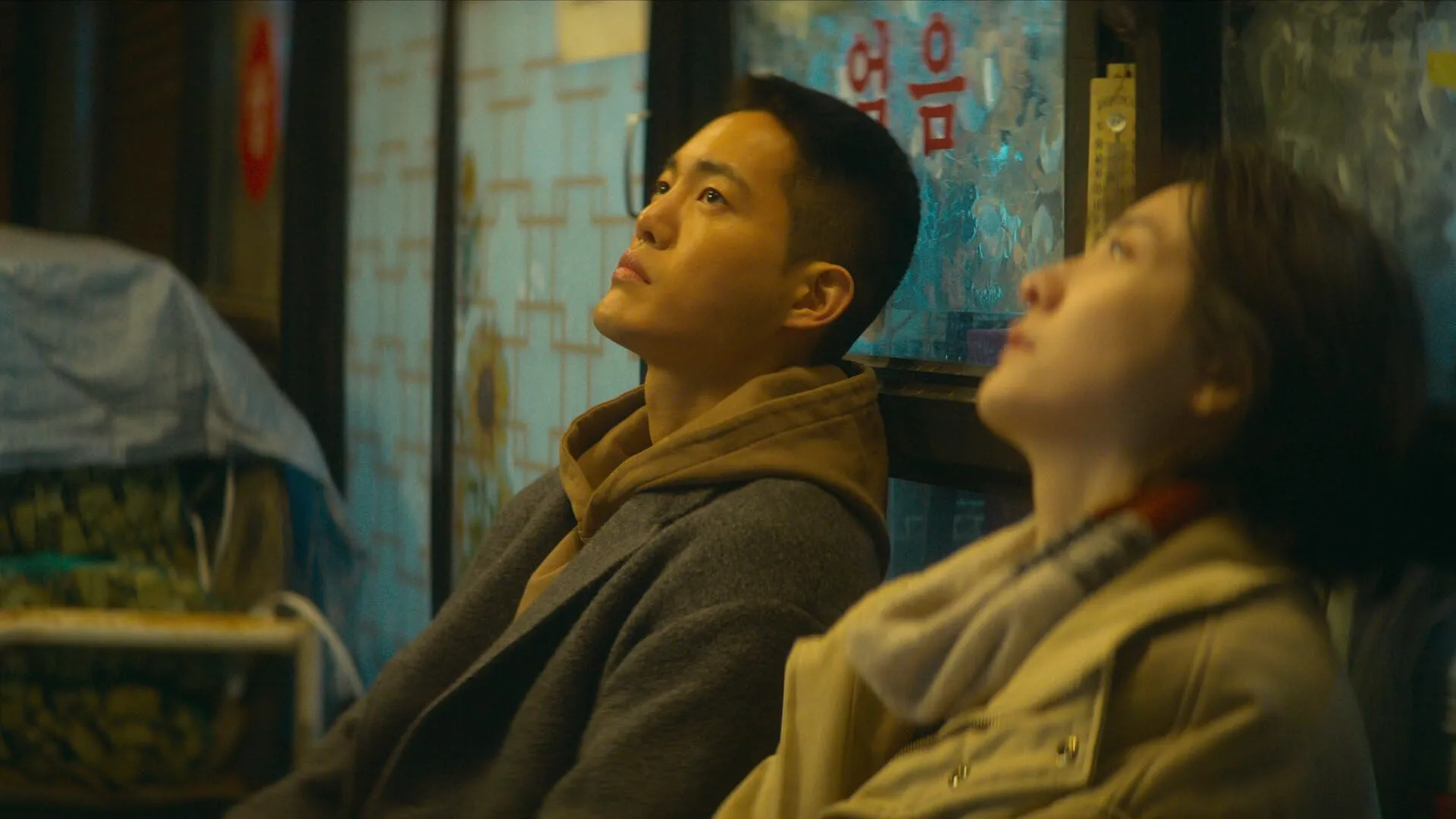
The narrative momentum stalls, and the focus shifts from the central female friendship to a romantic conflict that feels less original. The script also frequently leans on contrived conflicts, where a single honest conversation would resolve a misunderstanding that instead spirals into another multi-episode rift.
This reliance on miscommunication is a staple of the melodrama genre, but its overuse here can feel like a crutch, preventing more organic character development. I found myself wanting to shout at the screen, a feeling I know some viewers will share.
This brings me to the show’s full embrace of melodrama. It is a work of heightened emotion, and the technical elements often amplify this. The musical score, in particular, can be overbearing. It swells at predictable moments, telegraphing emotion so aggressively that it risks pushing dramatic scenes into territory that feels emotionally manipulative.
I have a high tolerance for slow burns and emotional storytelling, but there were moments when the series felt like it was instructing me how to feel instead of trusting the power of its own story and the capabilities of its actors. These narrative stumbles are frustrating because they detract from the story’s core strengths.
The show is at its best when it quiets down and allows its characters to simply exist in a room together, the air thick with decades of unspoken history. You And Everything Else has significant flaws in its execution, but the raw depiction of a complicated female friendship, carried by two exceptional lead performances, makes it a memorable and affecting drama. It is a show that will stick with you, not for its plot twists, but for its painfully honest look at how the people we love the most are also the ones most capable of hurting us.
“You And Everything Else” is a South Korean television series that premiered on September 12, 2025. It is available to watch on the streaming platform Netflix. The show tells the story of a long friendship between two best friends, charting their relationship from childhood into their forties.
Full Credits
Director: Jo Young-min
Writers: Song Hye-jin
Cast: Kim Go-eun, Park Ji-hyun, Kim Gun-woo, Lee Sang-yoon
The Review
You And Everything Else
This series is a demanding, often frustrating, yet emotionally potent drama. Its greatest strength is the raw, unflinching portrait of a decades-long female friendship, brought to life by two phenomenal lead performances. While the story is frequently bogged down by sluggish pacing and a heavy-handed script, the central relationship is so honestly explored that it leaves a lasting impression. It is a flawed piece of work worth watching for its affecting character study and the exceptional acting that sustains it.
PROS
- Exceptional lead performances from Kim Go-eun and Park Ji-hyun.
- A deep and honest exploration of a complex, decades-long female friendship.
- Effective use of a non-linear narrative to build emotional depth.
CONS
- Very slow pacing, with a repetitive and drawn-out middle section.
- The script relies heavily on contrived misunderstandings.
- An overbearing musical score that creates excessive melodrama.