


























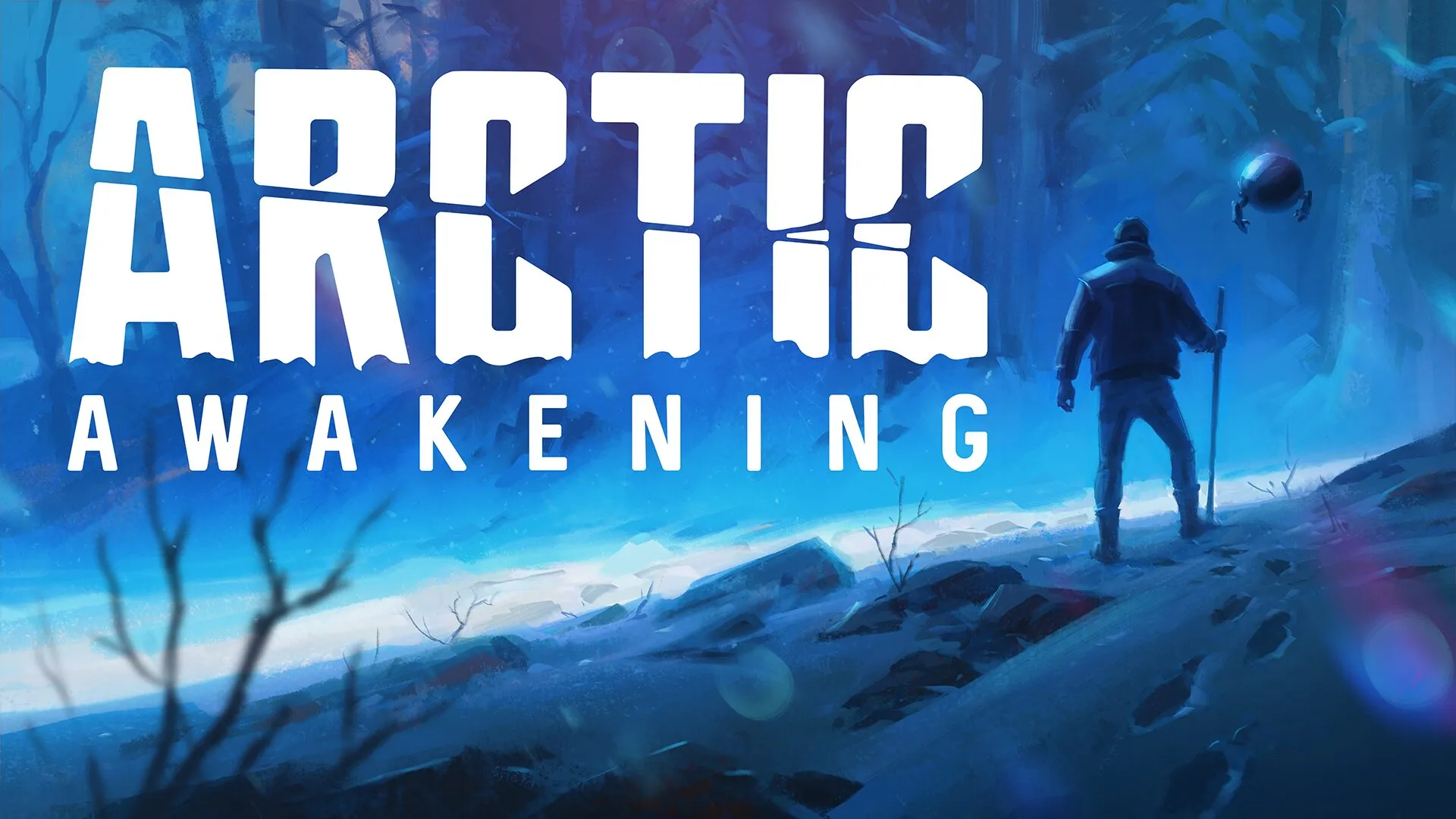

The survival genre has given us everything from desert islands to zombie-infested forests, each testing our ability to endure against impossible odds. Arctic Awakening takes this familiar framework and transplants it to the frozen wilderness of 2060s Alaska, creating a first-person narrative adventure that prioritizes emotional survival over physical threats.
You play as Kai, an ex-Navy pilot whose routine supply run turns catastrophic when his aircraft is mysteriously torn apart mid-flight. With co-pilot Donovan vanishing via parachute during the chaos, Kai finds himself stranded in hostile territory with an unlikely companion: Alfie, his court-mandated therapy robot.
GoldFire Studios structures this 8-10 hour experience across five distinct episodes, each running approximately two hours. The game operates as a walking simulator enhanced with light survival mechanics, where the real challenge lies in piecing together an increasingly complex mystery.
What begins as a straightforward rescue mission evolves into something far stranger as Kai discovers massive abandoned industrial complexes scattered throughout the wilderness. The relationship between man and machine takes center stage, with Kai’s reluctant partnership with Alfie driving both the emotional core and the mysterious elements forward. This is storytelling designed for patience, where atmosphere and character development carry more weight than action sequences or complex puzzle-solving.
A Journey of Healing and Discovery
Arctic Awakening builds its narrative foundation on the fractured psyche of its protagonist. Kai arrives in Alaska carrying baggage from his military past, his personal struggles significant enough to warrant court-ordered therapeutic supervision.
Alfie serves dual purposes as both survival companion and psychological monitor, creating an inherently tense dynamic that the game explores with genuine sensitivity. The therapy bot’s chipper demeanor clashes against Kai’s gruff resistance, establishing a relationship that mirrors the push-and-pull between acceptance and denial that defines real therapeutic processes.
The dialogue system allows players to shape this central relationship through multiple conversation branches. You can lean into Kai’s natural cynicism, embrace gradual warming toward Alfie, or find middle ground between hostility and acceptance. These choices feel meaningful because they reflect authentic emotional responses rather than arbitrary moral alignments. The writing captures the messy reality of someone grappling with trauma while simultaneously facing immediate survival challenges.
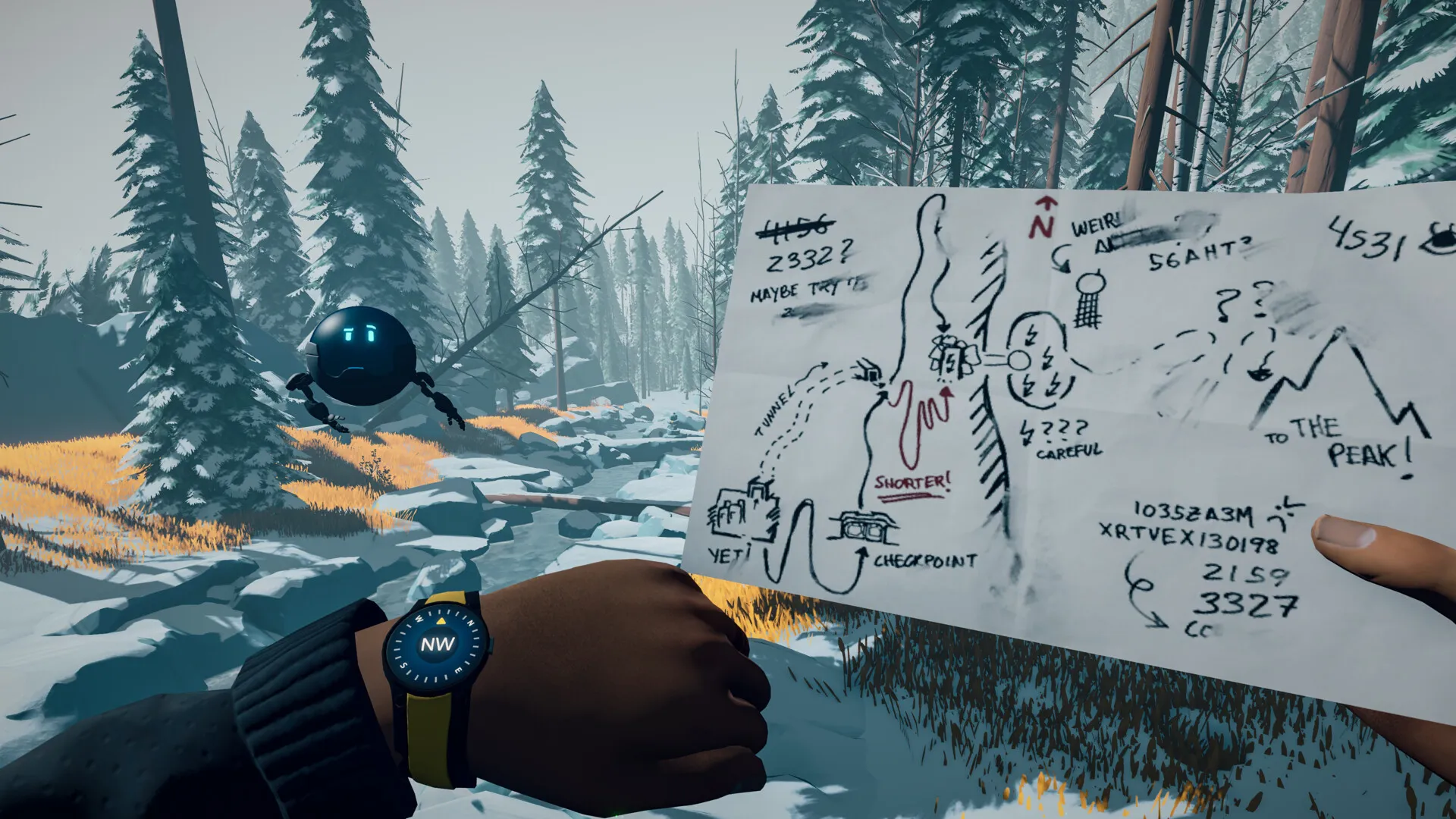
As Kai and Alfie venture deeper into the Alaskan wilderness, their personal journey interweaves with a larger mystery involving strange drone activity, abandoned research facilities, and unexplained atmospheric phenomena. The game employs visual storytelling effectively, letting environmental details and scattered documents reveal background information about the mysterious installations. Each discovery adds layers to both the external conspiracy and Kai’s internal struggles, creating parallel mysteries that enhance rather than compete with each other.
The episodic structure creates natural breathing points within the larger narrative arc, though it occasionally works against sustained momentum. Some episodes feel more essential than others, with certain chapters serving primarily to move characters between locations rather than advancing plot or character development significantly. When the pacing works, it allows for proper meditation on themes of loss, redemption, and human connection. When it doesn’t, you’re left walking through beautiful but empty landscapes waiting for the next meaningful story beat.
Survival Through Simplicity
Arctic Awakening approaches gameplay with deliberate minimalism, focusing on exploration and atmosphere over mechanical complexity. The survival elements center around basic hunger and thirst management, where neglecting Kai’s physical needs results in blurred vision and slower movement rather than immediate death. This approach serves the narrative by creating mild inconvenience rather than genuine challenge, keeping focus on story progression while maintaining the illusion of vulnerability.
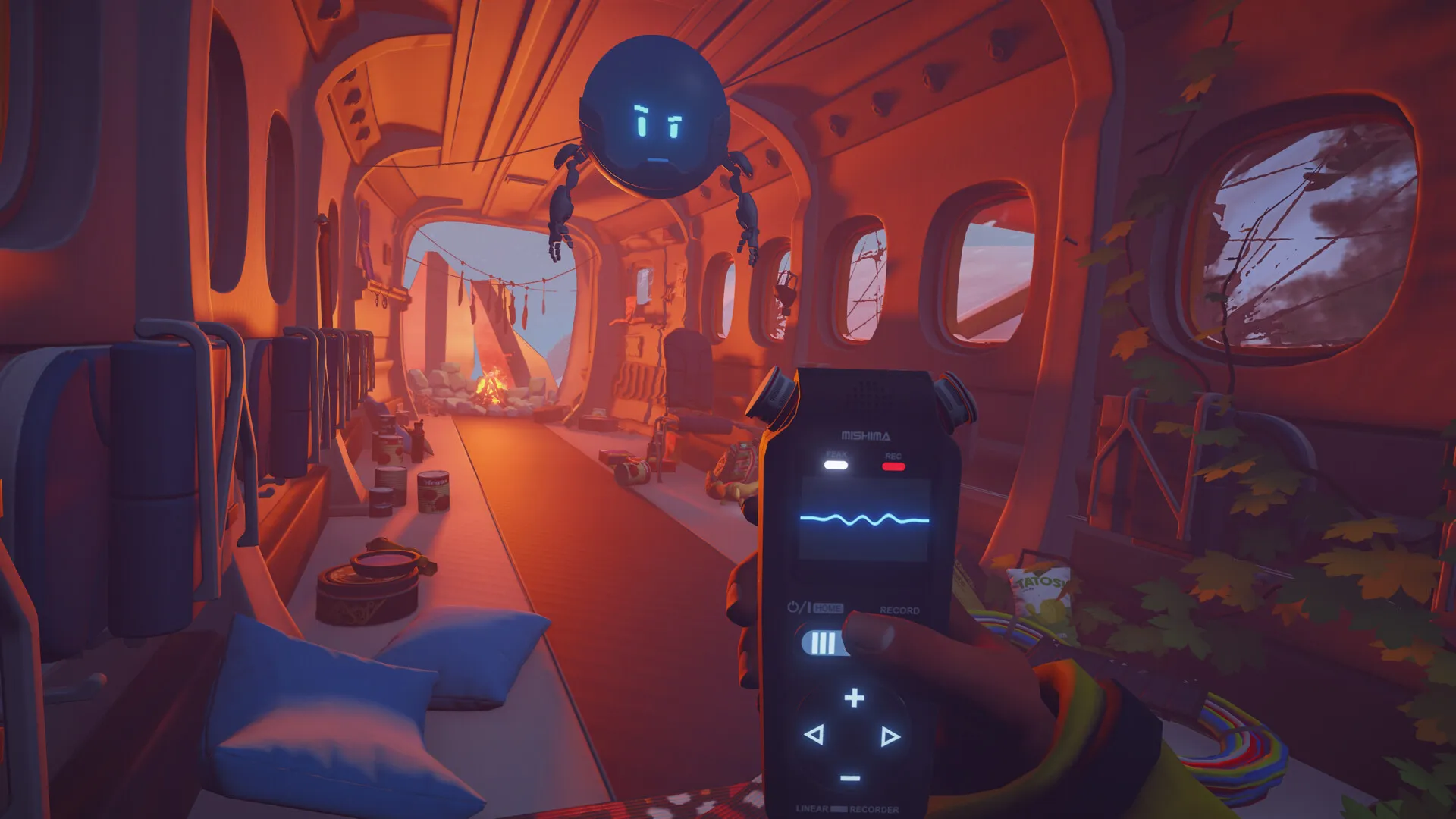
The mental wellness system represents the game’s most successful mechanical innovation. Scattered throughout the environment, cairn stones offer opportunities for guided breathing exercises through a simple rhythm-based minigame. These moments provide both mechanical benefit and thematic reinforcement, highlighting therapeutic techniques while offering players genuine moments of calm reflection. The breathing exercises feel integrated into both Kai’s character arc and the player’s experience in ways that make them rewarding rather than obligatory.
Environmental interaction remains straightforward throughout, with most activities involving hand-scanning to open doors, collecting scattered resources, or having Alfie download information from terminals. The simplicity works within the walking simulator framework, though it occasionally feels underutilized when interesting objects serve no purpose beyond brief inspection. Indoor exploration of abandoned facilities offers the most engaging interactive moments, with lived-in spaces telling stories through careful environmental design.
Technical performance presents significant concerns that undermine the experience. Progression-halting bugs requiring scene restarts occur with frustrating regularity, breaking immersion at crucial narrative moments. Audio glitches, including complete sound loss requiring game restarts, compound these issues. Performance stuttering becomes particularly problematic during later episodes, with frame rate drops severe enough to impact basic navigation. These technical shortcomings feel especially damaging in a genre where smooth pacing and atmospheric immersion are paramount.
Beauty Marred by Instability
Arctic Awakening succeeds most convincingly in its audiovisual presentation. The Alaskan wilderness receives gorgeous treatment through painterly art direction that captures both the stark beauty and underlying menace of frozen landscapes. Lighting effects create dramatic moments when massive sci-fi structures emerge from snowy horizons, while quieter scenes of waterfalls and mountain vistas provide genuine visual poetry. The contrast between natural environments and abandoned industrial complexes reinforces the game’s themes about human intrusion into pristine spaces.
Voice acting anchors the emotional experience, with Alfie’s performance particularly noteworthy for balancing artificial cheerfulness with growing emotional depth. Kai’s voice work captures the weariness and gradual healing of someone processing trauma, while supporting characters feel authentic within their limited screen time. Joff Winks’ atmospheric soundtrack complements the visual design perfectly, providing musical landscapes that enhance rather than overwhelm the environmental storytelling.
The 8-10 hour runtime creates mixed results for narrative pacing. Some players will appreciate the extended time spent developing the Kai-Alfie relationship, while others may find certain episodes drag without sufficient story advancement. The episodic structure feels somewhat arbitrary, breaking up what could function as a single cohesive experience without adding meaningful structural benefits.
Arctic Awakening works best for players who prioritize character-driven storytelling and atmospheric exploration over polished mechanical execution. Fans of Firewatch and The Long Dark will recognize familiar elements while discovering a unique take on therapeutic healing within survival contexts. The emotional core remains strong despite technical limitations, though potential players concerned about stability may want to wait for post-launch patches before diving into Kai’s frozen journey.
The Review
Arctic Awakening
Arctic Awakening delivers compelling emotional storytelling through its thoughtful exploration of trauma and healing, anchored by an endearing robot companion and beautiful Arctic environments. The Kai-Alfie relationship develops authentically across ten hours of atmospheric exploration. However, frequent technical issues and occasionally sluggish pacing prevent it from reaching its full potential. This flawed gem rewards patient players seeking narrative depth over mechanical polish.
PROS
- Authentic therapeutic relationship between Kai and Alfie
- Gorgeous painterly Arctic landscapes
- Strong voice acting and atmospheric soundtrack
- Meaningful dialogue choices that shape character dynamics
- Innovative breathing exercise mechanic
CONS
- Frequent progression-halting bugs
- Inconsistent pacing across episodes
- Limited gameplay variety
- Performance issues in later chapters
- Extended runtime feels padded at times