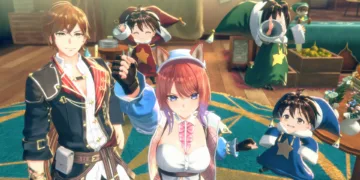


























Atelier Resleriana: The Red Alchemist & the White Guardian arrives as a curious artifact itself, emerging from the ashes of a failed mobile venture to tell a story about rediscovering forgotten crafts. This turn-based JRPG centers on alchemy as both mechanical foundation and narrative metaphor, presenting players with dual protagonists who must piece together the mysteries of their devastated hometown while learning to master arts their world has seemingly forgotten.
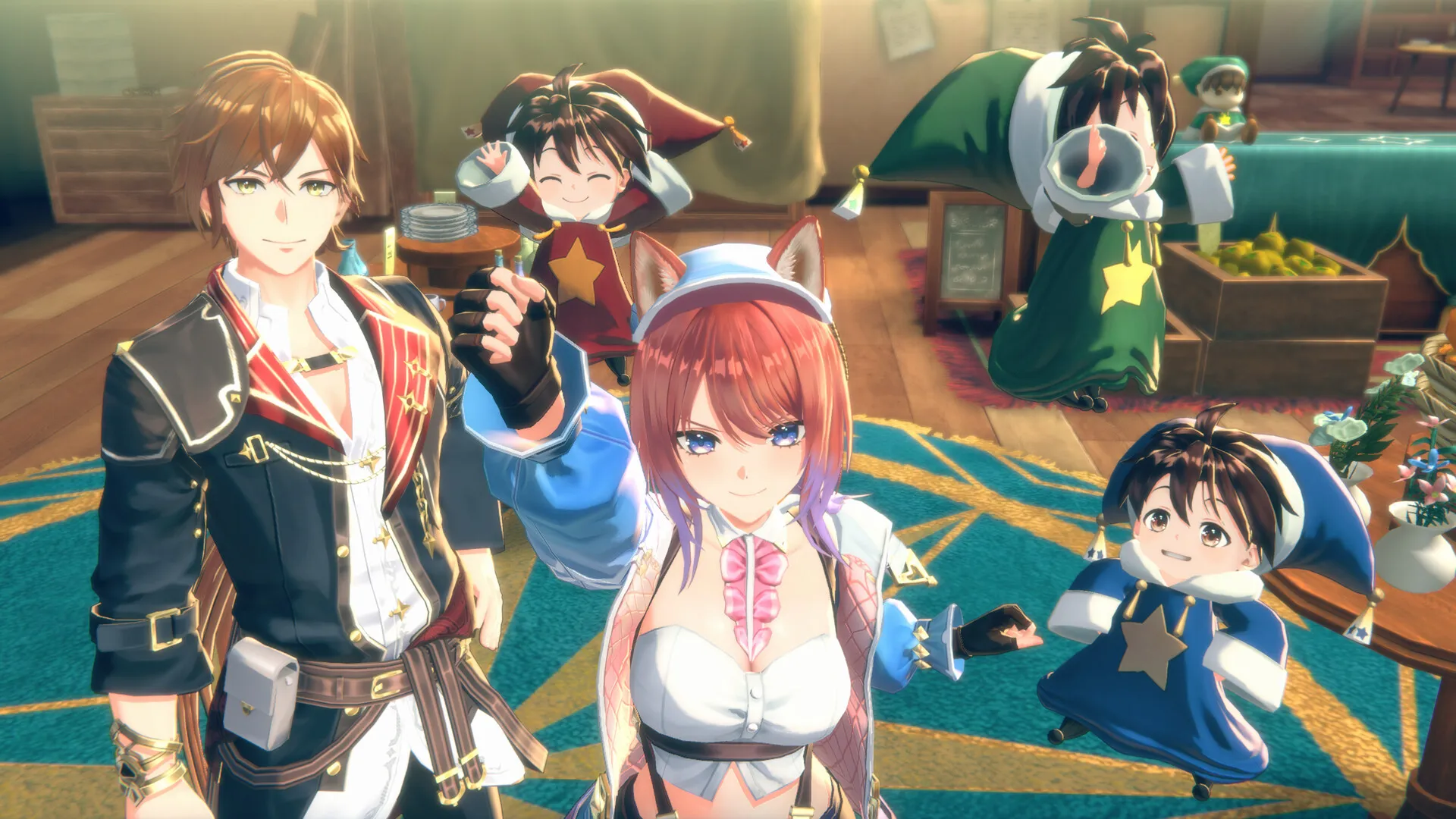
The game offers a choice between Rias, an energetic treasure hunter whose streetwear aesthetic clashes delightfully with the fantasy setting, and Slade, whose serious demeanor masks deep emotional wounds tied to his father’s mysterious legacy. Their partnership forms around the ruins of Hallfein, a town scarred by disaster twelve years prior, where players experience the gradual satisfaction of watching desolation transform into prosperity through careful crafting and commerce.
While connected to a previous mobile game’s world, this stands as its own narrative, accessible to newcomers through its focus on discovery and rebuilding. The core gameplay loop revolves around exploration, material gathering, alchemical synthesis, and shop management, creating a methodical rhythm that rewards patience. Japanese voice acting brings warmth to character interactions, while the visual style prioritizes artistic coherence over technical complexity. This slower-paced experience demands investment from players willing to engage with its contemplative approach to fantasy adventure.
The Weight of Memory and Partnership
The narrative structure of Atelier Resleriana builds its emotional foundation through the contrasting perspectives of its protagonists, creating a character study that examines how people process trauma and find purpose through connection. Rias embodies the healing power of curiosity and enthusiasm, diving headfirst into ruins and mysteries with an infectious energy that masks her own subtle grief. Her discovery of alchemical talent feels organic because it springs from genuine wonder rather than predetermined destiny, making her growth from treasure hunter to craftsperson feel earned.
Slade carries the heavier emotional burden, wrestling with his father’s legacy and the mysterious Geist Core armband that ties him to forces beyond his understanding. His reserved nature creates space for Rias’s exuberance while providing the narrative anchor for the game’s deeper mysteries. Their dynamic works because each character fills gaps in the other’s emotional landscape, creating a partnership that feels necessary rather than convenient.
The game populates their world with “Wanderers,” characters displaced from other realms who serve as both cameo appearances and thematic reinforcement of the story’s themes about displacement and adaptation. These familiar faces require no prior knowledge to appreciate, functioning as fellow travelers rebuilding their lives in an unfamiliar world. Their presence adds layers to the central mystery of why alchemy vanished from this realm while providing veteran players with recognition moments.
The mystery surrounding Hallfein’s disaster and alchemy’s disappearance unfolds through frequent cutscenes that sometimes overwhelm the gameplay rhythm. These dialogue-heavy sequences can interrupt the natural flow between exploration and crafting, creating pacing issues that work against the game’s contemplative nature. The emotional core remains strong, focusing on how shared purpose and gradual progress can heal both personal wounds and community devastation, but the delivery sometimes stumbles under its own verbosity.
The Rhythm of Creation and Commerce
The mechanical heart of Atelier Resleriana lies in how its various systems interconnect to create a satisfying loop of discovery, creation, and progress that mirrors the narrative themes of rebuilding and growth. Combat adopts traditional turn-based mechanics with tactical depth through its six-person squad system, where players manage both front and back row positioning while manipulating turn order to capitalize on timeline buffs and coordinate devastating combination attacks.

The Multi-action and Interrupt systems transform routine encounters into choreographed performances, where timing item usage and character abilities creates “item crashes” that deliver spectacular results. This system rewards players who invest time in understanding how their crafted items interact with party abilities, creating meaningful connections between the alchemy workshop and battlefield strategy. The blocking mechanics add active engagement to defense, though technical issues with frame rate drops during intensive battles can disrupt the timing-based gameplay.
Alchemy itself has been streamlined from previous entries through color-coding systems that make synthesis more approachable without sacrificing depth. The process of discovering recipes through exploration and experimentation maintains the series’ emphasis on curiosity-driven gameplay while ensuring that crafting decisions have tangible impact on combat effectiveness. Material quality directly translates to item power, creating incentive to seek out rare components and master advanced techniques.
The Mistletoe Miscellaneous shop system represents the game’s most innovative mechanical addition, transforming retail management into spatial puzzle-solving where arranging items by color attributes maximizes profits. This system connects crafting efforts to town development in visually satisfying ways, as successful commerce attracts new merchants and customers who expand available options. The fairy recruitment mechanic for shop staff feels underdeveloped, with identical character designs that lack personality, but the core concept of building both inventory and infrastructure creates compelling forward momentum.
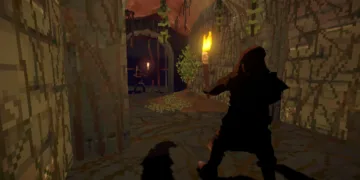
Dimensional Pathways provide randomly generated dungeons that scale difficulty with reward rarity, offering focused grinding opportunities that feel purposeful rather than repetitive. These spaces showcase the game’s stronger environmental design while providing materials needed for advanced synthesis projects. However, exploration mechanics feel limited compared to recent series entries, with tools like the Bungee Gem poorly explained despite their importance for traversal.
Beauty, Flaws, and Lasting Impressions
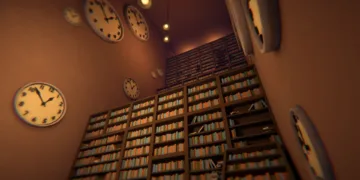
The visual presentation of Atelier Resleriana succeeds through artistic coherence rather than technical prowess, creating environments that feel lived-in and characters whose expressive animations convey personality effectively. The facial animation work deserves particular praise, especially in how character eyes convey emotion and sparkle with life during important story moments. The atelier itself becomes a character in the presentation, with floating symbols against starry skies creating an atmosphere of wonder and possibility.

Character design choices create mixed reactions, with Rias’s modern streetwear aesthetic creating intentional contrast against the fantasy setting while some supporting characters feature inexplicable animal ears that feel disconnected from the world’s internal logic. The environmental art shines brightest in the Dimensional Pathways, where creative use of color and lighting creates memorable spaces that reward exploration.
The soundtrack provides emotional support for the experience, with compositions like “Starry Sky Hideout” creating perfect accompaniment for the workshop sequences where players lose themselves in crafting experimentation. Japanese voice acting delivers strong performances that capture character personalities without feeling exaggerated or artificial.
Technical issues create frustrating interruptions to the experience, from game crashes during cutscenes to frame rate problems that interfere with combat timing. Loading screens appear frequently enough to break immersion, while interface design generally handles complex information well despite some organizational quirks around recipe management and ingredient sorting.
The game’s explanation of fundamental mechanics remains surprisingly poor despite extensive tutorial content, leaving players to discover important systems through trial and error. This creates unnecessary friction for newcomers while veteran players might appreciate the discovery process as part of the experience.
For players seeking a methodical, crafting-focused JRPG that prioritizes emotional storytelling and gradual progression over action spectacle, Atelier Resleriana offers a rewarding experience despite its technical shortcomings. The satisfying loop of creation and commerce, combined with genuine character chemistry and meaningful town development, creates an experience that celebrates patience and creativity while acknowledging that some things worth having require time and dedication to achieve.
The Review
Atelier Resleriana: The Red Alchemist & the White Guardian
Atelier Resleriana succeeds where it matters most: creating emotional investment through satisfying progression and genuine character chemistry. The innovative shop management system and streamlined alchemy mechanics provide compelling reasons to explore and experiment. However, technical issues and pacing problems with excessive dialogue prevent this from reaching its full potential. A solid entry that rewards patience despite its flaws.
PROS
- Engaging dual protagonist dynamic with strong character development
- Innovative shop management system that meaningfully connects to progression
- Beautiful art style with excellent facial animations
- Satisfying town rebuilding mechanics with visual impact
- Streamlined alchemy system accessible to newcomers
- Memorable soundtrack that enhances atmosphere
CONS
- Frequent technical issues including crashes and frame rate drops
- Excessive dialogue that interrupts gameplay flow
- Poor explanation of fundamental mechanics despite tutorials
- Limited enemy variety with repetitive color variants
- Severe difficulty spikes that can halt progress
- Numerous loading screens that break immersion