


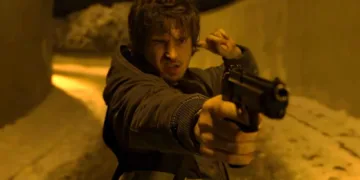






















The film opens through the eyes of a killer. A first-person perspective reminiscent of a video game places the viewer inside a tactical assault, all frantic motion and muzzle flashes, culminating in a tragedy that breaks a man. From this violent prologue, the camera pulls back to reveal Bruno, the soldier at the center of the chaos, now living in a self-imposed exile in Thailand.
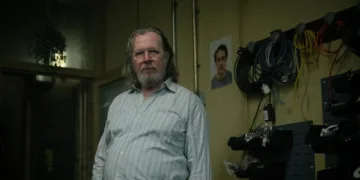
He is a man haunted by that opening mission, spiraling into a haze of alcohol and grief. His quiet, self-destructive existence is managed by his friend and former commander, Joe, and his steadfast ally, Fitch, who form a small circle of protection around him.
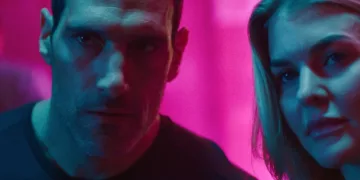
This fragile stasis is shattered by the arrival of Athena, a mysterious woman with no memory who appears at his home. She is a disruption, a potential salvation, and in nursing her back to health, Bruno finds a flicker of purpose in a life that had been emptied of it.
A Film of Shifting Gears
Affinity is a work of startlingly unconventional rhythm. After its violent, kinetic opening, the film decelerates into a long, quiet middle act that functions as a surprisingly sincere melodrama. The mechanics of the action thriller are put on hold for a significant portion of the runtime, replaced by a patient focus on character and connection.
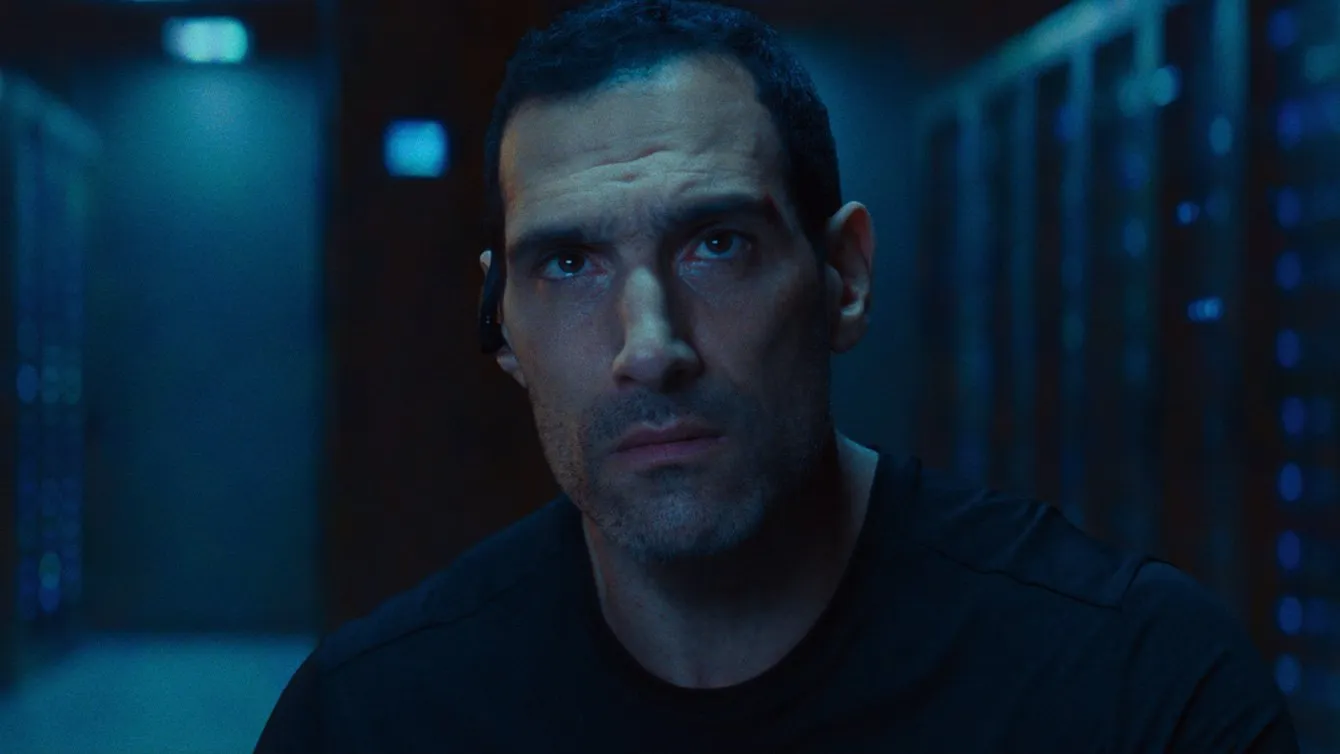
This section is grounded by the authentic chemistry between the performers. The friendship between Marko Zaror’s Bruno and Louis Mandylor’s Joe feels lived-in, their gruff, macho banter a comfortable shorthand for a deep and abiding loyalty. It’s a depiction of male affection that feels genuine within a genre that often avoids such nuance. Brooke Ence’s Fitch is a portrait of absolute solidarity, a friend whose readiness for violence is a given, never a question.
These grounded relationships throw the film’s central female character into sharp relief. Athena is portrayed by Jane Miro as a deliberate cipher, a beautiful blank space onto which Bruno projects his own need for redemption.
She is less a person than a catalyst, a walking plot device whose lack of interiority feels both like a narrative weakness and a strangely intentional choice, hinting at the artifice that will later consume the story. In these quieter moments, Zaror showcases a different facet of his abilities, playing the romantic lead with a wounded charisma that is a world away from his more unhinged villainous roles.
The Language of Combat
When the fragile peace is inevitably broken, the film reveals its true purpose and unleashes its primary mode of expression: violence. The second half of Affinity is an unrelenting showcase of physical artistry, a brutal ballet where every movement communicates character and intent. Marko Zaror, serving as both star and action director, uses combat as a narrative tool.
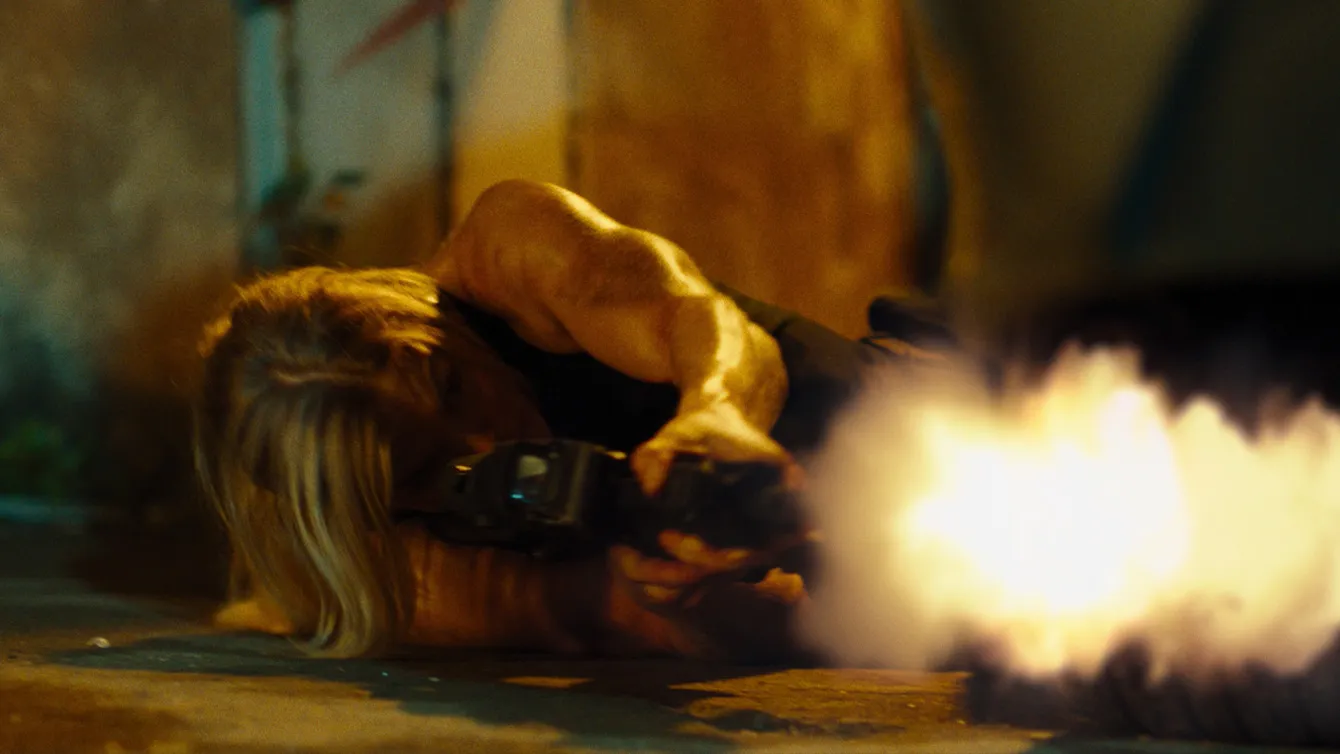
His expertise is the film’s undeniable centerpiece. The action is a rich vocabulary of pain, moving from the percussive impact of fistfights to the lethal grace of gun fu and the visceral slice of machetes and swords. The choreography is elaborate and acrobatic, with moments of stunning invention, like a spinning backflip that transitions seamlessly into a rear naked choke.
The film’s cinematography understands its core responsibility is to present this spectacle with absolute clarity. Wide, sweeping shots and sustained takes are employed as a statement against the chaotic editing that defines so much modern action cinema. Here, the human body is the main special effect, and the camera respects its performance.
This approach allows the audience to fully appreciate the craft and athleticism on display. The main henchman, Krieger, is presented as a formidable physical equal to Bruno. Their climactic showdowns are not just fights; they are conversations held through violence, a top-tier display of martial arts that serves as the film’s thunderous thesis.
The Third-Act Gamble
Just as the audience settles into the rhythms of a street-level rescue mission, the film executes a jarring and audacious pivot. The final fifteen minutes abandon the grounded thriller for a sudden lurch into science fiction, a narrative gamble that reframes the entire story.
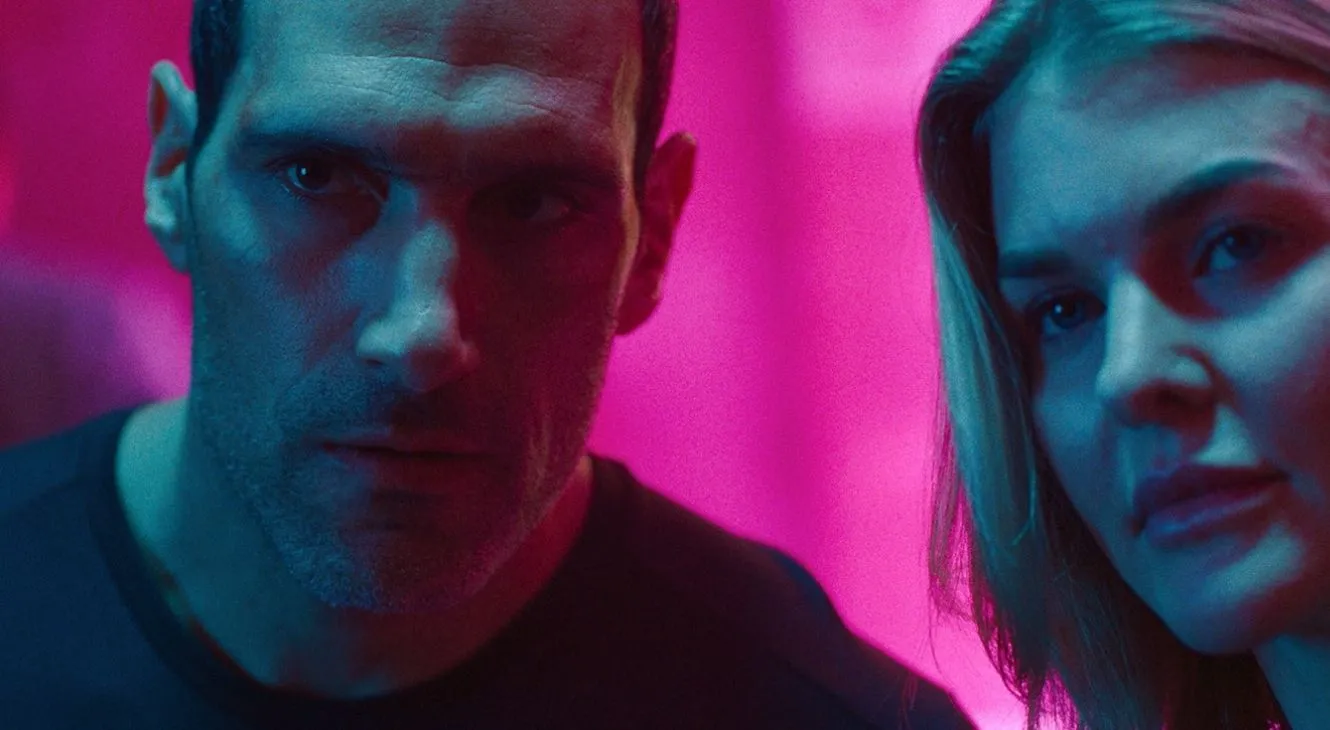
This abrupt genre shift radically alters the context of Athena’s mysterious past and the true motivations of her pursuers, transforming a simple story of kidnapping into something far stranger. It is a high-risk creative choice, one that redefines the meaning of the film’s title. The success of this gambit is a matter of taste. For some, it will land as a moment of B-movie genius, an unapologetic embrace of pulp storytelling that prioritizes shock and novelty over tonal consistency.
For others, it might feel like a nonsensical disruption that undermines the preceding drama. This narrative choice solidifies the film’s identity as a passion project, a lean and mean action vehicle built by its star. It is a film that delivers on its promise of world-class combat while taking a bizarre narrative risk that will either delight or alienate viewers, refusing to be just one thing.
Affinity is a sci-fi action thriller directed by Brandon Slagle. The film, which stars Marko Zaror as a PTSD-afflicted former Navy SEAL, debuted on Digital on September 30, 2025, and was distributed by Well Go USA Entertainment. It also became available on Blu-ray and DVD exclusively through Amazon on the same date. The plot follows the ex-SEAL after he rescues and falls for a mysterious woman, only for her subsequent disappearance to force him to return to his violent past to unravel a conspiracy.
Full Credits
Director: Brandon Slagle
Writers: Gina Aguad, Christopher M. Don, Liam O’Neil, Marko Zaror, Daniel Zirilli
Producers and Executive Producers: Joshua Dixon, Adel Nur, Adam Pray, Daniel Zirilli, Marko Zaror
Cast: Marko Zaror, Louis Mandylor, Brooke Ence, Jane Mirro, Brahim Chab, Elliott Allison
Director of Photography (Cinematographer): Niccolò de la Fère
Editors: Ernesto Díaz Espinoza
Composer: Rocco
The Review
Affinity
Affinity is a magnificent vehicle for the physical artistry of Marko Zaror, delivering some of the year's most intricate and well-shot action sequences. This martial arts brilliance, however, is welded to a tonally schizophrenic script that veers from quiet melodrama to a baffling science fiction finale. It is a lean, 80-minute spectacle that action purists will adore for its combat clarity, but its audacious narrative gambles make it a bizarre, uneven experience.
PROS
- World-class fight choreography and execution.
- Clear cinematography that showcases the action without shaky edits.
- Excellent on-screen chemistry between Marko Zaror and Louis Mandylor.
- An effective dramatic and romantic performance from Zaror.
CONS
- A jarring third-act twist that clashes with the preceding tone.
- Peculiar pacing that slows the film considerably in its middle act.
- The central female character is underdeveloped and functions as a plot device.
- The script and dialogue outside of the action scenes are weak.