


























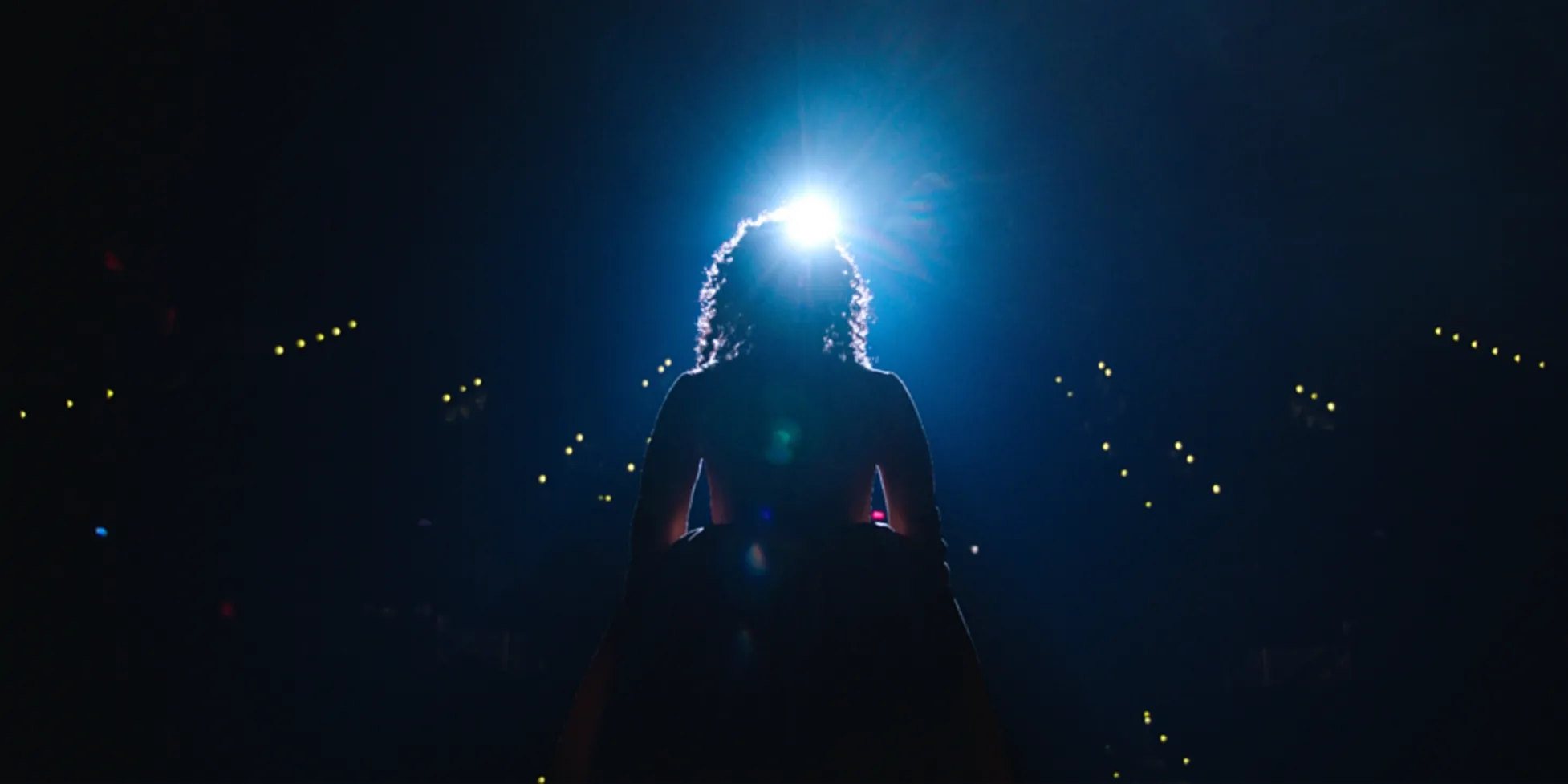

Most artists leave behind a curated legacy: polished recordings, official photographs, authorized biographies. Renée Elise Goldsberry, it turns out, was building a different kind of archive. For years, she turned a camera on herself, documenting her life with the unvarnished candor of a personal video diary. The documentary Satisfied is assembled from this raw material, offering a story that feels less produced and more discovered.
It chronicles a remarkable period when Goldsberry was originating the role of Angelica Schuyler in Hamilton, a performance that would earn her a Tony, while simultaneously navigating the private, often heartbreaking, journey toward building her family. The film’s power comes from this collision of the historic and the intimate, showing how a public triumph was forged amidst a deeply human struggle.
The Camera as Confidante
The structure of Satisfied is a quiet rebellion against the conventions of the celebrity documentary. In an era where such films can feel like feature-length press kits, this one hands the microphone and the camera directly to its subject. The core of the film is built from Goldsberry’s own extensive video logs, a decision that creates a startlingly direct and authentic narrative.
This isn’t a retrospective reflection; it’s an immediate, in-the-moment account of her life. I’m fascinated by how this repurposes the modern impulse to self-document. What begins as a personal vlog becomes, in the hands of the filmmakers, a powerful cinematic tool for conveying emotional truth. Goldsberry narrates her own story, and her voice—calm, thoughtful, and devoid of melodrama—acts as a grounding force, guiding the viewer through moments of professional anxiety and personal grief.
This first-person approach is paramount. When collaborators like Lin-Manuel Miranda or Ariana DeBose appear, they do so not as authorities on her life, but as supporting voices in a story she is unequivocally telling herself. The film trusts her perspective completely, a choice that gives it a rare and compelling integrity.
Harmony and Dissonance
The film’s editors construct a powerful rhythm by cutting between Goldsberry’s two parallel worlds, creating a study in contrasts. For anyone who felt the electricity of Hamilton, the behind-the-scenes material is a gift.

We are transported to the spartan rehearsal rooms where a cultural touchstone was pieced together, witnessing the raw energy and collaborative spirit that existed before the worldwide acclaim. Seeing the work, the repetition, and the experimentation demystifies the final, polished production in the best way possible. A particular highlight is hearing a rough demo of “Satisfied” sung by its creator, an auditory sketch that makes the power of Goldsberry’s final version even more apparent.
This professional ascent is juxtaposed with an intensely personal and vulnerable story. The film doesn’t shy away from her long and difficult path to motherhood, detailing with frankness her experiences with fertility treatments and the profound sorrow of miscarriages.
The adoption of her daughter from Ethiopia is a moment of immense joy, happening concurrently with her casting in Hamilton. The editing constantly highlights this duality, placing the elation of a successful performance against the quiet, demanding reality of home life, effectively communicating the immense sacrifice and emotional fortitude required to inhabit both spaces at once.
The Eight-Show Week and the Human Toll
While anchored by a singular talent, Satisfied speaks to a broader, more universal condition. It gives a powerful voice to the archetype of the “Broadway Mother,” a figure navigating one of the world’s most physically and emotionally demanding professions while raising children.

The film becomes a potent cultural document on the modern challenges of balancing career and family, particularly in creative fields where the work is never truly left at the office. It strips away the veneer of celebrity to reveal the unglamorous truth: success is not an event but a grind, earned through relentless effort and often at great personal cost.
Yet the film’s message is one of celebration, not complaint. It is a portrait of extraordinary resilience and a quiet acknowledgment of the support systems—a loving husband, loyal friends—that make such a life possible. Ultimately, Satisfied enriches the very art it documents. After witnessing the immense personal journey behind the performance, one can’t listen to Goldsberry’s soaring vocals on the cast album in the same way. The art remains, but now we understand its human price.
The film is the 2024 documentary Satisfied, following actress Renée Elise Goldsberry’s journey balancing motherhood and her career, particularly during her time originating the role of Angelica Schuyler in the Broadway hit Hamilton. The documentary premiered at the 2024 Tribeca Film Festival and had a limited nationwide theatrical release via Aura Entertainment and Fathom Entertainment, beginning on September 30, 2025. It is also available for streaming, with one snippet mentioning Apple TV+.
Full Credits
The Review
Satisfied
Satisfied transcends the typical celebrity documentary by using Renée Elise Goldsberry's own video diaries to craft an authentic and moving portrait. It masterfully balances the behind-the-scenes story of Hamilton's creation with a raw, unflinching look at her personal journey. The result is not just a film for theater fans, but a powerful and universal story about the immense sacrifice and resilience required to balance life and art. It's an intimate, honest, and deeply human film that enriches the very art it explores.
PROS
- An intimate and authentic narrative built from the subject's own video logs.
- Powerful dual storytelling that connects professional success with personal struggles.
- Offers rare, behind-the-scenes access to the creation of Hamilton.
- Explores universal themes of artistic sacrifice and the challenges of working motherhood.
CONS
- The deep focus on Broadway may have a narrower appeal for viewers unfamiliar with Hamilton.
- Follows a familiar biographical arc of struggle and triumph.
- The first-person perspective, while a strength, offers little critical distance.