










The genie-in-a-bottle premise is one of fiction’s most reliable engines for chaos, a simple setup where human desire crashes against cosmic power. Typically, the story is about the wisher: their greed, their folly, their eventual moral lesson. But what happens when the genie is the one with the agenda, and the wisher has no desires he can possibly understand? Genie, Make A Wish poses this question with a mischievous grin, presenting a fantasy-romance that is far more interested in its philosophical absurdities than its romantic potential.
The series introduces us to Iblis, a supernatural entity who is less a wish-granter and more a damned soul working a terrible commission-based job. His task, assigned by some unseen celestial management, is to corrupt humans through their own wishes. Success keeps him out of hell; failure to corrupt one truly pure soul means an eternity in a place that makes hell look like a vacation package. He has been waiting nearly a thousand years for the reincarnation of his one great failure.
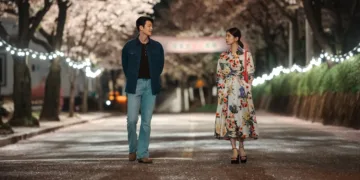
When he is finally freed from his lamp, he meets Ki Ka-young, a woman who is technically pure of spirit but is also a cold, clinical psychopath. This is where the series gleefully throws its rulebook into a bonfire. The central conflict is not a tender love story; it is a bizarre existential chess match between a jaded tempter and an emotionless subject, a peculiar and often brilliant subversion of K-drama expectations.
A Devil and His Unwitting Master
The show’s success rests almost entirely on the shoulders of its two leads, who navigate their characters’ profound oddities with remarkable skill. Iblis is a creature of immense power who has been reduced to a glorified customer service agent for the morally bankrupt. After centuries of dealing with the predictable greed of humanity, he is bored, cynical, and carries a deep-seated contempt for his clientele.
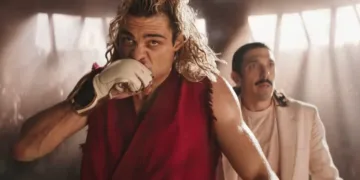
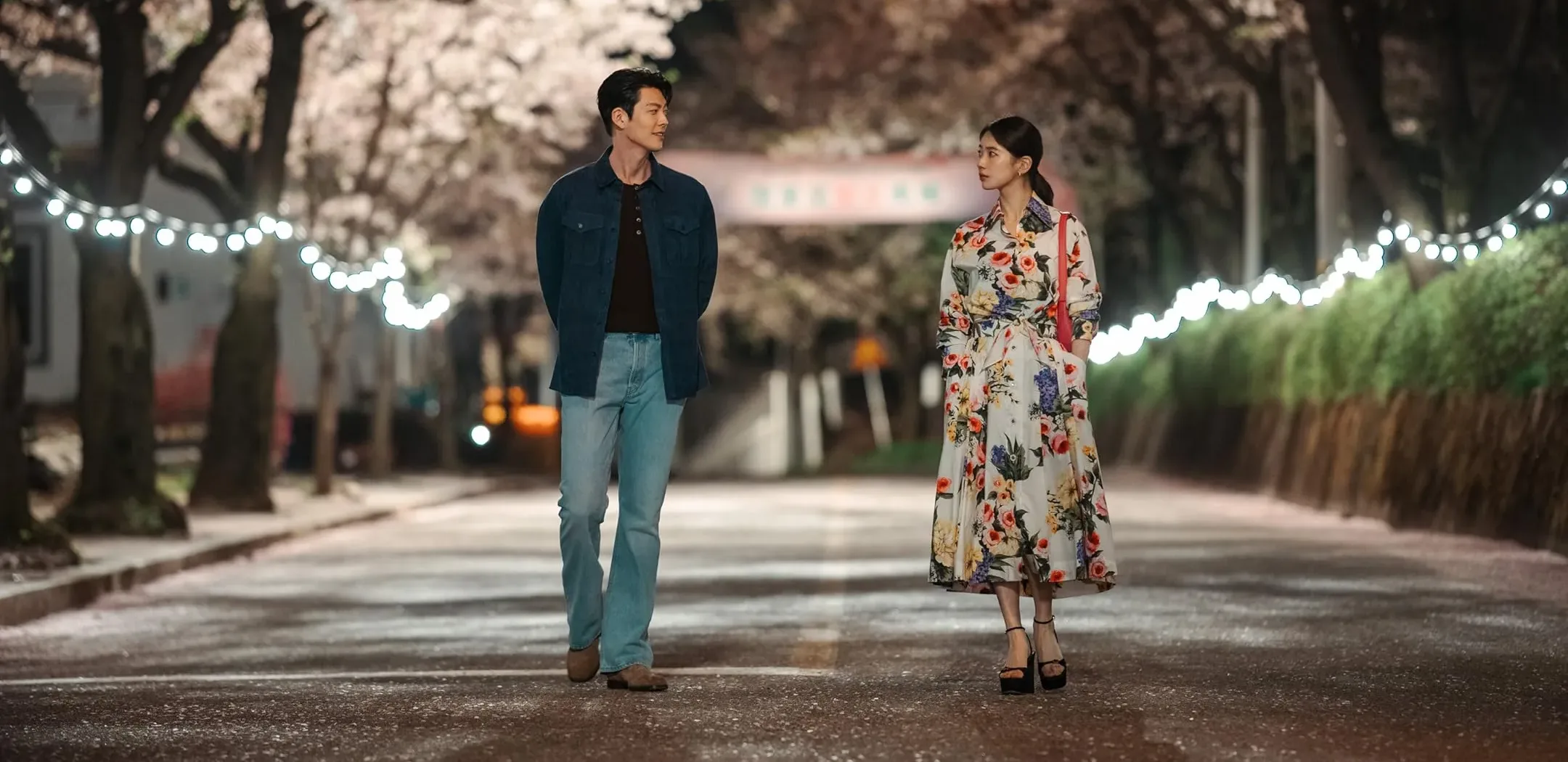
Kim Woo-bin’s performance is a masterclass in comedic weariness. He imbues Iblis with a sardonic charm and a theatrical flair, yet beneath every smirk is the exhaustion of a being who has seen it all. His confidence, honed over millennia, is completely shattered by Ka-young. He arrives ready to exploit her desires, only to find she does not really have any. His attempts at seduction and temptation bounce off her icy exterior, leaving him baffled and increasingly frustrated.
A recurring gag about his inability to grow a beard despite having Rapunzel-length hair speaks to his predicament: he commands cosmic power but is flummoxed by the simplest of human biological (or, in this case, non-biological) realities. His arc is the inverse of the typical genie story; he is the one who is slowly being changed, his cynicism challenged by a human whose purity is an unnerving absence of feeling.
Opposite him, Bae Suzy’s portrayal of Ki Ka-young is a quiet triumph. The “psychopath” label is not used here for cheap thrills or villainy. Ka-young is a product of a traumatic past and a strict upbringing, her lack of emotion a managed condition that has shaped her into a highly disciplined, successful, and profoundly lonely individual. Her life is a fortress of routine built to keep her dark impulses at bay. Bae Suzy conveys this with a subtle, controlled performance.
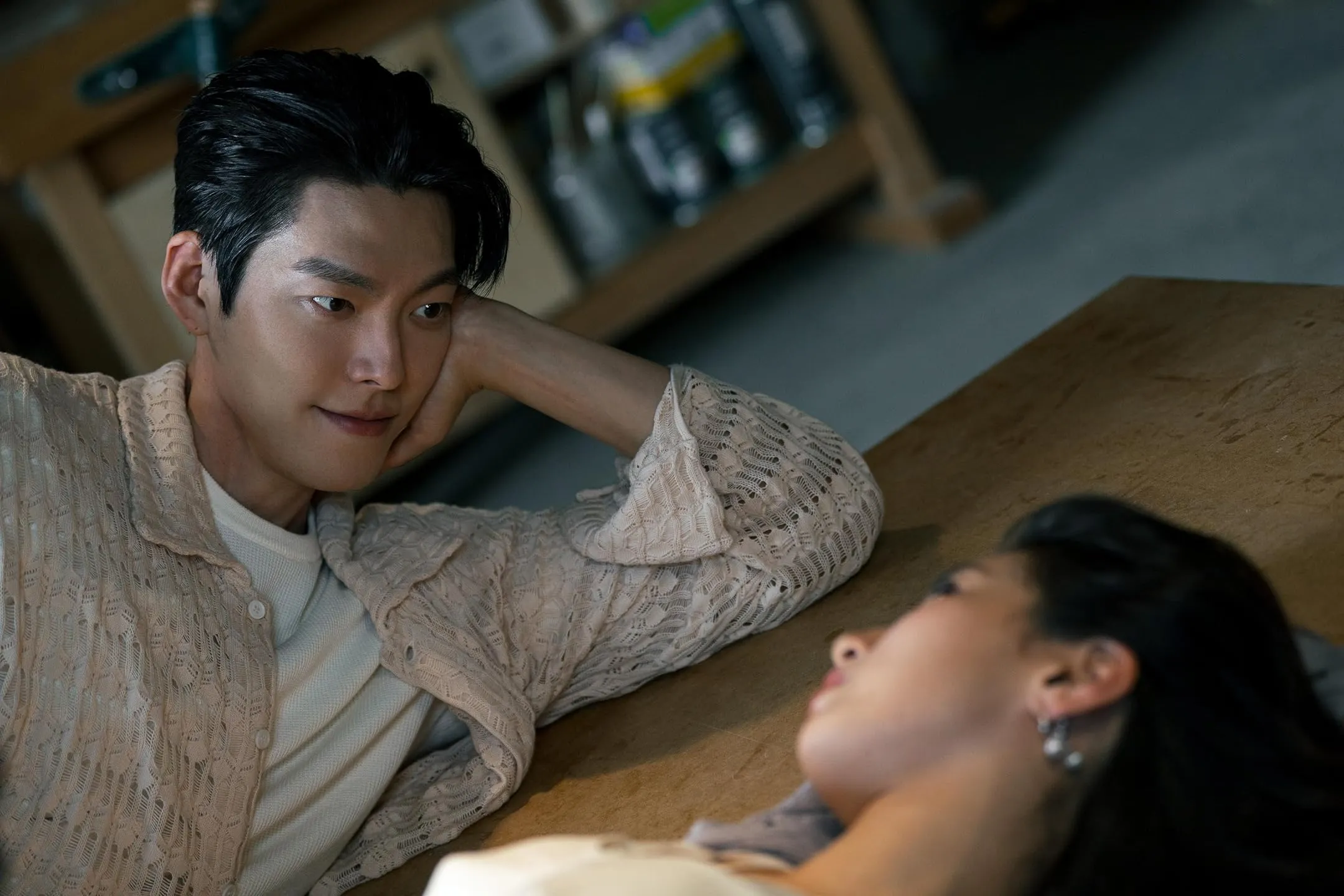
Her stillness is captivating; she uses micro-expressions to show the flicker of curiosity behind her otherwise blank facade. This performance is a far cry from the overt emotionality often required in romantic dramas. Her character’s motivation for keeping Iblis around is not a quest for love or wealth. It is a morbid scientific inquiry. He is an indestructible being, a perfect object for her to test the limits of her own darkness without breaking her solemn promise to her grandmother.
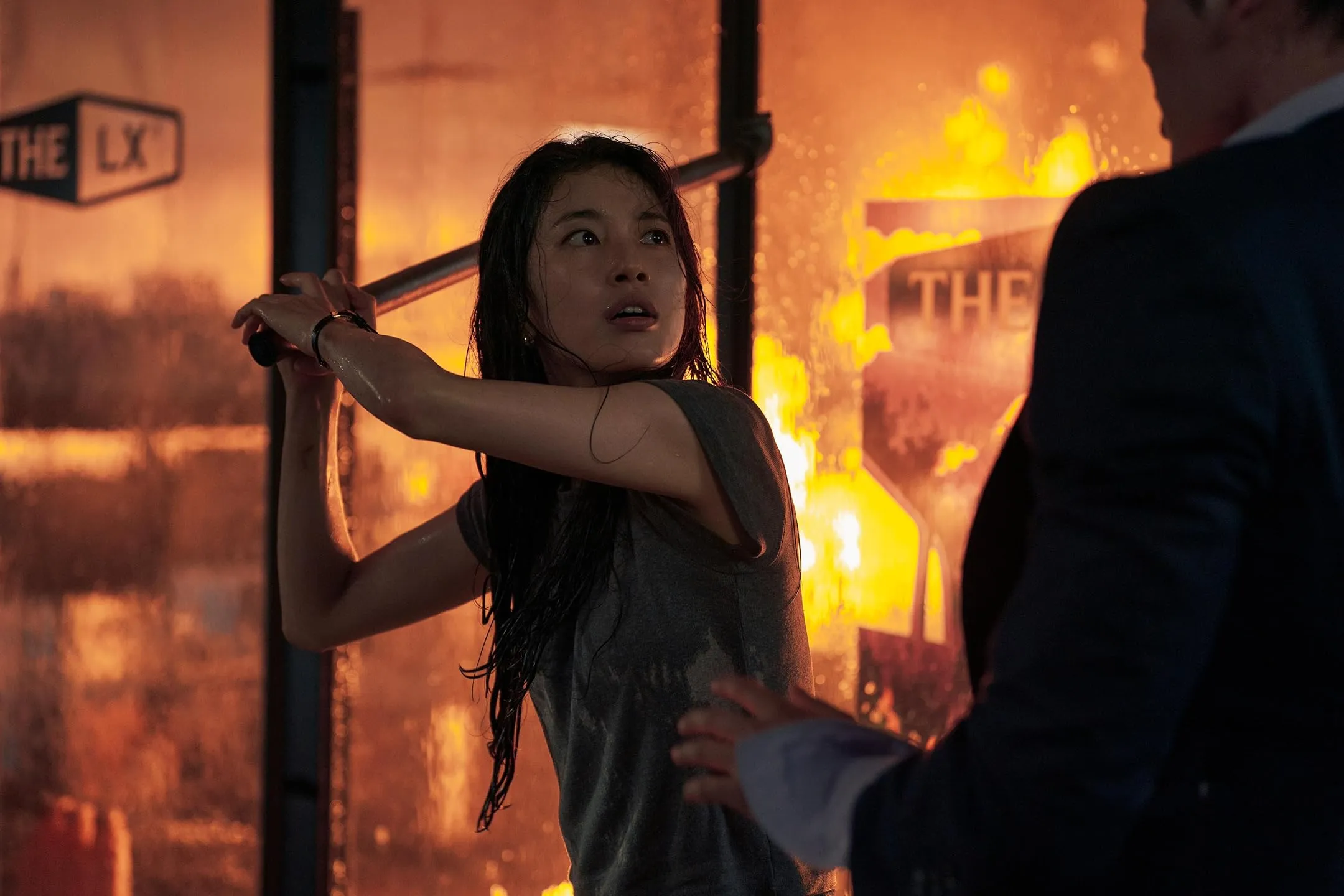
When he dangles her from a skyscraper roof in a fit of rage, her delighted laughter is one of the series’ defining moments. It perfectly encapsulates their dynamic: he thinks he is in control, but she is the one conducting the experiment. Their chemistry is born not of affection, but of a shared state of being outside the norms of their respective worlds.
A Cocktail of Chaos
The narrative architecture of Genie, Make A Wish is as unpredictable as its lead character. Writer Kim Eun-sook, known for epic, emotionally resonant tales like Mr. Sunshine, seems to be intentionally deconstructing her own formula here. The show’s tone shifts with a wild, almost reckless abandon.
A scene can begin with broad, slapstick comedy, such as Iblis’s first encounter with a smartphone, and then pivot without warning into a dark, psychologically tense exploration of Ka-young’s past trauma. It then might leap into a full-blown fantasy action sequence before settling into a moment of quiet, almost melancholic reflection. This approach can be jarring.
Viewers looking for a consistent emotional through-line might find the experience frustratingly chaotic. However, for those willing to go along for the ride, the tonal whiplash becomes part of the show’s unique charm. It keeps the audience permanently off-balance, never sure whether the next scene will bring a laugh or a gasp.
This structural daring is made possible by the fact that it is an original story, not an adaptation of an existing webcomic. In a television landscape increasingly reliant on established properties, the series feels like a welcome anomaly. This freedom allows the script to be genuinely strange, taking narrative risks that a more conventional show would avoid. The self-referential humor is a key component of this strategy.
Characters casually mention Marvel movies and Disney tropes, a winking acknowledgment of the fantasy genre conventions the show is both using and subverting. This meta-commentary serves a crucial function: it acts as a safety valve, preventing the show’s more melodramatic moments from feeling overwrought. By constantly reminding the audience of its own artifice, the series gives itself permission to be as ridiculous and as sincere as it wants to be, often in the very same scene. It is a high-wire act that does not always maintain its balance, but it is thrilling to watch.
The World of Wishes
The series is built on a foundation of high production values, creating a world that feels both hyper-real and utterly fantastical. The opening episodes, set in Dubai, look less like a television show and more like a lavish tourism campaign. Cinematography captures the epic scale of the desert and the glittering opulence of the city, creating a perfect playground for a creature of myth to reappear.
This visual grandeur effectively contrasts with the colder, more controlled aesthetic of Ka-young’s life back in Korea. The special effects, a cornerstone of any fantasy production, are largely successful. There are standout moments of digital artistry, like the materialization of a sleek, spectral jaguar that becomes a recurring visual motif. However, the quality is not always consistent. Some of the larger-scale action sequences, particularly a celestial battle between Iblis and a rival, feel a bit weightless and underwhelming, lacking the visceral impact the story requires.
The supporting cast provides a solid, if sometimes underutilized, ensemble. Characters like Iblis’s long-suffering assistant, Sade, offer moments of comedic relief, while the rival being Ejlael, played with simmering intensity by Noh Sang-Hyun, provides a necessary antagonistic force. Yet, some of their narrative arcs feel secondary to the main plot, occasionally seeming like filler designed to keep the leads apart until the script is ready for their next major interaction.
The subplot involving Ka-young’s friend, Min-ji, introduces a surprising and complex character trait, but it is tethered to a storyline that feels both uncomfortable and narratively superfluous. The show also features a number of high-profile cameos, including an appearance by Ahn Eun Jin.
While these moments are enjoyable for fans, they often feel fleeting, leaving a sense that a talented actor has been brought in for a brief appearance that does not fully serve the story. The series, in its ambition to build a rich mythological world, sometimes struggles to give every one of its inhabitants the attention they deserve.
The Korean fantasy romantic comedy series Genie, Make a Wish (original title: Da Irueojiljini), premiered on October 3, 2025, and is available to stream globally and exclusively on Netflix. The 13-episode series tells the story of an emotionally detached young woman named Ki Ka-young, who accidentally awakens a flamboyant genie named Iblis from a thousand-year slumber. The series follows their fantastical, conflict-filled, and comedic journey as the genie attempts to fulfill her three wishes, exploring themes of human desire and salvation. The project was highly anticipated, as it reunites lead actors Kim Woo-bin and Bae Suzy, and is written by star screenwriter Kim Eun-sook.
Full Credits
The Review
Genie, Make A Wish
Genie, Make A Wish is a brilliantly strange experiment, succeeding on the magnetic performances of its leads who anchor the show’s chaotic energy. The series juggles dark comedy, melodrama, and fantasy with a reckless, unpredictable spirit. While its tonal acrobatics can be jarring and some subplots feel thin, the sheer audacity of its premise makes it one of the most original and wildly entertaining K-dramas in recent memory. It is a beautiful, imperfect, and absolutely fascinating mess.
PROS
- An original and unpredictable premise that cleverly subverts genre tropes.
- Excellent and magnetic lead performances from Kim Woo-bin and Bae Suzy.
- A witty script filled with sharp, self-referential humor.
- High production values and a strong, often stunning, visual aesthetic.
CONS
- An inconsistent tone that shifts abruptly between comedy, drama, and fantasy.
- Underdeveloped supporting characters and subplots that can feel superfluous.
- Uneven visual effects, with some weaker moments that break the immersion.
- Underutilized high-profile guest appearances.