




















Most documentaries about beloved films are exercises in celebration, charting a straightforward course from brilliant idea to popular success. Strange Journey: The Story of Rocky Horror is something far more interesting: a celebration of failure. It understands that the entire fifty-year legacy of The Rocky Horror Picture Show is built on its initial, spectacular rejection by the mainstream.
This film, directed with intimate access by Linus O’Brien, son of creator Richard O’Brien, chronicles how a scrappy stage show and its subsequent box-office bomb became a cornerstone of cult cinema. The documentary serves two functions. It is a carefully assembled oral history of a chaotic artistic creation, packed with rare footage and candid recollections.
It is also a sociological study of how that creation was rescued from obscurity by an audience of outsiders who didn’t just watch the film, they inhabited it. It’s a compelling look at how a piece of art can become a cultural ritual, a safe harbor, and a declaration of identity, not because it succeeded, but precisely because it failed in all the right ways.
A Masterpiece from Mayhem
The documentary’s narrative design is one of its quiet strengths. It resists a simple chronological retelling, instead anchoring the story in the present with Richard O’Brien himself. He acts as our guide, a living link to the past whose personal journey mirrors the show’s evolution. From his youth in New Zealand absorbing the aesthetics of B-movies and early rock-and-roll, we follow him to 1970s London.
The film excels at capturing the creatively fertile, anything-goes atmosphere of the era that allowed such an oddity to take root. Using a rich blend of archival materials, the editing creates a tangible texture of the time. Grainy home movies, forgotten newsreels, and precious footage from the original 60-seat theatre run are woven together, mirroring the slapdash energy of the production itself. We learn how influences from glam rock, German Expressionism, and Hammer Horror films coalesced into something entirely new.
The documentary then tracks the show’s improbable leap to a film adaptation, perceptively framing its minuscule budget not as a hindrance but as a blessing. It was the lack of funds that kept the original, lightning-in-a-bottle cast together, a happy accident that proved essential to its magic. This entire chapter of creation builds methodically to the film’s initial, dead-on-arrival theatrical run, an ending that ironically sets the stage for its true story to begin.
More Than Talking Heads
Where many historical documentaries rely on a static parade of experts, Strange Journey feels like a warm, funny, and sometimes poignant family reunion. Director Linus O’Brien leverages his unique position to foster a disarming sense of intimacy. The interviews are shot and edited not as formal pronouncements but as genuine conversations, with subjects occasionally acknowledging the director’s relationship to his father.
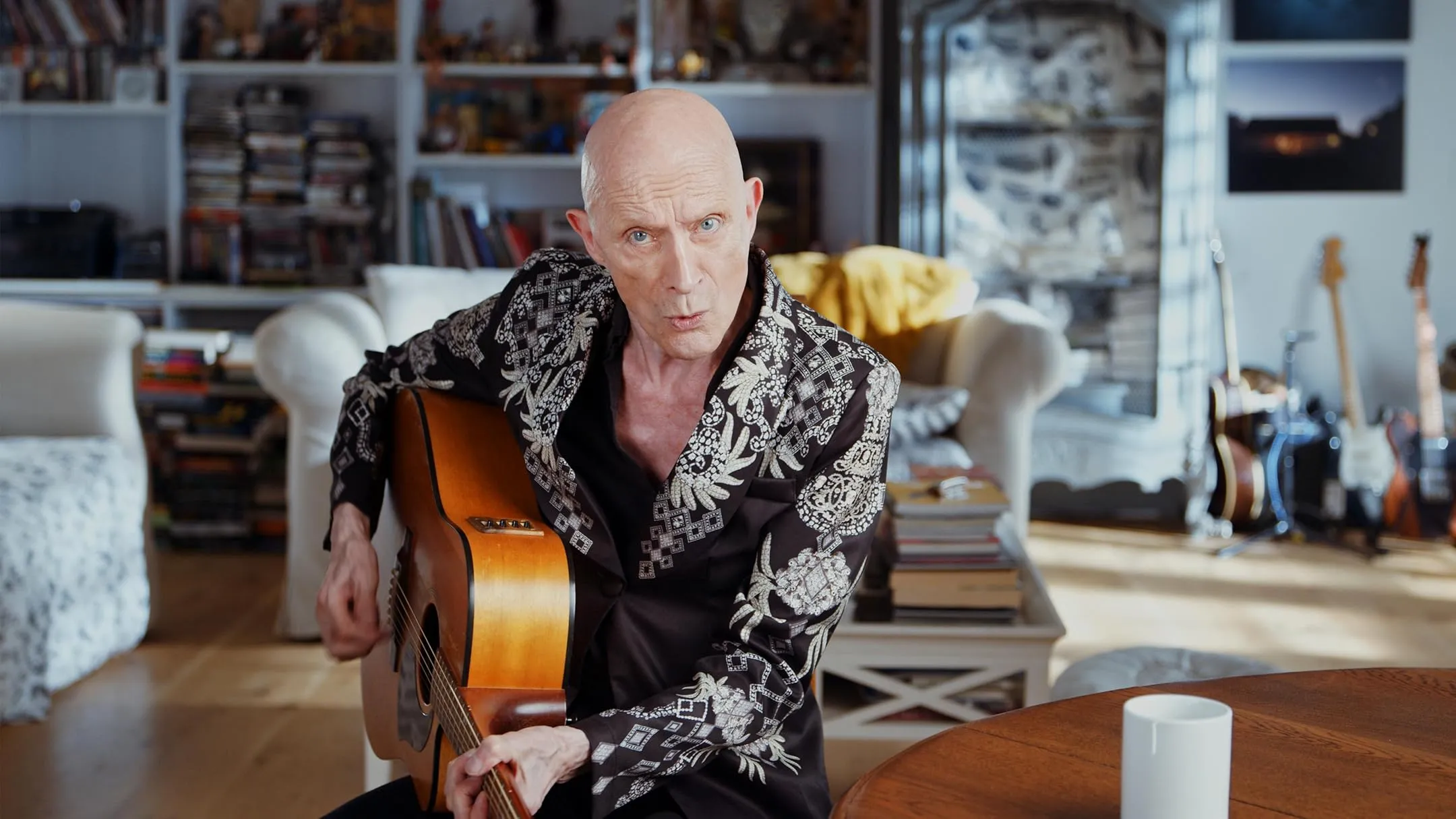
The result is a treasure trove of unguarded anecdotes. The appearance of Tim Curry is a highlight; though physically frail following a stroke, his wit is razor-sharp and his presence is powerful. His memories, alongside fond and funny recollections from Susan Sarandon about the film’s shoestring production, Barry Bostwick’s reflections on playing the straight man, and Nell Campbell’s infectious energy, paint a vivid human picture. Tying it all together is Richard O’Brien, who is far more than the primary subject.
He is the film’s emotional core, a guide who is equal parts mischievous storyteller and humble artist, visibly moved by the legacy of his work. His intermittent acoustic performances of the show’s iconic songs are a brilliant device, stripping them of their theatrical bombast to reveal the clever, heartfelt songwriting at their foundation. It reinforces the documentary’s central argument: behind the spectacle was real heart.
The Audience Finds the Film
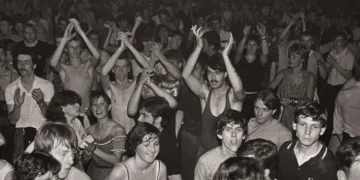
The documentary makes a significant structural pivot in its final third, shifting from a production history to a piece of cultural anthropology. It becomes a fascinating study of how a community and its rituals formed in a pre-internet age. The film meticulously tracks the organic birth of the midnight screenings, showing how audience participation grew from a few sarcastic cat-calls in a New York theater to a codified set of rituals involving callbacks, props, and costumes that spread across the globe.

This exploration of communal viewership is the documentary’s most resonant theme. It argues that Rocky Horror became a vital cultural artifact because it demanded interaction, transforming passive movie-watching into an active, empowering performance. This is seen most clearly in the evolution of the “shadow cast,” where fans perform the entire film in costume below the screen.
It is the ultimate expression of the show’s central ethos, “Don’t Dream It, Be It.” The documentary connects this phenomenon directly to powerful and moving testimonies from fans who found a sense of identity and belonging in those dark theaters. For many, especially in the LGBTQ+ community, the film provided a language and a space for self-acceptance, a script to live by when the outside world offered none.
Strange Journey: The Story of Rocky Horror is a 2025 American documentary film that chronicles the origins, cultural impact, and enduring legacy of the 1975 musical film, The Rocky Horror Picture Show. The documentary features extensive interviews with the original cast, including creator Richard O’Brien and stars like Tim Curry and Susan Sarandon, as well as reflections from modern-day celebrity fans. Directed by Linus O’Brien (son of the show’s creator), the film premiered at the South by Southwest Film & TV Festival (SXSW) on March 9, 2025, and received a wide release on September 26, 2025.
Full Credits
Director: Linus O’Brien
Writers: Avner Shiloah
Producers and Executive Producers: Linus O’Brien, Adam Gibbs, Garret Price, Avner Shiloah
Cast: Richard O’Brien, Tim Curry, Susan Sarandon, Barry Bostwick, Patricia Quinn, Nell Campbell, Lou Adler, Jack Black, Trixie Mattel
Director of Photography (Cinematographer): Warren Kommers
Editors: Avner Shiloah
Composer: Giosuè Greco
The Review
Strange Journey: The Story of Rocky Horror
Strange Journey: The Story of Rocky Horror is a warm, intelligent, and beautifully crafted documentary that does full justice to its subject. More than a simple "making-of," it’s a heartfelt exploration of how a commercial failure became a cultural sanctuary. With unparalleled access and a smart narrative structure that balances creation with community, the film is an essential chronicle for any fan. It is a moving and insightful look at the power of outsider art and the audiences who keep it alive.
PROS
- Intimate, familial tone thanks to the director's personal connection.
- Features candid and poignant interviews with nearly all the key players.
- Excellent use of rare archival footage from the original stage production.
- Thoughtfully explores the show's lasting impact as a cultural phenomenon and safe space.
- Richard O'Brien provides a charming and emotional core to the narrative.
CONS
- The insider perspective means it lacks a critical, objective viewpoint.
- Its deep focus may be more rewarding for existing fans than for newcomers.