
























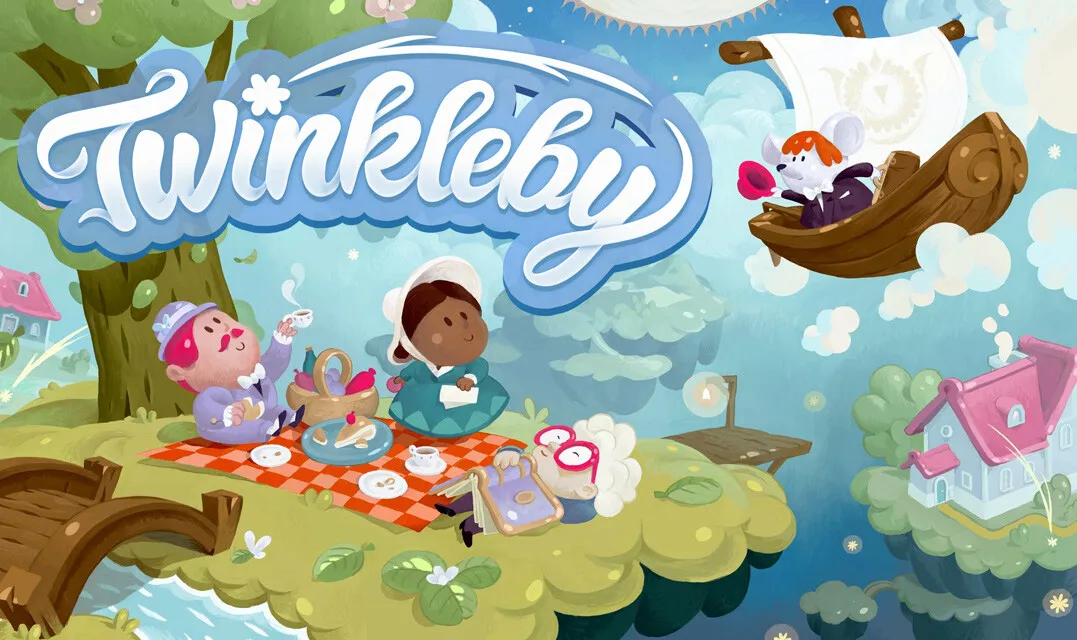

Twinkleby invites players into a serene world of floating islands where the only goal is to decorate, experiment, and watch life unfold. Developed by Might and Delight, this creative sandbox asks players to design dreamy archipelagos in the sky, placing houses and furnishings across islands while attracting neighbors who arrive seeking cozy new homes. These residents have their own preferences, and satisfying them earns you Stellars, the in-game currency that fuels your creative expansion.
The game sidesteps traditional challenges like combat or complex puzzles. Instead, it offers a meditative loop: decorate your islands, make your residents happy, collect Stellars, and unlock new spaces to transform. Around 10 main islands await discovery, with several secret locations hidden for persistent explorers. The hand-painted art style evokes children’s storybooks, and the design philosophy embraces freedom over restriction. There are no wrong answers here, no punishing fail states. This is a game for anyone craving a calm creative outlet where the act of making something beautiful is its own reward. Players who approach Twinkleby with patience will find a space that respects their time and creative instincts, even if it doesn’t always respect their schedule.
Building Your Sky-Bound Dioramas
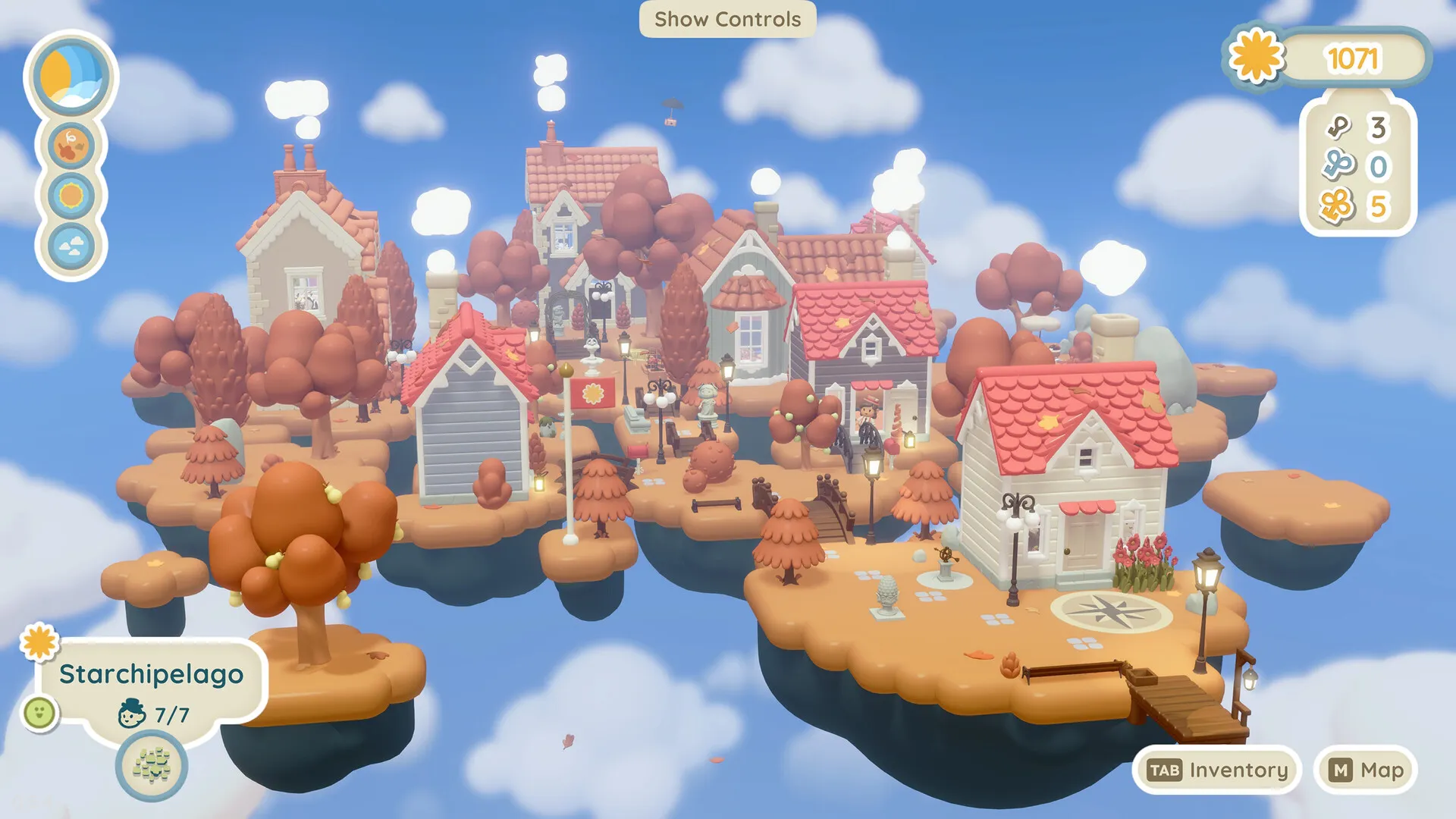
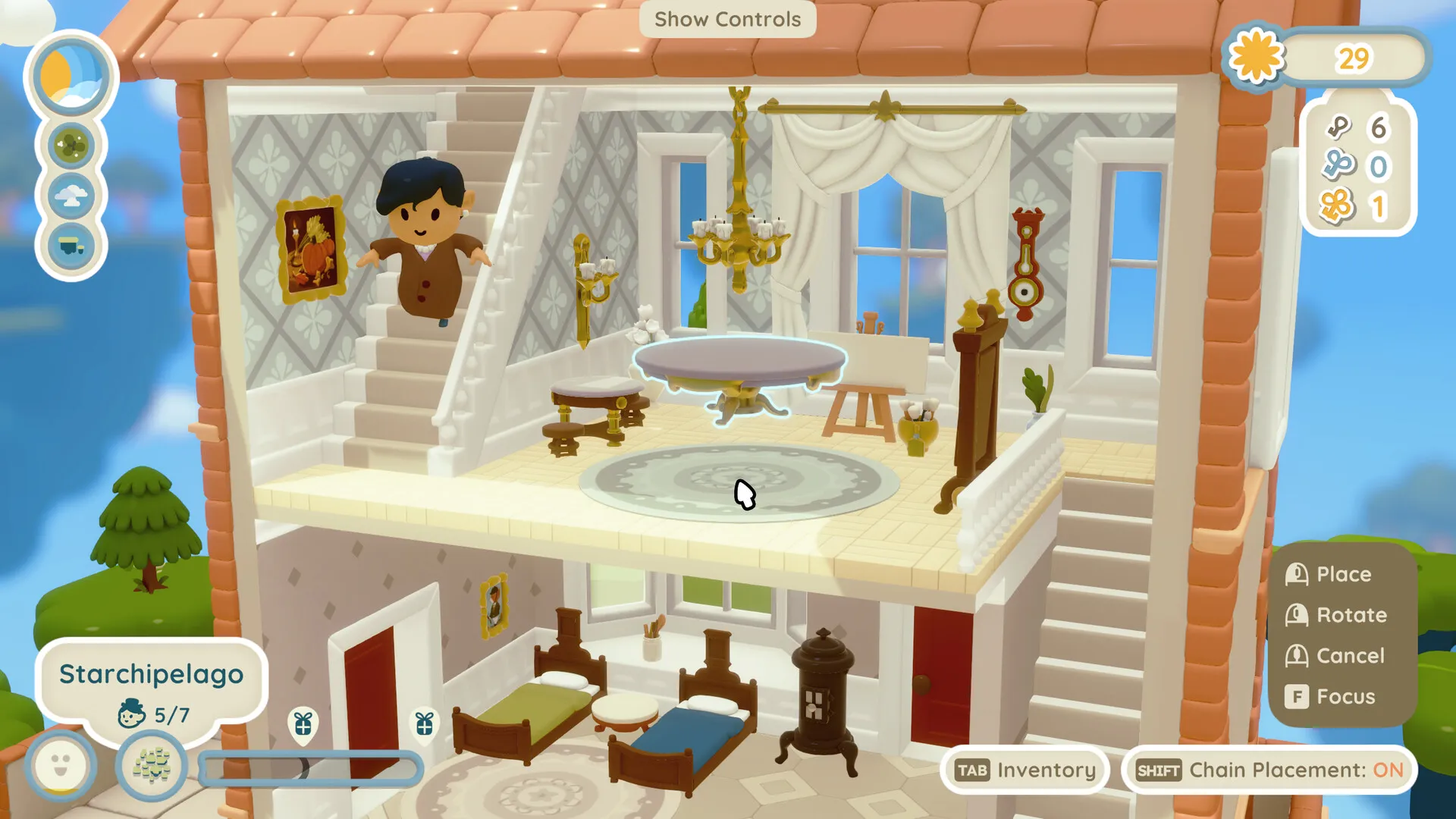
The heart of Twinkleby lies in its straightforward decoration system. Players open an inventory menu filled with furniture, plants, and decorative objects, then drag and drop these items onto their islands. The interface is intuitive, and the game includes a forgiving safety net: anything you don’t like can be tossed off the island’s edge, where it safely returns to your inventory. This mechanic removes the fear of commitment, encouraging constant experimentation without penalty.
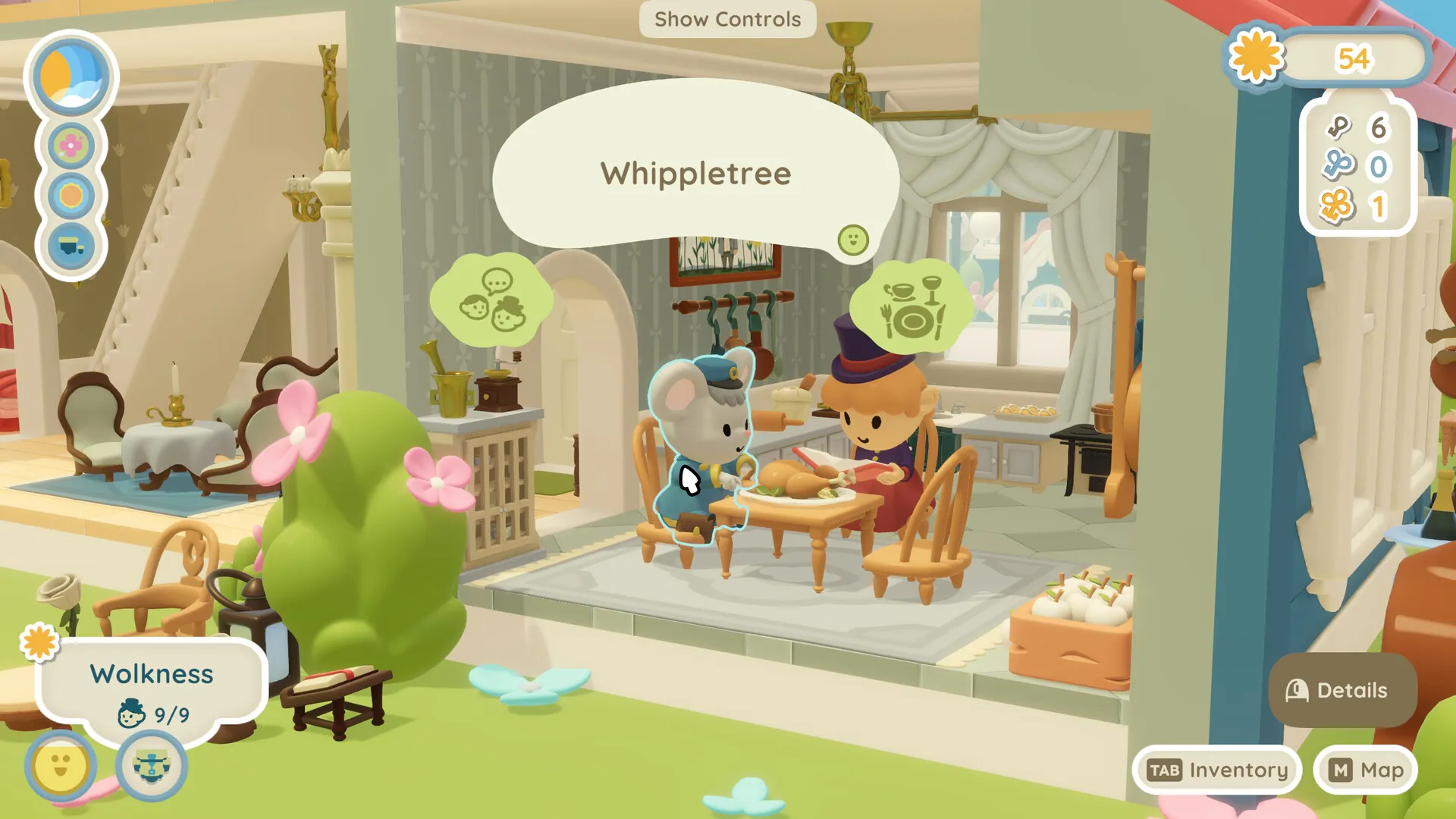
Neighbors bring personality to your creations. Each resident has distinct tastes and requirements. Vincent might crave a painting spot beneath starlight, while Lady Lidia prefers spaces filled with plants and books. Meeting these preferences rewards you with Stellars, fresh decorations, or map fragments that unlock new islands. When satisfied, residents sing joyfully and interact with your placed objects in endearing ways. Watch them water plants, settle into chairs with books, or share meals. These animations breathe life into your designs and provide immediate feedback that your efforts matter.
Each island features a lantern that controls resident arrivals. Light it, and neighbors will come. Leave it dark, and you can decorate in peaceful solitude. This simple toggle gives players control over their creative process, letting them work undisturbed before introducing the social element.
Stellars drive everything forward. You earn them through multiple channels: placing decorations, catching falling stars that drift past, fulfilling resident wishes, and unlocking treasure chests with keys purchased from the shop. These Stellars then purchase new items and unlock additional islands, creating a satisfying cycle where creativity generates progress. The game also offers parallel islands, which are clean versions of spaces you’ve already decorated. These let you test different design approaches without destroying your original work.
The customization extends beyond objects. Players can adjust the time of day, weather conditions, background scenery, and even the music. These options transform each island from a static space into a living canvas that reflects your mood and vision.
The challenge, such as it is, comes from rare neighbors with pickier requirements. They demand more thoughtful combinations of furniture and atmosphere, adding a puzzle-like layer for those who want it. Most residents remain forgiving, though, valuing effort and creativity over technical perfection. This balance makes Twinkleby accessible to players of all design skill levels. If you want to meticulously craft the perfect space, you can. If you’d rather throw furniture around randomly and see what happens, that works too.
Storybook Charm Meets Technical Stumbles
Twinkleby’s visual identity sets it apart from similar cozy games. The hand-painted art style creates a storybook atmosphere where each island feels plucked from an illustrated children’s tale. Floating landmasses hover against starry skies dotted with drifting clouds and glowing lanterns. Every decorative item carries a diorama-like quality, as if carefully crafted for a miniature world. The characters themselves are simple in design, avoiding photorealism in favor of charming, animated silhouettes that feel alive without demanding detailed facial expressions or complex movements.
The audio design complements this gentle aesthetic. Music adapts subtly to your chosen time of day and weather conditions, creating an ambient soundscape that never intrudes. Sound effects punctuate your actions with satisfying feedback: the melodic singing of happy neighbors, the soft whoosh of falling stars, the comical thump of objects being thrown overboard. These audio cues enhance the decorative experience without overwhelming it, maintaining the calm atmosphere that defines the game.
The presentation stumbles when the technical side enters the picture. Loading times stretch to 20-30 seconds when starting the game or switching between islands. In an era where many games have nearly eliminated loading screens, these delays feel particularly noticeable. They break the relaxed flow, forcing you to pause and wait when you’d rather be creating.
More frustrating are the placement mechanics. Ceiling lights and smaller decorative items can be maddeningly difficult to position correctly. The camera angle often prevents proper placement, requiring players to awkwardly fiddle with the view until the game accepts their input. Sometimes the game simply refuses to let you place an object at all, forcing you to give up on your design vision. This issue strikes at the game’s core purpose. When a decoration-focused experience makes decoration itself frustrating, it undermines the entire premise.
Character pathfinding also hiccups occasionally. Residents sometimes get stuck on invisible geometry, freezing in place for several seconds. The problem becomes more noticeable when removing residents by throwing their bags off the island. They’re supposed to cry dramatically and float away with umbrellas, but the animation can catch on unseen obstacles, creating awkward delays. Outside these issues, the game runs smoothly with minimal glitches.
A Slow Burn That Rewards Patience
Twinkleby’s pacing is deliberately unhurried, for better and worse. The early game feels restrictive as you work with a limited decoration inventory and slow Stellar income. You’ll frequently find yourself waiting for stars to literally fall from the sky, watching the screen for that next bit of currency. The economy loosens as you progress, granting more options and faster accumulation, but the pace never truly accelerates. This design choice serves the game’s meditative nature. Players looking for quick gratification or rapid unlocks will find the experience frustrating. Those who embrace the slowness may discover something meditative in the gradual expansion.
The game’s greatest weakness is repetition. Decorating is the only activity available. After several islands, the pattern becomes predictable: attract residents, fulfill their needs, collect rewards, move to the next space. Variations exist through rare neighbors, treasure chest hunting, and item set completion, but these additions don’t fundamentally change what you’re doing. The core loop remains static throughout. Games like Animal Crossing or Stardew Valley mix their decoration elements with fishing, farming, social interactions, and seasonal events. Twinkleby offers nothing beyond its central mechanic, which limits its long-term appeal.
Replay value comes from revisiting completed islands with newly unlocked decorations. You can experiment with different weather conditions, backgrounds, and design themes, transforming familiar spaces with fresh perspectives. The ability to reset everything without penalty encourages this iterative approach. Throw everything off, start again, see what happens. Some players will find endless satisfaction in this cycle of creation and recreation. Others will exhaust their interest after decorating the available islands once.
The game works best in short sessions. Play for 30-60 minutes, decorate an island or two, then step away. This approach keeps the experience fresh and prevents the repetition from becoming tedious. Marathon sessions expose the game’s limitations more quickly, leading to burnout.
Final Thoughts on a Peaceful but Limited Experience
Twinkleby succeeds as a calming creative sandbox. The charming presentation, satisfying decoration mechanics, and freedom to experiment without punishment create an inviting atmosphere. Watching residents interact with your designs provides genuine delight, and the hand-painted aesthetic delivers consistent visual pleasure. The game understands its audience: people who want to unwind, express themselves creatively, and escape into a peaceful world above the clouds.
The technical issues hurt more than they should precisely because the game is so focused. When placement frustrations arise in a decoration-focused experience, they strike directly at the core appeal. The slow early progression and repetitive structure mean Twinkleby won’t satisfy everyone. Players seeking variety, faster pacing, or activities beyond decoration should look elsewhere.
For the right person, though, Twinkleby offers something valuable: a peaceful creative ritual you can return to when the world feels too loud. It’s a digital dollhouse floating in the stars, asking nothing more than your imagination and patience. If that sounds appealing, and you can forgive the technical rough edges, Twinkleby carves out a small, special space in the cozy game genre. Just remember to play in small doses, and let the experience breathe between sessions.
The Review
Twinkleby
Twinkleby delivers a genuinely relaxing creative sandbox with charming storybook visuals and satisfying decoration mechanics. The freedom to experiment without failure states creates an inviting space for self-expression. However, frustrating object placement issues and lengthy loading times undermine the core experience, while the repetitive single-activity structure limits long-term engagement. Best enjoyed in short bursts by players seeking a meditative creative outlet rather than varied gameplay. A peaceful but flawed gem that rewards patience.
PROS
- Beautiful hand-painted storybook aesthetic
- Satisfying decoration mechanics with forgiving reset system
- Adorable resident interactions bring islands to life
- Complete creative freedom without wrong answers
- Relaxing atmosphere with adaptive audio
CONS
- Frustrating object placement mechanics
- Long loading times (20-30 seconds)
- Repetitive single-activity gameplay loop
- Slow early progression and limited starting inventory
- Limited long-term appeal compared to genre peers