






















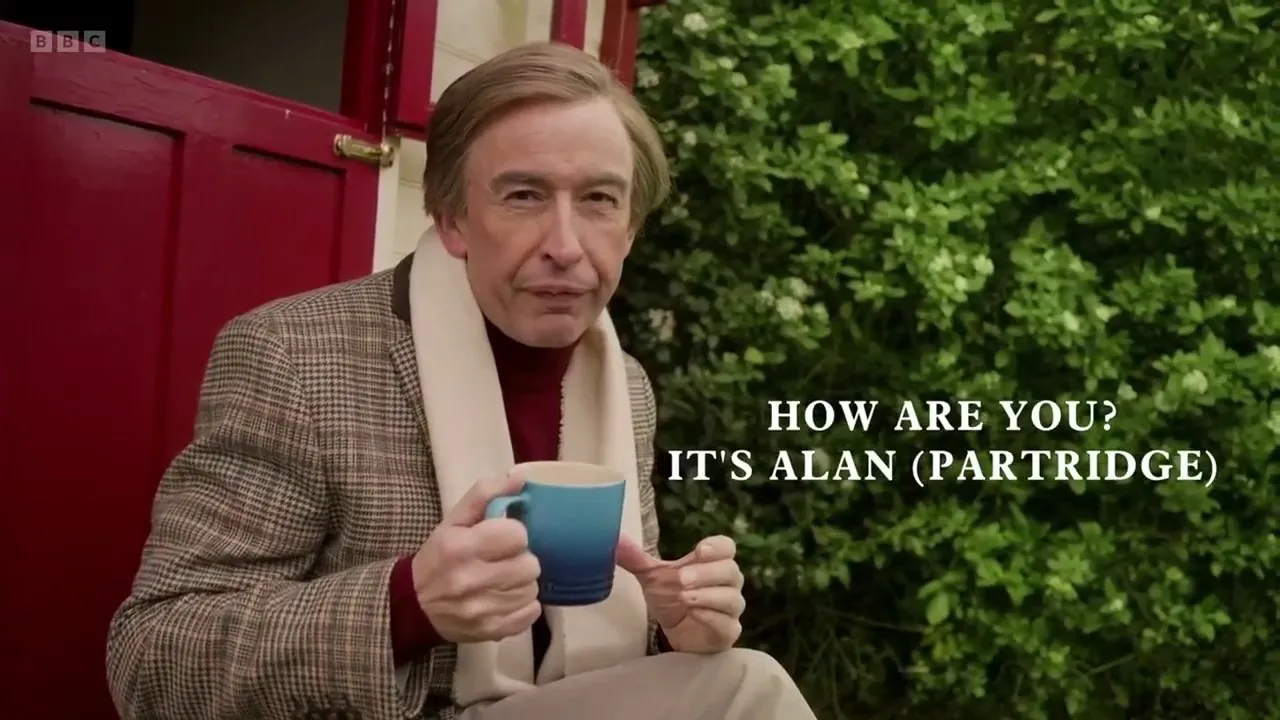

In the current media ecosystem, the celebrity-as-penitent has become a reliable content stream. We are awash in polished documentaries where famous faces embark on televised “journeys” to understand themselves or a pressing social issue, usually with the help of a patient expert and a sympathetic camera crew. It is into this landscape of curated sincerity that Alan Partridge, a man allergic to genuine introspection, makes his return. His latest series, How Are You?
It’s Alan (Partridge), is not simply a new chapter for Steve Coogan’s creation; it is a magnificent, accidental satire of the entire genre of performative wellness. The show’s premise, in which Alan funds his own mental health documentary after a minor public collapse, asks a pointed question about our cultural moment: What happens when a figure defined by his airtight ego is forced to engage with the modern mandate for public vulnerability? The result is a work that functions as a perfect critique of an industry that increasingly conflates confession with character.
The Partridge Persona: Vanity and Vulnerability
This iteration of Alan Partridge is a figure caught between eras, a relic of a bygone broadcasting age now adrift in a world that speaks a therapeutic language he cannot comprehend. He is a Gen X manchild whose entire conception of masculinity is built on the shaky foundations of insecure bravado and a deep suspicion of anything resembling weakness. The series finds him in his wilderness phase, exiled from the institutional security of the BBC and scrambling to maintain relevance.
His solution is to co-opt the visual and verbal tics of the wellness industry, which he proceeds to misunderstand with glorious precision. He treats mental health not as a state of being but as a branding opportunity, a topic to be conquered with a mix of outdated terminology and hollow, self-aggrandizing pronouncements. He suggests with a straight face that bipolar disorder might once have been dismissed as being “moody,” a line that is funny for its ignorance and chilling for the cultural truth it contains.
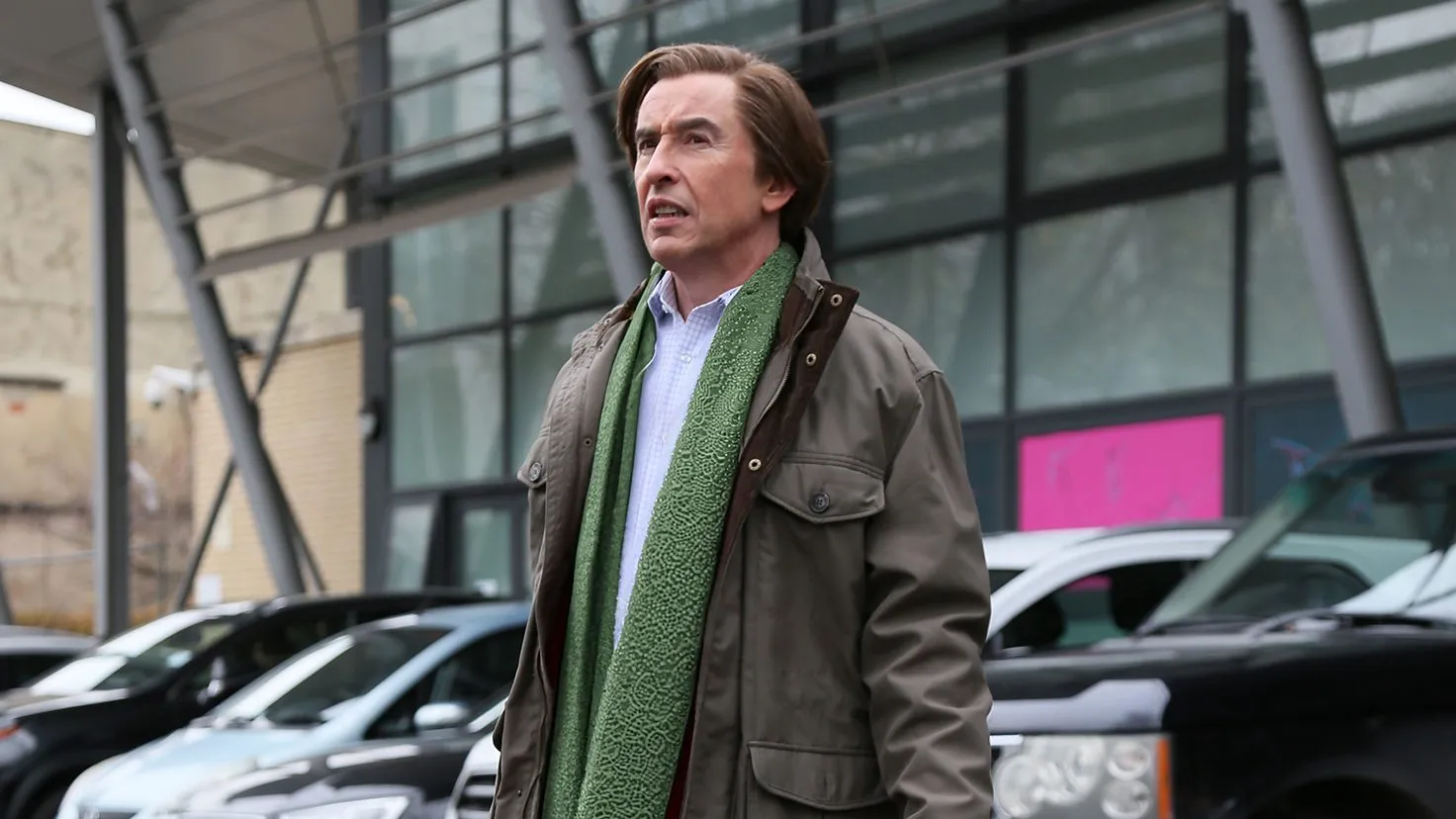
His approach to self-improvement is purely external. He believes contentment can be achieved by settling old scores and correcting the public record, never through the difficult work of inward reflection. This is reflected in Steve Coogan’s masterful physical performance. Alan’s posture is stiff, his smile is a grimace held a second too long, and his eyes dart about with the constant, low-grade panic of someone terrified of being found out.
His very appearance is a costume designed to project a success his circumstances no longer support, from the desperately trendy mustard chinos to a new hair color that sits uneasily atop his head. Yet for all this carefully constructed artifice, the series allows for startling moments of pathos.
Beneath the cringe-worthy pronouncements and social misfires, the show reveals flashes of a profoundly sad and isolated man. The comedy recedes just long enough for us to see the void at his center, the loneliness that fuels his desperate need for affirmation. It is in these moments that the character transcends caricature to become a poignant symbol of a person left behind by a culture whose rules of engagement have fundamentally changed.
A Medley of Misfires: Comedic Style and Structure
The structural brilliance of the series lies in the conceit that Alan is in full creative control, with his “Pear Tree Productions” serving as the vehicle for his vision. This framework transforms the show into a potent satire of modern content creation. Alan is not making a documentary; he is producing content, a crucial distinction in the streaming age where volume can often supersede quality. His editorial decisions are a parade of catastrophic misjudgments.

He illustrates a mental breakdown with an aggressively edited montage of exploding fruit and visualizes perseverance with a painfully labored sequence of himself grimacing through a jog. These choices are a sharp critique of the heavy-handed metaphors and visual clichés that litter the landscape of low-budget factual television. The mockumentary format itself is pushed into a new, more narcissistic phase. Where earlier examples of the genre often observed their subjects’ foibles from a slight distance, this series places us directly inside the echo chamber of its protagonist’s ego.
The show’s humor operates on multiple levels. The verbal comedy is as sharp as ever, a distinctive blend of corporate jargon, mangled idioms, and folksy aphorisms that perfectly captures the linguistic chaos of modern public discourse. Malapropisms like “tastistics” are not just simple errors; they are windows into a mind that absorbs information superficially without ever processing its meaning. The pacing is deliberately fragmented, unfolding as a series of short, sketch-like scenes that mimic the disjointed experience of scrolling through a social media feed.
One moment Alan is humiliating himself on a high-pressure cooking show, the next he is recording a vapid voiceover for a local business. This structural choice prevents any real narrative momentum from building, reinforcing the idea that his project is not a coherent investigation but a collection of disconnected set pieces designed to showcase himself. The resulting cringe is an active experience for the viewer; we become the exasperated commissioners who should have stopped him, forcing us to confront our own appetite for this kind of compellingly awful television.
Alan’s Orbit: Personal Entanglements and Supporting Players
While Alan’s documentary purports to be an examination of the nation’s psyche, its most revealing moments come from the unscripted intrusion of his own chaotic personal life. The series makes a significant move by bringing characters from the audio-only From the Oasthouse podcast into a visual medium, a sophisticated choice that reflects the modern entertainment industry’s approach to building cross-platform character universes.
We finally meet his domineering girlfriend Katrina, whose quiet menace was perhaps more potent when left to the listener’s imagination. Her on-screen presence makes Alan’s state of denial about their dysfunctional relationship painfully, visibly real. This dynamic serves as a stark counterpoint to the hollow lessons about wellbeing he attempts to impart to his audience, exposing the immense gap between his public performance and his private reality. His relationships are not part of his life; they are fodder for his project.
This commodification of the personal is the show’s most resonant critique of contemporary culture. An awkward and passive-aggressive reunion with his former colleague Simon Denton is staged not for reconciliation but as a dramatic set piece for the cameras. Every interaction is assessed for its narrative potential. The power dynamics within his small orbit tell a richer story than any of his planned segments. With his long-suffering assistant Lynn, he is a petty tyrant, secure in a co-dependent relationship forged over years.
With Katrina, the roles are reversed; he is cowed, desperate, and utterly subjugated. These scenes are shot with an observational stillness that heightens the psychological discomfort, allowing the subtle shifts in power to play out in real time. Alan’s inability to maintain a boundary between his professional project and his private humiliations is not just a character flaw. It is a mirror held up to an era where every aspect of a life, no matter how painful or intimate, is a potential piece of marketable content.
This series is the latest installment in the saga of Alan Partridge. The six-part mockumentary series, How Are You? It’s Alan (Partridge), premiered on BBC One and BBC iPlayer on 3 October 2025. The show follows Alan as he returns to Britain after a year working in Saudi Arabia and decides to create a documentary exploring the issue of mental wellness in the UK, using himself and his own sense of unease as the centerpiece. It is available to watch on the BBC’s streaming service, BBC iPlayer.
Full Credits
The Review
How Are You? It's Alan (Partridge)
How Are You? It's Alan (Partridge) is a blistering triumph of television satire. It weaponizes its enduring character to execute a near-perfect critique of the modern obsession with performative wellness and confessional media. The series is painfully funny, structurally clever, and far more profound than a simple comedy. By placing a man allergic to sincerity in charge of a documentary about mental health, the show creates a brilliant and biting commentary on our current cultural moment. It’s a hilarious, squirm-inducing, and essential piece of television.
PROS
- Sharply critiques modern media trends, celebrity culture, and the "wellness" industry.
- Alan Partridge is portrayed with both comedic brilliance and surprising pathos.
- The humor is multi-faceted, from clever wordplay to well-executed cringe comedy.
- Effectively explores generational divides and the commodification of personal life for content.
CONS
- Depth is enhanced by familiarity with the character's extensive history.
- The comedy is heavily reliant on awkwardness, which may be an acquired taste.
- Its sketch-like structure may frustrate those seeking a conventional narrative.