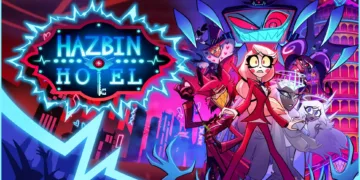




















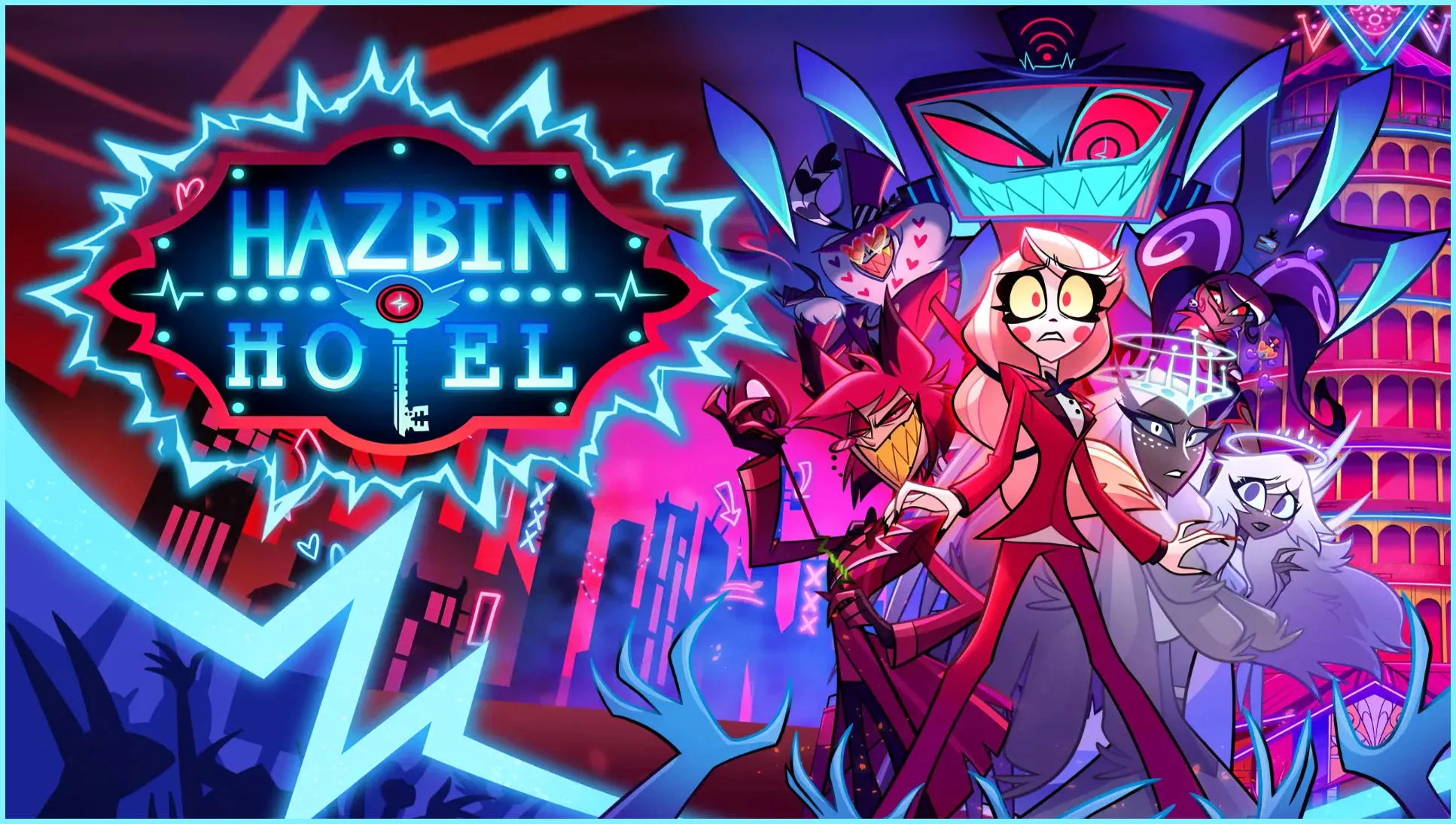

The return of Hazbin Hotel for season two marks a consequential moment for streaming animation. Centered on Charlie Morningstar’s campaign to redeem sinners in Hell and halt the annual violent extermination, the series remains a chaotic, dark, and mature musical. After the intense Season 1 finale, Charlie and her misfit staff rebuild their destroyed establishment.
Sir Pentious’s shocking ascent to Heaven destabilizes celestial bureaucracy, demonstrating that redemption is possible while also unsettling the cosmic order. Season two moves quickly, presenting itself as a more focused, character-driven continuation. It sharpens the show’s signature approach by combining Broadway-scale musical production with raunchy adult humor, and it argues that the concept can sustain itself on a major platform.
Ideologies in Turmoil: Testing the Redemption Arc
The sophomore run puts the hotel’s central premise under pressure. The possibility of change grows harder to accept when confronted by stark behavior and pragmatic resistance. A new wave of sinners seeks conflict with angels instead of inner peace, which exposes a core weakness in Charlie’s utopian project. Sir Pentious’s breakthrough forces Heaven to confront unforeseen realities and reveals an institutional rigidity that undermines its claim to perfected virtue. Heaven reads less like an idealized realm and more like an entrenched administration resistant to reform.
The narrative proposes that celestial governance requires structural reassessment, shifting its view on judgment and mercy. Charlie’s firm belief in universal change meets repeated challenges from Hell’s moral decay, prompting viewers to consider that some characters prioritize self-interest over ethical transformation. The series frames a nuanced argument: transformation can occur, but it carries no guarantee. That argument is projected onto the mechanics of eternal reward and punishment, suggesting the system of cosmic adjudication itself needs reevaluation.
Season two tightens its narrative compared to the debut. The storytelling adopts a steadier rhythm and avoids the episodic drift that sometimes slowed season one. Side stories now support the main conflict and strengthen the central thread rather than distract from it. This pacing shift lets the writing foreground character reactions and mounting tension instead of heavy exposition, a choice that aligns with streaming viewers accustomed to immediate momentum. Plot developments feel consequential, with each beat feeding into the major disputes around the hotel’s future.
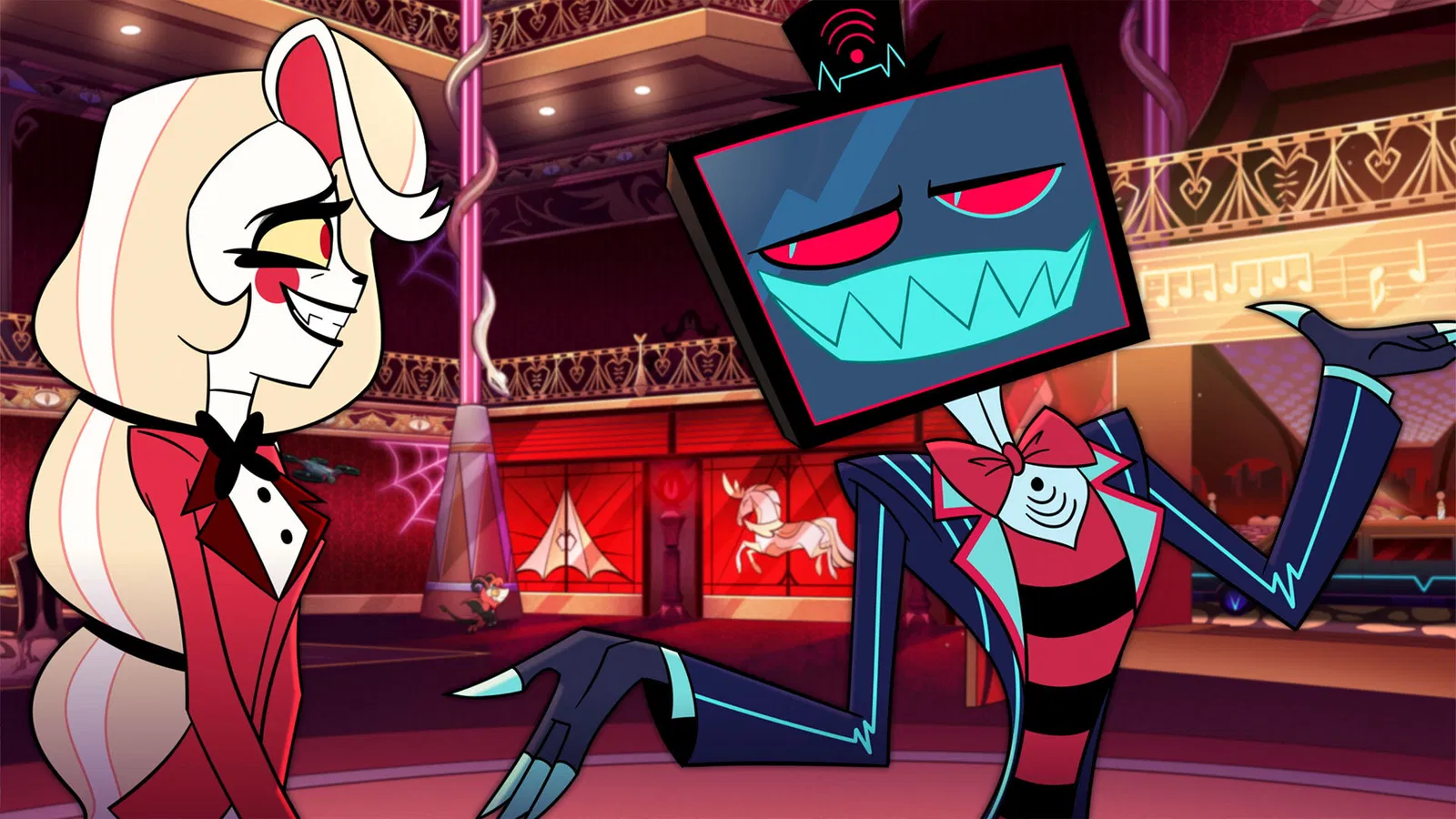
Threats emerge from the group’s inner circle and the wider geopolitical structure of Hell. The Vees—Vox, Valentino, and Velvette—move from background antagonists into the season’s principal villains. Vox’s media empire mounts a calculated smear campaign against Charlie, a storyline that highlights the corrosive force of propaganda in a realm already defined by moral chaos. His ambition reaches toward annexing Heaven.
This commentary on media magnates and manufactured outrage anchors the supernatural conflict in contemporary anxieties about corporate influence on public perception. Vox’s drive for control, deployed through technology and spectacle, reads as a stark parallel to real-world corporate villainy.
The season also deepens the “Seven Years Ago” mystery, scattering clues about past events that shaped the characters. That historical unrest bleeds into both Heaven and Hell, and the serialized reveals point toward a future rupture of institutional hierarchies. The series leverages this turmoil to stage a scenario where celestial and infernal structures confront internal crisis.
Character, Conflict, and Cultural Touchstones
Vox dominates the season’s narrative space. His persona as a narcissistic television demon who manipulates the masses functions as a sharp critique of digital-age villainy. Vox’s ample screen time is justified by substantial musical set pieces that position him as the season’s primary cultural force. Valentino and Velvette play distinct, supportive roles within the trio, each articulating a tactical belief in Vox’s designs. Valentino’s ongoing, manipulative dynamic with Angel Dust intensifies, adding uncomfortable but necessary depth to Angel’s arc and exposing systemic exploitation. That depiction raises questions about power dynamics and consent that media narratives increasingly confront.
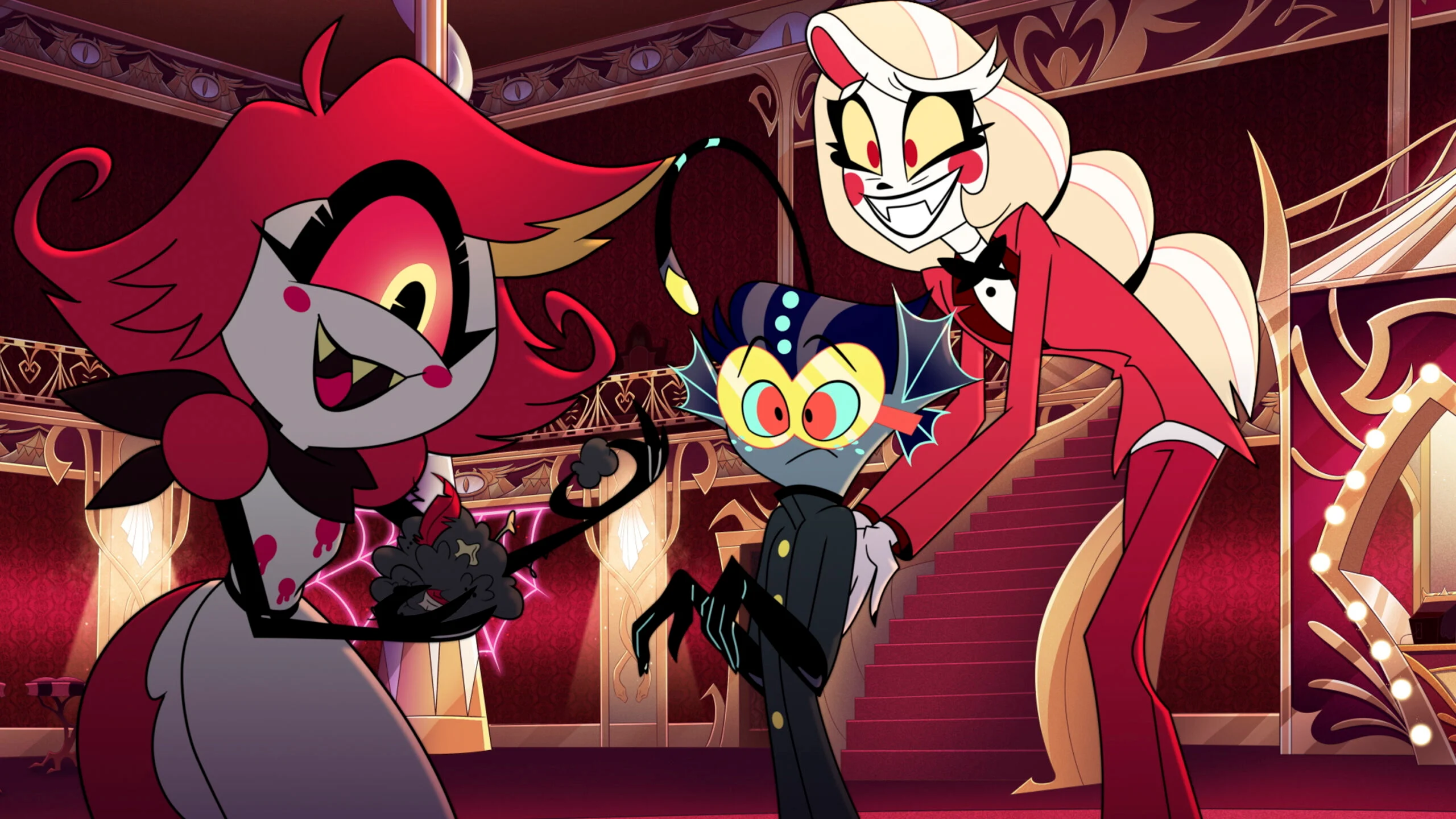
The supporting cast yields some of the season’s strongest character work. Sir Pentious’s Heaven arc becomes an engaging study of dislocation and accidental goodness, and his presence creates an ethical test for celestial beings. Angel Dust and Husk preserve their emotional core, and their relationship simmers toward a payoff that rewards serialized patience. Cherri Bomb’s reaction to Pentious’s ascent supplies a humanizing counterpoint to her chaos, expressed effectively in a duet that probes affection outside conventional romance.
Alastor remains an enigmatic schemer, his self-serving designs a steady background threat. His measured detachment from Charlie’s mission operates as a deliberate device to keep the central conflict grounded in human-like flaws. His maneuvers underline the difficulty of trusting power even when it appears to align with positive aims.
Charlie and Vaggie display mixed development. Charlie arrives as a forceful, driven leader whose urgent need to validate the hotel leads to elaborate, often chaotic plans that test the status quo. Her arc examines leadership burdens and the search for dependable support, which she finds in Vaggie. The couple shares a strong musical number that highlights their mutual reliance. Vaggie’s growth reads as subtler, concentrated on hotel management and internal redefinition after the war. The voice cast earns praise for bringing life and complexity to exaggerated physical designs, and the performances play a key role in the show’s cultural reach.
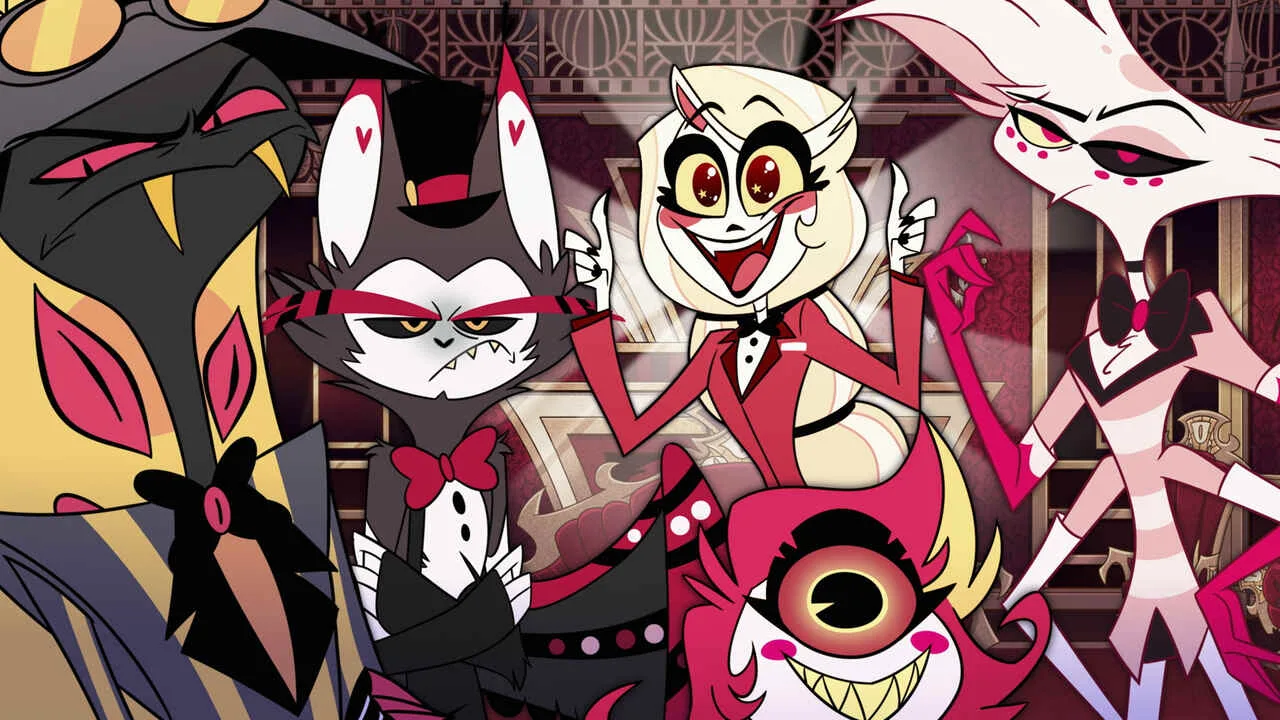
New arrivals such as the scientist Baxter and Abel, Adam’s son, plus Lute’s returning vengeful presence, add perspectives that unsettle the established order. Abel functions as a critique of inherited dogma, standing in stark contrast to his father’s destructiveness. While some of these characters reserve their full potential for later seasons, they broaden the ethical register and allow the narrative to examine institutional critique and generational conflict.
Aesthetics and the Streaming Musical Format
Season two marks a clear upgrade in animation, reflecting the advantages of a larger production budget and extended development. Visuals appear more cohesive, with richer backgrounds and sharper expressions. The move from an independent digital pilot to a polished streaming product demonstrates that platforms can invest in and refine independently conceived animation. Action sequences feel explosive and colorful, balancing morbid humor with moments of genuine tenderness through attentive visual storytelling. Increased fluidity and dimensionality in character movement indicate technical refinement and reward the production teams’ craft.
The season embraces its musical identity with greater confidence. Songs integrate more naturally into the plot and often propel action in ways that recall large-scale stage productions. This use of music functions as a structural device for compressed exposition and emotional release, an approach that signals a broader trend of musicals reshaping episodic forms on streaming services.
The soundtrack remains strong, with notable vocal work and stylistic range from modern rock to jazz-inflected numbers. Standout tracks such as the often-discussed “Gravity” show the series can create catchy, commercially viable songs that linger in cultural memory. While some numbers do not always reach the emotional peak of season one’s most affecting ballads, they succeed technically and push the plot forward with energy.
Vox’s musical moments employ modern rock textures to underscore his corporatized persona. Sound design works tightly with visuals to sustain the show’s chaotic, raunchy charm and to argue that the animated musical can operate as a sophisticated genre on streaming television.
Structural Constraints and Future Industry Prospects
The eight-episode season length imposes a structural constraint that affects delivery. That limit forces brisk pacing and produces a finale that reads as compressed and, to some viewers, neatly resolved for a plot with world-ending stakes.
The creative team attempts to condense a sprawling, multi-layered story into 25-minute segments, a format that would benefit from additional room for subplots and emotional beats to breathe. This tension reflects a recurring challenge for serialized streaming shows: balancing binge-friendly momentum with the complexity required for deeper dramatic work.
Even so, the season lays groundwork for what comes next by seeding hints of an inevitable massive conflict. The show appears to have found firmer footing in its second run, refining voice and structure in preparation for what follows. With seasons three and four already confirmed, Hazbin Hotel stands ready to expand its world and continue probing representation, morality, and institutional power. The season’s success affirms independent animation and its distinct, adult-oriented perspective, and it points to a streaming environment that remains open to creator-driven, distinctive projects.
The series Hazbin Hotel is an adult animated musical comedy that was originally an independent pilot before being picked up for a full series. The first season premiered on Amazon Prime Video on January 19, 2024, with its second season set to premiere on October 29, 2025. The show is set in Hell and follows Charlie Morningstar, the princess of Hell, who opens a hotel to rehabilitate sinners and prevent Heaven’s annual Extermination. It has a content rating of TV-MA for mature audiences, features a distinct blend of dark humor and Broadway-style musical numbers, and its episodes typically run for approximately 23-25 minutes.
Full Credits
Title: Hazbin Hotel
Distributor: Amazon Prime Video
Release date: October 29, 2025 (Season 2 Premiere)
Rating: TV-MA
Running time: ~23-25 minutes per episode
Director: Vivienne Medrano
Writers: Vivienne Medrano, Adam Neylan, Adam Huerta, Adam L. Ward
Producers and Executive Producers: Vivienne Medrano, Alli Reich, Scott Greenberg, Joel Kuwahara, Dana Tafoya-Cameron
Cast: Erika Henningsen, Stephanie Beatriz, Alex Brightman, Keith David, Kimiko Glenn, Blake Roman, Amir Talai, Jeremy Jordan, Christian Borle, Jessica Vosk, Krystina Alabado, Joel Perez, Lilli Cooper, Shoba Narayan, Patrick Stump, Alex Newell, Liz Callaway
Editors: Scott Henry, Vivienne Medrano
Composer: Sam Haft, Andrew Underberg
The Review
Hazbin Hotel Season 2
Hazbin Hotel Season 2 is a bold, visually superior encore that finds its narrative rhythm. By pivoting the focus to the compelling Vees and the richly developed supporting cast, the series strengthens its identity as a sophisticated musical comedy. While the eight-episode constraint causes pacing issues and leaves the main protagonists' arcs feeling slightly underdeveloped, the season successfully deepens its complex themes of redemption and systemic failure. It is a highly confident and exhilarating installment.
PROS
- Significant animation and sound design upgrade, showcasing richer visuals.
- The musical numbers are fluid, confident, and expertly integrated into the plot.
- The Vees, especially Vox, are elevated to compelling, central antagonists who offer potent contemporary commentary.
- Strong, satisfying character development for the supporting cast (Sir Pentious, Angel Dust).
- The overall narrative structure is tighter, more focused, and driven by consequence.
CONS
- The arcs for the main protagonists, Charlie and Vaggie, are weaker compared to the supporting cast.
- The eight-episode runtime causes the finale to feel rushed and limits the story’s potential scope.
- While technically excellent, the new songs generally lack the deep emotional weight of Season 1’s most impactful ballads.