


























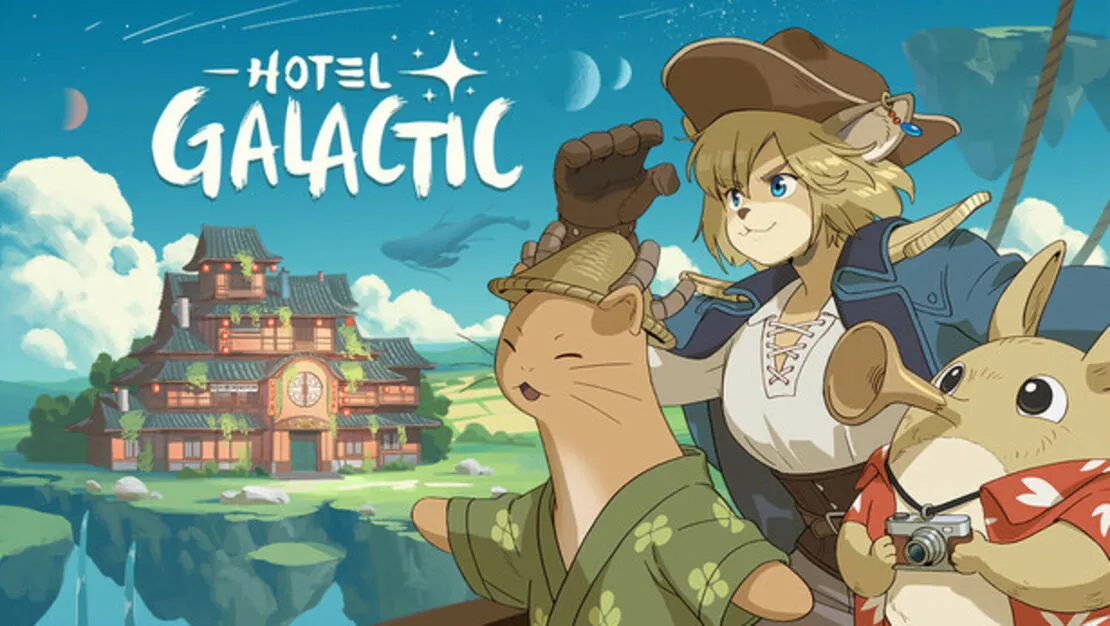

Hotel Galactic places you in the ethereal role of a wandering spirit, suddenly appointed as the manager of a forgotten inn adrift in space. Your guide is Grandpa Gustav, a ghostly host who hopes you can restore his dilapidated hotel to its former splendor.
The game’s immediate appeal is its stunning visual presentation. Every scene looks like a page from a hand-painted storybook, animated with a gentle touch that recalls the works of Studio Ghibli. Floating islands drift by as skyships deliver guests, creating a world that feels both vast and personal.
This is a cozy management simulator, mixing construction and staff supervision with a quiet, developing narrative. The intended feeling is one of peace and calm. It asks you to settle in, take your time, and slowly breathe life back into a magical place.
The Manager’s Blueprint: Hotel Operations
Your role in Hotel Galactic is that of an overseer, a design choice that shapes the entire experience. You float above the action, a guiding spirit rather than a physical character, issuing commands that your dedicated staff carry out.
This creates a perspective of grand oversight, similar to the abstract management found in titles like The Elder Scrolls: Castles. You are present, but not physically part of the world you are rebuilding. This distance allows for quick and efficient command of your entire operation at a glance, but it also fosters a unique relationship with the hotel itself.
It becomes a diorama you are carefully curating. The core satisfaction comes from this act of curation. Building new rooms is a simple yet rewarding process. You select a room type, perhaps a simple guest room or a much-needed bathroom, designate its location on the grid, and then watch your workers bring it into existence, board by board.
The freedom to decorate these spaces is where the game’s creative potential begins to show. Placing furniture, amenities, and decorations feels less like managing a business and more like arranging a magical dollhouse. Each choice, from the placement of a bed to the addition of a potted plant, contributes to the hotel’s personality.
This act of slow, deliberate creation is mirrored in the game’s crafting systems, which are notably tactile. The cooking mini-game is a prime example of this hands-on approach. To create a meal, you do not simply select a recipe from a menu. Instead, you physically drag ingredients like a Satori Peach or a bundle of pasta onto various work stations.
An item might first go to the chopping board, then into the cauldron, with each step being a distinct action you initiate. You can follow established recipes given to you by the game, or you can experiment to create your own signature dishes. This system allows for a personal touch, letting you develop a unique menu for your intergalactic guests.
The same principle applies to crafting snacks for your staff at the Ration Prepper or building furniture at a workbench. Each item feels earned because you directed every step of its creation. The deliberate pace of these actions is a core feature, reinforced by the ability to speed up time. Even at double speed, the game maintains its unhurried, relaxing rhythm, ensuring the experience remains a gentle one.
A Memorable Stay: Characters and Atmosphere
Where Hotel Galactic truly distinguishes itself is in its heartfelt presentation and the personality of its world. The game’s aesthetic is its strongest feature, a painterly vision that feels crafted with immense love. The visuals evoke a powerful sense of nostalgia, like a memory of a beloved animated film.
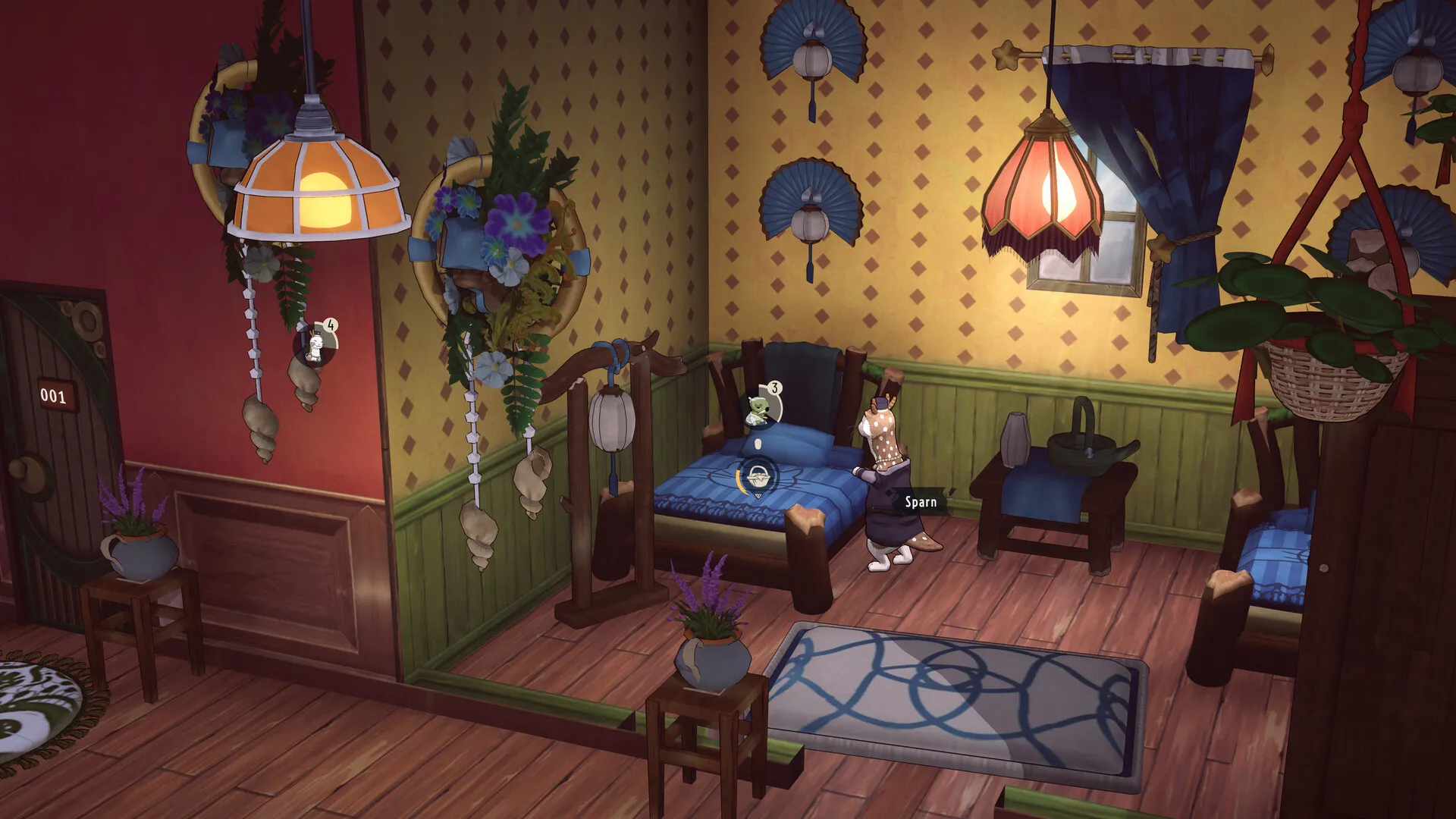
The world is rendered in a 2.5D style with warm, slightly muted colors and soft textures that look like watercolors on textured paper. Character designs are wonderfully imaginative and diverse. You will meet the Pingtons, adorable anteater-capybara-like creatures with trumpets for noses, and the Derrets, a delicate ferret species represented by the sassy father-son duo Tukyuk and Sparn. The four-legged Maklovians, like your head chef Maklo, seem inspired by Japanese folklore. This creative approach to character design makes the hotel feel like a genuine crossroads of the galaxy.
The story unfolds organically through your interactions with this colorful cast. The narrative is not delivered in large, disruptive blocks of text. Instead, it is threaded through daily conversations and beautifully animated cutscenes.
You slowly piece together the history of the hotel, Gustav’s own guarded past, and the mysterious circumstances surrounding its original downfall. The writing gives each character a distinct and memorable voice. Gustav is the wary but ultimately loving grandfather figure, hesitant to trust you at first but gradually warming as you prove your dedication.
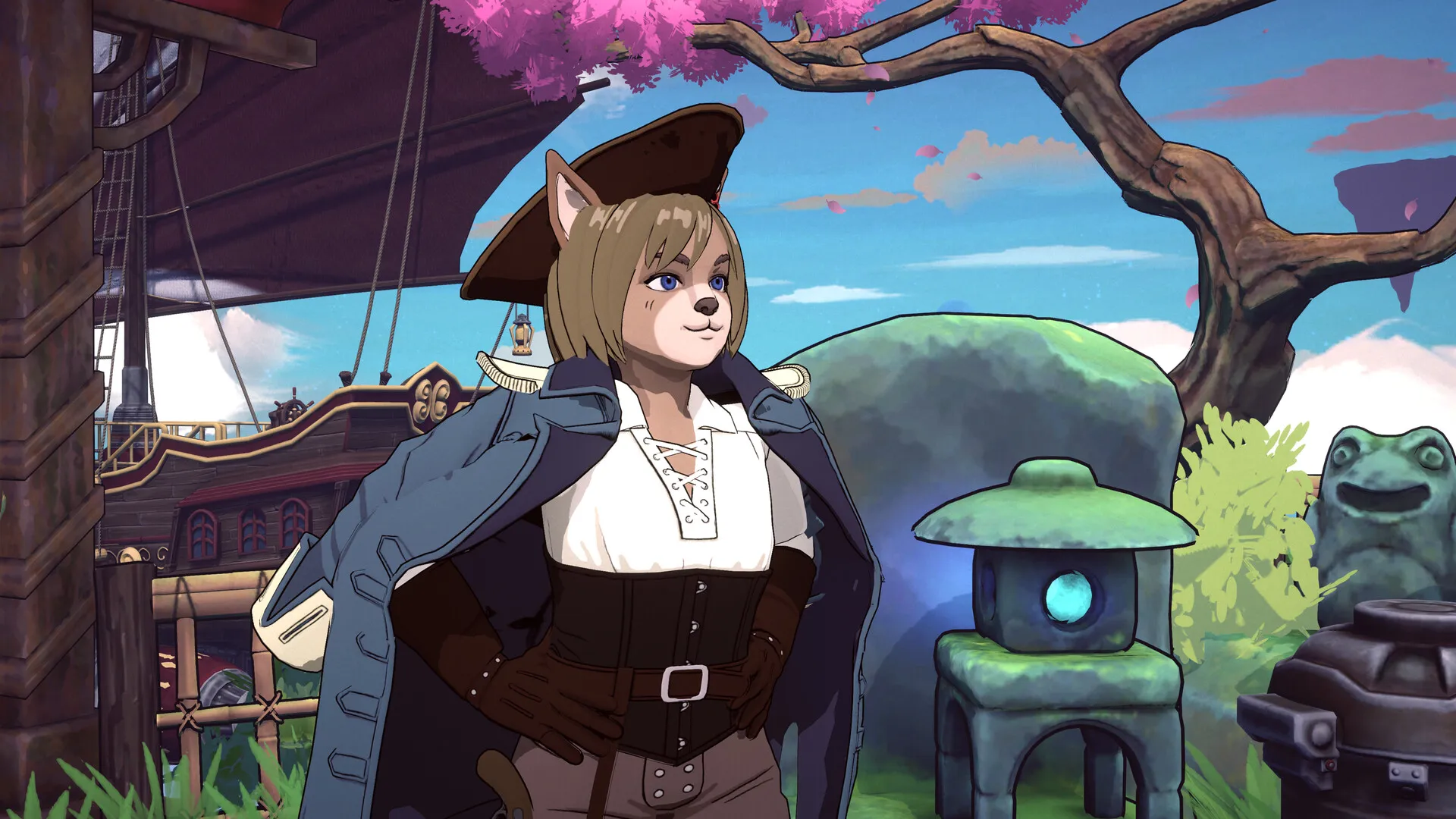
Maklo is endearing, his passion for cooking matched only by his appreciation for your efforts. The smaller recurring characters who arrive on skyships, such as Pouncy Paws with a new batch of guests or Captain Mogumo with potential staff for hire, make the world feel alive and interconnected. The game is full of small, charming details that deepen this connection. Seeing a short character like Maklo conjure a magical wooden stool to reach his beloved cauldron is a tiny moment of animation that speaks volumes about the care put into the world.
This rich visual and narrative tapestry is supported by an exceptional audio presentation. The soundtrack, composed by Zofia Dormaradzka, is more than simple background noise; it is a central part of the game’s identity. The music is soft, full of wonder, and capable of evoking a deep sense of calm. It is the kind of score that encourages you to pause and simply listen.
The voice acting is another high point. Every character is fully and expressively voiced, their deliveries filled with personality that matches their designs. This is augmented by playful text effects, like rainbow fonts and wiggling letters, that make conversations feel dynamic. One minor blemish is the opening cutscene, where the spoken dialogue and written subtitles do not properly sync, but this is a small issue in an otherwise masterfully presented experience.
Service Hiccups: Clunky Systems and Slow Progress
For all its charm, Hotel Galactic’s underlying mechanics exhibit some significant design frustrations that hinder the management experience. The core issue lies with the staff AI and the resulting need for constant micromanagement.
While your workers will handle some recurring tasks automatically, such as changing bedsheets, almost every new process requires direct and repeated intervention. You cannot simply queue up a complex series of crafting jobs and trust your staff to see it through efficiently.
This hands-on approach may be intended to keep the player engaged, but in practice, it creates tedium. The problem of scale becomes a serious concern. If managing a small hotel with five rooms already feels like a constant juggling act, overseeing a large, thriving establishment threatens to become an exercise in frustration rather than satisfaction.
This issue is deepened by a confusing and inefficient task priority system. The logic that governs your staff’s actions is often opaque and counterintuitive. The game’s classification of tasks is a primary source of this problem. For instance, the act of preparing ingredients for a meal is not considered part of “cooking.”
This means your designated chef, even with cooking set as their highest priority, might finish a dish and then wander off to haul logs instead of prepping the ingredients for the next order. You have to manually direct them back to the kitchen.
Workers also “fight” over tasks in a highly inefficient manner. A staff member three rooms away might claim a job, slowly marching toward it while another perfectly capable worker stands idle right next to the task. These inefficiencies disrupt the satisfying loop of automation and optimization that is central to the appeal of management games.
The game’s pacing, while intended to be relaxing, is sometimes slowed to a crawl by its progression structure. Basic and essential tools, such as shovels and sickles needed to clear land for expansion, are locked deep within the research tree.
This gating of fundamental abilities feels artificial. You can see the Stargrass and rocks blocking your path to building a new wing, but you are barred from this progress for hours until you complete a long chain of prerequisite quests.
This can stall momentum and create periods where you are simply waiting for lengthy research timers to finish with little else to do. This feeling is compounded by an unclear tutorial system. The first major quest, “WORK, WORK!,” does little to guide new players, often leaving them to click on everything in mild panic or seek answers from outside the game. These clunky systems and artificial roadblocks detract from the otherwise smooth and enjoyable experience the game strives to create.
A Hotel Under Construction: Technical Faults
As a game in Early Access, a certain number of technical issues are expected, but Hotel Galactic currently suffers from several significant bugs that can severely disrupt gameplay. A few of these problems are game-breaking, capable of halting progress completely.
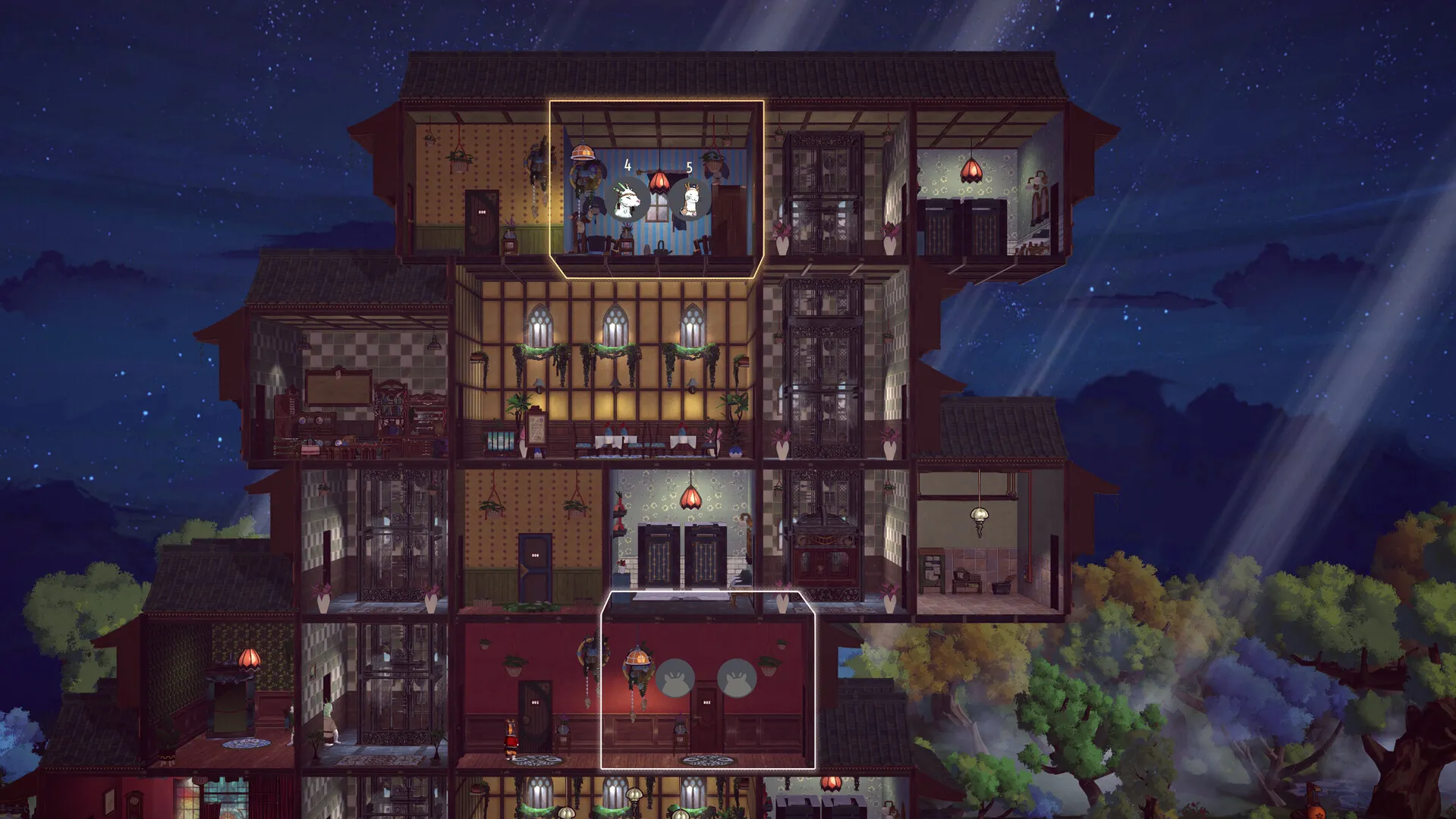
The most serious of these is an “eternal night” bug, where the day-night clock freezes. This is not merely a visual issue; it stops the hotel’s core operational cycle. With time standing still, guests cannot check in or out, bringing the entire economy of your establishment to a grinding halt. While a workaround involving reloading the game and fast-forwarding time exists, it is not intuitive, and many players may reasonably assume their save file is permanently broken.
Other bugs directly interfere with the game’s systems. Quest tracking can fail, a frustration exemplified by “The Hunger Strike” mission. In this quest, you are tasked with making two bentos for your staff, yet the game may not acknowledge completion until you have crafted five or more.
The Ration Prepper machine itself seems to be the source, claiming there is no space in its queue while the queue is visibly empty. This leads to tedious workarounds, like throwing out ingredients and putting them back in your storage just to get the machine to function.
On occasion, entire sections of the hotel can glitch out, rendering rooms and the items within them completely unusable until you restart the game. Workers themselves can bug out, holding a tool like a pickaxe but being unable to perform the associated task or properly unequip it for another worker to use.
Beyond these major issues, a host of smaller glitches and performance problems create a sense of general instability. User interface elements, such as the “Start Research” button, may fail to appear without re-opening the menu.
Sprites can fail to load, appearing as white squares. Annoying visual artifacts, like a food preparation icon getting stuck on the screen, persist until you reload. The game’s performance is also a concern. It suffers from frequent stuttering and FPS drops, especially when panning the camera across the island.
These hitches occur even on low graphics settings, suggesting underlying optimization problems. Finally, the camera controls feel clunky, lacking a smooth, scrollable zoom. This makes finding a comfortable viewing angle difficult, forcing you to choose between being too close to see the whole picture or too far away to appreciate the game’s lovely details.
The Review
Hotel Galactic
Hotel Galactic is a beautiful dream of a game, with a stunning, hand-painted world and a cast of characters that are genuinely endearing. Its heart and artistic vision are undeniable. However, this dream is frequently interrupted by the frustrating reality of its Early Access state. The experience is marred by game-breaking bugs, clunky management systems, and sluggish progression that undermine its cozy ambitions. There is a fantastic game here, but it remains buried under a thick layer of technical issues that need significant work before the hotel is ready for a grand opening.
PROS
- Gorgeous, hand-painted visual style.
- Charming and well-voiced characters.
- Exceptional and atmospheric soundtrack.
- A relaxing and creative core concept.
CONS
- Significant game-breaking bugs.
- Clunky staff AI requires constant micromanagement.
- Slow and frustrating progression gating.
- Inconsistent performance and stuttering.