











The staying power of SpongeBob SquarePants comes from a style of physical comedy that bends its hero into impossible shapes. SpongeBob (Tom Kenny), the eternally upbeat resident of Bikini Bottom, functions like living taffy. He stretches, flattens, pops, and re-forms for laughs, and this feature leans into that elasticity at every turn. The story starts with a modest personal milestone.
SpongeBob measures a half-clam taller and sets his sights on “Big Guy” status, the requirement for riding the Shipwreck roller coaster. A bout of nerves at the park triggers a fib tied to a promise to Mr. Krabs, which funnels SpongeBob and Patrick (Bill Fagerbakke) into the Krusty Krab basement. There they discover a pirate windpipe.
One blast summons the Flying Dutchman (Mark Hamill), who seeks a pure, open-hearted soul to break his curse. SpongeBob fits the bill, which sparks a rescue effort. Mr. Krabs (Clancy Brown), Gary the snail, and a reluctant, demotion-wary Squidward (Rodger Bumpass) give chase along the Dutchman’s trail.
Return to Form: Mechanical Comedy and Absurdity
This entry lands among the character’s funniest big-screen adventures since the 2004 film, a reminder that the series’ gag engine still fires hot. Writers Matt Lieberman and Pam Brady, working with director Derek Drymon, keep escalation constant. The film tears forward with rapid visual puns, quick dialogue volleys, and snap-to-impact timing. The humor springs from design.
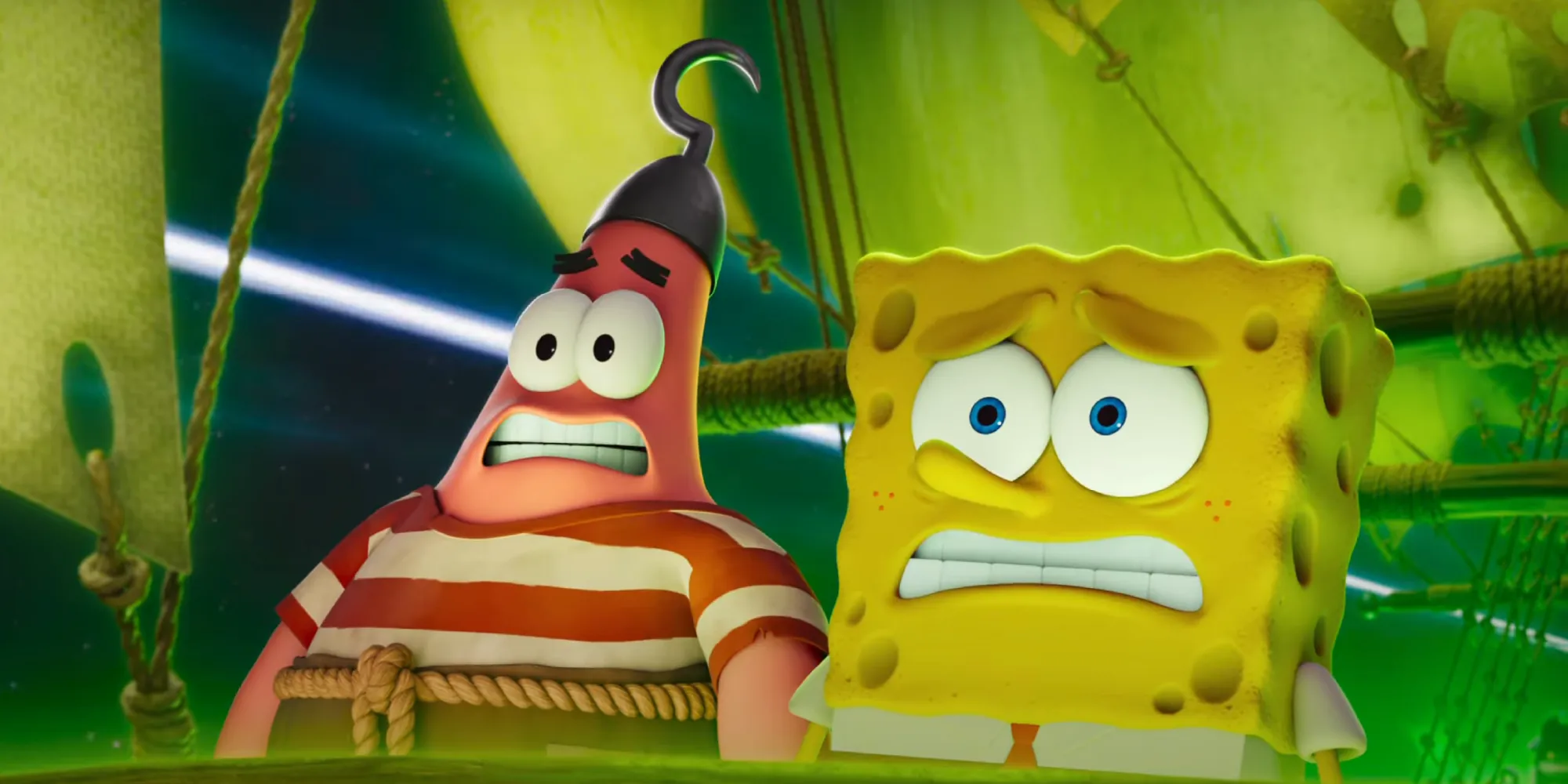
Patrick and SpongeBob operate like rubbery machines, pinging through tubes, compressing into pancakes, and snapping into temporary new shapes that fit each gag. The plot hangs an outsized odyssey on a comically modest want. A roller coaster ride triggers a plunge to the underworld, which creates a steady hum of comic dissonance between tiny motivation and cosmic consequence.
The commitment to silliness never wavers. Running bits pay off, including a fear gag that drops literal bricks from pants with clockwork regularity. The film also sprinkles nods that long-time viewers will clock immediately, a signal that the team understands the rhythms and references that define the show’s classic absurdist voice.
Texture and Spectacle: The Cinematic Look
A 2D and CGI mix gives the production a theatrical sheen. Surfaces carry a sculpted quality, close to claymation, which amplifies the snap and wobble of every stretch and squash. Much of the adventure unfolds in the underworld, and the art team treats it as an expansive stage.
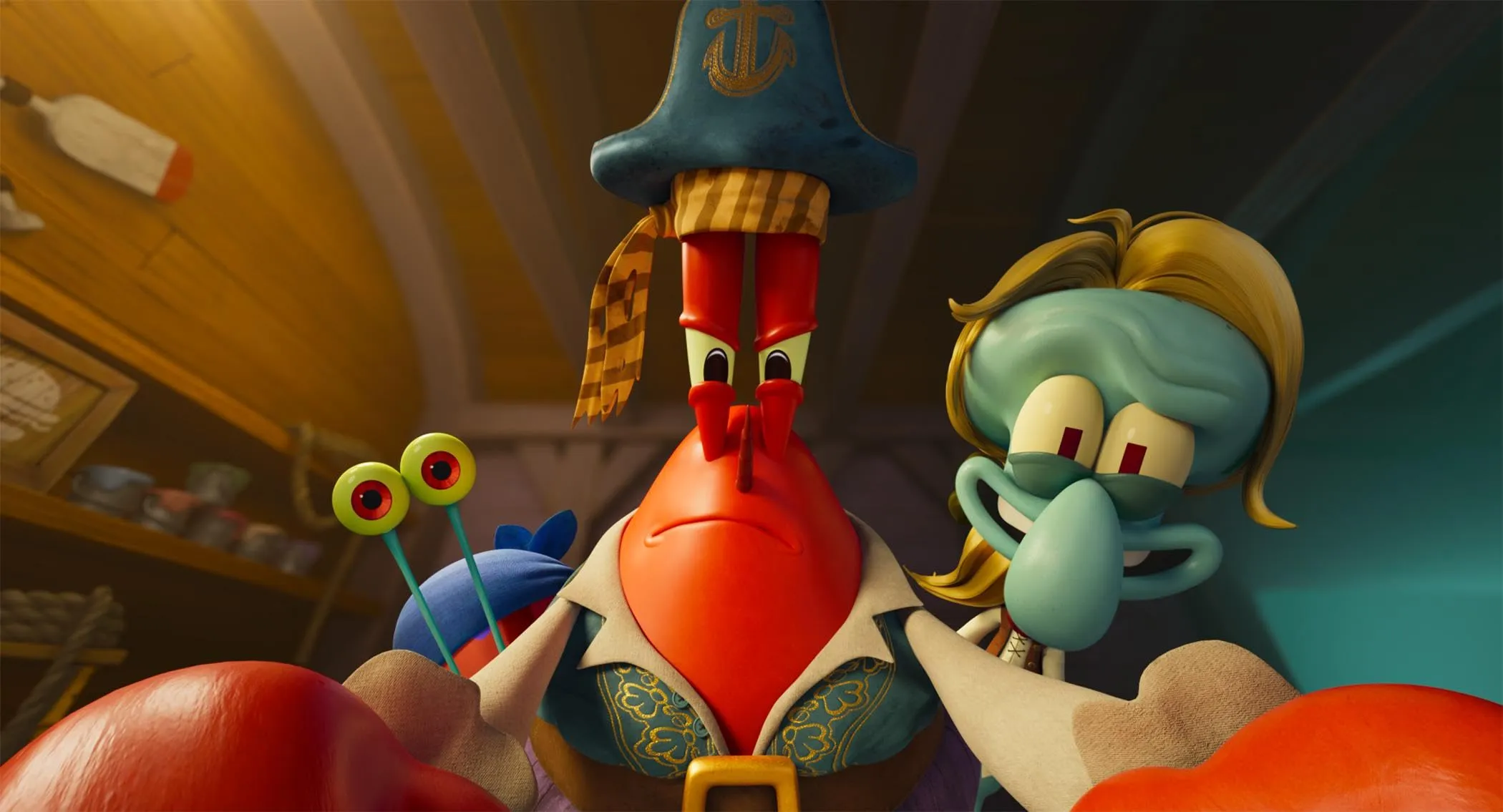
The setting feels denser than Bikini Bottom, filled with ornate creatures and shifting backdrops that hold the eye. Designers lean into spooky and surreal imagery. Enemy forces arrive with memorable shapes and sizes, including massive squids, sirens, and rope monsters that could have walked in from a dark fantasy sketchbook.
The choice sharpens tension in set pieces that ride closer to creature-feature beats while staying within the series’ comic frame. The animation sells scale, depth, and impact, so the heightened action tracks cleanly with the script’s rising stakes and the production’s goal of delivering a full theatrical experience.
Character Arcs and the Pacing Engine
Director Derek Drymon keeps the film on a fast gear. Transitions snap, gags reset quickly, and action spikes frequently. Underneath the velocity sits a straightforward arc about self-acceptance. SpongeBob chases an external label, the prized “Big Guy” designation, and the story shapes that pursuit into a test of the qualities he already carries.
The script carves out meaningful space for Mr. Krabs within that idea. Krabs’ backstory as a so-called Certified Swashbuckler enters as a key guidepost, and he steps into a mentor role that reframes courage for SpongeBob. The choice gives Krabs more presence than he often receives in the movies, and it ties the rescue quest to a clear emotional throughline.
Voice performances lock those beats into place. Mark Hamill’s Flying Dutchman hits the right pitch of spectral menace and exasperated humor, which sharpens both threat and punchline. The core arc holds, though a handful of late sequences feel engineered to hustle characters to their next checkpoint. Those connective passages read as mechanical rather than organic development. Even with that hiccup, momentum stays high, and character-driven jokes keep the ride lively from scene to scene.
The film’s storytelling choices line up cleanly. A small want fuels an oversized quest, a design that suits SpongeBob’s brand of comic logic. The 2D/CGI hybrid adds tactile snap to every gag and loads the underworld with cinematic weight. The performances give the jokes and the emotional beats a reliable anchor, with Hamill’s Dutchman standing out.
Drymon’s pacing favors propulsion, which keeps laughter frequent and minimizes downtime. The occasional convenience in the third act shows the gears of the plot, yet the engine keeps turning. The result plays like a confident return to the series’ mechanical comedy roots, delivered with theatrical polish and a brisk sense of purpose.
The SpongeBob Movie: Search for SquarePants is an animated comedy and adventure film based on the long-running television series created by Stephen Hillenburg. The movie follows SpongeBob as he sets out to prove his courage by following the mysterious Flying Dutchman into the ocean’s depths. It had its world premiere at the AFI Film Festival on October 26, 2025, and is scheduled for theatrical release by Paramount Pictures in the United States on December 19, 2025.
Credits
Title: The SpongeBob Movie: Search for SquarePants
Distributor: Paramount Pictures
Release date: October 26, 2025 (World Premiere), December 19, 2025 (US Theatrical Release)
Running time: 88 minutes
Director: Derek Drymon
Writers: Pam Brady, Matt Lieberman (Screenplay); Marc Ceccarelli, Kaz, Pam Brady (Story)
Producers and Executive Producers: Lisa Stewart, Pam Brady, Aaron Dem (Producers); Marc Ceccarelli, Pete Chiappetta, Anthony Tittanegro, Vincent Waller, Andrew Lary (Executive Producers)
Cast: Tom Kenny, Clancy Brown, Rodger Bumpass, Bill Fagerbakke, Carolyn Lawrence, Mr. Lawrence, George Lopez, Ice Spice, Arturo Castro, Sherry Cola, Regina Hall, Mark Hamill
Director of Photography (Cinematographer): Peter Lyons Collister
Editors: Wyatt Jones
Composer: John Debney
The Review
The SpongeBob Movie: Search for SquarePants
The SpongeBob Movie: Search for SquarePants delivers an entertaining return to the franchise's best comedic mechanics. Director Derek Drymon maintains a kinetic pace, and the visual design provides effective spectacle, particularly in the underworld setting. The film succeeds in its core mission of generating absurd, high-velocity humor. While the underlying message of self-acceptance remains simple, the journey itself is a fun experience, supported by Mark Hamill's memorable performance. It is a worthy splash in the long history of Bikini Bottom stories.
PROS
- Considered the funniest cinematic outing since the original 2004 film.
- Exploits SpongeBob's malleability for inventive visual gags.
- The 2D/CGI hybrid animation style provides excellent cinematic texture.
- Gives Mr. Krabs unexpected depth and screen time.
- Mark Hamill delivers a memorable take on The Flying Dutchman.
CONS
- The theme of self-acceptance is rudimentary.
- Some sequences in the third act feel forced or structurally convenient.