


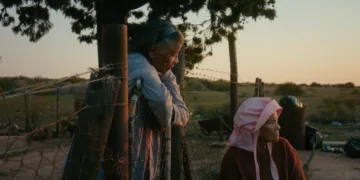


























Ayvalık has never been neutral in Another Self. The seaside town looks like refuge, with its warm light, old streets, olive trees, and water that seems designed to soften every hard confession. Season 3 understands that beauty can become a trap when people mistake calm surroundings for inner peace. Ada, Leyla, and Sevgi return to a place that once promised healing, and the final season keeps asking a harsher question: what happens when the cure becomes another ritual, another story people tell themselves so they do not have to face the living damage in front of them?
Created by Nuran Evren Şit, Netflix’s Turkish drama ends as it began, with three women trying to understand why their lives keep repeating patterns they never consciously chose. The new season opens its historical frame in Çanakkale in 1915, where a Turkish soldier spares an injured Australian soldier instead of killing him. That act of mercy sits strangely at first, then clarifies the season’s governing idea. History is not only war, lineage, and blood. It is also the buried consequence of one decision made under impossible pressure.
Ada’s Controlled Collapse
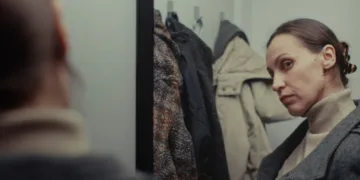
Ada returns from Barcelona with the clean outline of reinvention. She has studied new medical methods, plans to open a women’s clinic in Ayvalık, and carries herself with the poise of someone who has turned pain into procedure. Tuba Büyüküstün plays that poise beautifully. Her Ada often seems composed by force, as if stillness were a professional credential.
The season disrupts her self-command through two threads. The first is Deniz, the half-sister Ada has never met, whose existence comes from her father’s second family. The clues are tactile rather than grand: a library card hidden inside a book, possible family names offered by Özgür, a horseshoe in a keepsake box. These details matter because they make identity feel handled, sorted through, and almost accidentally discovered.
Özgür’s arrival on the flight from Barcelona could have been a convenient romantic device. Instead, the show uses him as a figure of intellectual intimacy. His shared love of Kahlil Gibran with Ada and his anthropologist’s attention to names make him a bridge between emotional curiosity and family history. Toprak remains the future Ada has feared, Selim the order she has outgrown, and Özgür the question that arrives before she is ready to answer it.
Leyla Stops Performing Survival
Leyla’s story is the season’s sharpest domestic critique. Her life is crowded with obligations: a toddler, a struggling tavern, a missing chef, a husband whose fantasies float above the bills. Erdem’s idea of buying a boat, paired with his airy “we’ll find a way” optimism, gives the marriage its most precise diagnosis. Leyla is not living with a villain. She is living with a man who has outsourced reality to her.
Seda Bakan gives Leyla a comic snap that never cancels the fatigue underneath it. Her line to Erdem, “You annoy me,” lands because it is too small for the anger it carries. The show often finds truth in that mismatch between phrase and feeling. Leyla’s stalled libido is treated less as a punchline than as evidence of emotional overwork. When Yorgos, the tavern’s new chef, reawakens her desire, the point is not simply temptation. It is recognition. Someone else sees her as a woman rather than a household system.
Her later business proposal to Fiko is one of the season’s most meaningful turns. It is modest in plot size, large in character consequence. Leyla begins to organize a future around her own competence, not around repairing Erdem’s drift.
Sevgi and the Price of Truth
Sevgi carries the final season’s most tender arc and its cruelest interruption. After another cancer recovery, she and Fiko look toward adoption, with Sevgi fearing that her body’s history will be used as evidence against her ability to mother. Boncuk Yılmaz plays Sevgi with a softness that is never passive. She lets pauses do the work of speeches, especially when happiness feels close enough to frighten her.
The wedding to Fiko is staged as communal release. Friends and family gather, the season lets warmth fill the frame, and for a brief stretch, Another Self allows joy to exist without correction. Then Muko’s letter arrives, carrying a family secret that changes Sevgi’s understanding of her origins. The scene works because it does not treat revelation as spectacle. Sevgi reads, absorbs, and remains present. The pain is not theatrical. It is administrative in the way family secrets often are: a document, a name, a fact that rearranges memory.
Healing, Repetition, and the Limits of Explanation
The ancestral-healing material has always been the show’s most divisive element, and Season 3 leans into it with greater confidence and greater risk. The family constellation sessions are most persuasive when read as metaphor. They give shape to inherited fear, silence, abandonment, and sacrifice. They become weaker when the writing explains what the actors have already shown.

The middle episodes feel slower for this reason. Ada’s restraint, Leyla’s exhaustion, and Sevgi’s hesitation already contain the past. The show sometimes mistrusts that clarity and reaches for another session, another symbolic link, another verbal key. Still, Erdem Tepegöz’s direction keeps the human scenes grounded. Conversations between the three women remain the series’ true grammar: interruptions, teasing, sudden quiet, the intimacy of being witnessed without needing to perform coherence.
Season 3 closes its central arcs with a fitting lack of neatness. Ada moves away from Selim and toward Toprak. Leyla begins building a self outside dependency. Sevgi receives truth where comfort might have been easier. The season’s finest insight is cultural as much as dramatic: families often call silence protection, then leave the next generation to mistake that silence for destiny.
The third and final season of the critically acclaimed Turkish drama Another Self (originally titled Zeytin Ağacı) premiered worldwide on Netflix on June 24, 2026. Produced by OGM Pictures, this farewell chapter wraps up the moving journey of three lifelong friends who originally headed to a coastal town to seek alternative spiritual healing. In this final season, Ada seeks a fresh start in Ayvalık while encountering a disruptive figure from her past, Sevgi reevaluates her dreams of building a traditional family, and Leyla confronts deep-seated relationship issues. You can stream all eight episodes of the final season right now, exclusively on Netflix.
Where to Watch Another Self Season 3 Online


Full Credits
Title: Another Self Season 3 (Zeytin Ağacı)
Distributor: Netflix
Release date: June 24, 2026
Rating: TV-MA
Running time: 8 episodes (approx. 45–55 minutes per episode)
Director: Erdem Tepegöz
Writers: Nuran Evren Şit
Producers and Executive Producers: Onur Güvenatam
Cast: Tuba Büyüküstün, Seda Bakan, Boncuk Yılmaz, Murat Boz, Fırat Tanış, Rıza Kocaoğlu, Umut Kurt, Şükrü Özyıldız, Berk Cankat, İlayda Akdoğan, Füsun Demirel, Atsız Karaduman
Director of Photography (Cinematographer): Ahmet Bayer
Editors: Erkan Özekan
Composer: Toygar Işıklı, Özgür Buldum
The Review
Another Self Season 3
Another Self Season 3 gives Ada, Leyla, and Sevgi a tender, imperfect farewell, strongest when their friendship cuts through the fog of ancestral healing. The season can over-explain its spiritual ideas, yet its best scenes remain sharply human: Ada tracing Deniz through family clues, Leyla tiring of Erdem’s drift, Sevgi reading Muko’s letter after a wedding that briefly lets happiness stand unguarded. Its ending is untidy in the right places, letting growth feel earned rather than decorative.
PROS
- Warm central friendship
- Strong work from the three leads
- Rich Ayvalık atmosphere
- Thoughtful family-history thread
- Emotionally apt final turns
CONS
- Slow middle stretch
- Spiritual material over-explained
- Some male characters stay thin
- Present-day drama occasionally crowded