


























A documentary filmmaker arrives in a foreign land to find a mystery. Not a murder, but something murkier: the slow, public disintegration of a national soul. This is the entry point for Jonathan Jakubowicz’s Soul of a Nation, which casts him as a reluctant detective in a country prosecuting itself. He finds a nation convulsed by a civil cold war, with the government’s proposed judicial overhaul serving as the drama’s inciting incident.
The visual grammar is one of discord; protest crowds are shot with a restless, wide lens, capturing a sea of faces unified only in their opposition. The film meticulously documents the fissures and fractures of 2023, establishing a rhythm of simmering conflict. Then, the plot violently twists. The morning of October 7th arrives like a jump cut, shattering the narrative and forcing the central question from the shadows: when a state is at war with itself, what happens when a true monster appears at the door?
A Map of Internal Exiles
Jakubowicz’s initial investigation is a work of political cartography, mapping the invisible borders that run through Israeli society. The judicial reform is the film’s MacGuffin, the object of desire that reveals the characters’ true allegiances. Through a series of starkly lit interviews, the film composes a fractured portrait. The camera often holds tight on faces, using a shallow depth of field that isolates each speaker in their own ideological world.
Figures like former prime ministers Ehud Olmert and Naftali Bennett speak from spaces that feel less like offices and more like confessionals, their testimonies adding layers to the national schism. The film excels in diagnosing the deep tissue damage beneath the surface-level politics.
It illuminates the cultural chasm between the Ashkenazi elite, often filmed in modern, secular spaces, and the Mizrahi and Sephardi populations, whose conservatism is explained as a product of historical trauma and pressing security anxieties.
The 2005 Gaza disengagement is presented as a kind of original sin, a political decision whose ghost still dictates the terms of debate. The effect is claustrophobic, a depiction of a society of internal exiles, each group stranded on its own island of history and conviction.
The Day of the Long Lens
The film’s entire aesthetic and rhythm are shattered by the arrival of October 7th. The controlled, analytical pace dissolves into the frantic, sickening grain of terrorist-shot footage. Jakubowicz’s decision to include this material is a stark one, stripping away any cinematic artifice and confronting the audience with the unmediated horror of the event. The sound design plunges into chaos.
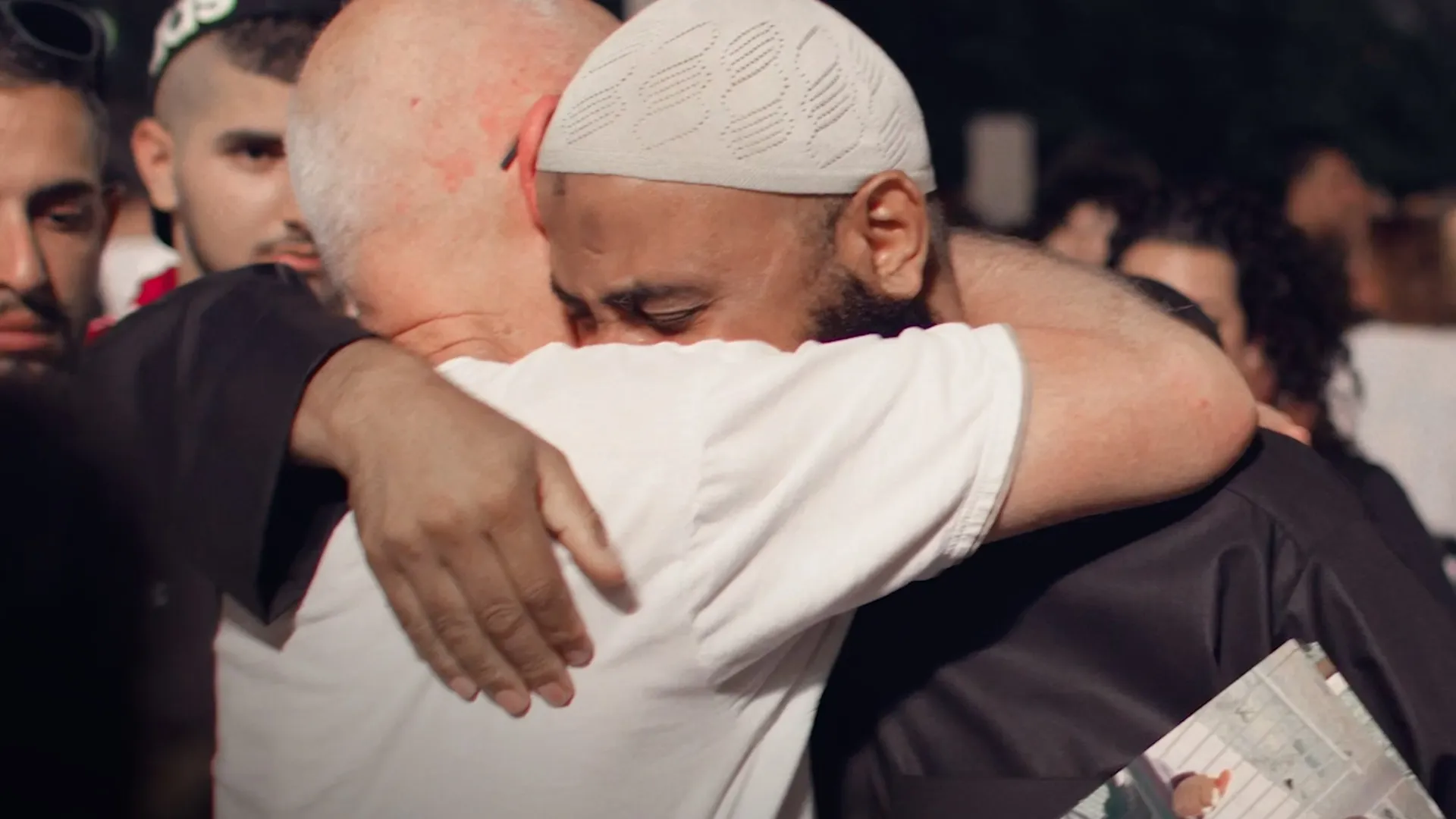
The edit becomes brutal and abrupt, mimicking the psychological shock experienced by the nation. This raw depiction of violence is then immediately contrasted with the film’s visual portrayal of the aftermath. The cinematic language shifts again. We see scenes of reservists descending on Ben Gurion Airport, the frame filled with movement and purpose.
The lighting in these sequences feels brighter, more naturalistic, capturing a nation emerging from the shadows of internal strife into the harsh sunlight of a fight for survival. This newfound unity is portrayed not as a sentimental triumph but as a grim, biological imperative. The bitter political arguments, which felt so monumental just moments before in the film’s runtime, are rendered instantly obsolete, the concerns of a world that no longer exists.
An Inquiry without a Verdict
In its final act, the film circles back to its filmmaker-detective, a man left holding a notebook full of contradictory clues. Jakubowicz’s subjective presence prevents the film from ever claiming the cold authority of objective journalism. It remains a personal inquiry, a journey into a moral and political maze that offers no clean exit.
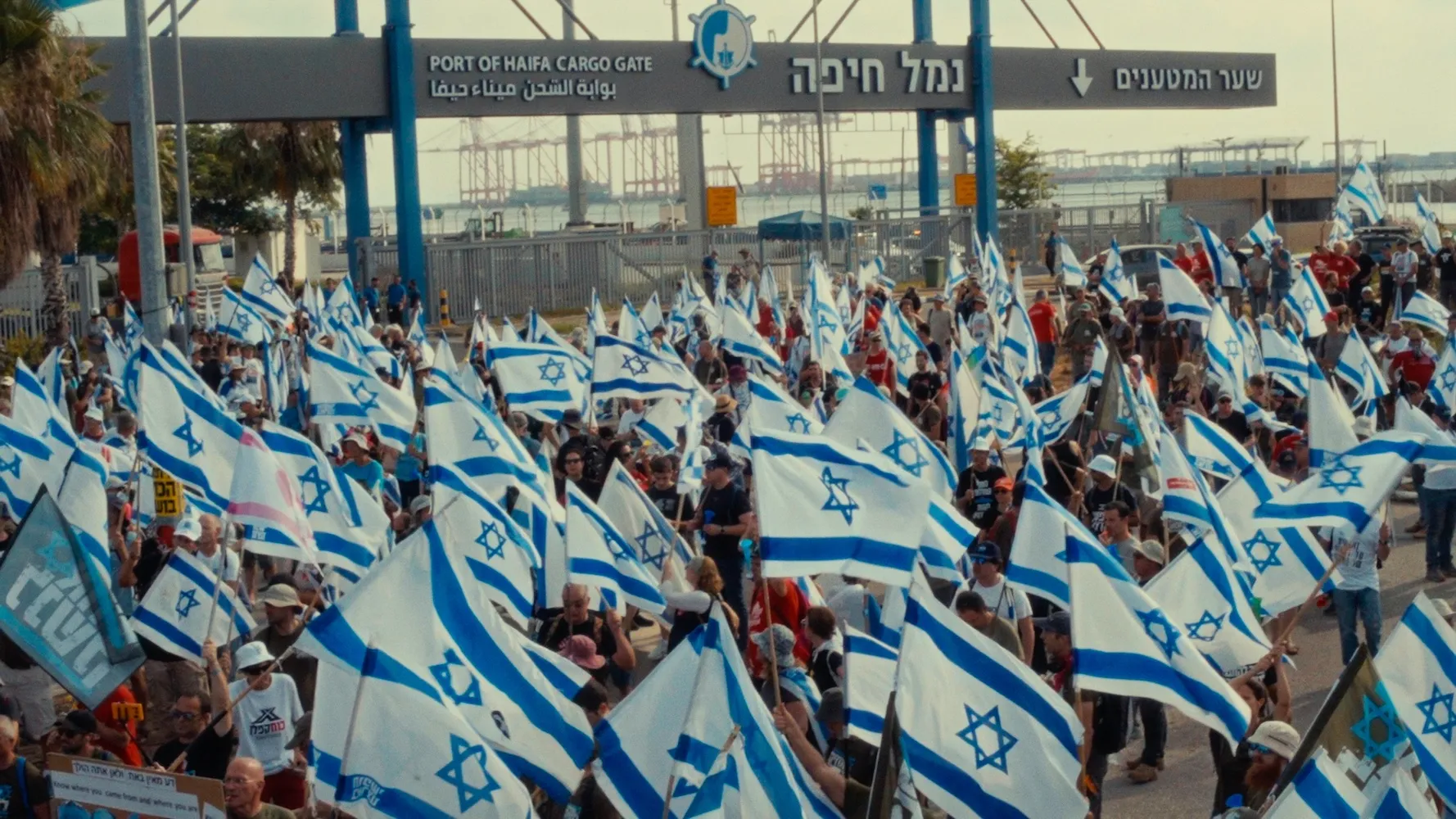
This refusal of a neat resolution is both the film’s most defining feature and its most challenging aspect. It presents a dizzying array of perspectives, a cacophony of voices that never harmonizes into a single, reassuring chord. The structure mirrors the classic noir, where the investigation reveals not a simple truth but a deeper, more systemic corruption of the soul.
The film’s strength is its courage to remain in that uncomfortable space, offering a portrait of a specific, traumatic moment in time rather than a prescriptive analysis. It captures the essence of a nation whose defining characteristic may be its perpetual state of unresolved tension, a people united by an ancient history and divided by every possible interpretation of its future.
Soul of a Nation is a 2025 documentary film directed by Jonathan Jakubowicz that offers an unfiltered look at Israel’s internal divisions and external threats in recent history. The film delves into the country’s profound internal conflicts and political unrest, ultimately chronicling the national transformation and unity that emerged following the devastating October 7 attack. The documentary features exclusive interviews with key political figures and public voices, including former Prime Ministers Naftali Bennett and Ehud Olmert. The film premiered at various Jewish film festivals in early 2025 and is set for a theatrical release on October 3, 2025, distributed by Greenwich Entertainment. Availability for streaming or digital purchase will follow its theatrical run.
Full Credits
Director: Jonathan Jakubowicz
Writers: Jonathan Jakubowicz
Producers and Executive Producers: Jonathan Jakubowicz, Claudine Jakubowicz, Dalit Merenfeld, Santiago Garcia
Cast: Naftali Bennett, Ehud Olmert, Dorit Beinisch, Shlomo Ben Ami, Tzipi Livni, Michael Oren, Simcha Rothman
Director of Photography (Cinematographer): Carlos Arroyo
Editors: Santiago Garcia
Composer: Mikel Hurwitz
The Review
Soul of a Nation
Soul of a Nation is a raw, often unsettling piece of cinematic testimony. It forgoes a tidy narrative in favor of a visceral, ground-level immersion into a country’s identity crisis. While its refusal to offer a conclusion may frustrate some, its power lies in its unflinching portrayal of a society’s breaking points and its tragic, violent reunification. It is an essential, if difficult, document of a nation caught between internal schism and external threat, capturing a historical moment with painful clarity.
PROS
- Offers a deeply nuanced exploration of the complex social and political divisions within Israel.
- Effectively documents the profound psychological shift in the nation following the October 7th attacks.
- Presents a challenging, multi-faceted perspective that avoids simplistic answers or propaganda.
- The filmmaker’s on-the-ground presence adds a compelling layer of personal inquiry.
CONS
- Its narrative structure, which mirrors the chaos of the events, may feel disjointed or unfocused to some viewers.
- A viewer with no prior knowledge of Israeli history might find some of the political context difficult to follow.
- The lack of a firm authorial conclusion leaves many complex issues unresolved.