





















Cristian Ponce’s A Mother’s Embrace lands as a slow-burn horror piece that threads psychological instability through environmental dread. The setting fixes us in Rio de Janeiro, 1996, amid a catastrophic flood that turns streets and rooms into vessels for panic. Ana (Marjorie Estiano) returns to active duty as a firefighter, shadowed by a childhood trauma involving her mother’s desperate murder-suicide attempt.
An early flashback builds a raw bridge between past and present, and it stains every choice Ana makes on the job. A call sends her team to a remote, failing elderly care home, already buckling under rot and storm. The place leans, groans, and sweats. Walls feel misaligned with reason. The design speaks first. It signals a match between space and mind: damp masonry for intrusive memory. Threat arrives before anything supernatural moves into frame.
Pacing and the Existential Coil
The screenplay works with a measured tempo that prioritizes character study over jolts. Dread accrues by inches. Mood sets the pulse. Ponce tracks maternality as a concept that extends beyond biology, placing a woman’s agency and self-definition under pressure from public duty and private scars. Ana’s push for professional credibility and inner steadiness carries the emotional weight.
The film operates as a meditation on anxiety that ties concrete terrors to spectral ones. Historical flooding, institutional neglect, and an old wound lock together with paranormal currents that seep into corners. Some viewers may feel the middle lengthen; the design of this structure requires patience. The atmosphere needs time to breathe. Ethical lines refuse clean separation.
The script withholds a tidy division between good and evil and keeps the deepest conflict within Ana, which sets up a final movement that favors ambiguity over instruction. No lecture. Space for unease. The film leaves room for the audience to sit with an open ending and its thorny aftertaste.
Chiaroscuro and the Architecture of Decay
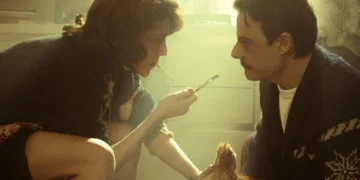
Ponce maintains a tight grip on atmosphere, and that consistency becomes the dominant strength. The visual language draws on expressionistic framing that echoes classic noir grammar, where shadow outtalks dialogue. The cinematography stays murky and moody, leaning on low-key lighting that functions as true chiaroscuro. Surfaces glisten with damp. Black pools at the edges.
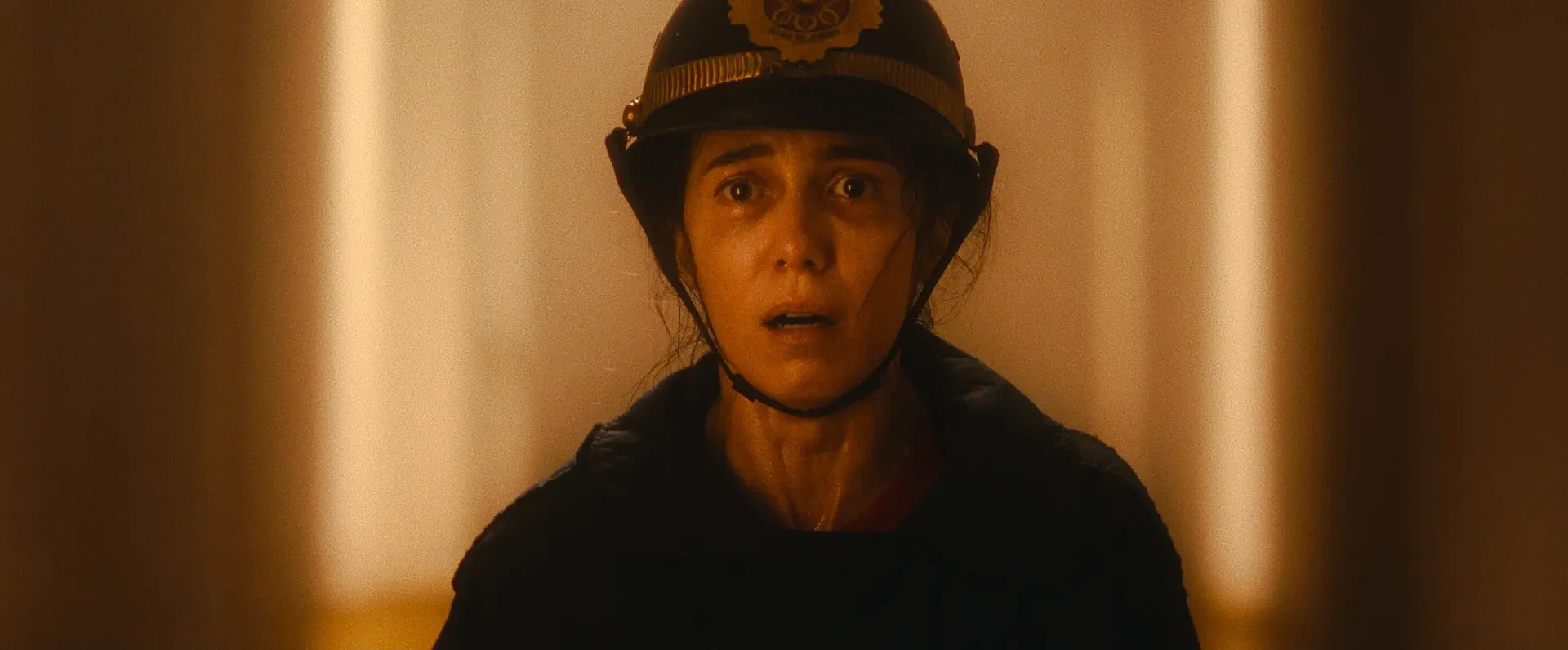
Faces emerge, then recede. The images guide the eye toward a destination that feels inevitable and wrong at the same time. The care home takes on the weight of a character through production design. Cracked plaster. Streaked grime. Oppressive gloom. The building externalizes Ana’s psychic distress with a precision that feels clinical and feverish in the same shot.
The result lands less like a jump-scare machine and more like a somatic tremor. You feel it in the sternum. An early flashback carries ferocious intensity that would challenge any film to match across its length. The subsequent rise in visual tension holds the tone on a tilted axis, which keeps the piece charged and unstable. Proof that a setting can unsettle the body before the plot files any paperwork.
The Anchor of Naturalism
Marjorie Estiano centers the film with a performance that balances restraint and rawness. Her work reads like lived experience. Ana registers as a person with a job and a fracture, not a template for genre beats. The professional resolve feels practical and convincing, even as the character carries a history of fragility.
The portrayal remains steady and absorbing from first alarm to final silence. She provides the necessary still point while the world around her grows less reliable. That poise matters. It gives the audience a line to hold. The ensemble around her supports the pressure.
Val Perré, Reynaldo Machado, and Ângelo Rebelo supply sturdy, grounded counterpoints that keep scenes weighted. Their presence helps the emotional stakes move forward without shortcuts. Ana’s isolation forms through credible interactions rather than mechanical staging. The cast works like a calibrated instrument, drawing out value from material that leans on atmosphere and interiority.
A few technical notes sit under the skin of the experience. Sound design tightens the jaw. Water becomes percussion. Building groans answer human breath. The pacing of those textures manipulates attention in small, telling increments. Tension works by suggestion, then repetition, then proximity. The eye learns the geometry of the corridors.
The ear learns the scale of the rooms. The film edits that education into the body. Neo-noir lineage threads through the piece: chiaroscuro, expressive angles, an environment that behaves like motive. The approach steps away from hard-boiled cynicism and moves toward a psychological register heightened by memory. The thriller frame remains in place, and the psychological current keeps it humming.
The themes meet the craft at a useful intersection. Free will, identity, and ethical gray zones cue the character arc rather than living off to the side as thesis. Ana’s need for agency holds hands with the storm and the corridor shadows. The care home does not lecture; it presses. The camera watches pressure distribute across faces and rooms.
The lighting marks fault lines. The narrative structure chooses mood as spine. Momentum arrives from a steady tightening rather than a sprint. A dry aside for balance: if you enjoy sunny hallways, this tour may not be for you. The film works on the mind by working on the senses first. Then it asks the questions. Who am I under duty. Who am I under fear. Who am I when the building starts to speak.
By the end, ambiguity reigns without feeling like a dodge. The conflict stays internal, and the resolution keeps its edges ragged. That choice aligns with the visual logic already in place. Darkness pools. Water climbs. A figure holds. The piece honors the slow-burn promise it made at the start. The flame stays low. The heat creeps. The room changes shape, and you realize it has been shaping you back.
A Mother’s Embrace is a Brazilian horror-thriller that premiered at film festivals in 2024 before receiving various international and digital releases. Set in Rio de Janeiro in 1996, amidst a massive, historic storm, the film follows firefighter Ana as she and her team are called to evacuate a severely dilapidated, remote elderly care home. The mission quickly turns sinister as Ana’s own traumatic past collides with the building’s mysterious residents and dark secrets. The movie is available to watch on various digital platforms for rent or purchase, and has streamed exclusively on platforms like Screambox in some territories.
Credits
Title: A Mother’s Embrace
Distributor: Blue Finch Films, Screambox
Release date: The film premiered at festivals in 2024; the UK digital release was November 10.
Rating: Not Rated (Often associated with a UK 15 rating for digital release).
Running time: 91 minutes (1 hour 31 minutes).
Director: Cristian Ponce
Writers: Cristian Ponce, André Pereira, Gabriela Capello
Producers and Executive Producers: André Pereira, Mariana Muniz (Producers)
Cast: Marjorie Estiano, Chandelly Braz, Javier Drolas, Val Perré, Reynaldo Machado, Ângelo Rebelo, Rafael Canedo, Pablo Guisa Koestinger
Director of Photography (Cinematographer): Pablo Desanzo
Editors: Cristian Ponce
Composer: Nicolás E. Pucci
The Review
A Mother’s Embrace
A Mother's Embrace is a powerful, visually driven psychological horror. Director Ponce successfully merges Ana’s personal trauma with environmental disaster, creating a potent, deeply unsettling experience. The film excels through its murky, expressionistic lighting and nightmarish production design, which function as extensions of Ana's internal conflict. While the deliberate slow-burn pace occasionally feels languid in the middle, Marjorie Estiano’s nuanced performance anchors the narrative firmly. It is a compelling and mature entry into the genre, offering challenging ambiguity instead of simple resolution.
PROS
- Exceptional, emotionally driven lead performance by Marjorie Estiano.
- Atmospheric, moody cinematography utilizing classic noir techniques.
- Nightmarish, effective production design of the dilapidated care home.
- Deep philosophical subtext concerning agency and maternality.
- Successful calculated slow-burn structure.
CONS
- Pacing in the middle section can feel slightly slow.
- The high anxiety of the opening flashback is difficult to sustain.
- The final act's ambiguity may frustrate viewers seeking definitive answers.