






![Kingdom Hearts Collection [I-III] Review](https://gazettely.com/wp-content/uploads/2026/10/Kingdom-Hearts-Collection-I-III-1-360x180.webp "Kingdom Hearts Collection [I-III] Review: KHII Holds Steady as Newer Entries Fluctuate 37")
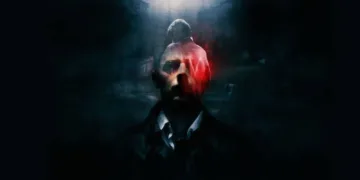



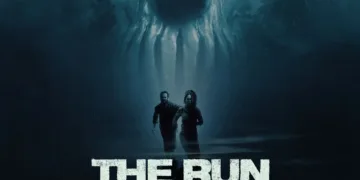
Paul Raschid’s The Run frames a horror thriller as an interactive event driven by audience choice. The film operates as a full-motion game in which the path of the story depends on collective votes or a single player’s selections. Zanna, a fitness influencer played by Roxanne McKee, sets out on a morning run across the sunlit terrain of Lake Garda in Northern Italy and faces a sudden fight for survival.
The scenery shifts from serene to threatening once masked figures begin to pursue her. The design quantifies risk with branching routes that lead to five endings and twenty distinct death scenes. This build makes the project an experiment that fuses cinematic storytelling with the immediate tension of group decision-making.
Crowdsourcing the Horror: Audience as Co-Director
The Run invites a social mode of viewing that blends engagement with group psychology. Voting tools in theaters, including simple glow sticks, sit at the center of the format. The process creates friction between careful survival logic and the crowd’s appetite for chaos, humor, or immediate danger.

Group impulses frequently push Zanna toward choices that feel careless or self-serving, echoing classic horror behavior with self-awareness. The result is narrative crowdsourcing that keeps each screening distinct.
Voting pauses can slow the flow or spark loud disputes among attendees, yet shared risk and debate often carry the room. Selections that seem dangerous sometimes open unexpected routes, reinforcing the playful spirit of the traps the film lays out for viewers.
Italian Backdrop and Cinematic Authenticity
Lake Garda’s mountains, caves, castles, and farms supply a striking visual foundation that holds even as the narrative branches. McKee’s performance presents Zanna as athletic, focused, and capable, which lends force to an endurance story built on immediate choices.
Appearances by Italian genre icons Dario Argento and Franco Nero further tie the piece to a recognizable horror lineage. Judging the work as a conventional feature presents a challenge because audience input shifts cause and effect.
That dependence can lead to clunky moments or loose links between actions and outcomes. Some dialogue lands as rough or purely functional, especially when introducing the mechanics. The core plot can feel familiar outside the interactive structure, tracing well-known thriller rhythms.
Ambition, Thematic Layers, and the Unexpected Twist
The Run signals ambition within interactive cinema, extending Paul Raschid’s prior full-motion work. The film aims to raise the format’s stakes and frequently succeeds as an experience, even as some branches lean on clichés or carry heavy-handed themes, including religious or moral tones in several late sequences. A major twist arrives late and reframes the action that precedes it.
Viewers should avoid cast or character lists beforehand to preserve the surprise. Certain stretches feel messy or gimmicky because the format makes tough demands, yet the feature still plays as an intense thriller when watched in a straightforward line. The piece reaches peak energy in a room that votes together. Its effect in solitary play will vary.
The Run, directed by Paul Raschid, is a horror-thriller that merges cinematic storytelling with viewer choices. The film had theatrical screenings on the festival circuit and in specific venues like the Genesis Cinema in London. It was released for digital platforms, including iOS and Android devices via the App Store and Google Play Store, on October 28, 2025, with a PC release on Steam following later in the year.
Credits
Title: The Run
Distributor: PRM Games, Benacus Entertainment, RNF Productions
Release date: October 28, 2025 (Mobile platforms)
Rating: Content Warning: Strong language, violence and gore (Specific MPA/BBFC rating is not consistently provided, but festival warnings indicate mature content.)
Running time: 90 minutes (Festival cut/main path) or 3+ hours (Total filmed content for all branching paths)
Director: Paul Raschid
Writers: Paul Raschid
Producers and Executive Producers: Sara Sometti Michaels, Seth Michaels (Producers), Reece Foster (Executive Producer)
Cast: Roxanne McKee, George Blagden, Franco Nero, Dario Argento, Fabio Testi, Jamie Ward, Jemma Donovan
Director of Photography (Cinematographer): Andrea Arnone
Editors: Christopher CF Chow BFE
Composer: Glen Gabriel
The Review
The Run
The Run succeeds less as a pristine cinematic narrative and more as a dynamic social experiment. Paul Raschid's film is an ambitious, high-energy thriller, benefiting immensely from Roxanne McKee's compelling performance and the stunning Italian locales. While the core plot can be conventional and the interactive breaks are occasionally disruptive, the thrill of communal decision-making and the impact of the final twist make it a deeply memorable event. It redefines the audience experience.
PROS
- The collective voting system creates a unique, high-energy, and interactive event.
- Excellent use of the beautiful Italian scenery around Lake Garda.
- Roxanne McKee is highly capable and athletic in the demanding central role.
- Includes welcome guest appearances from Italian genre figures like Dario Argento and Franco Nero.
- Features a major, trippy plot twist that significantly alters the context of the action.
CONS
- Interactive breaks in the film can interrupt the flow of the narrative.
- The underlying thriller story is sometimes "run of the mill" outside of the choices.
- Some of the script is rough-edged or functional, particularly in the intro.
- The cause-and-effect can feel loose due to the branching story structure.
- Certain story paths lean heavily into established horror clichés.