

















Yemi Bamiro’s Black Is Beautiful: The Kwame Brathwaite Story restores the presence of a photographer whose gaze shaped a generation’s mirror. Born Gilbert Ronald Brathwaite (1938–2023), he fashioned an ethic of self-making and gave the “Black Is Beautiful” movement in 1960s Harlem a visual creed. The film proposes art as instrument and shield, a line of defense against social and political erasure.
Bamiro assembles archival footage, close conversations with family members such as his son Kwame Jr. and his wife Sikolo, and a trove of images that breathe with care and precision. The documentary arrives like a reckoning that finally recognizes a contribution held at the margins for years. It reads as reflection and invocation at once, a study of how one person’s vision can reframe a wounded world and open a path toward dignity.
In the Face of Horror: The Necessary Image
Brathwaite’s first vow to the camera formed in the aftermath of a single, shattering image: the 1955 photograph of Emmett Till in an open casket. That encounter with unvarnished truth redirected his life toward a practice grounded in responsibility. He came to see the medium as a vessel that records violence and creates affirmation.
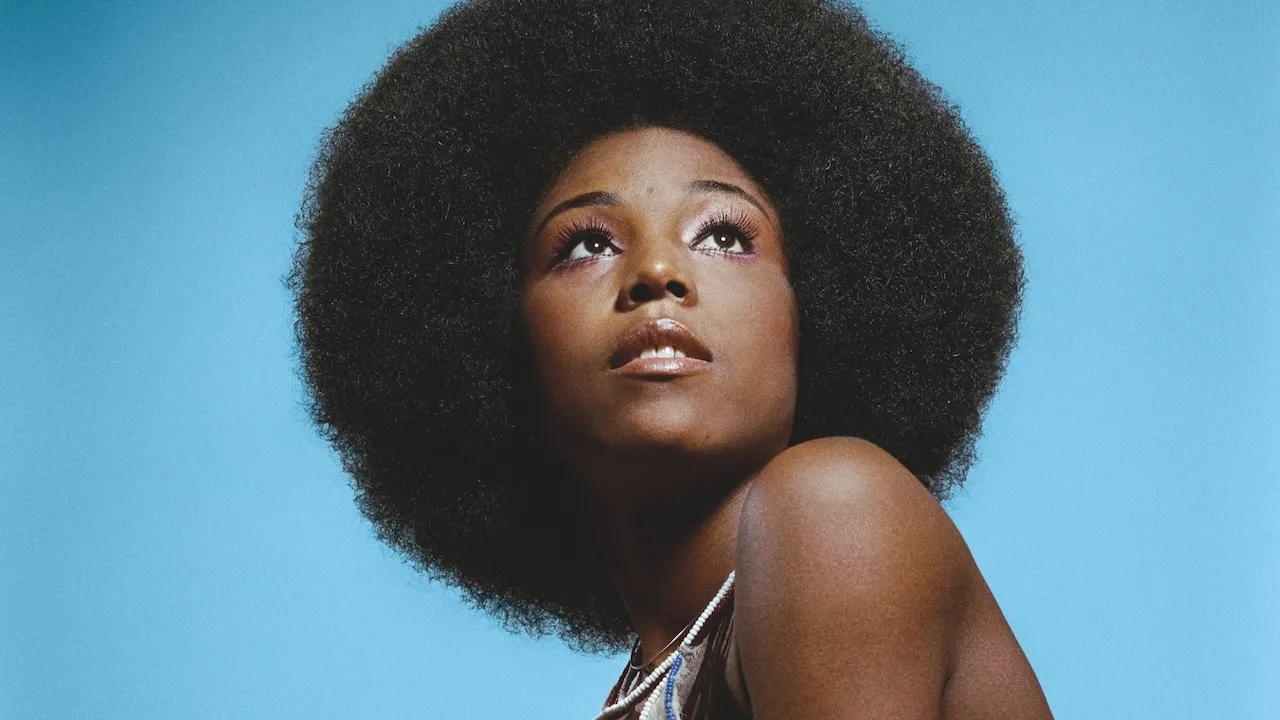
With his brother Elombe Brath, he co-founded the African Jazz Arts Society and Studios (AJASS), a home for Afrocentric aesthetic standards. From that soil rose the Grandassa Models, a collective that turned natural Black beauty into a public philosophy. Brathwaite’s method honored texture and contour. He shaped light around hair and skin to establish an iconography of presence, one that insists on worth without apology.
When public narratives chased spectacle and suffering, his images proposed another measure of reality: aspiration, community, hard-won joy. Horror set the first terms, but beauty answered them with discipline, and the answer carried moral weight. The camera became a way of thinking. The image became a shelter where dignity could gather and endure, even as the world pressed against it.
The Architecture of Memory: Scope and Craft
The archive gives the film its breath and reach. Brathwaite worked across six decades, chronicling Harlem’s daily pulse, serving as the Apollo Theater’s house photographer, and rendering figures such as Nina Simone, Miles Davis, Muhammad Ali, and the Jackson Five with clarity and ceremony.
Bamiro guides this expanse with care. Talking-head context arrives from artists including Gabrielle Union and Alicia Keys, yet the photographs hold the floor, inviting time to settle inside them. Pacing and edit choices respect silence and charge, allowing the political and emotional current of the work to gather force without dispersing.
Momentum builds from labor: picture after picture constructs a lived cosmology where style, music, and collective pride speak the same language. The documentary acts as retrieval and repair. It brings a sidelined legacy into view and treats it as necessary knowledge.
Kwame Jr.’s devotion to the body of work stitches family duty to cultural memory, completing pieces of a twentieth-century aesthetic puzzle that had sat near the surface but remained unseen by many. The result reads like a ledger of affirmation. Each frame records a transaction between artist and community, a promise that visibility can carry ethical charge and historical consequence.
The Enduring Echo of Mission
A vocation this sustained asks for a private ledger of costs. The film acknowledges the steadiness of Sikolo Brathwaite, a partner, muse, and anchor who made the work’s cadence possible. In Brathwaite’s practice, image and action meet. The photographs powered Pan-Africanist and Civil Rights energies, feeding belief and sharpening resolve.
His own renaming as Kwame, honoring Ghana’s first president, Kwame Nkrumah, signals the political clarity that guided his eye. The portrait that emerges reaches beyond biography. Voices converge into a choral record of a community that shaped its worth in public view.
To witness these images is to meet an ethic of self-definition that refuses erasure. The message travels across years with steady light: beauty affirmed in one’s own terms becomes resistance, ritual, and daily practice, a stance that survives and keeps speaking.
Black Is Beautiful: The Kwame Brathwaite Story is a feature-length documentary that serves as a tribute to the late Kwame Brathwaite, the pioneering Harlem photographer and activist who was instrumental in popularizing the “Black Is Beautiful” movement. The film premiered at the BFI London Film Festival in October 2025 and was later scheduled for North American screenings, including at the DOC NYC festival in November 2025, with an online streaming period also available during that month. The documentary chronicles Brathwaite’s life, his work documenting Black American history and culture over six decades, and his family’s efforts to ensure his long-overlooked legacy receives proper recognition following his death in 2023.
Credits
Title: Black Is Beautiful: The Kwame Brathwaite Story
Distributor: Misfits Entertainment, Wayfarer Studios (Production Companies and Sales)
Release date: World premiered October 9, 2025, at the BFI London Film Festival
Running time: 99 minutes
Director: Yemi Bamiro
Writers: Otto Burnham, Yemi Bamiro
Producers and Executive Producers: Producers: Joanna Boateng, Lizzie Gillett, Ian Bonhôte, Andrew Calof. Executive Producers: Alicia Keys, Kasseem ‘Swizz Beatz’ Dean, Moby, Kwame S. Brathwaite, Robynn Brathwaite, Andee Ryder, Robin Bronk, Lindsay Hicks, Jamey Heath, Steve Sarowitz, John Logan Pierson
Cast: Kwame Brathwaite (archive footage), Sikolo Brathwaite, Kwame S. Brathwaite Jr., Elombe Brath (archive footage), Gabrielle Union, Jesse Williams, Alicia Keys, Kasseem ‘Swizz Beatz’ Dean
Director of Photography (Cinematographer): Jean-Louis Schuller, Nathan Ray Salter
Editors: Otto Burnham
Composer: Kwes, Marli Wren
The Review
Black Is Beautiful The Kwame Brathwaite Story Review
Black Is Beautiful: The Kwame Brathwaite Story offers a profound excavation of a vital cultural history, transforming overlooked archive material into a compelling statement on aesthetic self-determination. The film's rigorous focus on Brathwaite's photographs highlights how a camera can confront existential darkness with light and affirmation. It is a visually rich and meticulously paced documentary that honors the power of the image to ignite change.
PROS
- Effectively restores a key figure in the Civil Rights and Pan-Africanist movements to prominence.
- Showcases a vast, striking collection of Brathwaite's photography.
- Connects the personal motivation (Emmett Till's photo) to the resulting political movement.
- Balanced use of interviews, archival footage, and seamless pacing.
CONS
- Briefly touches on, but does not deeply explore, the personal cost to his family, such as his wife Sikolo Brathwaite.
- Primarily centers on Brathwaite's work, rather than the broader impact of the movement he started.