








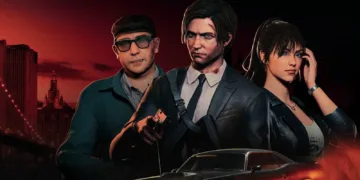









Luc Besson, long associated with lavish imagery and precise staging in films like Léon and The Fifth Element, turns to the immortal Dracula myth with Dracula: A Love Tale. The film arrives with clear ambition and a glossy surface, using a richly upholstered aesthetic to reframe the classic vampire narrative. Besson shifts the material away from traditional horror and leans into a sentimental, intensely romantic mode.
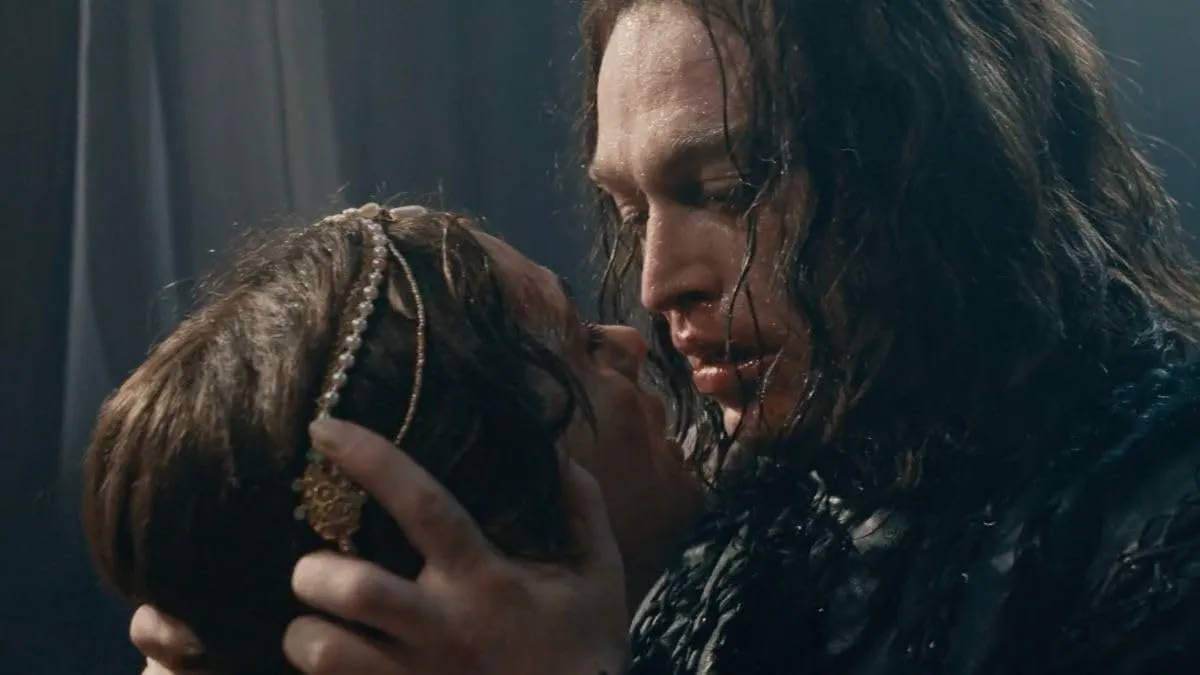
The central idea is simple and heavy at the same time: Prince Vlad, who becomes Count Dracula, clings to an eternal, tragic romance with his lost love, Elisabeta, reborn centuries later as Mina. Emotion drives the structure, which moves between two sharply defined timelines.
One strand follows the 15th-century battles of Wallachia, tracking Vlad Dracul’s life and the moment he renounces God. The other unfolds in the elegant late 19th-century world of Belle Époque Paris. Caleb Landry Jones leads as the cursed Count, Zoë Bleu plays both Elisabeta and Mina, and Christoph Waltz appears as a vampire-hunting priest, together anchoring an experience that aims for grand, heightened feeling.
Pacing and the Weight of Centuries
The film’s narrative rhythm grows out of a long, deliberate prologue. This 15th-century section matters for everything that follows. It lays out Vlad Dracul’s fierce devotion to Elisabeta and the chain of events that shapes his damnation. We watch him fight the Turks and bargain desperately with God for his wife’s safety. Elisabeta’s death shatters that bargain. Vlad’s irreligious grief turns into defiance, and that act of revolt leads directly to his transformation into Dracula and the curse of immortality.
The script treats his self-chosen metamorphosis into a vampire as a kind of deus ex machina, asking the audience to accept a sudden supernatural rule so the emotional arc can move forward. In that first movement, the vampire condition reads less like a monstrous affliction and more like a punishment born from one violent rejection of faith. The centuries-spanning prologue functions in a way that will feel familiar to players of narrative-driven games, where a dense origin chapter sets the motivation and emotional logic for every later step in the protagonist’s quest.
After this turning point, the film shifts into a second movement that covers Dracula’s 400 years of restless wandering. That long period plays like an extended penalty phase, a roaming penance that gradually leads him toward his 19th-century encounter with Mina. Here, structure becomes the key design choice. Jonathan Harker appears as a land agent, and the story relocates from the more familiar London to Paris, which acts as a fresh stage for familiar Dracula motifs.
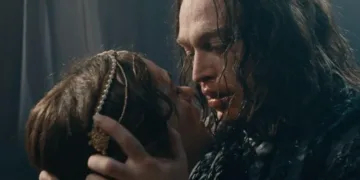
Iconic beats such as Harker’s captivity and the Count’s fixation on Mina’s portrait stay in place, but they unfold inside new visual and spatial parameters. The tempo rises once Christoph Waltz’s weary, sharp-tongued priest enters the picture and steps into the role of opposing force after Harker’s escape. From that point, the film builds toward a climactic confrontation that leans into supernatural spectacle, including an army of living gargoyles.
The final stretch carries a strong emotional hit: Dracula understands that turning Mina has endangered her eternal soul. His last act, offering himself to the stake, reframes him as a tragic hero whose death finally closes his curse and releases Mina to live. The ending steers attention toward emotional consequence rather than pure visual excess, keeping the focus on how each narrative choice lands on the characters.
The Cast and Emotional Intensity
For an epic on this scale to work, the performances need to hold all that mythic weight, and Caleb Landry Jones’s version of Dracula leaves a sharp impression. He leans into an exaggerated, wounded physicality that recalls his earlier work in body-horror roles, giving the Count an off-kilter, almost grotesque presence. His distorted Central European accent adds another strange texture to the character. Through these choices, Jones conveys the feeling of a man loaded with four centuries of pain, shifting between a relentless predator and a lover who never stops mourning.
Christoph Waltz fits neatly into the part of the vampire-hunting priest. He plays the character as witty and incisive, a figure who brings an intellectual and moral angle that cuts through Dracula’s sweeping passion. His scenes give the middle portion of the film clear momentum, providing a measured, grounded energy that counterbalances the grand melodrama around him.
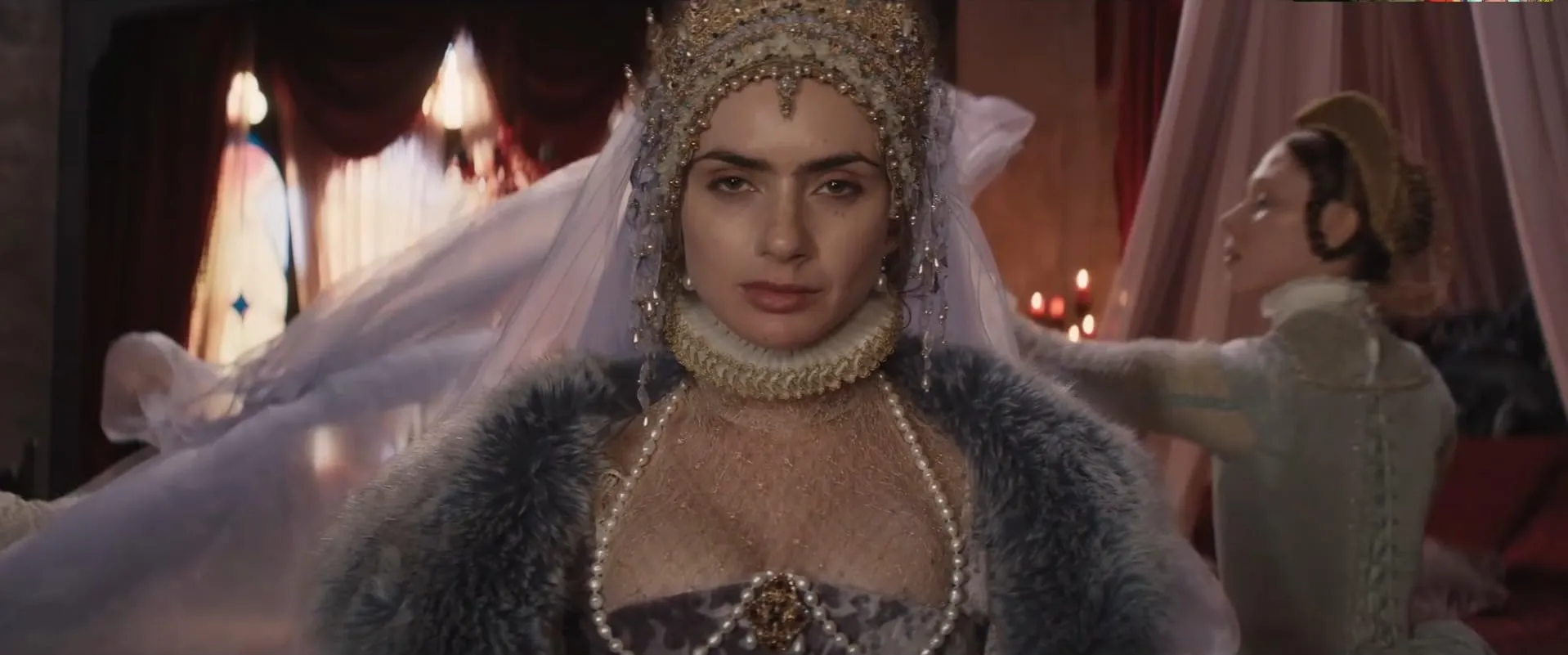
Zoë Bleu, in a key debut, carries a different kind of challenge. She must play both the cherished Elisabeta and the quieter, more reserved Mina, so she becomes the emotional engine for Dracula’s obsession across both timelines. The film asks her to embody the idealized love that fuels Dracula’s entire campaign.
Structurally, the script makes a notable choice by folding the demented Renfield together with Mina’s friend, Lucy, reimagined here as Maria, and by framing Ewens Abid’s Jonathan Harker as a somewhat timid presence. These adjustments affect how emotional beats are distributed among the supporting players, shaping the dynamic between Dracula, his human counterparts, and the forces hunting him.
Besson’s Blend of Style and Spectacle
Besson’s direction operates on a tonal tightrope. The film mixes sweeping romance and dark fantasy with bursts of comedy that arrive almost sideways. The world he creates feels wild, visually dense, and steeped in darkness, yet he occasionally lets in a strain of bizarre humor.
Moments such as Dracula’s failed attempts to end his own existence and the farcical perfume episode in Florence, where a scent instantly turns him into an object of desire, bring in a playful flavor that recalls Mel Brooks. That constant oscillation between grand tragedy and sly comedy gives this gothic romance a distinctive rhythm, one that treats mood shifts as part of the design rather than interruptions.
On the visual level, the film leans heavily into opulence. The production design and sets feel lavish and heavily textured, giving the images a strong charge. Large-scale sequences, most notably the battle against the Turks, display Besson’s eye for staging action on a big canvas. Editing during these scenes carries a force that echoes the dramatic arrangements seen in classic historical films.
The interplay between 15th-century armor and late-19th-century Parisian spaces creates a rich visual contrast. Besson appears very comfortable in this fantastic, mystical mode, filling the world with sword fights, gunplay, and physical confrontations that sit naturally inside the hybrid setting he imagines. The script’s decision to stretch across four hundred years of fixation fits the scale of these choices and matches the high production values that surround the characters.
The Technical Craft and Score
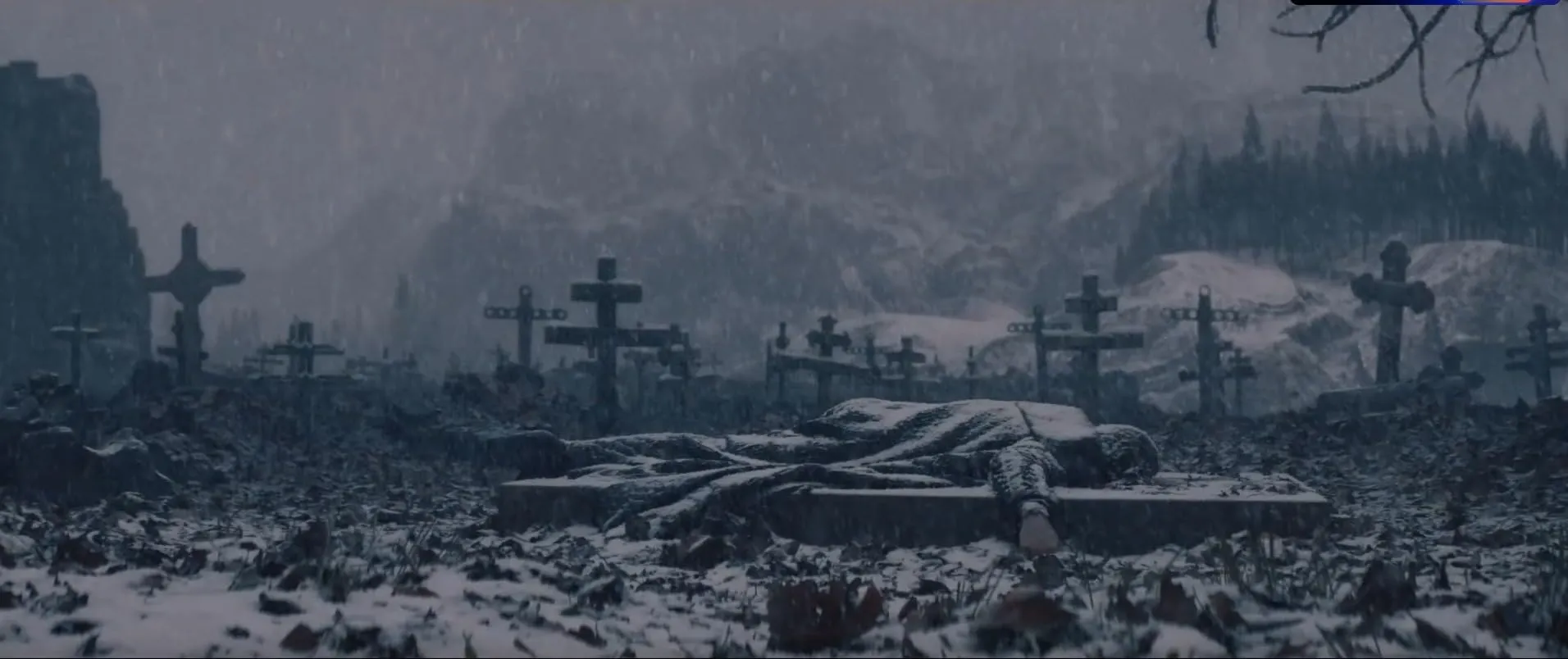
Colin Wandersman’s cinematography provides a significant part of the film’s sheen. His images give the project a polished visual surface and capture period detail in both the castle interiors and the streets and salons of Paris. The camera treats each era as a distinct space yet keeps them connected through lighting and texture.
Lucas “Kub” Fabiani’s editing keeps the shifts between the main temporal blocks clear. The historical prologue, the montage of global roaming, and the Paris showdown line up in a way that preserves flow, so the multi-century structure does not collapse into confusion.
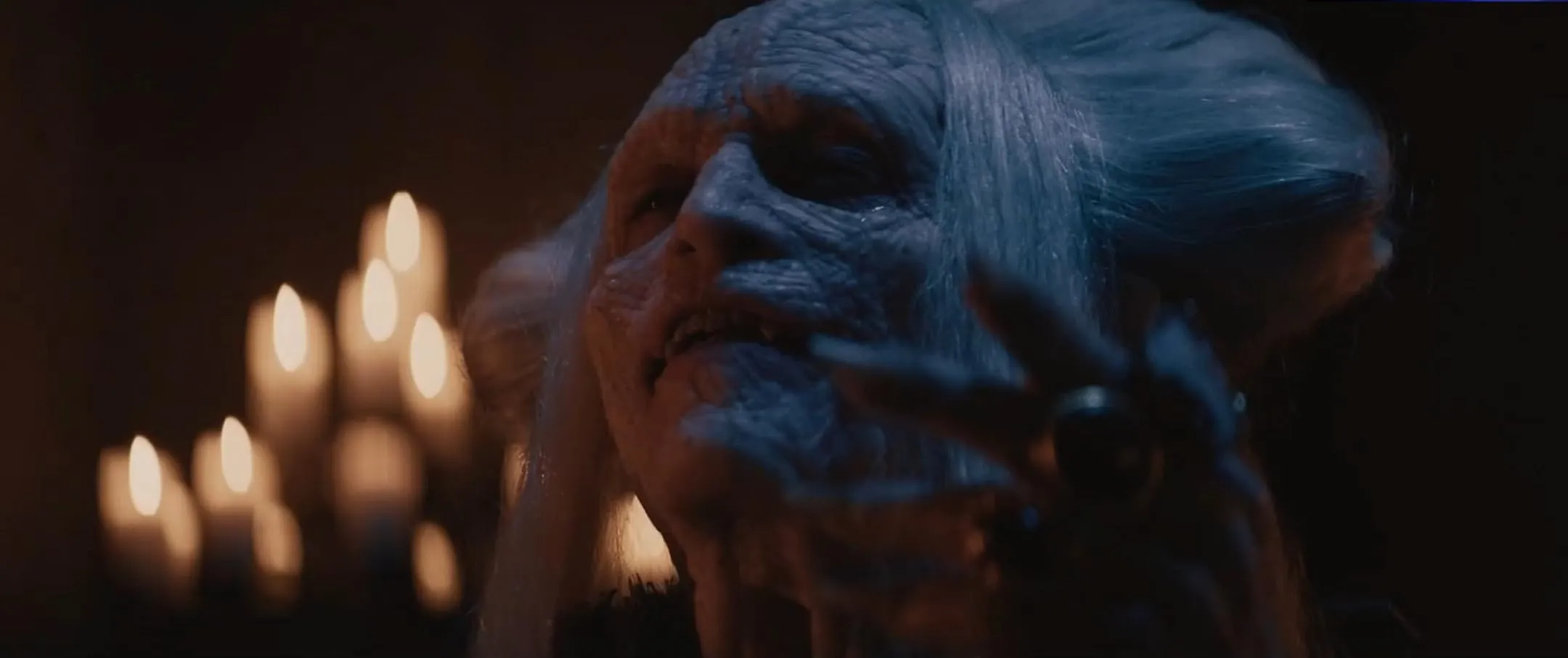
Costumes, makeup, and sets work together to root the heightened emotions in material detail. Dracula’s makeup and hairstyling, especially the pained, exaggerated look crafted for Jones, reinforce the physical strain of his performance and signal the weight of his curse.
Among the technical elements, the standout piece is Danny Elfman’s score. The music has a powerful presence and pulls the viewer into the film’s atmosphere almost immediately. It carries the central romance, keeps pace with the shifts between intimacy and battle, and gives the large combat scenes extra weight. The score ties the emotional and spectacular strands together, so the big images feel connected to the inner lives of the characters.
Theme: Love as Damnation
Dracula: A Love Tale finds its strongest narrative identity in the idea that love functions as Dracula’s damnation. His transformation into an immortal creature arrives as a direct answer to his refusal to accept Elisabeta’s death and the will of God. The film treats the vampire state as a spiritual chain that binds him to ongoing suffering rather than as a simple horror trope.
The central tragic knot lies in the fact that his intense, centuries-long attempt to reach his lost love becomes the very thing that endangers Mina’s soul once he turns her. In the end, his decision to die for Mina’s salvation recasts him as a figure with a religious dimension. He accepts divine judgment, gains the release of death, and allows Mina to continue her life. The film closes on the idea that a love stretched across time has to answer for its consequences, and that acceptance may carry more power than possession.
Dracula: A Love Tale is an English-language French gothic romance and romantic fantasy film directed and written by Luc Besson, based on the novel Dracula by Bram Stoker. The film reframes the classic vampire myth as a centuries-long quest for love, focusing on Prince Vladimir’s transformation into Dracula after the death of his beloved wife, Elisabeta, and his subsequent search for her reincarnation, Mina. The film had its French theatrical release on July 30, 2025, by SND. It is scheduled for a wide theatrical release in North America on February 6, 2026, distributed by Vertical Entertainment. If you are outside of the US and UK, the film’s international release dates vary, but it will be available for digital purchase starting December 1, 2025, followed by DVD and Blu-ray on December 22, 2025.
Full Credits
Title: Dracula: A Love Tale
Distributor: SND, Vertical
Release date: 30 July 2025 (France)
Rating: R-16
Running time: 129 minutes
Director: Luc Besson
Writers: Luc Besson, Bram Stoker (novel)
Producers and Executive Producers: Virginie Besson-Silla, Philippe Corrot
Cast: Caleb Landry Jones, Christoph Waltz, Zoë Bleu, Matilda De Angelis, Ewens Abid, David Shields, Guillaume de Tonquédec, Bertrand-Xavier Corbi
Director of Photography (Cinematographer): Colin Wandersman
Editors: Lucas “Kub” Fabiani
Composer: Danny Elfman
The Review
Dracula: A Love Tale
Luc Besson's Dracula: A Love Tale is an ambitious, high-concept romance. It powerfully conveys the crushing weight of eternal love redefined as a curse, supported by a lavish visual aesthetic. Caleb Landry Jones delivers a truly strange, intense, and compelling performance, complemented by Christoph Waltz's sharp, grounding presence. While the film's hybrid tone sometimes veers into the bizarre, and the final act risks spectacle over intimacy, the emotional sincerity of the centuries-long tragedy and the ultimate sacrificial ending provide substantial thematic depth. It is a bold, though occasionally flawed, reinterpretation of a literary classic that deserves a look for its sheer commitment.
PROS
- Successfully centers the narrative on the tragic, centuries-long romance.
- Lavish production design, breathtaking sets, and powerful cinematography.
- Unique, intense, and strange portrayal of Dracula's anguish.
- A powerful, immersive soundtrack that elevates the melodrama.
- Perfect casting provides a witty and grounded counterpoint to Dracula's obsession.
CONS
- The blend of dark romance with Mel Brooks-style comedy is sometimes jarring.
- The final confrontation relies heavily on CGI and gargoyles, potentially distracting from the emotional climax.
- The mechanism of Dracula's transformation is unexplained, treated as a deus ex machina.
- The very lengthy 15th-century prologue, while necessary, makes the film front-heavy.
- Certain character accents or physical portrayals may be distracting.