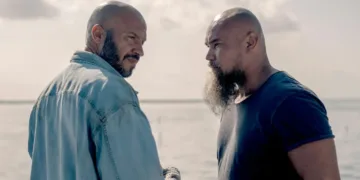





















The returning warrior has long sat near the core of cinema’s myth library, the victorious fighter welcomed home from an impossible conflict. Christian Bonke’s feature debut, Hercules Falling, rewires that familiar pattern from its opening stretch and studies what happens when the conflict refuses to let go. The film keeps its gaze fixed on post-traumatic stress disorder (PTSD), treated as an invisible enemy that does not retreat. Its focus is Youssef (Dar Salim), a Danish soldier seasoned by several tours in places such as Afghanistan and Iraq, now stuck in the uneasy quiet of family life that refuses to feel safe.
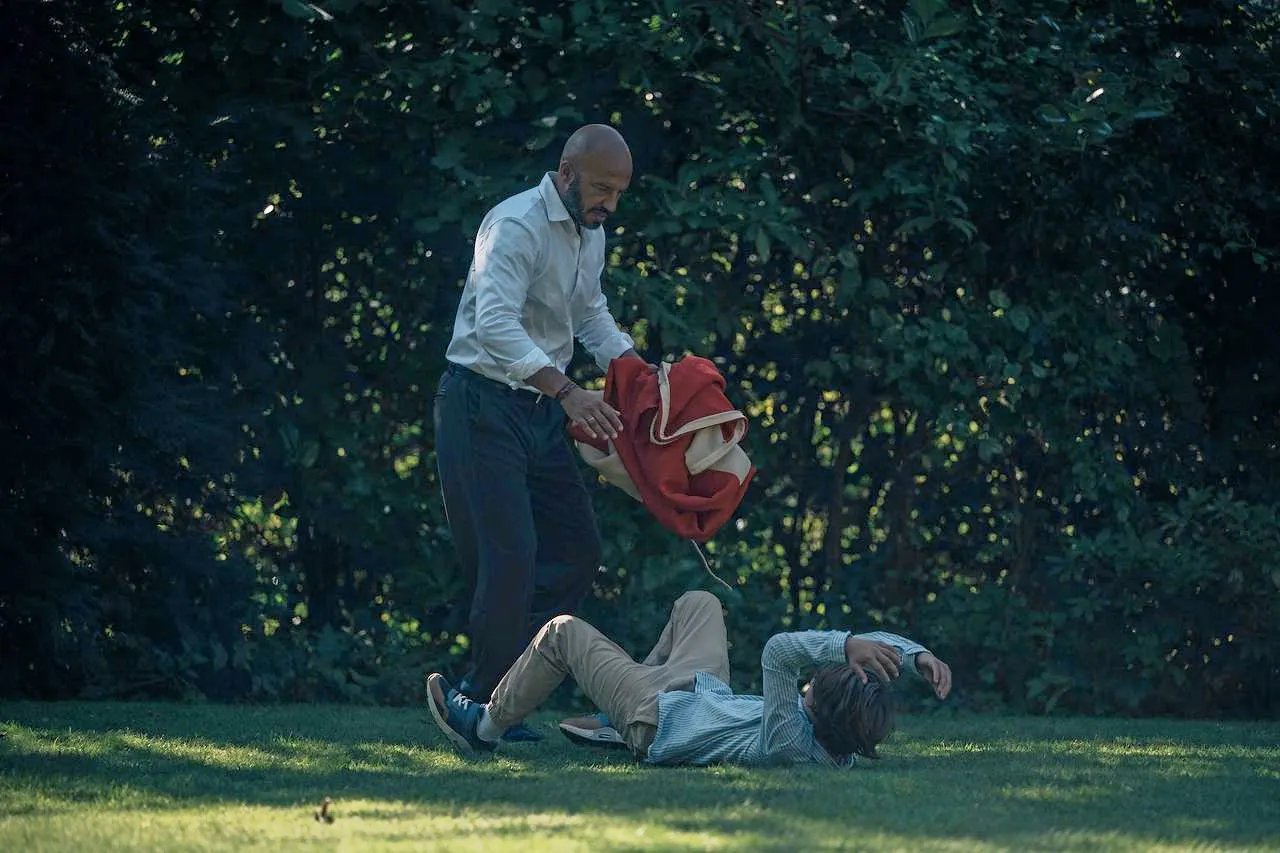
The story’s true ignition point is small in scale and terrifying in implication. As Youssef naps beside his young son, Oskar, he jolts awake in a dissociative panic and nearly strangles the child. That near-fatal mistake forces him to recognise that his trauma now threatens the very family he once served to protect. He chooses a form of exile and moves to a veteran rehabilitation retreat on the remote Danish island of Strynø. From that point, Hercules Falling establishes an emotionally raw, bruising register and tracks the difficult, unseen effort required to build any sense of normality for people whose minds still operate inside a war zone.
Authentic Storytelling Through Hybrid Structure
Bonke builds Hercules Falling on a hybrid framework that fuses narrative fiction with documentary-style realism, and that choice shapes the film’s force. The structure is not a decorative flourish; it matches the story’s insistence on credibility. The film unfolds at an actual veteran retreat facility on Strynø, a secluded place that feels immediately anchored in lived reality. The retreat is run by Anne-Line Ussing and Stuart Press, who play themselves. Press, an Australian army veteran diagnosed with PTSD, stands in direct alignment with the film’s central theme.
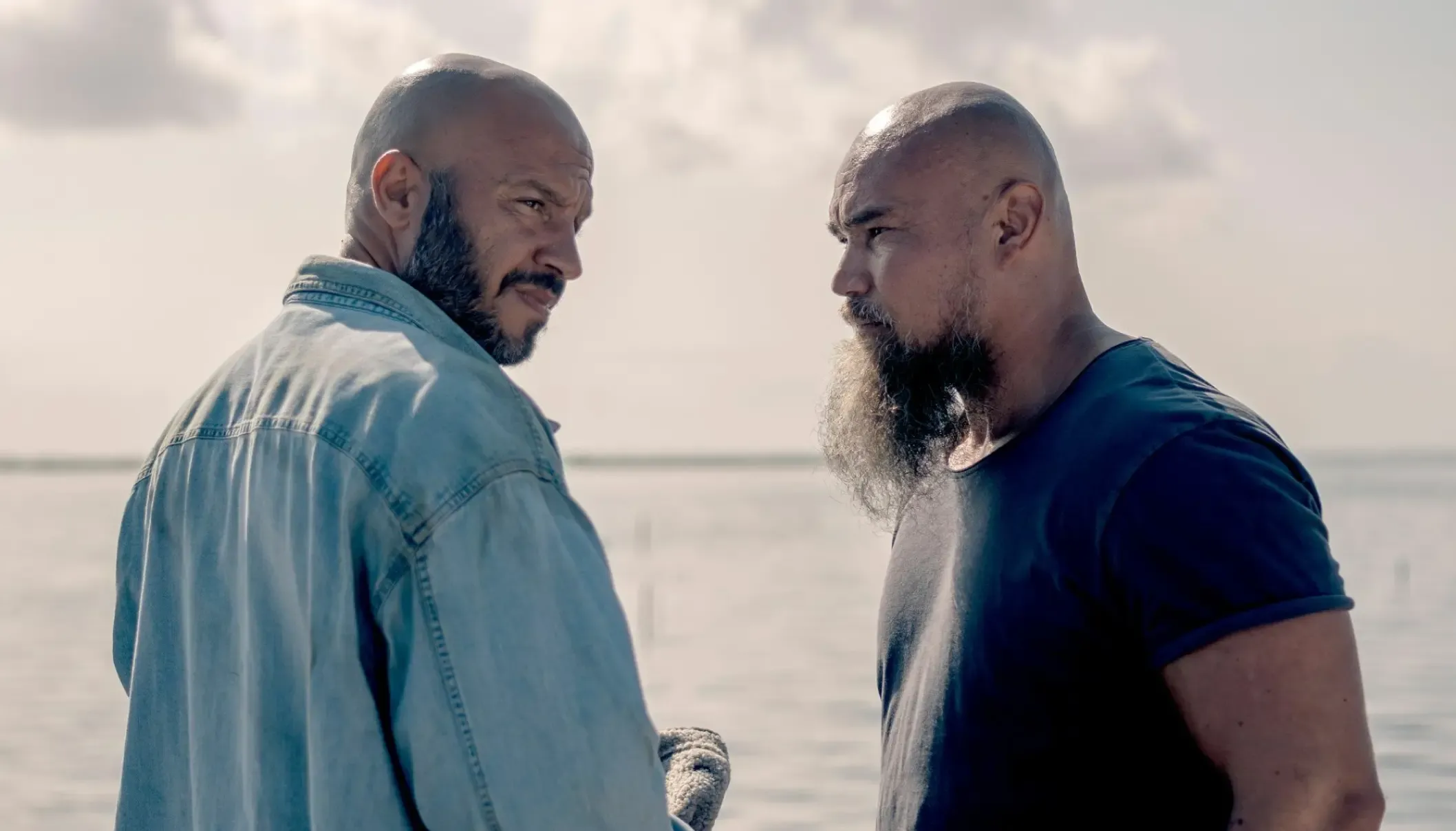
This meeting of fictional design and real experience extends to the ensemble. Youssef, written as the central character, moves through a group made up largely of real combat veterans whose shared histories shape the atmosphere and the behaviour of the group. That decision gives the film significant heft and emotional impact. The method sidesteps tidy, polished versions of military trauma that often appear in cinema. Instead of relying on actors to simulate that experience, the film presents the viewer with lived-in camaraderie, tension and struggle among veterans in recovery. The setting feels unforced and stripped of performance varnish.
Even the title works as a piece of narrative framing. Hercules Falling calls up the mythic hero, a figure associated with superhuman strength and an expectation of constant success without visible weakness. That reference points toward a harsh cultural demand placed on men, and on soldiers in particular, to perform invincibility and to bury their own need for help.
The film positions itself away from the more triumphalist or melodramatic treatments of military service that have dominated many films, especially from North America. Hercules Falling commits to an emotionally brutal and clear-eyed depiction of war’s enduring cost. The story turns toward the inner terrain of trauma and moves away from the spectacle of combat and functions as a pointed counter-narrative to conventional heroic war stories. The way the film dissolves the dividing line between scripted fiction and factual space becomes its strongest formal gesture.
Dar Salim’s Internalized Struggle and Character Depth
Hercules Falling leans heavily on its lead performance, and Dar Salim delivers work of sharp intensity and fine detail. He carries Youssef’s inner conflict in his body as much as in his expressions, pairing a powerful physical presence with a constant undercurrent of distress. At first, Youssef appears defined by his silence and his imposing build, yet Salim registers the dilemma of a veteran forced to acknowledge a deep vulnerability. The performance remains tightly controlled and simmering, and the character often feels, as one description in the film suggests, like “unexploded ordnance” that could detonate at any moment.
Youssef’s path through the film resists neat progression. Once he arrives at the retreat, he reacts with hostility to the routines and “safe spaces” on offer, charged with an energy that can easily tip into destruction. The film treats healing as a fitful, stop-start process with frequent reversals. Moments of genuine movement tend to spring from mundane triggers. A sequence in which Youssef helps butcher a sheep on the farm becomes one such scene, pressing him up against buried psychological “landmines” that briefly surface and demand attention. Recovery appears slow, painful and far from linear.
The supporting players are essential to how this character study functions. The real veterans on screen bring a specificity that shapes the group interactions. Their shared laughter, awkward pauses and flashes of spontaneous camaraderie feel earned and free of theatrical staging.
They form a credible environment in which Youssef’s fictional storyline can unfold. Youssef’s wife, Lærke (Christine Gjerulff), and his son, Oskar (Hector Banissi), provide another crucial axis. Their pain and persistence keep the viewer aware of the domestic stakes that surround Youssef’s inner war and remind us of the life he tries to reclaim. Salim threads the character through both raw, combat-honed aggression and a searching, almost spiritual desperation in a man who cannot escape what he has witnessed and done.
Style, Pacing, and Environmental Impact
Aside from its subject and performers, Hercules Falling derives strength from its technical design, especially in pacing and the use of place. The emotional weight of the material is heavy, yet editor Denniz Göl Bertelsen maintains a brisk, engaging rhythm. The cutting keeps the narrative moving and avoids a sluggish or stalled feel, so Youssef’s inward movement remains believable even at its most painful stretches. The shape of the film stays focused and avoids a wandering shape, and the structure supports a clear sense of progression.
The isolation of Strynø functions as something richer than simple scenery. The island’s wild, rugged character, its lack of digital noise and its constant exposure to weather all serve the story. The landscape operates as a psychological instrument, an outlet for Youssef’s emotions that stands in for the controlled chaos of combat. The film captures a carefully shaped interplay between a damaged man and a natural world that feels indifferent yet quietly restorative.
Imagery and sound work together to reinforce these ideas. Oskar’s line about the wind feeling like a “tsunami brewing” operates as direct foreshadowing, a hint that enormous emotional forces still move under the surface even as Youssef edges toward stability. Recovery appears as an ongoing battle that never becomes a clean victory. The soundtrack supports this arc.
The score begins in a bleak, discordant register that mirrors Youssef’s mental state and gradually shifts toward lighter, more melodic and airy passages as he makes tentative moves toward acceptance and healing. The adjustment in tone tracks the change in his inner world. That attention to rhythm, visual metaphor and sound design gives Hercules Falling the shape of a carefully built, fully told story.
Hercules Falling (Herkules Falder) is a powerful Danish-German psychological drama centered on Youssef, a former combat veteran grappling with the profound emotional and mental fallout of his military service. Following a violent episode at home, Youssef embarks on a difficult journey of recovery at a real-life veteran rehabilitation retreat located on the remote island of Strynø. The film is notable for its innovative use of a hybrid structure, blending fiction with documentary elements by featuring real veterans and facility staff alongside lead actor Dar Salim. After premiering at film festivals, the film is expected to be released in the Nordics by Scanbox in the first quarter of 2025. As of today, November 25, 2025, theatrical and streaming availability is forthcoming.
Full Credits
Title: Hercules Falling
Distributor: REinvent Studios (Sales Agent), Scanbox (Nordic release), Beo Starling (Production)
Release date: November 20, 2024 (Estonia), Expected Q1 2025 (Nordics)
Running time: Approximately 98 minutes (based on festival runtimes)
Director: Christian Bonke
Writers: Christian Bonke, Marianne Lentz
Producers and Executive Producers: Jonas Frederiksen, Beo Starling, Martin Heisler, Christine K. Nonboe
Cast: Dar Salim, Christine Gjerulff, Thomas Abrigo, Hector Banissi, Indee Ussing Press, Anne Line Ussing, Stuart Press, Marcus MP, Emil Busk, Esben W. Nielsen
Director of Photography (Cinematographer): Martin Munch
Editors: Denniz Göl Bertelsen
Composer: Jonas Struck
The Review
Hercules Falling
Hercules Falling is a vital, uncompromising piece of cinema that reframes the war story as an internal, post-combat struggle. Its hybrid structure, blending fiction with the authentic reality of veterans, ensures the emotional weight is earned, never manipulated. Dar Salim's raw, contained performance anchors the film, making Youssef's fractured journey a profound, necessary exploration of male vulnerability and the heavy cost of service. It may be difficult to watch, but its honesty makes it essential viewing.
PROS
- Exceptional use of a hybrid narrative, featuring real veterans and the actual retreat facility.
- Dar Salim delivers a deeply intense, nuanced, and physically convincing portrayal of PTSD.
- Provides a rare, honest look at male mental health and the unsung struggle of veterans.
- Effective use of the Strynø natural environment and the shifting musical score to mirror Youssef's internal state.
CONS
- The emotionally brutal and deliberate nature of the subject matter may feel slow or intense for some viewers.
- Its focus on internal struggle means plot events are secondary to psychological breakthroughs.