
























![Kingdom Hearts Collection [I-III] Review](https://gazettely.com/wp-content/uploads/2026/10/Kingdom-Hearts-Collection-I-III-1-360x180.webp "Kingdom Hearts Collection [I-III] Review: KHII Holds Steady as Newer Entries Fluctuate 37")




Bila Burba presents a stark and patient record of a people fighting against oblivion. Directed by Duiren Wagua, a filmmaker rooted in the very community whose struggle he films, the documentary turns its gaze toward the Guna people of northern Panama. Its main concern is the possibility that a collective memory, a kind of cultural soul, might be rescued from the slow erosion of time.
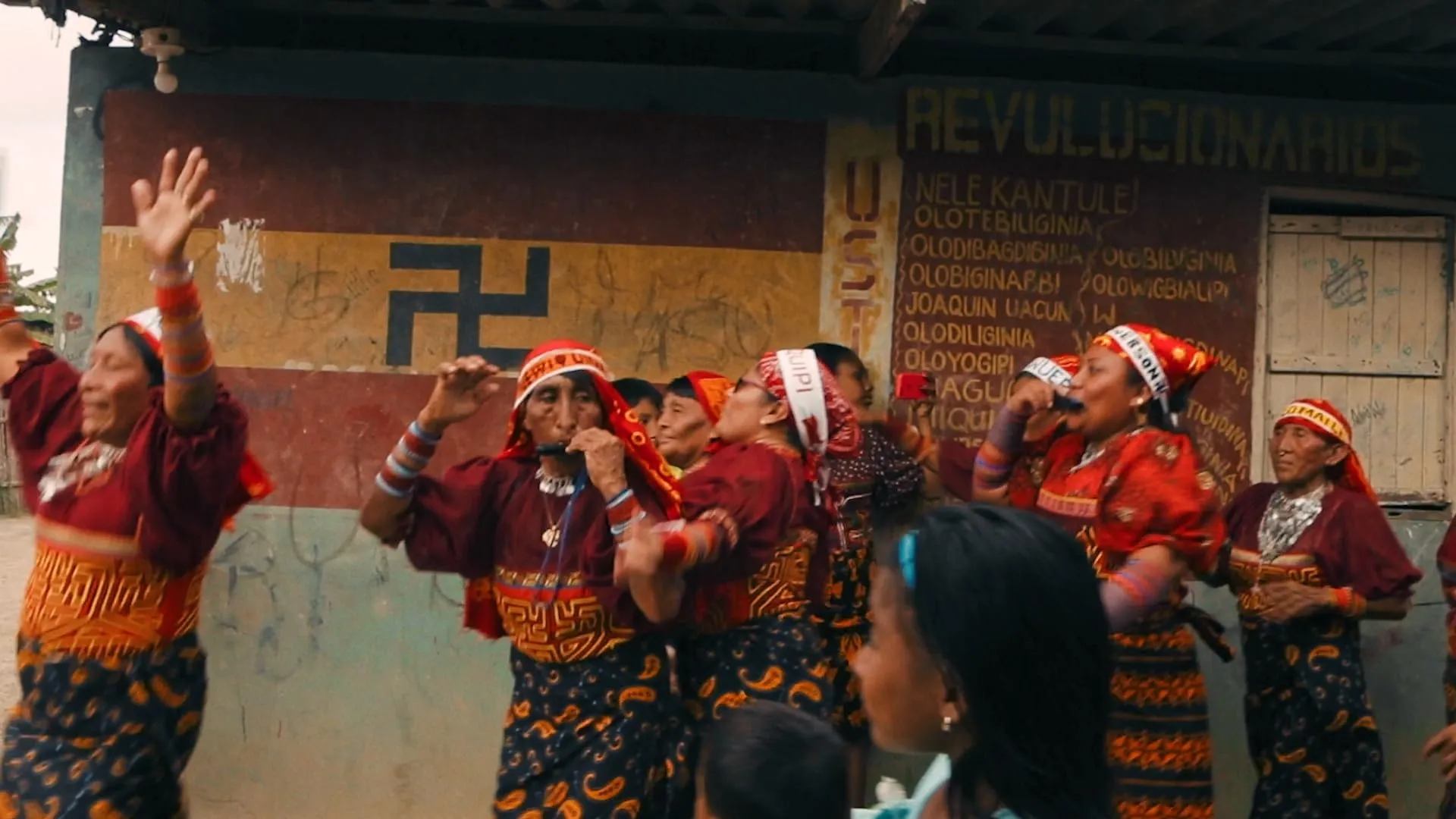
The narrative returns again and again to the 1925 San Blas rebellion, a violent act of resistance against the Panamanian government’s systematic attempt at cultural erasure. The film traces the means by which this history stays alive: an annual, fiercely charged theatrical re-enactment of the battle. Through this ritual, a single tragedy becomes a recurring triumph. The film opens a space to contemplate existence defined by defiant persistence.
Blood and Birthright
The history of the Guna people is tied to their claim to the autonomous territory known as Tulenega Shire, established as far back as 1870. That claim becomes more fraught after Panama’s independence from Colombia in 1903. The new national structure disregards Guna sovereignty and prepares the ground for deep-seated conflict.

The Panamanian government implements racist laws that seek to annihilate Guna culture and smooth the theft of ancestral resources. The 1925 uprising emerges as a profound, sorrowful necessity, a courageous and desperate bid for regional independence and a refusal to submit. This battle remains a stark, enduring monument to Guna identity, evidence that resilience can form in the deepest shadows of oppression. The fight gives shape to a primal human insistence on continuing to exist.
Spectacle of Self-Redemption
Each year, the anniversary becomes a communal return to the past. Generations move through the streets in traditional dress, holding aloft the red and yellow flags of the rebellion. The live performance creates an atmosphere heavy with tension, lifting a grisly, politicized history from textbooks into an immediate, lived present. The Guna people themselves take on the roles, shaping the event as a cultural victory witnessed through the eyes of the rebels.
For families and the wider community, the performance carries a necessary purpose, making sure the children receive a history often denied or distorted by state-sanctioned education. The camera moves dynamically through the festivities and reconstructed battle scenes, many of which remain unflinchingly brutal. Theatre here works as psychological survival, a ritual held against the pull of the void.
Fragmentation and Testimony
The documentary’s structure relies on a fractured chronology. It shifts between active, visceral footage of the re-enactment and the calm, steady testimony of community elders. The interviews anchor the emotional truth of the conflict, as elders share stories passed down over generations, turning the fluid nature of oral tradition into something concrete on screen. This method underscores the significance of these non-official narratives.
The constant juxtaposition can make the film’s movement feel non-linear, which may unsettle an external audience. The initial historical context appears early, then recedes for much of the runtime. The film functions most clearly as a document made by the Gunadule culture for the Gunadule culture. It offers an entry point into this profound historical episode, while viewers without prior background may experience the unnerving sensation of a story that remains just beyond full comprehension.
The documentary Bila Burba premiered in 2023 and has been shown at various international film festivals. Directed by Duiren Wagua, a member of the Gunadule nation of Panama, the film captures the annual theatrical re-enactment of the 1925 San Blas Rebellion, a pivotal event in the Guna people’s history of resistance against government oppression and cultural erasure. The documentary uses this powerful, community-staged performance as a means of exploring how history is preserved and identity is asserted across generations. As of November 28, 2025, the film is available to stream on the platform True Story in some territories.
Full Credits
Title: Bila Burba
Distributor: True Story (streaming platform), imagineNATIVE Film Festival (for Canadian Premiere)
Release date: 2023 (Original Year), November 28, 2025 (UK streaming release on True Story)
Running time: 70 minutes
Director: Duiren Wagua
Writers: Duiren Wagua, Orgun Wagua
Producers and Executive Producers: Diego Madias, Jhojaddy Ramirez
Cast: The film features members of the Guna community, but no principal credited actors are listed as the cast consists of community members and elders being interviewed/re-enacting.
Director of Photography (Cinematographer): Duiren Wagua, Manuel Campos
Editors: Orgun Wagua
The Review
Bila Burba
Verdict Bila Burba is an essential cultural document, offering a meditation on how trauma and triumph are processed through communal performance. The film’s greatest strength lies in its profound access to a tradition that resists historical disappearance. Though the layered, non-linear structure creates occasional narrative confusion for outsiders, this disorientation mirrors the complex, organic nature of memory itself. It is a visually arresting act of self-sovereignty.
PROS
- Exceptional cultural access and intimate perspective from an Indigenous director.
- The dramatic re-enactments are visceral and create a strong sense of urgency.
- Successfully demonstrates the power of theatre as a tool for cultural preservation.
- Focuses on a vital, underreported historical event (the 1925 San Blas Rebellion).
CONS
- The non-linear editing style sometimes feels muddled and lacks smooth transitions.
- Requires the viewer to bring supplemental historical context to fully appreciate the narrative.
- The backstory, while presented early, is not consistently elaborated upon later in the film.







