
























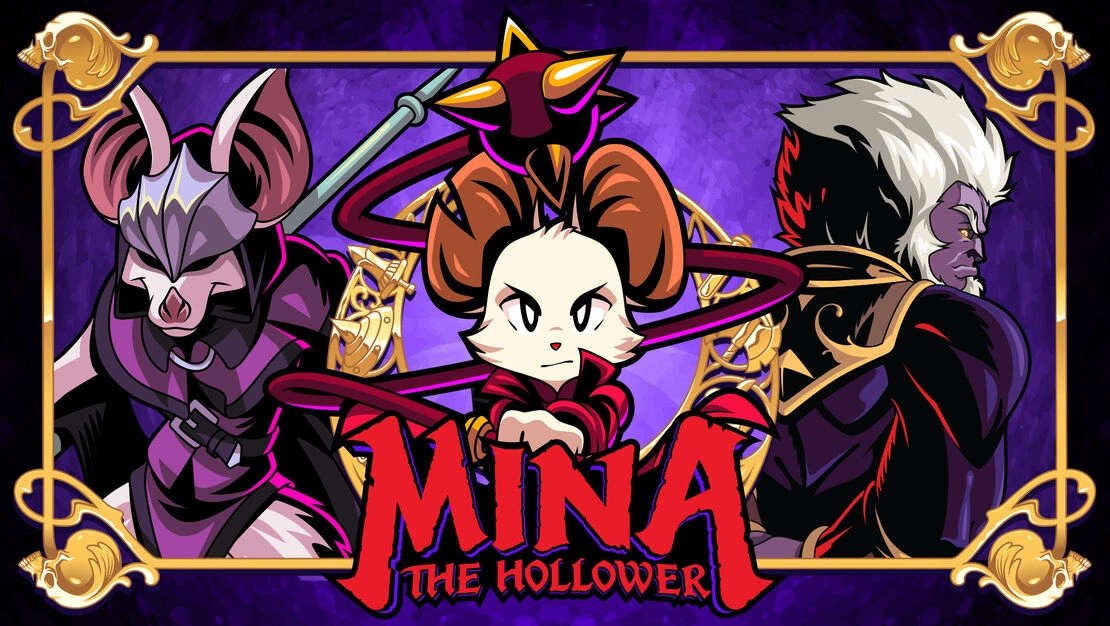

Mina the Hollower arrives with the confidence of a game that knows exactly what it wants from the past. Yacht Club Games dresses it in a Game Boy Color-inspired coat, then fills that small frame with a dense, punishing, strange, and surprisingly flexible action-adventure RPG.
Its heroine, Mina, is a tiny mouse Hollower sent to the Tenebrous Isles to investigate sabotaged Spark Generators and the spreading horrors tied to them. She may look fragile, yet she moves through this hostile world with a monster slayer’s resolve and an inventor’s uneasy connection to the machines at the root of the crisis.
The first impression is immediately clear: this is cute gothic horror with teeth. Haunted houses, crypts, cursed farms, oddball villagers, undead enemies, giant bosses, and dark little jokes all crowd into its world. Beneath the retro surface sits a demanding adventure about exploration, survival, and mastery. Mina burrows, fights, experiments with builds, chases clues, and pays for mistakes in blood, Bones, and bruised pride.
The Tenebrous Isles Reward Curiosity and Memory
The Tenebrous Isles are built around Ossex, a central town that starts as a safe point of orientation and slowly becomes a web of leads. Shops open up, NPCs gain new relevance, clues point toward distant routes, and shortcuts reshape how the world fits together.
The island is structured less like a checklist and closer to a physical mystery. You are rarely stopped by a glowing lock or a required dungeon item. Progress usually comes from reading the environment, testing a route, surviving a dangerous path, or realizing that an earlier oddity has a purpose.
That design gives Mina the Hollower a refreshing sense of trust in the player. Like the first Legend of Zelda, it is comfortable letting you wander into trouble. Like Link’s Awakening, it fills its small spaces with weird characters and dreamlike logic.
Like Dark Souls, it lets distant areas fold back into one another through shortcuts that feel earned rather than handed out. The comparison matters because Mina understands why those games worked. It does not copy their shapes alone. It captures the pleasure of noticing a strange gap, remembering it hours later, and returning with a new idea.
The game strongly rewards note-taking. Suspicious mirrors, unreachable shelves, odd bits of NPC dialogue, blocked bridges, hidden holes, inaccessible treasure chests, and glimpses of future areas all sit in the player’s mind. The map gives broad help, yet it does not flatten the world into a solved diagram.
That choice can be thrilling for players who enjoy old-school discovery. It may also frustrate anyone who prefers clear markers, detailed room maps, or direct quest logs. Mina wants you to pay attention, and it is rarely shy about punishing distraction.
Its regions avoid feeling like simple palette swaps. Bayou routes force you to think about water and boats. Icy mountains bring fragile blocks and sliding hazards. Desert zones mix machinery, conveyors, and explosions. Graveyards, beaches, farms, crypts, and castles each bring different rhythms of danger. Septemberg stands out as one of the game’s sharpest areas, an autumn nightmare of wind, leaves, pumpkins, hedge mazes, storms, and escalating fear. It feels playful at first, then grows nastier screen by screen.
Shortcuts are a key part of the pleasure. A rope, a switch, a train, or a hidden path can turn a draining trek into a quick hop from the nearest safe point. The train is especially charming because it serves a mechanical purpose and deepens the setting. It is fast travel with personality. You can move through the carriages, speak with passengers, and feel the island as a lived-in place rather than a menu full of destinations.
Burrowing Turns Movement Into Combat Language
Mina’s burrowing is the mechanic that gives the game its pulse. At first, it reads like a dodge or a traversal trick. Soon, it becomes the center of how you understand space. Mina can dive under the ground, slip beneath enemies, pop up into a jump, avoid hazards, break objects, lift items, discover hidden rooms, and extend movement through dangerous terrain. The move asks the player to think in two states at once: above ground, where attacks and enemies are visible, and underground, where timing and positioning become everything.
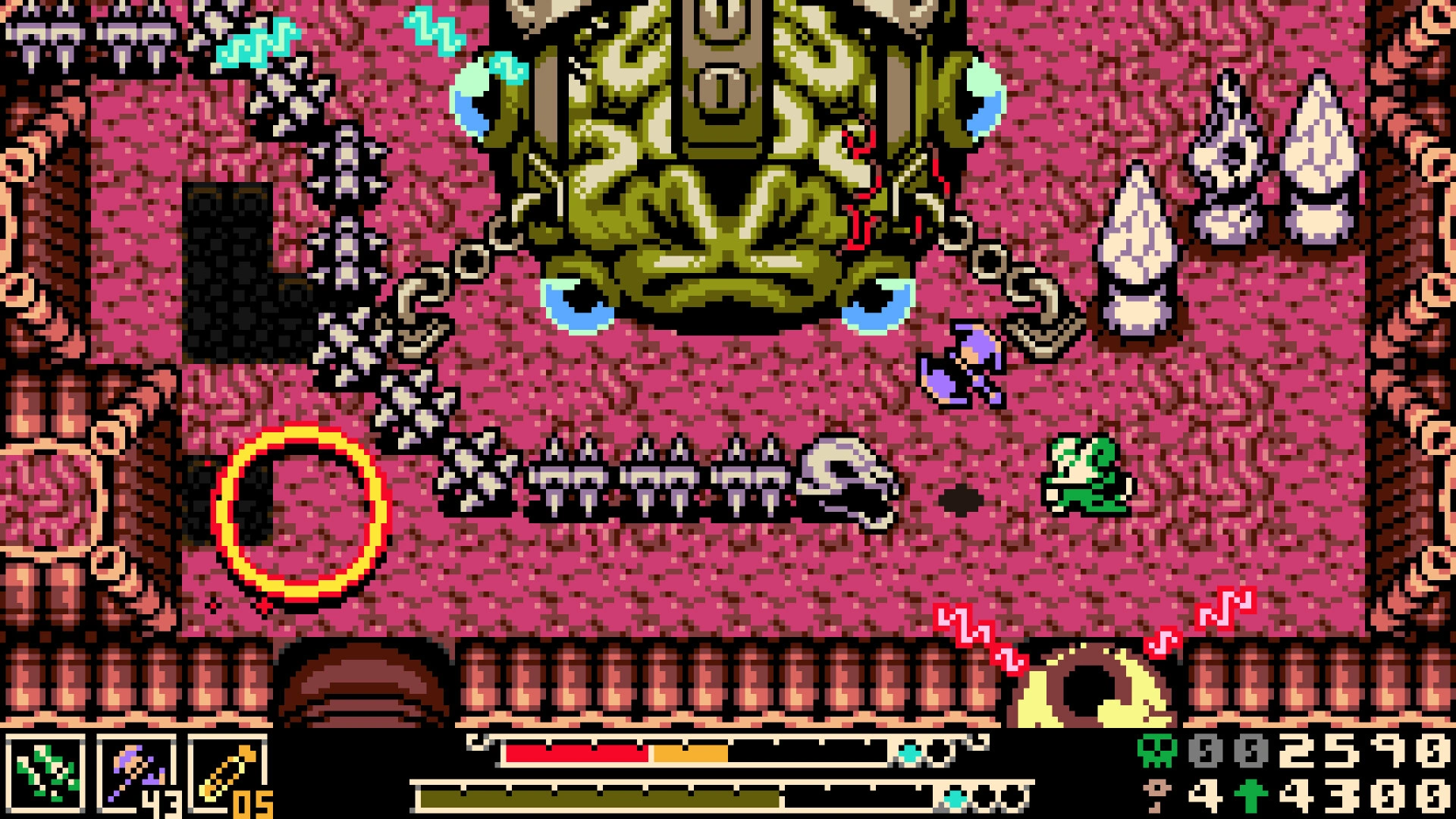
There is a real learning curve here. Burrow too early and you waste the opening. Pop up in the wrong spot and you land in pain. Misjudge a gap and you lose health to the terrain. The system can feel awkward during the first hours, especially in areas filled with enemies and platforming hazards. Once it clicks, Mina starts to feel wonderfully nimble. Combat becomes a matter of dipping under danger, emerging behind an enemy, and turning defense into pressure.
The weapon system supports that sense of improvisation. Mina can fight with tools such as the Nightstar, a whip-like mace with safe reach, twin daggers suited for aggressive damage, heavier hammer-style weapons, and defensive options with shield-like or coffin-like qualities.
Upgrades tend to expand function rather than inflate numbers. That keeps the focus on spacing, timing, and rhythm. The right weapon is tied to how you read a room. Long reach can keep you safe. Daggers can melt a boss if you stay accurate. Heavy weapons reward patience and positioning.
Sidearms add another layer of adaptation. Powered by Joules, these secondary tools include knives, axes, projectile-blocking parasols, the Iron Steed bicycle, ghostly helpers, and strange pet-like attacks. Some behave like classic subweapons from Castlevania, while others are odd enough to feel specific to Mina’s world. The Iron Steed is a great example because it can aid movement, combat, and secret hunting. Sidearms are limited by resources and availability, so they encourage practical thinking rather than a single perfect solution.
Trinkets are where build crafting opens up. These modifiers can change movement, defense, offense, healing, burrowing, and survival. An exploration setup might focus on longer jumps, longer burrow time, wall grabs, or slow falling. A boss setup might use damage multipliers, revives, health boosts, lightning protection, or attack effects.
Since you can swap them at Underlabs, the game invites you to treat each major obstacle as a design problem. A route that felt impossible can become manageable with the right movement build. A boss that seemed brutal can soften once your damage, healing, or defensive tools fit the pattern.
The healing system gives combat its sharpest edge. Mina uses Plasma Vials, yet missing health is refilled through aggression. Landing hits builds Plasma, then a vial converts it into health. Low health does not invite you to hide in a corner. It pushes you back toward the enemy. This creates a tense emotional loop: fear tells you to retreat, the system tells you to attack. The best moments happen when you survive because you trusted your hands, not because you found a safe pause.
Difficulty Comes With Many Ways to Push Back
Mina the Hollower is hard from the start. Enemies hit hard, bosses demand pattern recognition, platforming hazards punish sloppy movement, and the opening stretch can make the player feel underpowered. After the guided intro, the world opens with little concern for your comfort. A route can look like the intended path and still chew you up. That early harshness may catch some players off guard.
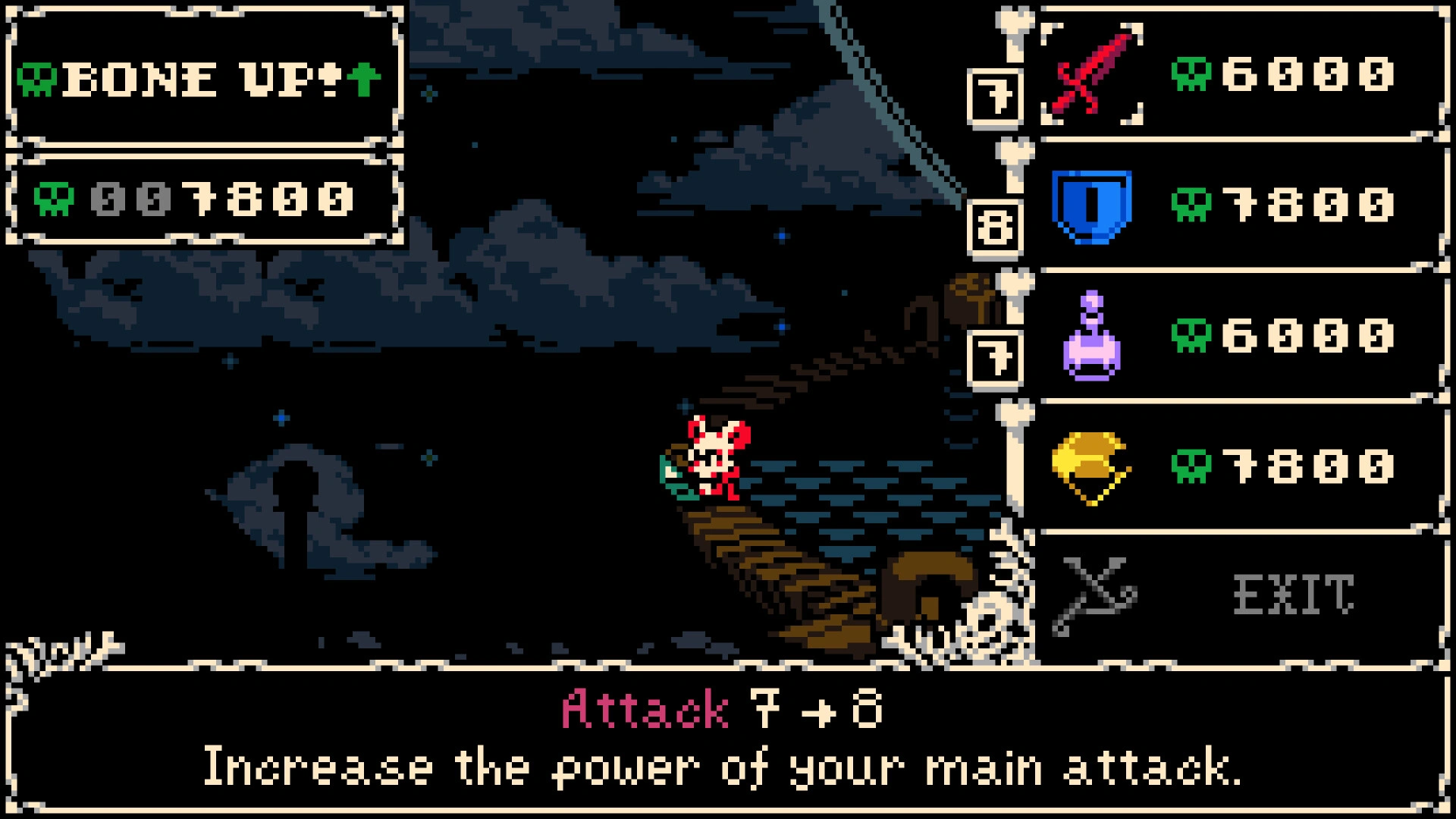
The game improves as its systems widen. Bones serve as the central progression resource, used to raise main weapon attack, defense, and Sidearm strength. They come from combat and exploration, and they create a familiar risk loop. Push farther and you may return richer. Die carelessly and you can lose progress, though Sparks can protect you from that loss. Underlabs act as the anchor points where you level up, swap weapons, adjust Trinkets, manage resources, and prepare for the next push.
This structure makes difficulty feel negotiable. A boss can be beaten through clean pattern learning. It can also be handled through stronger stats, a better Trinket setup, smarter Sidearm use, or a safer weapon choice. Grinding exists, yet it rarely feels like the only answer. For players who enjoy RPG progression, that matters. Hollow Knight asks for mastery above all else, while Mina gives players several levers to pull. Skill still matters, but planning matters too.
Bosses are usually large, readable, and severe. The best fights make good use of the visual clarity, with clear targets and attacks that can be learned through repeated attempts. Optional and secret bosses push this further, serving players who want the nastiest tests the island can offer. Regular enemies also require focus. Even a normal room can turn dangerous when bats, pits, spikes, and moving hazards all crowd the screen.
The assist and modifier options are unusually generous. Players can reduce enemy damage, add boss checkpoints, alter game speed, remap controls, adjust screen shake, change healing rules, add Underlabs, warp back to the hub, or make Mina’s movement floatier.
Challenge seekers can move the other way with harsher settings, one-hit rules, altered movement, strange visual effects, and New Game+ variations. Easier settings may disable achievements, but the game frames the choice clearly. It respects different appetites for friction without treating accessibility as an afterthought.
Gothic Pixels With a Strange Little Soul
The Game Boy Color-style art is one of Mina’s smartest choices. Its blocks, limited shapes, and bright contrasts are nostalgic, yet the presentation is never muddy. Fragile tiles, gaps, hazards, boss weak points, and interactive objects are usually readable at a glance. That clarity is essential in a game this demanding. If a boss fills the screen with limbs, teeth, projectiles, or strange appendages, the visual language still guides your eye toward what matters.
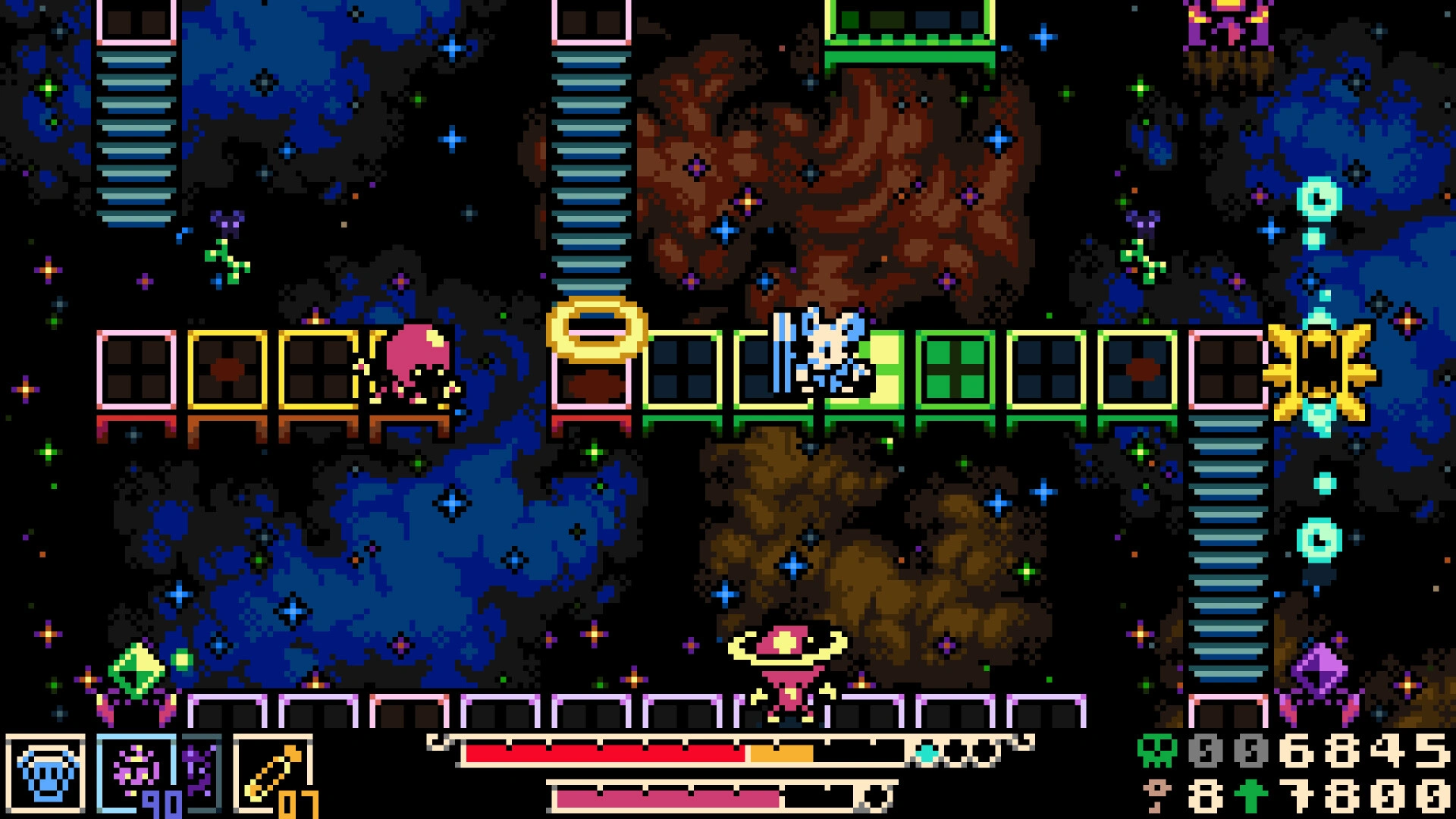
The small-scale pixel art also has surprising drama. Tower silhouettes, scenic backdrops, region-specific props, and sudden establishing shots give the island a theatrical quality. The world feels carved out of old hardware memory, then filled with modern density. It can be adorable one moment and genuinely unnerving the next. Mina’s tiny body makes every towering monster seem larger, every haunted room colder, every sprint through danger a bit funnier and scarier.
The tone is one of the game’s greatest strengths. It is spooky, goofy, and grim in quick turns. You meet ghosts, cursed villagers, strange shopkeepers, friendly abominations, possessed places, angry spirits, and absurd monsters that feel pulled from a Halloween cartoon after midnight. Dialogue and portraits often sharpen the mood, especially when cute overworld sprites give way to stranger, uglier character art during conversation.
The soundtrack leans into chiptune gothic energy. It carries the baroque bite of classic horror-action games, with boss themes that push tension and area music that gives each region its own mood. The soundscape helps tie together machinery, magic, decay, and comedy. Even when the game is at its strangest, the music keeps the adventure coherent.
Narratively, Mina herself is the most interesting piece. She is a monster slayer, but she is also an inventor whose machines are tied to the island’s crisis. That gives her heroism a faint discomfort. She helps the Islefolk, defeats horrors, and restores order, yet her own work may have helped create the conditions for disaster.
The game uses that tension well. Choices here are less about dialogue trees and moral meters, and closer to how exploration changes your understanding of responsibility. The player chooses routes, builds, risks, secrets, and pacing, while the story slowly asks what Mina’s inventions have cost.
A main run can land around the mid-20-hour range, with plenty left for completionists. Hidden rooms, optional treasures, secret bosses, unresolved clues, area checklists, and New Game+ give the game a long tail. Carrying completion data and opened chests into New Game+ makes repeat play feel like continued investigation rather than a clean reset. Mina the Hollower is dense, strange, and demanding in all the right ways. It rewards patience, memory, experimentation, and a fondness for the dark little corners most games are too tidy to keep.
The Review
Mina the Hollower
Mina the Hollower is a sharp, demanding, and richly crafted action-adventure that turns retro design into something fresh through burrowing, flexible builds, risky healing, and a world built around curiosity. Its difficulty can bite hard early on, and the light mapping may frustrate players who need clearer guidance, yet its combat, secrets, gothic charm, and player-driven exploration make it one of the strongest indie RPG adventures of its style.
PROS
- Excellent burrowing mechanic
- Dense, rewarding world design
- Strong combat and build variety
- Great gothic pixel art
- Memorable chiptune soundtrack
- Meaningful assist and modifier options
- High replay value
CONS
- Tough early difficulty spike
- Limited map detail may frustrate some players
- Heavy reliance on memory and note-taking
- Some routes can feel unclear at first