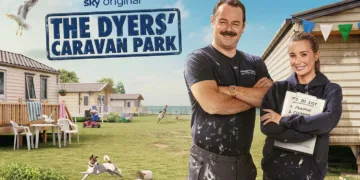















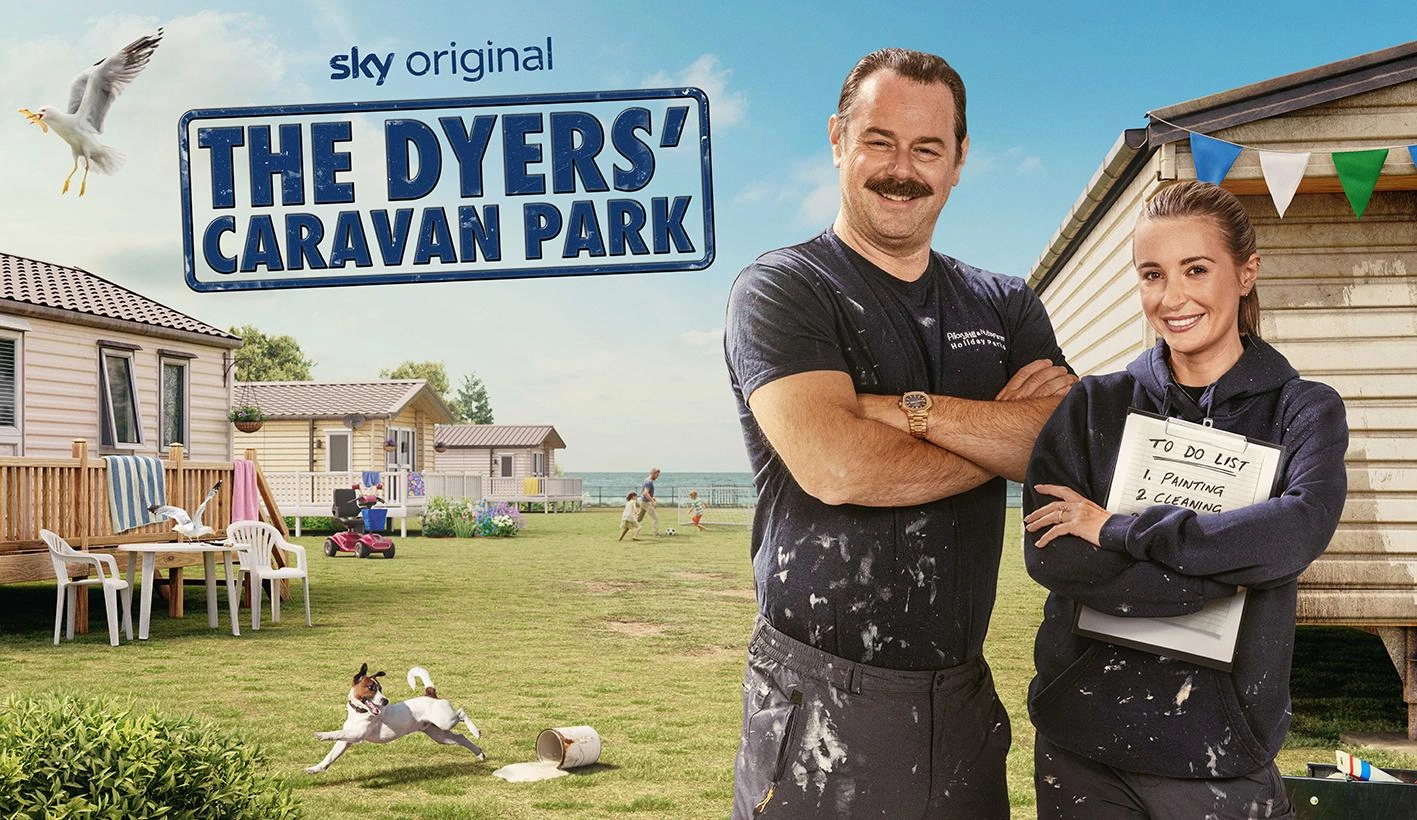

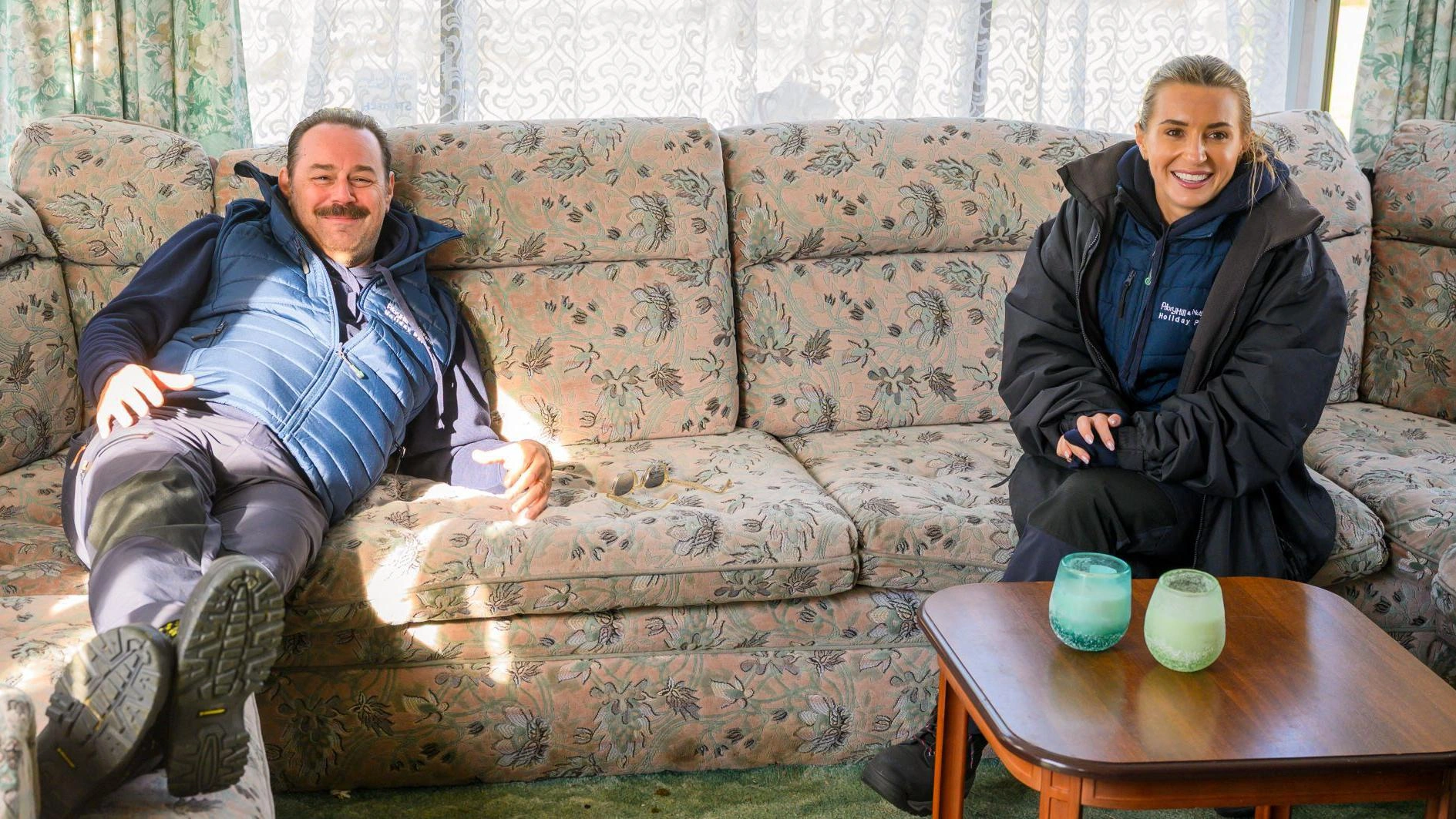
The Dyers’ Caravan Park arrives as a six-part Sky Original reality series with a premise that sounds almost engineered in a lab for British television: Danny Dyer, joined by his daughter Dani, invests in Priory Hill, a family-run caravan park in Leysdown-on-Sea on the Isle of Sheppey, hoping to revive a fading slice of seaside holiday culture. The show mixes celebrity business experiment, father-daughter banter, working-class nostalgia, and the kind of chaotic light entertainment where a bad idea can become a full episode if enough bunting is involved.
Danny’s attachment to caravan parks gives the series its emotional hook. He remembers them as places where families gathered, children made friends without effort, and community felt natural rather than curated. His mission is framed as a bid to bring back the “great British holiday,” a phrase loaded with class memory, national longing, and a faint smell of chips in the rain.
Priory Hill gives that dream a harder edge. The park has empty pitches, financial strain, a grieving family legacy, and staff trying to protect a real business. The central tension sits in the gap between Danny’s sentiment and the daily work of keeping the place alive.
Celebrity Revival TV With Mud on Its Shoes
The series belongs to a growing wave of celebrity-led workplace reality television, where a famous personality steps into a struggling traditional industry and tries to fix it through charm, visibility, and improvisation. The format suits the streaming era and its hunger for personality-driven unscripted shows that can be sold through a simple hook. Famous man buys rural or seaside business. Famous man learns business is difficult. Staff stare into the middle distance with the patience of people who have seen this sort of thing before.
What separates The Dyers’ Caravan Park from a cleaner business makeover show is its refusal to tidy itself up. Danny calls people “geez,” “treacle,” and “my son.” He leans into the geezer persona, sometimes knowingly, sometimes so fully that the boundary between character and man becomes slippery.
Dani brings a lighter comic rhythm, often acting as the amused mirror for her father’s schemes. Their scenes together have a loose, familial warmth that keeps the show watchable, especially when the practical details begin to resemble an accountant’s distress signal.
The problem is one of identity. The series wants viewers to care about Priory Hill as a business, a workplace, and a community. It also wants to turn Danny’s chaos into comic spectacle. Those impulses do not always sit easily together. A residents’ meeting can begin as an attempt at democratic listening, then slide into public humiliation for the people already running the site.
A promotional video can seem like harmless fun until the staff realize it may actually represent the business. The show’s messiness gives it energy, yet it can make the park’s real pressures feel like props in someone else’s celebrity adventure.
That contradiction says something about modern reality TV. Streaming and broadcaster platforms increasingly favor shows that sell authenticity while shaping every awkward pause into entertainment. Here, authenticity exists. The question is how much care the show takes with it.
Danny and Dani Dyer Carry the Circus
Danny Dyer is the series’ engine, sales pitch, and biggest risk. His charisma is undeniable. He can fill a room, puncture tension with a joke, and speak about childhood caravan holidays with genuine affection. He understands the emotional value of places like Priory Hill: affordable escapes, multigenerational memory, and communities that do not often receive generous attention on television.
That representation matters. The show puts working-class leisure culture on screen without treating it as a museum piece. Caravan parks are presented as living social spaces, full of residents, regulars, gossip, loyalty, irritation, and ritual. In an industry still prone to polishing class identity into something more palatable, there is value in seeing this world with its rough edges intact.
Still, Danny’s affection does not equal competence. His decision to miss the opening day of the season so he can attend the Brit Awards lands badly, especially with staff and owners expecting their celebrity investor to show up. His later apology shows charm, yet the damage is clear. He can win people over, then casually create new problems for the very people he claims to support.
The residents’ meeting exposes this pattern. Danny asks what improvements people want, then promises too much without knowing the costs, history, or local tensions behind those requests. His confidence is funny until it collides with reality. Night lights, an indoor pool, play areas, and sports facilities are not simple matters of desire. They involve money, complaints, placement, safety, and maintenance. Glamour meets planning permission, and glamour loses.
Dani Dyer brings warmth and silliness, especially in scenes involving social media ideas or offhand exchanges with her father. Her role, though, often feels ornamental. She strengthens the family dynamic and adds comic relief, yet she rarely seems central to the park’s future.
Moments such as saging a dirty caravan instead of cleaning it, filming a swear-heavy luxury caravan video, or being called a “young Scorsese” by Danny show the programme’s natural comic lane. They also reveal how often the show chooses personality over practical insight.
The People Who Have to Live With the Ideas
The strongest parts of The Dyers’ Caravan Park come from the people around the Dyers. Priory Hill is run by the Butcher family, with Jimi and Alex continuing the work after their father’s death. Alex’s grief gives the park a personal weight that celebrity banter cannot erase. This place carries family history, emotional labor, and the pressure of keeping a long-running local business alive.
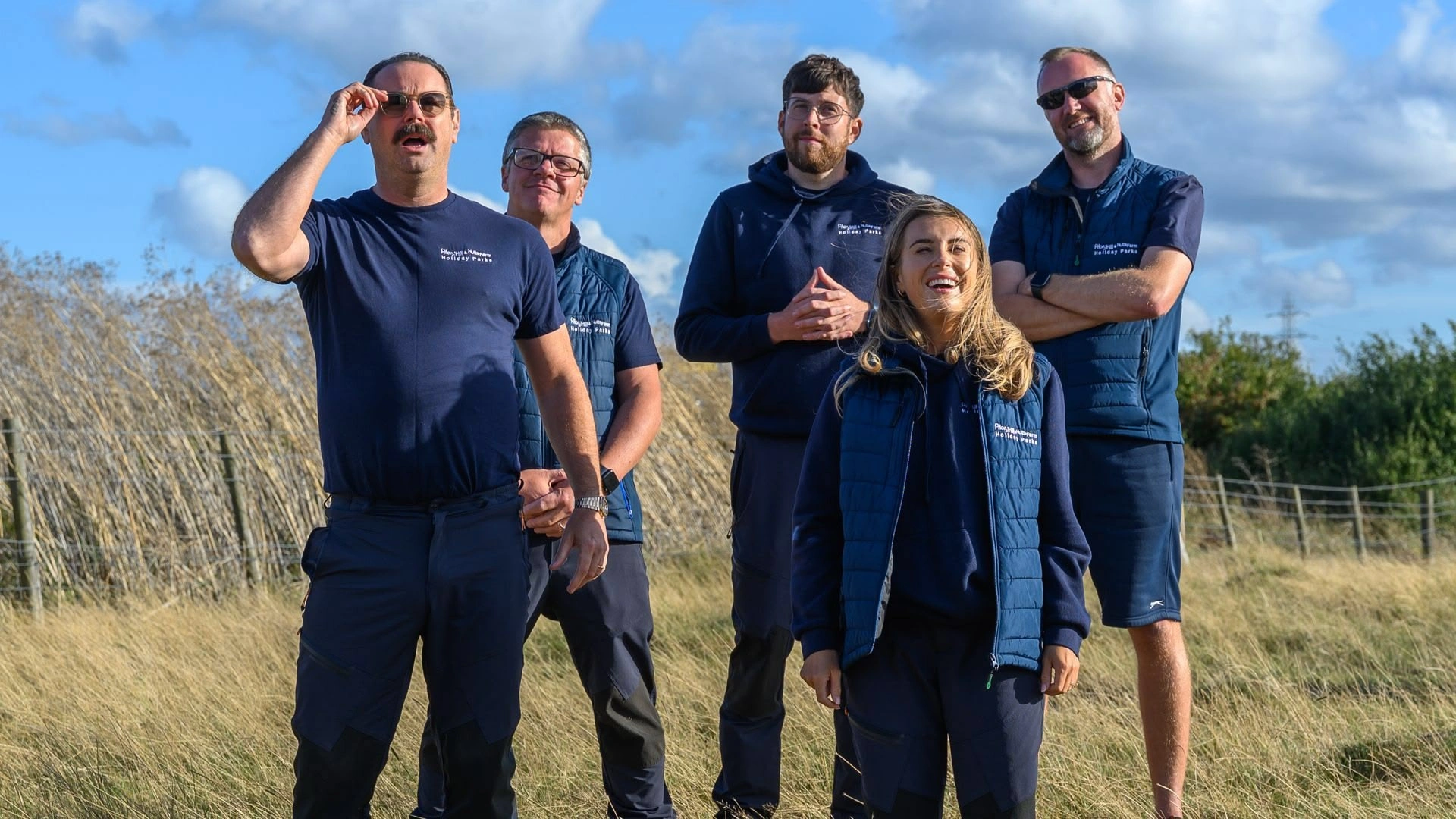
The staff are often the show’s quiet reality check. Site directors Paul and Darren, site manager Mark, and the wider management team understand the park’s problems with a clarity Danny lacks. Their faces say what a spreadsheet might say if spreadsheets could suffer.
They know why certain lights were removed, why an indoor pool is a fantasy at £250,000 or more, why child-friendly facilities create disputes over location, and why empty pitches are a serious financial wound rather than a convenient plot point. Around 38 pitches sit vacant, costing roughly £150,000 in lost yearly revenue. That figure hangs over the series like a storm cloud over a bank holiday weekend.
The residents’ meeting becomes the show’s sharpest scene because it captures the strange power dynamic at play. Danny opens the floor with celebrity ease, then real frustration floods in. Complaints about management land in front of the very staff who have been trying to hold the park together. It is awkward, revealing, and ethically uneasy. Television loves a bit of candor. People running a business tend to prefer candor with a plan attached.
The sports day captures the same tension in louder form. It is lively, ridiculous, and genuinely funny, with mobility scooter racing and windy games that seem designed by someone who trusts plastic eggs far too much. It also costs £10,000, which makes the laughter catch slightly in the throat.
As entertainment, the series has charm. As a portrait of business revival, it often looks alarmingly casual. Its cultural value lies in its attention to a community rarely given this much screen time, yet its weakness comes from treating that community’s problems as scenery for celebrity misadventure.
The Dyers’ Caravan Park is a 2026 Sky Original reality series following Danny Dyer and Dani Dyer as they invest their time, money, and public image into Priory Hill and Nutts Farm Holiday Park on the Isle of Sheppey in Kent. Inspired by Danny’s childhood memories of British caravan holidays, the six-part series follows the father-daughter duo as they attempt to revive the park and bring fresh attention to the traditional seaside getaway. The series premiered in the United Kingdom on February 24, 2026, on Sky One, with episodes also available to stream on NOW. A second series has already been commissioned by Sky.
Full Credits
- Title: The Dyers’ Caravan Park
- Distributor: Sky One, NOW
- Release date: February 24, 2026
- Rating: 15
- Running time: 45 to 48 minutes per episode
- Director: Josh Jacobs
- Producers and Executive Producers: Claudia Webster, Ben Wicks, Jordan Read, Denise Kadoo, Jo Bucci
- Cast: Danny Dyer, Dani Dyer
The Review
The Dyers’ Caravan Park
The Dyers’ Caravan Park is messy, funny, awkward, and often unsure of its own purpose. Danny Dyer’s charm gives it life, while the staff and residents give it stakes the show does not always handle with enough care. It works best as light celebrity chaos with flashes of working-class holiday nostalgia, less so as a serious business revival series.
PROS
- Danny Dyer’s charisma keeps the series watchable
- Strong sense of place and community
- Staff and residents add real emotional weight
- Funny father-daughter moments with Dani Dyer
- Captures a fading British holiday culture
CONS
- Tone often feels confused
- Real business stakes can feel sidelined
- Some ideas seem wasteful or poorly planned
- Dani’s role feels limited
- The celebrity angle sometimes overwhelms the park itself