




















The Martini Shot takes its title from the filmmaking phrase for the last shot of the day, and writer-director Stephen Wallis turns that bit of industry language into a direct metaphor for mortality. Steve, played by Matthew Modine, is a terminally ill filmmaker trying to complete one final movie before his time runs out. That premise sounds clean on paper, yet the film quickly moves away from ordinary end-of-life drama into something stranger, slipperier, and far less predictable.
Set across rural Ireland, the movie uses cliffs, ruins, pubs, meadows, and quiet coastal views as a kind of suspended space between life and whatever comes after it. Steve may be a dying artist processing his final days, a director reshaping reality to suit his own fears, or a godlike figure casting people into a story he refuses to release. Wallis lets those possibilities overlap, giving the film the feel of a half-remembered dream built from cinema, regret, desire, and spiritual panic.
That ambition is admirable. It also makes The Martini Shot a difficult film to settle into. Its best moments carry real tenderness and oddball charm, while its weaker ones drift into self-importance.
Mortality, Control, and the Problem of Shape
Steve’s terminal diagnosis gives the film its emotional engine, but his response to death is less about acceptance than control. He gathers a small cast and crew for what he calls his final project, though the production rarely feels like a normal shoot. It plays closer to an interactive space inside Steve’s mind, where memory, fantasy, grief, and ego are constantly being rearranged.
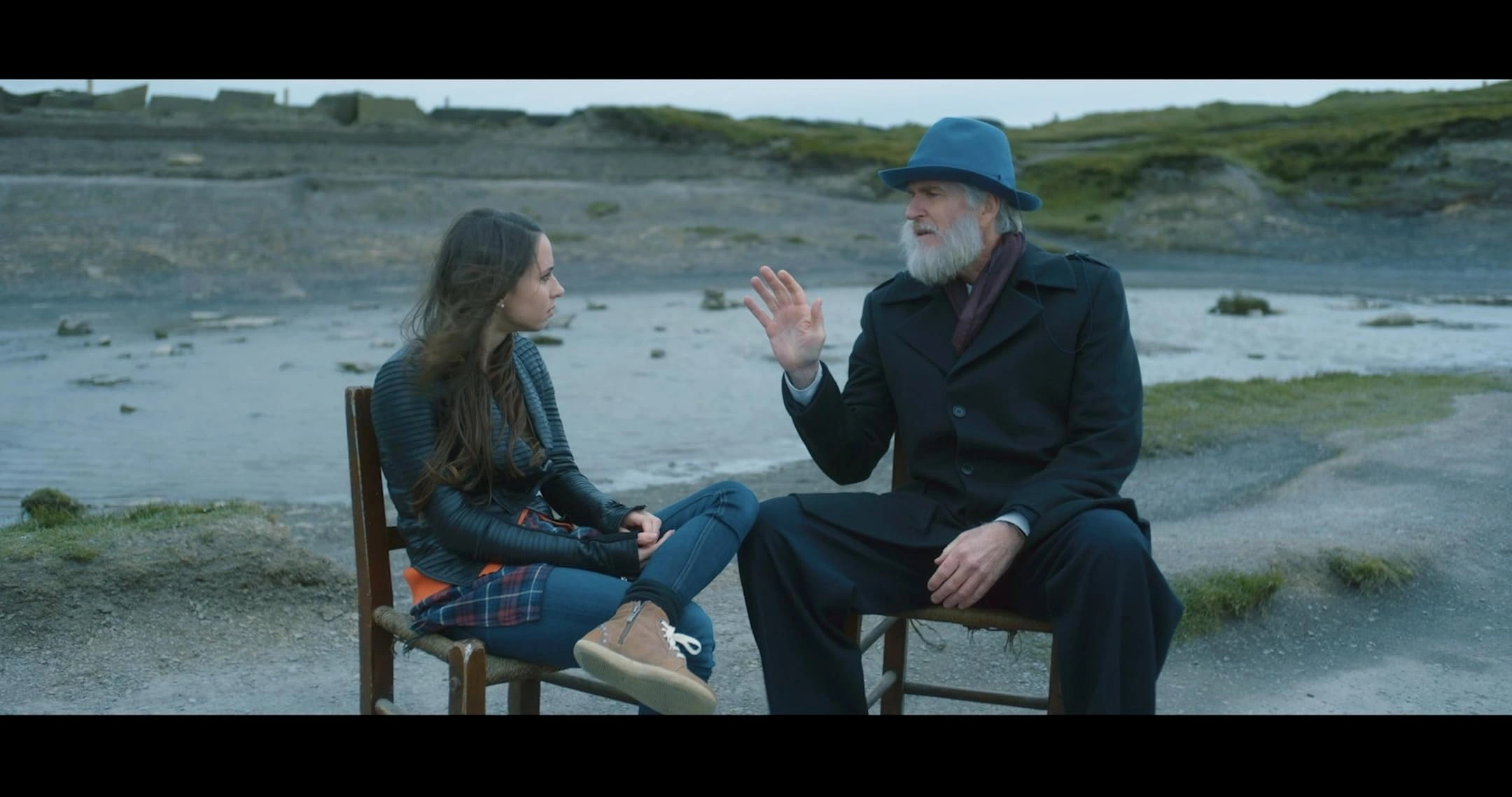
That structure gives The Martini Shot an unusual relationship with storytelling. Steve can stop the action, recast people, change details, and bring the dead into his movie. Errol, played by Derek Jacobi, and Philip, played by Stuart Townsend, are deceased performers who still serve Steve’s creative vision. Their presence gives the film a ghostly texture, though Wallis often treats the supernatural with whimsy rather than dread.
The central ideas are rich: artistic legacy, the instability of truth, faith, grief, love, and the fear of being forgotten. Steve often speaks as if perception is the only reality left, and the film’s fragmented form reflects that belief. Like a narrative-driven game where the player keeps rewriting the rules of a world, Steve tries to bend every scene toward emotional meaning.
The problem is that the film keeps interrupting its own feeling. Scenes that might have landed with quiet force often get buried under metaphors, speeches, quotations, and self-aware comments about cinema. The “martini shot” itself is a strong image, a final act of creation before the lights go out, yet the script circles that idea so often that it starts to lose its sharpness. The film wants mystery, but mystery needs rhythm. Here, the pacing can feel like a beautiful puzzle with too many pieces left facing down.
Matthew Modine Holds the Frame
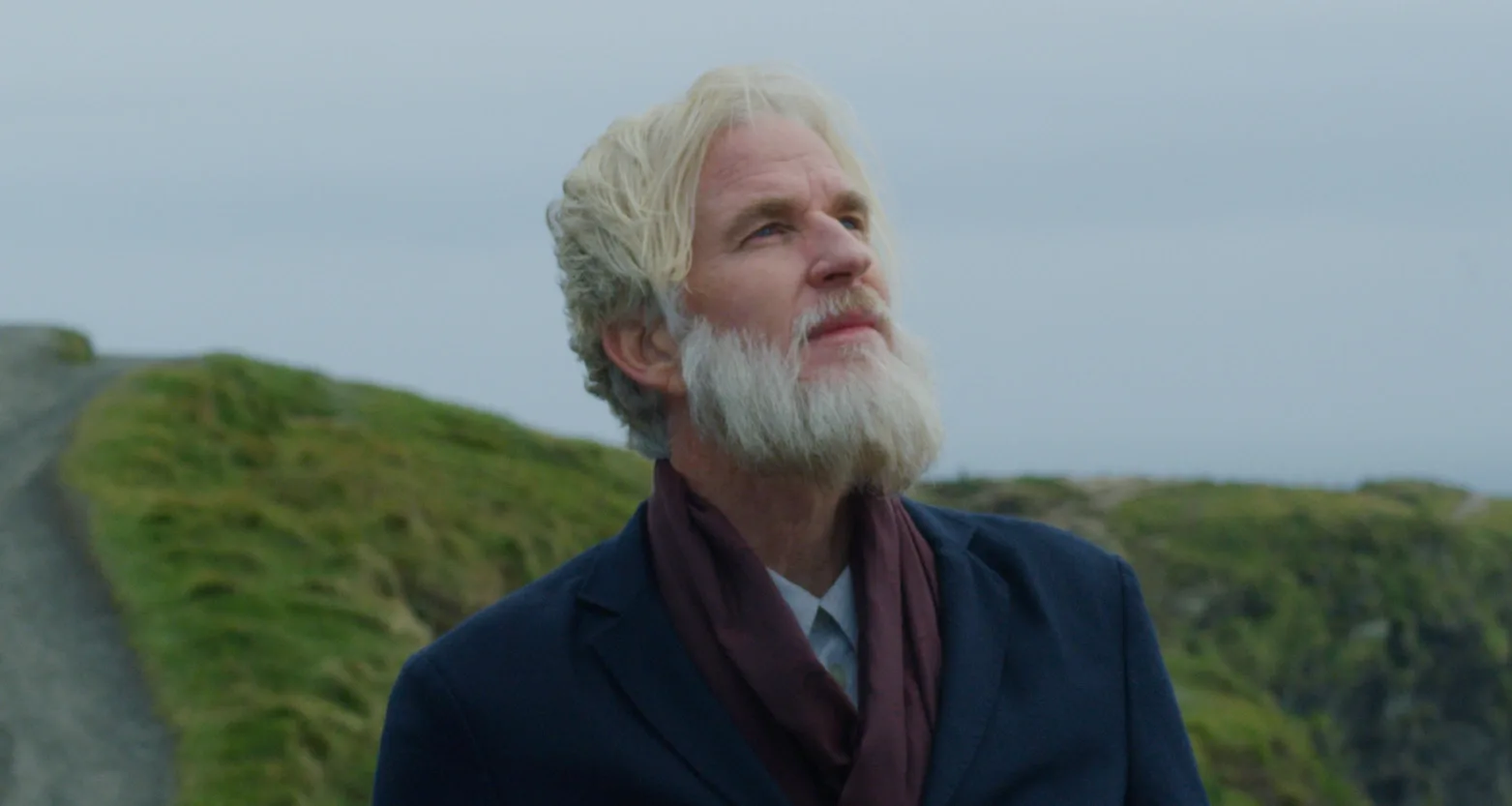
Matthew Modine gives The Martini Shot its most reliable source of gravity. His Steve is sincere, vain, frightened, playful, arrogant, and quietly desperate. With his white hair and heavy beard, he looks almost mythic, somewhere between fading auteur and exhausted deity. Modine understands that Steve’s power is fragile. He may be able to shape the world around him, yet he cannot stop the one event that matters most.
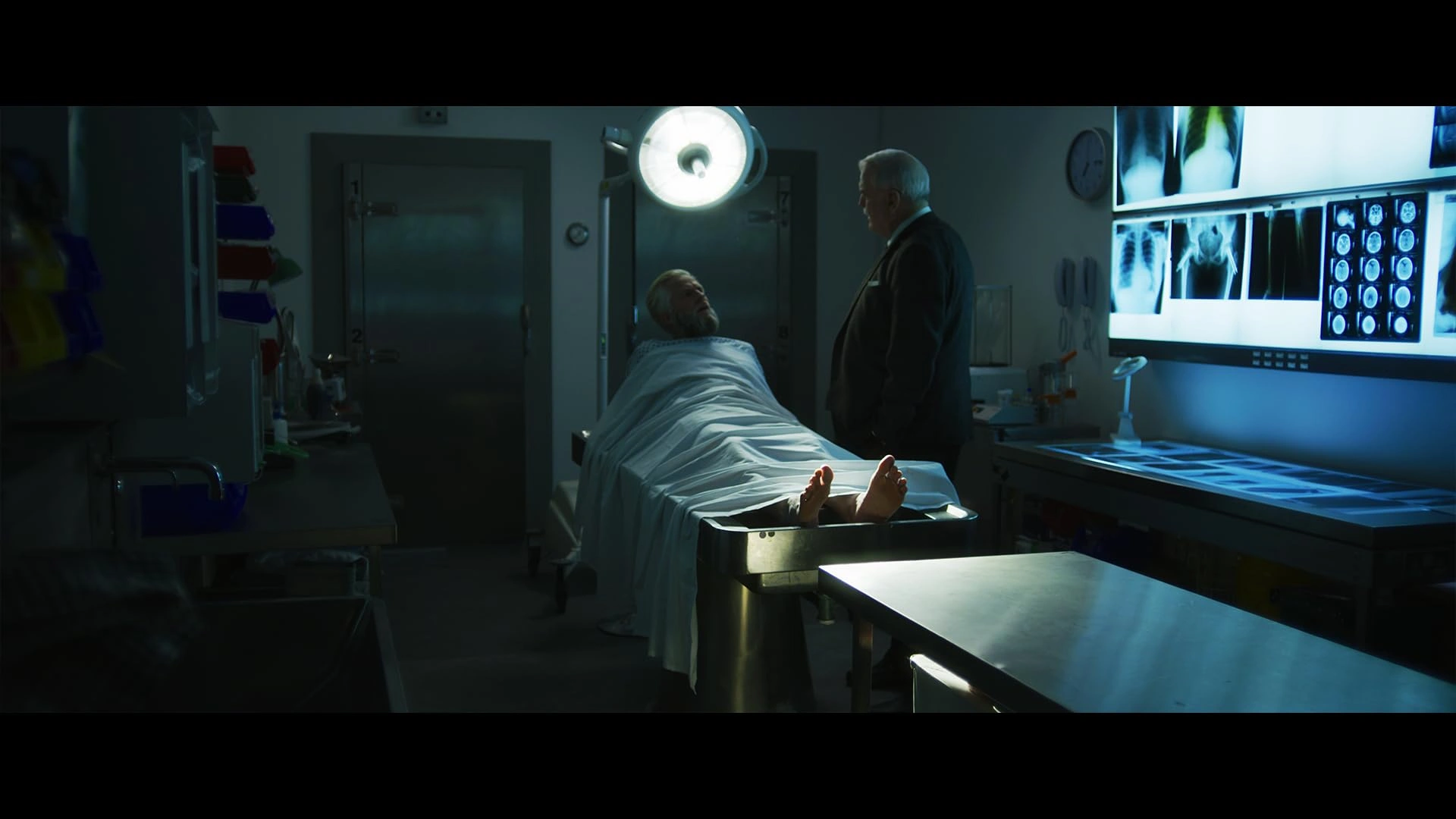
That tension keeps the character interesting, especially because Steve is far from noble. He can be manipulative, childish, and careless with the people caught inside his imagination. His treatment of women is one of the film’s sharpest discomforts. Morgana Robinson’s Dr. Ehm, a therapist figure filtered through Steve’s vanity, exposes how easily his creative power slides into objectification. The film seems aware of this flaw, but its handling of it can feel uneven.
Fiona Glascott’s Mary gives the movie much of its warmth and wit. She is Steve’s assistant, emotional anchor, comic counterweight, and the rare person willing to call out the absurdity of his world. Her jokes about dead actors and production logistics give the film flashes of dry humor, while her bond with Steve adds a human pulse to the metaphysical fog. Their unresolved tension works best when Mary resists becoming another prop in Steve’s story.
The supporting cast adds polish, even where the roles feel thin. John Cleese has a brief comic bite as Steve’s doctor. Derek Jacobi brings theatrical weight to Errol, and Stuart Townsend gives Philip a haunted edge. Still, Modine carries the film’s emotional load. Whenever the script drifts too far into abstraction, his performance pulls it back toward a recognizable fear: the terror of leaving behind an unfinished self.
Beauty, Whimsy, and Uneven Magic
Stephen Wallis directs The Martini Shot with obvious affection for cinema as ritual, confession, and escape. His boldest craft choice is the use of Ireland as a dream space. The cliffs and ruins are not simple postcard scenery. They create the feeling of a world paused between takes, where a dying filmmaker can stage one last argument with existence. Even when the drama falters, the landscapes give the film a soft, mournful beauty.
The tone is harder to balance. Wallis shifts between philosophical drama, film-set comedy, spiritual fantasy, and self-referential industry humor. Some of that works nicely. Mary’s practical complaints about the madness of hiring dead actors give the movie a needed spark, and the production jokes help puncture Steve’s grandiosity. At other points, the film seems too enamored with its own metaphysical haze. The dialogue can lean heavily on poetic statements that explain feeling rather than let it build.
Alain Mayrand’s score helps smooth some of those rough edges. Its lush, soothing quality supports the film’s reflective mood, while the bright color palette gives even the strangest scenes a gentle glow. The editing is intentionally fragmented, matching Steve’s unstable reality, but it can also distance the viewer from the emotions the film wants to reach.
The Martini Shot has imagination, strong scenery, and a committed lead performance from Modine. Its magic realism gives it personality, and its interest in mortality feels sincere. Yet its emotional power depends on patience for a film that often chooses abstraction over clarity, whimsy over momentum, and philosophical rumination over direct dramatic force.
The Martini Shot is a 2023 existential comedy-drama written and directed by Stephen Wallis. The film stars Matthew Modine as Steve, an ailing filmmaker who begins work on what he believes will be his final artistic project, with reality, memory, death, and cinema gradually blending together. The movie premiered at the Galway Film Fleadh on July 13, 2023, followed by festival screenings in Canada and the United States. As of May 31, 2026, it is available on UK digital platforms through Miracle Media, with streaming availability varying by country. Current JustWatch listings show it available in the United Kingdom and several other territories, while no United States streaming option is listed.
Where to Watch The Martini Shot (2023) Online
Full Credits
- Title: The Martini Shot
- Distributor: Miracle Media, Double Dutch International
- Release date: July 13, 2023 at Galway Film Fleadh, March 2, 2026 on UK digital platforms
- Rating: PG-13, 12
- Running time: 1 hour 32 minutes
- Director: Stephen Wallis
- Writers: Stephen Wallis
- Producers and Executive Producers: Stephen Wallis, Susan Ilott, Emma Owen, Angelo Paletta, Michael Godfrey, Russ De Jong, Stan Wontor, James Robson, Nick Talon, Sari Colt, Dominic Davey, Paul Feinstein, Ron Casement
- Cast: Matthew Modine, John Cleese, Derek Jacobi, Stuart Townsend, Fiona Glascott, Morgana Robinson, Jason London, Catriona Loughlin, Cat Hostick, Dermot Murphy, Maria McDermottroe, Nigel Mercier
- Director of Photography: Russ De Jong
- Editors: Russ De Jong
- Composer: Alain Mayrand
The Review
The Martini Shot
The Martini Shot is an ambitious, strange, and often beautiful meditation on mortality, art, and control. Matthew Modine gives the film a steady emotional center, while Ireland’s landscapes add a dreamlike pull. Still, the fragmented structure and heavy philosophical dialogue often weaken its impact. The film has sincerity and imagination, but its self-aware style may test viewers who want clearer emotional momentum.
PROS
- Matthew Modine gives a committed, grounded lead performance.
- Rural Ireland gives the film striking visual atmosphere.
- The central “martini shot” metaphor is strong.
- Fiona Glascott brings warmth and dry humor as Mary.
- The film has bold ideas about death, art, faith, and legacy.
- Alain Mayrand’s score supports the reflective mood.
CONS
- The story can feel scattered and overly abstract.
- Some emotional moments get buried under speeches and metaphors.
- Supporting characters are often underused.
- The pacing drifts in several scenes.
- Steve’s flaws are interesting, but not always handled with enough care.
- The film’s self-referential style can feel indulgent.