





















Palestine Comedy Club follows a group of Palestinian stand-up performers trying to build a touring comedy show in a place where movement, speech, and daily routine are shaped by occupation, war, displacement, and cultural division. The premise sounds almost impossible: take comedy on the road through cities where reaching the venue can be harder than winning over the crowd. That tension gives the documentary its pulse.
The film centers on Alaa Shehada and the Palestine Comedy Club, a collective made up of performers from Jenin, Hebron, Ramallah, Haifa, the Golan Heights, and Beit Awwa. Their differences matter. Each person brings a specific local identity, sense of humor, and relationship to risk. British artistic director Sam Beale also appears as a guiding presence, helping frame stand-up as both performance training and a cultural experiment.
What makes the film immediately affecting is its refusal to treat comedy as escape. Here, laughter becomes a form of contact. It lets people speak about fear, humiliation, family, politics, and survival without surrendering the room to despair.
A Road Movie Where Every Road Has a Cost
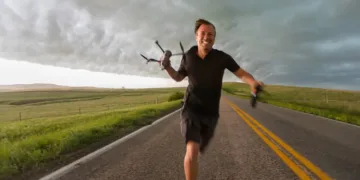
The film’s road-trip structure gives it a clear narrative engine. The group travels through Ramallah, Nablus, Haifa, Nazareth, Jerusalem, London, and other charged spaces, each location adding a new pressure point. Booking a show should be a logistical task. In Palestine Comedy Club, it becomes a test of endurance. Permits, checkpoints, biometric cards, and the threat of arrest turn travel into drama before anyone reaches a stage.
That structure gives the documentary a natural rhythm. The van, the rehearsal space, the stage, the checkpoint, and the family home each become part of the same story. The film understands that Palestinian life cannot be separated from geography. A short distance can carry years of political weight. A city can feel close on a map and unreachable in practice.
The strongest thematic thread is identity. The performers do not present Palestine as one simple idea. They reveal a web of cities, customs, accents, generational habits, religious expectations, and comic instincts. The film is especially sharp when it observes how jokes shift from place to place. A line that works in Ramallah may create anxiety in Nablus. A performer from Haifa carries a different freedom, and a different guilt, than a performer from the West Bank.
Also Read






Then October 7, 2023 arrives, and the film’s sadness rises from the background. Gaza, Jenin, and the West Bank become sources of grief that can no longer sit beneath the comedy. The documentary handles this shift with sincerity. Its performers keep joking, yet the humor never treats pain lightly. It becomes a language for continuing to speak when ordinary speech feels exhausted.
The Ensemble Finds Comedy in the Cracks
Alaa Shehada emerges as the film’s key creative force: thoughtful, observant, and aware of the strange burden placed on a comedian working under such conditions. His scenes with his mother give the documentary some of its warmest moments. Their teasing has the loose timing of family life, the kind of humor that existed long before it was shaped into a stage routine. Those scenes also reveal one of the film’s best insights: comedy is already embedded in Palestinian daily life. The club is trying to give it a new form.
Diana Sweity brings a darker, more sardonic flavor. Her joke about Hebron having a “sea” turns into a punchline about discarded refrigerators and washing machines, a bleak image made funny through timing and self-possession. Ebaa Monther has a different charge, fiery and restless, with a visible awareness of how performance changes across cultural borders. Her anxiety around jokes involving women and conservative expectations gives the film a valuable glimpse of comedy as negotiation.
Raed Al-Shyoukhi, Khalil Al-Batran, and Hanna Shammas help broaden the portrait. Each performer carries a distinct relationship to place, mobility, privilege, danger, and belonging. The group dynamic is lively, and the show itself seems to draw from music, movement, storytelling, ensemble rhythm, and direct social observation.
The frustration is that the documentary rarely lets us stay with a routine long enough to feel its full shape. We get sparks of comic personality, yet the process behind the material remains partly hidden. I wanted to see jokes fail, change, sharpen, and land differently across cities. The film tells us the comedy matters, and it clearly does, but it sometimes withholds the rhythm that would let us feel that importance from inside the performance.
A Humane Film With Rough Edges
Alaa Ali Abdallah directs with intimacy and clear affection for the people on screen. The documentary’s chronological shape gives the viewer an easy path through a politically and emotionally dense subject, while the road-trip format supplies movement and anticipation. The editing carries us through rehearsals, family scenes, performances, travel barriers, personal reflections, and later exile with enough momentum to keep the film accessible.
The craft is at its best when it mixes personal observation with context. Graphics help clarify the political realities without turning the film into a lecture. Occasional animation gives the storytelling a softer, more lyrical texture. The photography captures Palestinian cities and landscapes with an eye for beauty, but it never lets beauty erase tension. Streets, homes, theaters, and checkpoints all feel connected by an invisible pressure.
The sound of the film matters too. Laughter lands differently here. A crowd’s silence can feel as meaningful as applause. A supportive murmur can carry discomfort, empathy, or uncertainty. As someone who has spent years listening to how film sound shapes emotional space, I found those moments quietly revealing. The documentary often understands that performance is built from what the room gives back.
Still, the film has rough edges. Some transitions feel abrupt. A few personal portraits need greater depth. Sam Beale’s artistic role remains underexplored, especially given her influence on the club’s formation and stage language. The London section and the later scenes of exile raise large questions about audience reaction, artistic expansion, homesickness, and survival, then move past them too quickly.
Palestine Comedy Club is imperfect as a study of stand-up craft. As a portrait of artists trying to keep language, laughter, and community alive under unbearable pressure, it carries real force.
Palestine Comedy Club is a 2025 documentary directed by Alaa Aliabdallah and co-directed by Charlotte Knowles. The film follows six Palestinian comedians as they create and tour a stand-up show across Palestine and Israel, using comedy to explore identity, displacement, occupation, and survival. It premiered at SXSW London on June 6, 2025, before later festival screenings and a UK cinema release in February 2026. The film is available through select cinema screenings and festival programs, with First Hand Films handling world sales.
Full Credits
- Title: Palestine Comedy Club
- Distributor: Tough Crowd Limited, First Hand Films
- Release date: June 6, 2025
- Rating: 12A
- Running time: 96 minutes
- Director: Alaa Aliabdallah
- Writers: Alaa Shehada, Charlotte Knowles
- Producers and Executive Producers: Charlotte Knowles, Carri Twigg, Esther Van Messel, Mikail Chowdhury, Farzana Rahman, Maryam Pasha
- Cast: Alaa Shehada, Hanna Shammas, Diana Swity, Ebaa Monther, Khalil Al-Batran, Raed Al-Shyoukhi, Sam Beale, Alaa Aliabdallah
- Director of Photography Cinematographer: Alaa Aliabdallah
- Editors: Libby Knowles
- Composer: Khalil Al Batran, Faris Amin
The Review
Palestine Comedy Club
Palestine Comedy Club is a humane, urgent documentary that finds moving power in artists using laughter against fear, division, and displacement. It could show more of the actual comedy and deepen a few personal arcs, yet its emotional clarity and cultural weight make it hard to shake. The film works best as a portrait of resilience, community, and art under pressure.
PROS
- Strong emotional core
- Memorable ensemble of performers
- Sharp road-trip structure
- Meaningful cultural and political context
- Effective use of humor amid grief
CONS
- Needs more complete stand-up routines
- Some performer stories feel underdeveloped
- A few transitions are abrupt
- Sam Beale’s role needs more detail
- Later exile scenes could be fuller