
























![Kingdom Hearts Collection [I-III] Review](https://gazettely.com/wp-content/uploads/2026/10/Kingdom-Hearts-Collection-I-III-1-360x180.webp "Kingdom Hearts Collection [I-III] Review: KHII Holds Steady as Newer Entries Fluctuate 37")



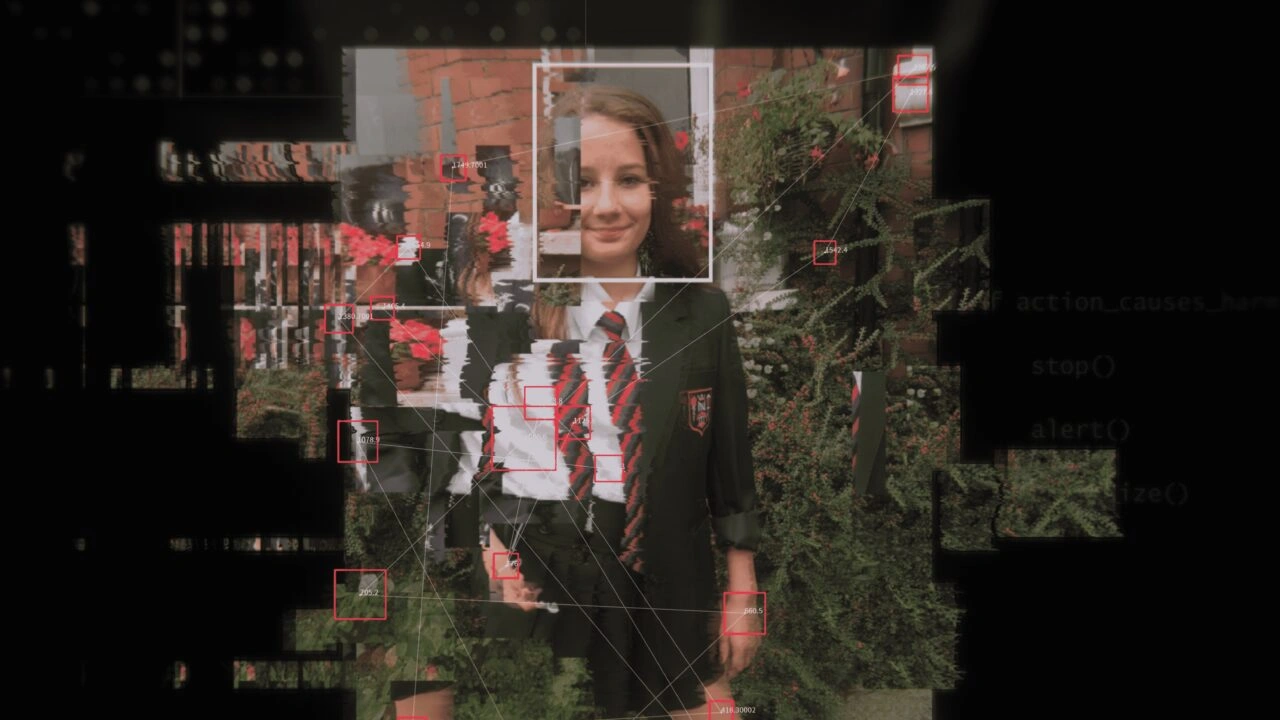

Molly vs the Machines approaches one of the most painful questions of the digital era: what happens when a child’s private despair becomes raw material for an algorithm? Marc Silver’s documentary tells the story of Molly Russell, who died in 2017 at the age of 14 after months of exposure to posts connected to self-harm, suicide, depression, and eating disorders on platforms including Instagram and Pinterest. The film treats her death as a personal catastrophe and a public indictment, asking how systems built to maximise attention could feed a vulnerable teenager such relentless darkness.
Ian Russell, Molly’s father, becomes the film’s emotional centre. His life, as the documentary presents it, exists in two halves: the ordinary family life before Molly died, and the campaign for accountability that followed. Silver builds the film through interviews, inquest reenactments, whistleblower testimony, archive material, and AI-generated narration. That mixture gives the documentary a restless, accusatory shape. It is grief cinema filtered through platform capitalism, which may be the bleakest subgenre anyone has accidentally invented.
The Child Behind the Case
The film is strongest when it returns to the people who knew Molly before her name became attached to legal findings, parliamentary debates, and arguments about online safety. Ian Russell speaks with a restrained anguish that feels almost unbearable because it refuses theatricality. He is not presented as a crusader first. He is a father trying to understand how a normal evening at home could lead to a permanent rupture.
Molly’s friends, now young adults, carry a different kind of weight. They remember her humour, her appearance, her warmth, and the changes that seemed visible only in retrospect. Their memories give the film its most painful sense of absence. They grew up. Molly did not. That fact hangs over every interview like a second frame around the image.
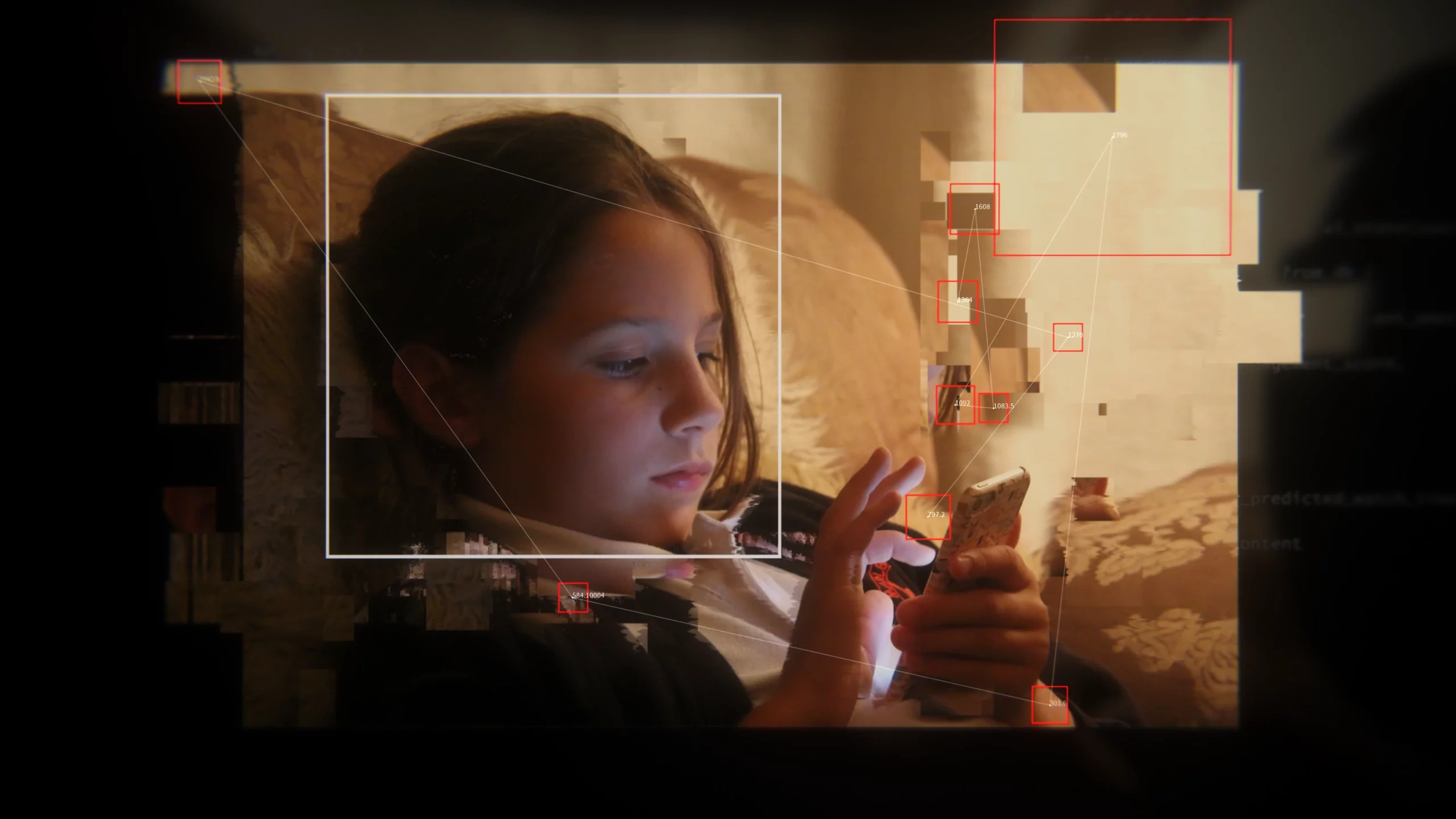
Silver is careful with ordinary details, and those details hurt. Molly watched television with her family the night she died. She said goodnight. Her final message to a friend included laughing emojis. These fragments refuse the false comfort of obvious warning signs. They show how adolescent pain can move through a house silently, passing beside dinner, homework, school uniforms, and the glow of a phone screen.
The harmful posts shown in the documentary are difficult to sit with. Their language of self-loathing, pain, death, and worthlessness turns an abstract debate into something horribly concrete. The film understands that “content” is too clean a word for material that can burrow into a young mind.
The Algorithm as Accomplice
Molly vs the Machines presents the algorithm as a machine without malice, which may be exactly the problem. It does not need hatred to cause harm. It needs engagement. Once Molly interacted with posts connected to depression, suicide, and self-harm, the system kept serving her similar material, trapping her in a feedback chamber of despair. Call it automated sorrow farming, a phrase ugly enough to fit the mechanism.
The recreated inquest scenes give the documentary its procedural spine. Actors restage testimony and questioning, allowing the film to examine the polished corporate language that surrounds catastrophe. Meta executive Elizabeth Lagone becomes a key figure in this section, especially through the company’s insistence that certain posts could be considered safe or even helpful because they might make users feel less alone. The film treats that logic as morally evasive. It has the smooth texture of policy speech and the emotional temperature of a printer manual.
The inquest finding, that Molly died from depression and the negative effects of online content, with social media contributing in a meaningful way, grounds the film’s anger in legal reality. This is where the documentary connects Molly’s death to a longer historical pattern: powerful systems often become accountable only after harm has already become impossible to ignore. Factories had fires. Roads had crashes. Platforms have children left alone with recommendation engines.
Whistleblower testimony and the film’s account of Silicon Valley culture widen the frame. Social media is shown shifting from a space for connection into an architecture of data extraction, attention capture, and behavioural prediction. The film sometimes simplifies this history, yet its central accusation lands with force: platforms made choices, then called the consequences complexity.
The Ghost in the Interface
Silver’s most divisive choice is the use of AI-generated narration and imagery. The film gives “the machines” a voice, creating an eerie simulation of algorithmic perspective. At times, this works. The cold, synthetic narration turns data harvesting into something intimate and invasive, like a stranger reading a diary while pretending to be furniture. It fits a film about systems that observe people constantly without caring for them.
Still, the device is risky. In a documentary about a real child, any formal choice that pulls attention away from her humanity has to justify itself. The AI material sometimes feels thematically apt, sometimes like a clever idea that wandered into a funeral wearing smart shoes. I see the point, then I resent the point. Both reactions seem valid.
The film’s structure has similar strengths and gaps. It moves between family testimony, legal reenactment, tech history, and social warning with urgency, yet some parts feel underexplored. Molly herself remains partly out of reach. Her mother and siblings receive limited space. The legal and political aftermath of the case could have been developed with greater precision, especially the debates around child safety regulation and age restrictions on social media.
For all its formal ambition, the documentary works best in its plainest moments. Molly’s loved ones provide what no AI voice can simulate: memory, pain, love, and the unbearable knowledge that a child was left alone with systems designed to keep feeding her pain.
Molly vs the Machines is a 2026 British documentary directed by Marc Silver. The film examines the death of 14-year-old Molly Russell and her father Ian Russell’s campaign for online safety after social media content was found to have contributed to her death. It premiered on March 1, 2026, as part of Glasgow Film Festival’s premiere slate, with simultaneous UK cinema screenings through Cosmic Cat. The documentary aired on Channel 4 on March 5, 2026. It is also listed through festival and online documentary platforms including Millennium Docs Against Gravity.
Where to Watch Molly vs the Machines (2026) Online
Full Credits
- Title: Molly vs the Machines
- Distributor: Cosmic Cat, Channel 4
- Release date: March 1, 2026 in UK cinemas and at Glasgow Film Festival, March 5, 2026 on Channel 4
- Rating: 15
- Running time: 83 minutes
- Director: Marc Silver
- Writers: Marc Silver, Shoshana Zuboff
- Producers and Executive Producers: Kat Mansoor, Natalie Humphreys, Marc Silver, Charlie Falconer, Shoshana Zuboff, Jess Search, Minette Nelson, Sacha Mirzoeff, Alaphia Zoyab, Elise Tillet, Mark Thomas, Sandra Whipham, Angel Maldonado, Margarita Louis-Dreyfus, Joseph Schull, Harriet Gugenheim
- Cast: Michael Shaeffer, Neil Maskell, Kelly Campbell, Leah Walker, Kerri McLean, Bronagh Waugh, Angela Peters, Ivy Blackshaw
- Director of Photography: Marc Silver
- Editors: Emiliano Battista
- Composer: Saya Gray
The Review
Molly vs the Machines
Molly vs the Machines is a painful, urgent documentary that is most powerful when it stays close to Molly Russell’s family and friends. Its AI framing can feel strained, and the film leaves parts of Molly’s life and the legal aftermath underexplored. Still, its portrait of grief, corporate evasion, and algorithmic harm is hard to shake.
PROS
- Emotionally powerful interviews with Molly’s father and friends
- Strong focus on social media accountability
- Inquest reenactments add dramatic and legal weight
- Disturbing, necessary look at harmful online content
- Timely subject with clear cultural relevance
CONS
- AI narration and imagery can feel gimmicky
- Molly’s personality could have been explored further
- Some political and legal aftermath feels underdeveloped
- The structure occasionally feels overloaded







