

























![Kingdom Hearts Collection [I-III] Review](https://gazettely.com/wp-content/uploads/2026/10/Kingdom-Hearts-Collection-I-III-1-360x180.webp "Kingdom Hearts Collection [I-III] Review: KHII Holds Steady as Newer Entries Fluctuate 37")



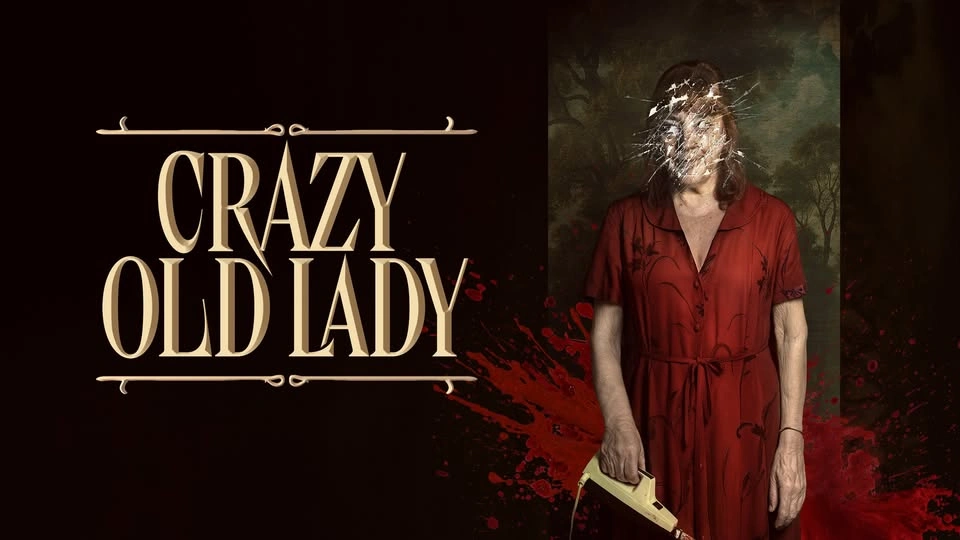

Crazy Old Lady begins with the kind of request that sounds harmless until cinema gets involved. Laura, delayed on the road with her daughter during a heavy storm, grows alarmed by erratic phone calls from her elderly mother Alicia. Unable to reach Alicia’s caregiver and worried about her mother’s state of mind, Laura asks her ex, Pedro, to stop by the old family mansion and check on her. Pedro expects discomfort, maybe a long night of awkward politeness. He gets chains, duct tape, and a front-row seat to Alicia’s collapsing sense of reality.
Writer-director Martín Mauregui builds the film as a compact Argentine horror thriller, using a stripped-down premise with nasty precision. An elderly woman lives alone in a decaying house. A man enters out of obligation. Her mind slips between present and past, and Pedro becomes César, a figure Alicia associates with abuse, control, and possibly buried crimes. From there, the movie becomes a strange cocktail of horror, sadistic black comedy, and psychological unease, carried by Carmen Maura’s sharp, slippery performance.
A Captivity Thriller with a Troubled Core
The story works as a chamber thriller, keeping Pedro physically restrained for much of the film while Alicia forces him into a history he does not understand. That structure gives Crazy Old Lady an efficient narrative engine. Pedro cannot leave. Alicia cannot be reasoned with in any stable way. Every attempt to explain the truth risks pushing her further into the version of reality she has already chosen.
The film’s most interesting idea is also its most uncomfortable one. Alicia’s dementia becomes both weapon and defense. Her confusion places Pedro in danger, yet it also shields her from ordinary moral judgment. The script keeps asking us to watch her as a victim, aggressor, unreliable witness, and performer of revenge. That ambiguity gives the film its sharpest edge.
César is the ghost haunting every scene, even before the film explains who he may have been. He might be a real abuser, a distorted memory, or a name attached to several kinds of pain. Alicia believes Pedro is César, which lets her act out years of rage on the wrong body. Mauregui hints at older political and personal violence, including disappearances and buried guilt, but those ideas remain half-lit. The film raises them, then retreats into genre mechanics.
That choice keeps the movie brisk, but it also limits its emotional reach. Alicia’s trauma has texture in Maura’s performance, while the writing treats it like a box of sharp objects to be opened whenever the tension needs a boost. The result is effective, queasy, and occasionally too glib for the material it handles.
Carmen Maura Holds the Knife and the Movie
Carmen Maura gives Crazy Old Lady its pulse. Alicia could have become a broad horror figure, the elderly monster in the mansion with a weapon in hand and a stare aimed at the cheap seats. Maura avoids that trap through tonal control. She can look frail, almost heartbreakingly lost, then pivot into cruelty with a tiny adjustment of her eyes or voice. Her Alicia is playful, wounded, nasty, and frighteningly amused by her own power.

The performance matters because the film gives Alicia several modes at once. She is a woman slipping away from herself, a survivor of something ugly, and someone who seems to enjoy punishing Pedro once she has him trapped. Maura finds the bitter humor in that contradiction without softening the threat. She makes Alicia funny in the way a loaded trap is funny: you laugh, then remember someone is about to lose a finger.
Daniel Hendler has the less flamboyant role, but his work is essential. Pedro spends much of the movie tied down, panicked, and forced to improvise against a captor whose logic keeps resetting. His attempts to reason with Alicia create a nervous comic rhythm, especially when he tries to play along with her version of events. Pedro is not always a brilliant survivor. At times, his choices inspire the silent audience response of, “Really? That’s your plan?” Still, his fear feels immediate, and his desperation gives the film its human pressure.
The humor is grim and often well-timed. Alicia’s sadistic games, the electric carving knife with a cord that refuses to cooperate, and the near-rescue moments where help misses the obvious all give the film a cruel comic snap. The comedy never makes the violence harmless. It makes it stranger. Sensitive viewers should also know that a disturbing dog death arrives early, setting the film’s merciless mood before Pedro is even properly trapped.
A Tight Room with Uneasy Echoes
Mauregui directs with a clear sense of limitation. Most of Crazy Old Lady unfolds inside Alicia’s old mansion, especially the living room where Pedro is held. Rather than fight the confined setup, the film leans into it. The rain outside, dim lighting, cluttered corners, and partly emptied rooms turn the house into a physical extension of Alicia’s mind. It feels decayed, theatrical, and full of objects that might become weapons at any moment.

The pacing is brisk, which helps. The film does not waste much time on subplots, and its focus keeps returning to two questions: what will Alicia do next, and can Pedro find any opening before she does it? That simplicity gives the movie momentum. It also exposes the thinness of the premise. Since Pedro is physically restricted for so long, the action has to come from verbal games, sudden cruelty, and unlucky interruptions. Some scenes land with real force. Others circle the same idea with new props.
As horror, the film is less interested in elaborate torture mechanics than in domination, humiliation, and the terror of being trapped inside someone else’s broken memory. The gruesome moments are sharp enough, including bodily harm and a scene of sexual humiliation, but the movie’s real discomfort comes from watching illness and trauma feed the thriller machinery.
Crazy Old Lady is polished, tense, and nasty in a controlled way. It has the shape of a lean captivity thriller and the soul of a black comedy that keeps laughing at the wrong time. Maura gives it danger, wit, and bruised humanity. The film around her is skilled enough to hold the room, though its treatment of dementia and trauma may unsettle viewers for reasons beyond the scares it intends.
Crazy Old Lady is a Spanish-language psychological horror thriller written and directed by Martín Mauregui. The film follows Pedro, who is asked by his ex-girlfriend Laura to check on her elderly mother Alicia during a stormy night. What begins as a simple favor turns into a nightmare after Alicia mistakes him for a man from her past and refuses to let him leave. The film premiered at Fantastic Fest on September 21, 2025, opened in Spain on October 10, 2025, and was released for U.S. streaming on February 27, 2026. It is available to watch with a subscription on AMC+ and can also be rented or purchased through Prime Video.
Where to Watch Crazy Old Lady (2025) Online










Full Credits
- Title: Crazy Old Lady
- Distributor: Shudder, RLJE Films, DeAPlaneta
- Release date: September 21, 2025, Fantastic Fest; October 10, 2025, Spain; February 27, 2026, United States streaming release
- Running time: 94 minutes
- Director: Martín Mauregui
- Writers: Martín Mauregui
- Producers and Executive Producers: J. A. Bayona, Belén Atienza, Gabriela Carcova Krichmar, Ramón Campos, Víctor Fandiño, Ron Halpern, Valentine Torre, Nicolás Pérez Veiga, Alfredo Pérez Veiga, Carolina Agunin, Anna Marsh
- Cast: Carmen Maura, Daniel Hendler, Agustina Liendo, Emma Cetrángolo, Camila Peralta, Ezequiel Díaz, Ana Belati, Mercedes Menzidabal, Olivia Nuss, Tamara Rocca, Valentina Bordeau, Johanna Chiefo
- Director of Photography: Julián Apezteguía
- Editors: Andrés Pepe Estrada, Guillermo de la Cal
- Composer: Pedro Osuna
The Review
Crazy Old Lady
Crazy Old Lady is a tight, nasty chamber thriller powered by Carmen Maura’s wickedly precise performance. Its confined setup, cruel humor, and storm-soaked atmosphere create steady tension, though its use of dementia and trauma can feel blunt. The film works best as a macabre captivity story, less so as a deeper study of buried pain.
PROS
- Carmen Maura’s magnetic lead performance
- Strong confined-house atmosphere
- Sharp black comedy
- Brisk pacing
- Effective suspense built from a simple setup
CONS
- Dementia angle may feel exploitative
- Thin premise stretches at times
- Some trauma themes feel underdeveloped
- Pedro can be frustratingly passive
- Early dog death may upset viewers







