










God of Frogs is the sort of low-budget horror film that announces its personality before the first act has even settled. A Canadian anthology built around a mythic frog-like creature that resurfaces every 25 years, it throws creature-feature pulp, folk horror, body horror, slasher chaos, and corporate sci-fi into the same bog and lets them fight for air.
The film moves from 1969 to 1994, then to 2019 and 2044, with each chapter tied to the same monstrous figure, the same swampy territory, and a human lineage marked by hunger, fear, and inheritance. It is strange, bloody, sexually charged, and proudly absurd in stretches. That willingness to look ridiculous gives it some charm. Horror has always made room for rubber-suited nightmares, and this one arrives with enough slime, muscle, and menace to earn a place in that tradition.
Its strongest qualities are visual and tactile. The creature design has real presence, the practical effects give the film a handmade personality, and the psychedelic lighting often does more with little than bigger productions manage with plenty. The film’s weakness lies in its structure. The anthology format gives God of Frogs scope, but it also creates uneven pacing and leaves some of its best ideas hungry for richer development.
Four Eras, One Ancient Appetite
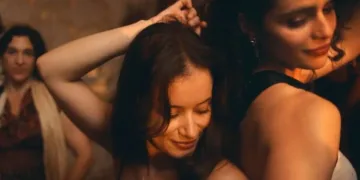
The 1969 segment gives God of Frogs its most potent myth-building. Set around a riverside cult, it follows Lilith as she becomes an unwilling vessel for the creature worshipped by those around her. This opening has the film’s most disturbing atmosphere, using ritual, pregnancy horror, and cult devotion to set up the Frog God as something ancient, predatory, and already woven into human belief. The movie wisely avoids turning its monster into a biology lesson. What matters is what it demands and how willingly people make offerings to it.
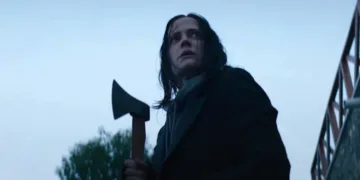
The 1994 section shifts the film into slasher territory, with Eve tied to the creature’s legacy and drawn back toward the woods as part of a film crew investigating frogs. There is an amusing arrogance to these characters, who treat danger as material to capture on camera.
That idea feels very 1990s in the best way, with shades of self-aware horror and found-footage curiosity. The section works because it understands that documentation can become a trap. A camera does not make the monster safer. It only records the mistake.
The 2019 chapter turns toward political and media satire, using corruption, public image, and disaster as its playground. Then the 2044 segment pushes into corporate horror, where the bog and its creature become resources to extract, package, and exploit. That progression gives the movie a strong cultural pulse. Across time, belief becomes science, science becomes business, and business becomes another ritual with cleaner branding.
The repeated 25-year cycle gives the film a clear spine, yet it can also make the structure feel predictable. Too many chapters begin with people entering the creature’s territory, ignoring warning signs, and discovering that the swamp has its own rules. The ambition is easy to appreciate, but some segments feel rushed. A film this fascinated by legacy could have spent longer with the people forced to carry it.
A Monster Made of Slime, Flesh, and Nerve
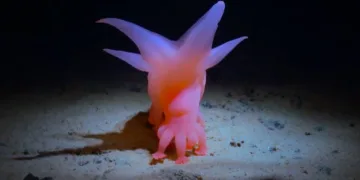
The Frog God is easily the film’s best asset. The creature has the right kind of ugly beauty, a practical, human-sized monster with a slimy physicality and a blunt sense of threat. It looks like something that could hurt you, which matters. Too much modern creature horror sands down its monsters through digital polish. Here, the suit, texture, and physical performance give the beast weight.

The early body horror leaves the strongest mark. Lilith’s pregnancy and birth imagery brings the film into genuinely nasty territory, where horror comes from flesh under pressure, ritualized violation, and the terror of the body becoming someone else’s property.
The creature’s sexuality is presented with a discomforting directness, which gives the 1969 material a raw folk-horror charge. It is not elegant, but elegance would feel wrong here. The film works best when it feels damp, physical, and a little embarrassing to look at.
The changing visual texture across the four eras is one of the film’s smarter formal touches. The opening has a rougher, older-film quality, while later chapters move closer to cleaner digital imagery. That shift helps each era feel distinct, and it mirrors the movie’s move from ritual secrecy to public spectacle and corporate control. The lighting often goes full psychedelic, bathing the supernatural moments in intense color. I have a soft spot for horror that treats colored light like a musical instrument, and God of Frogs plays loudly.
The gore has a pleasing indie messiness, with enough blood and bodily ruin to satisfy creature-feature fans. Some digital effects and action beats show the budget, but the handmade monster work keeps the film from feeling anonymous. Its craft has fingerprints all over it.
Wild Swings, Uneven Screams
The performances match the movie’s heightened register. Ali Chappell gives Lilith a tragic charge in the opening, grounding the most grotesque material in fear and surrender. Ilana Haley’s Eve becomes the strongest emotional anchor in the 1994 section, especially because her pull toward the swamp feels personal before it becomes horrific. Kate Vernon’s later version of Eve gives the larger timeline a needed human thread, helping the film feel less like four disconnected incidents.

James Gilbert brings a slick, predatory menace to the guru figure, which pairs neatly with the creature itself. The later ensemble, including Corteon Moore, Alexander Eling, Erika Prevost, and Sabryn Rock, brings energy and urgency, though some of their material moves too quickly for deeper emotional investment. The cast often plays big, and that choice fits a film where a man-sized frog deity lurks in the reeds. Subtlety would drown in this swamp.
Tone is the film’s trickiest balancing act. God of Frogs begins with eerie cult horror, shifts into goofy slasher momentum, then turns toward satire and future-set sci-fi. Those changes keep the movie lively, but they also weaken its emotional focus. The 2044 section is the least satisfying stretch, partly because the shouting and rushed conflict drain tension instead of raising it.
Still, there is value in watching an indie horror film chase a wild idea with this much conviction. God of Frogs is messy, uneven, and sometimes silly, but it has a memorable monster, nasty practical effects, and a visual identity that sticks. Fans of cryptid horror, creature features, and strange low-budget genre cinema will find plenty to enjoy in its swampy madness.
God of Frogs is a 2026 Canadian horror anthology film about an ancient frog-like creature that returns every 25 years, tying its hunger to the same human family across several eras. The film was released digitally on March 2, 2026, and runs 101 minutes. It is available to rent or buy through platforms such as Prime Video, Apple TV, Fandango at Home, and Plex, depending on region and availability.
Where to Watch God of Frogs (2026) Online





Full Credits
- Title: God of Frogs
- Distributor: HighballTV, Miracle Media
- Release date: March 2, 2026
- Rating: 18+
- Running time: 1 hour 41 minutes
- Director: Adrian Bobb, Ali Chappell, Richard Lee, Natalie Metcalfe
- Writers: Adrian Bobb, Matthew Campagna, Ali Chappell, Max Francis, Foad H.P., Ilana Haley
- Producers and Executive Producers: Matthew Campagna, Johnathan Sharp
- Cast: Kate Vernon, Lynne Griffin, Rodrigo Fernandez-Stoll, Corteon Moore, Erika Prevost, Alexander Eling, Sean Sullivan, James Gilbert, Ali Chappell, Izzy Shiffman, Christian Lloyd, Sabryn Rock, Fanar Zak, Juan Chioran
- Director of Photography: Caitlin Bevington, Gaelen Cook, Jared Marino
The Review
God of Frogs
God of Frogs is a messy, imaginative indie horror film with a memorable creature, nasty practical effects, and a wild four-era structure. Its anthology format gives it scope, though some chapters feel rushed and thinly developed. Still, the film has enough slime, gore, strange humor, and swampy mythology to satisfy fans of oddball creature features.
PROS
- Strong practical creature design
- Vivid body horror and gore
- Bold four-era structure
- Psychedelic lighting gives the film personality
- Fun pick for cryptid horror fans
CONS
- Uneven pacing across segments
- Later chapters feel rushed
- Some characters need deeper development
- 2044 section weakens the tension
- Tone can become too chaotic