

























![Kingdom Hearts Collection [I-III] Review](https://gazettely.com/wp-content/uploads/2026/10/Kingdom-Hearts-Collection-I-III-1-360x180.webp "Kingdom Hearts Collection [I-III] Review: KHII Holds Steady as Newer Entries Fluctuate 37")



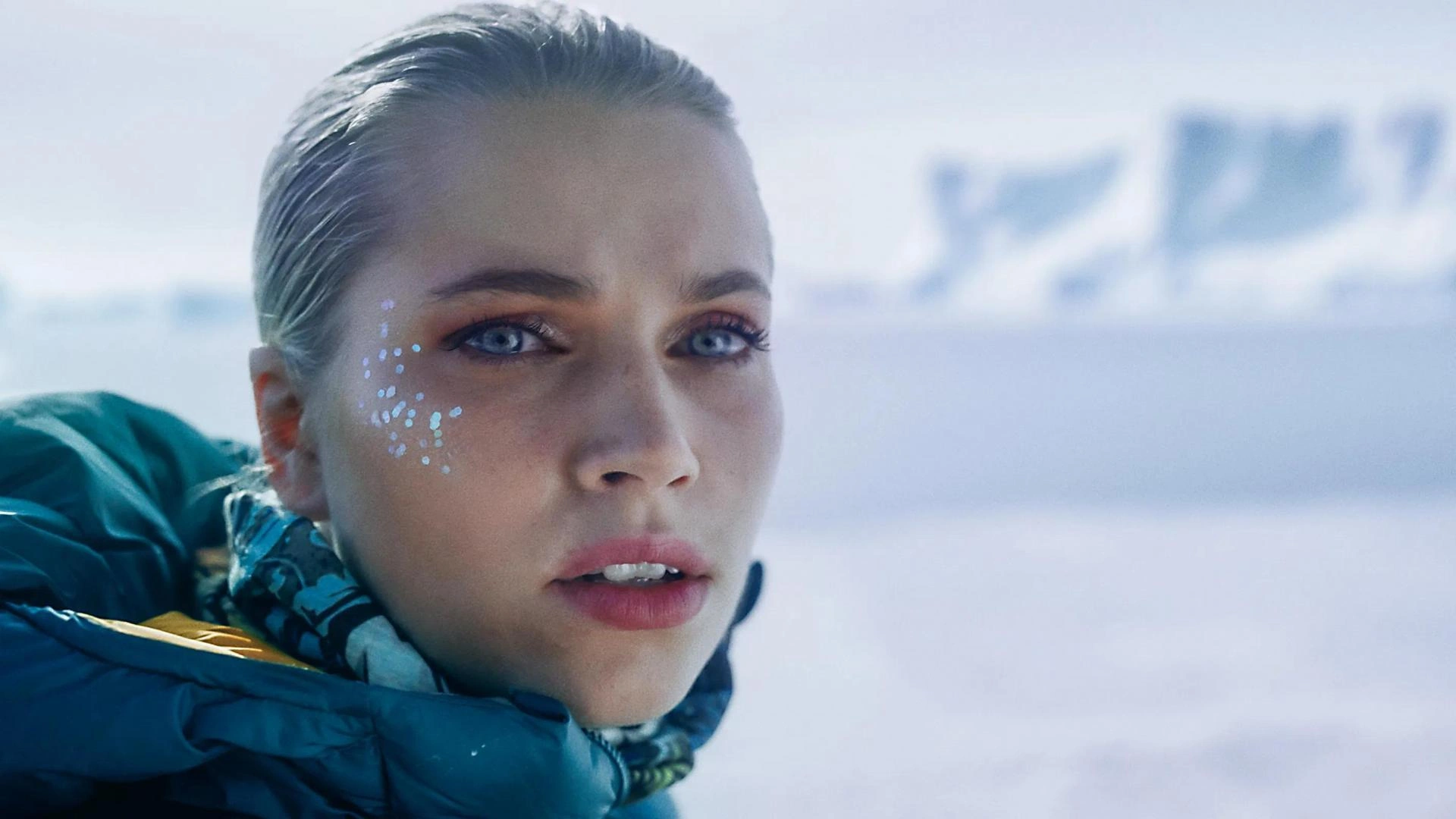

The Drift begins with a premise so clean that it almost feels carved from myth. Emily, a celebrated figure skater played by Thea Sofie Loch Næss, travels to the Arctic with her team for a promotional photoshoot and survival excursion. After stepping away to scatter the ashes of her late sister, she becomes separated from land and wakes on an ice floe drifting into open water.
From there, the film strips survival cinema down to its most basic elements: cold, hunger, silence, fear, and the slow decay of hope. One woman, one unstable sheet of ice, one brutal question: how long can a body and mind endure?
That simplicity gives The Drift its strongest pull. There is a primal force in watching Emily face a landscape that appears serene from a distance and merciless up close. The Arctic setting, with its white expanses and deep blue water, carries a strange cultural weight too. It recalls Nordic traditions of endurance, isolation, and respect for nature, while speaking in the global language of survival cinema.
Survival Without Momentum
The opening stretch works because Emily’s danger is immediate and practical. The ice beneath her is melting and shifting. Her supplies are limited. The cold is constant. She has to think before she panics, and those early survival actions give the film a welcome tactile quality. She starts a fire, melts snow for water, repairs damaged gear, tends to wounds, and turns the contents of her backpack into tools for staying alive.
These details suggest a stronger film hiding inside The Drift. Survival thrillers often resemble games in their purest form: limited resources, hostile terrain, shrinking safe zones, and a protagonist forced to make choices under pressure. The best entries in this mode, from Arctic to Fall, create tension through escalation. Each obstacle changes the rules. Each mistake narrows the path forward.
Here, the structure grows repetitive. Emily freezes, screams for help, sees a possible rescue, loses it, waits, then faces another wave of cold or bad weather. The ice floe should function like a ticking clock, since her refuge is slowly vanishing under her feet. The film rarely uses that idea with enough precision. The threat is visible, yet the pacing often treats it as background texture.
Believability becomes a serious problem as the story continues. Some details make enough sense, such as Emily having survival gear because of the planned overnight trip. Later turns are much harder to accept. The damaged phone, the strange lack of useful rescue contact, and the repeated missed chances push the film toward contrivance. At only around 80 minutes, it still feels stretched because its central situation stops developing.
A Performer Stranded With the Script
Thea Sofie Loch Næss gives The Drift its human anchor. With little dialogue and almost no one else sharing the frame, she has to build Emily through breath, posture, trembling hands, and flashes of panic. Her performance is physical in a way that suits the material. She looks alert, scared, stubborn, and at times quietly furious at the absurd cruelty of her situation.
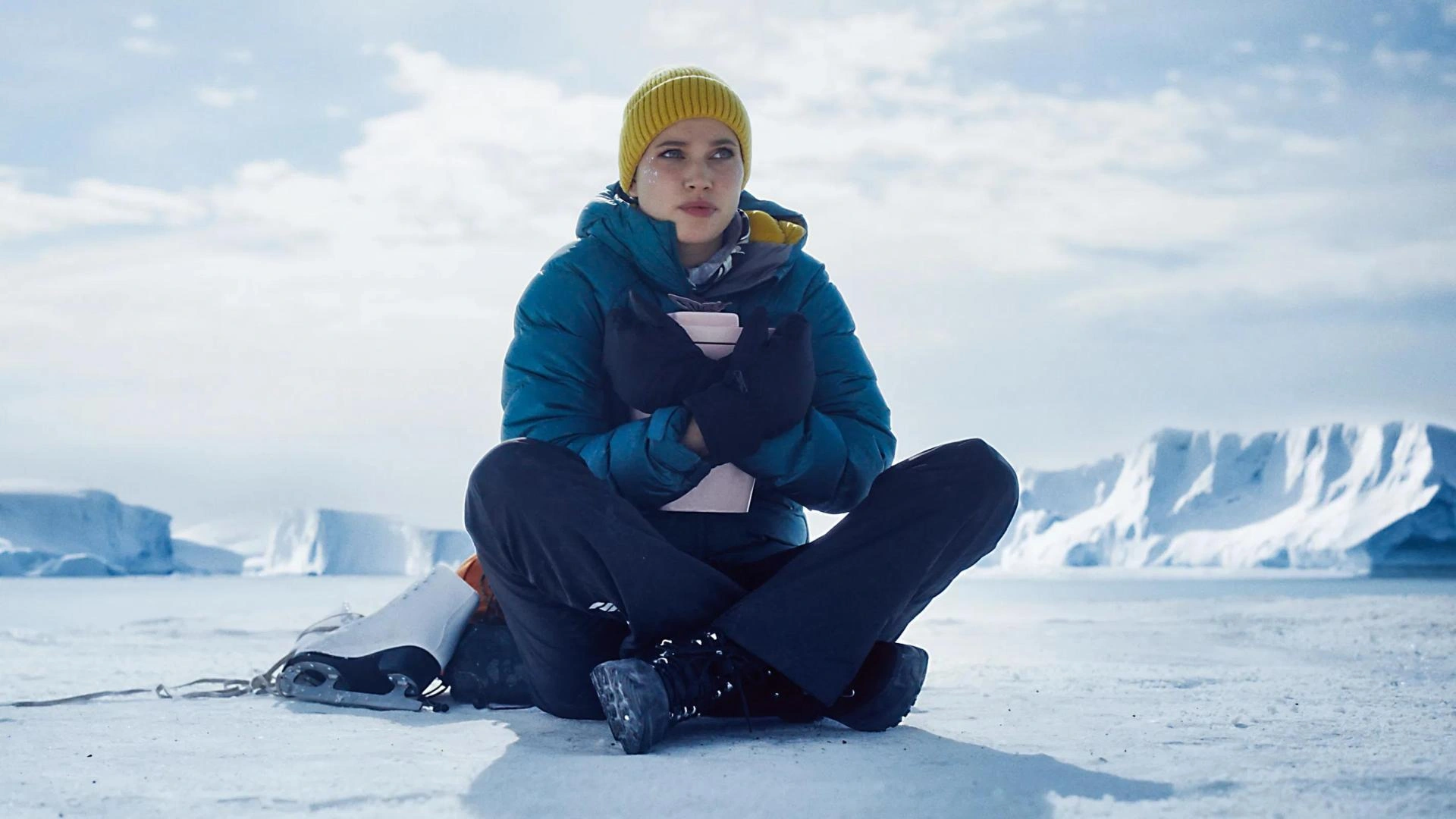
The figure skating background adds an interesting contrast. Emily comes from a world of controlled movement, polished surfaces, and public performance. On the ice floe, those same elements turn against her. Ice no longer supports grace. It becomes unstable ground, a trap, a vanishing stage. That reversal gives the film a richer cultural and symbolic texture than the script fully explores.
Emily’s grief over her sister provides the emotional motive for her isolation near the glacier’s edge. It gives her survival battle a personal wound beneath the physical one. Yet the sister material can feel overworked, especially when the film leans into sentimental imagery or heavy lines. The stronger choice would have been restraint, letting the Arctic silence carry the grief.
The phone conversations with Harry, an air-conditioning salesman, create the film’s strangest tonal rupture. The device gives Emily someone to speak to, which makes sense in a one-person survival film. The execution drains urgency from the story. A random telemarketer becoming her only thread to the world feels awkward, and the long exchanges pull the film away from the raw immediacy that suits it best.
The Arctic Looks Alive, The Drama Does Not
The strongest craft element in The Drift is its use of landscape. The Arctic imagery gives the film scale, especially in the early passages. Wide shots of ice, ocean, snow, and pale sky create a place that feels beautiful because it is indifferent. The environment has no villainous intent. It simply exists, and that indifference is more frightening than malice.
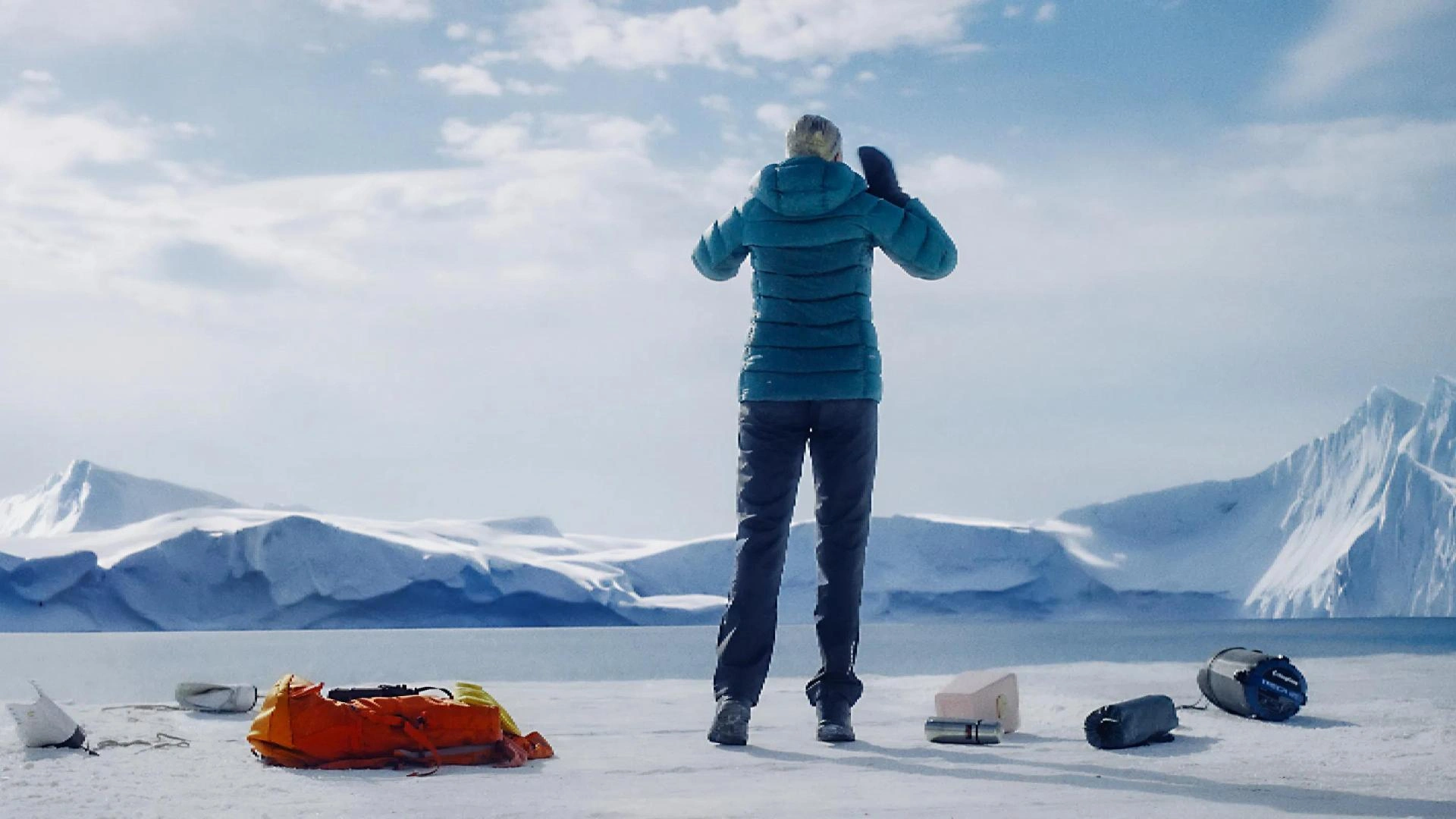
This is where the film’s Finnish and Greek production background becomes interesting. It takes a Nordic survival setting, with its harsh relationship between human fragility and natural force, and frames it through a broader international genre grammar. The result can be visually striking, especially when Emily is reduced to a small figure against an immense field of white and blue.
The presentation weakens whenever the film relies too heavily on artificial-looking effects or staged animal moments. A polar bear, distant rescue possibilities, and some environmental shots do not always blend smoothly with the otherwise clean location work. The confined setting also becomes visually repetitive because the direction struggles to show Emily’s changing condition in fresh ways.
The sound design fares better. Wind, waves, cracking ice, snow, and silence create physical discomfort. These natural sounds communicate danger more effectively than much of the dialogue. The score is less successful. It often presses too hard, adding sentimental or inspirational tones to scenes that need a colder, sharper approach.
The Drift has a sharp survival concept, a committed lead, and moments of real visual beauty. What it lacks is sustained pressure. Its ice keeps moving, yet the drama too often stands still.
The Drift is a 2026 survival thriller directed and written by Taavi Vartia. The film follows ice skater Emily, played by Thea Sofie Loch Næss, after she becomes stranded on an Arctic ice floe that begins drifting south and melting. The movie was released on VOD and digital platforms on February 24, 2026, with Prime Video listing it with a 1 hour 23 minute runtime and a G rating. As of May 31, 2026, it is listed on Prime Video in supported regions, with VOD / digital availability also noted by Movie Insider.
Full Credits
- Title: The Drift
- Distributor: Capelight Pictures International, MPI Media Group / Capelight Pictures
- Release date: February 24, 2026, VOD / Digital
- Rating: G
- Running time: 1 hour 23 minutes
- Director: Taavi Vartia
- Writers: Taavi Vartia
- Producers and Executive Producers: Aleksi Puranen, Lilette Botassi, Joonas Vartia, Dimitris Hatzivogiatzis, Antti Kaarlela, Matti Holmborg
- Cast: Thea Sofie Loch Næss, Nikos Koukas, Mimi Roivainen, Jasmin Simonen
- Director of Photography: Nikos Karanikolas
- Editors: Benjamin Mercer
The Review
The Drift
The Drift has a strong survival hook, striking Arctic imagery, and a committed lead performance from Thea Sofie Loch Næss, but it struggles to build real suspense from its premise. The film works best in quiet, physical moments where Emily battles cold, hunger, and isolation. It weakens whenever the script leans on awkward phone conversations, repetitive threats, and shaky logic. A sharper version could have been tense and haunting. This one drifts too often.
PROS
- Strong lead performance
- Beautiful Arctic imagery
- Effective natural sound design
- Simple, gripping premise
- Some tense survival details
CONS
- Repetitive pacing
- Weak story logic
- Overbearing score
- Overbearing score
- Awkward phone subplot







