

























The Remake of the End of the Greatest RPG Of All Time begins with a joke every RPG player understands. You load a save file sitting at 99.54 percent completion, most achievements already unlocked, and the game throws you straight into the final stretch of a fantasy epic you have never played. It is a perfect little panic attack in menu form.
The setup recalls that strange moment of returning to an old save after months away, staring at names, skills, items, and quest markers like someone else left them there as a prank. Rose, Robert the Robot, Captain No-Beard, and Darkhart are already important before you know why. The world expects familiarity. You have none.
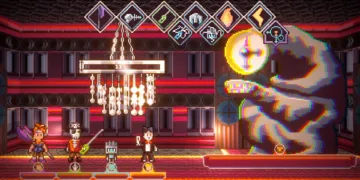
At a glance, this looks like a loving riff on 16-bit RPGs, full of pixel-art dungeons, turn-based battles, boss drama, and party banter. That disguise lasts just long enough to become funny. The game’s real form is a deduction puzzle built from manual pages, hidden rooms, codes, developer footage, and the unsettling feeling that this fake classic has a life outside your screen.
The RPG Mask Hides an Escape Room
The cleverest trick in The Remake of the End of the Greatest RPG Of All Time is how confidently it speaks the language of RPGs while quietly refusing to behave like one. You explore a 2.5D world, collect items, reunite party members, inspect menus, and prepare for battles. Your instincts tell you to think about stats, damage, equipment, and party roles. The game wants you thinking about evidence.
Combat makes that shift clear. Battles resemble turn-based encounters, but they function like locked boxes. Enemies shrug off attacks that do not match their exact weakness, so victory depends on reading the rules scattered around the world. One clue might tell you a creature fears fire. Another fragment of an old manual might reveal that a precise sequence of attacks triggers an electric combo. The fight is solved before the winning blow lands.
That design can be deeply satisfying. This is a game that makes a notebook feel like a controller. You write down strange phrases, enemy details, symbols, diagrams, and half-understood hints. Then, after minutes of confusion, three scraps of information connect in your head and the path opens. It captures the same tactile pleasure that made Tunic’s manual puzzles so memorable, with a stronger fixation on final-save disorientation and fake RPG history.
The friction comes from the same source. Combat sometimes feels too rigid, since there is often a correct answer and a pile of useless choices around it. Players expecting flexible strategy may find these fights restrictive. The final stretch can feel closer to an open-note exam than a dramatic boss run, especially when the missing answer is tucked behind a clue you did not know you needed.
Manual Pages, Dev Rooms, and a Game That Watches Back
The game grows stranger once you step outside the RPG. At any point, you can leave the pixel-art adventure and enter a first-person 3D space with the texture of a forgotten dev room, a liminal hallway, and a software error that learned how to breathe. This second layer reframes everything. A manual page found in the RPG might explain a puzzle in the 3D space. A developer video might reveal that a broken collision wall inside the fantasy world leads somewhere you were never meant to reach.

The instruction manual is the game’s finest object. Its torn pages work as tutorial, artifact, lore source, and puzzle key. Handwritten notes make it feel handled, studied, and argued over. Since the “original” RPG never existed, the manual creates a fake memory of it. You start learning a lost game backward, reconstructing its rules from an ending that already assumes you cried, grinded, and bonded with these characters dozens of hours ago.
That emotional trick is sharper than it first appears. The Remake is funny about nostalgia, but it is also aware of how memory edits things. The two developers, Jacob and Lucas, treat their childhood favorite with reverence, insecurity, and disagreement.
Their live-action clips and audio logs show two friends trying to remake something that may exist more clearly in feeling than in fact. Should a remake fix flaws? Preserve them? Add material from an old manual full of childhood scribbles? Darkhart’s presence, awkward and oddly central, becomes part of that creative anxiety.
The outside interference gives the story a darker pulse. Someone appears to be tampering with the project, leaking or reshaping it, turning fan attachment into sabotage. The game toys with the ugly comedy of internet discourse, especially the kind that treats fictional ownership as sacred law. It also lets unease creep in slowly. What begins as a clever meta-puzzle gains the mood of a haunted cartridge, closer to Inscryption in spirit, with the screen acting less like a window and closer to a witness.
The writing can stumble when it tries to state its ideas too plainly. Its sincerity is part of the charm, yet some late moments feel heavy-handed. Still, the bond between mechanics and narrative gives the game its pull. You are not learning lore between puzzles. You learn the story by behaving like someone desperate to understand a game that has already ended.
Brilliant Clues, Rough Edges, and the Right Audience
The strongest parts of The Remake of the End of the Greatest RPG Of All Time come from its layered puzzle logic. A clue in one space unlocks a thought in another. A scribble on a manual page changes the way you read an enemy, a room, or a developer comment. The best moments have that rare puzzle-game spark where the solution feels impossible until it feels obvious.

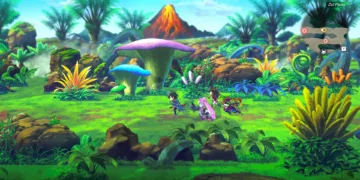
Its presentation supports that feeling well. The pixel-art RPG world captures the comfort of late-era 16-bit adventure, with enough polish to sell the fantasy and enough oddness to keep it unstable. The 3D spaces add a colder texture, full of glitches, strange rooms, and little violations of expected rules. The live-action material has a handmade quality that fits the premise, even when the acting turns broad. This is an indie game where roughness often works in its favor, like a scuff mark on a cursed rental cartridge.
There are real patience tests. Backtracking can drag, especially when the next clue could sit in either reality. Some puzzles lean into obscurity, asking the player to test items, revisit old spaces, or stare at information until meaning shakes loose. The open structure can also create awkward sequence breaks, leaving players in areas before they understand what tools they need.
That makes the game easy to admire and slightly harder to recommend without a warning label. It is ideal for players who love escape rooms, fake documents, meta-fiction, old RPG aesthetics, and games that reward a pen beside the keyboard.
Anyone looking for a traditional JRPG, flexible combat, or clean guidance may bounce off its sharper edges. For the right player, though, this is the kind of odd indie artifact that lingers, partly because it convinces you there was once a greatest RPG of all time, and you somehow missed everything except its ending.
The Review
The Remake of the End of the Greatest RPG Of All Time
The Remake of the End of the Greatest RPG Of All Time is a smart, strange, and memorable indie puzzle game that turns RPG nostalgia into a dense act of deduction. Its combat can feel rigid, and its backtracking sometimes slows the mystery, but the best moments are wonderfully satisfying. For players who enjoy manuals, clues, meta storytelling, and games that trust them to think, this is a rewarding oddity.
PROS
- Clever meta-puzzle structure
- Strong retro RPG atmosphere
- Satisfying clue discovery
- Memorable manual-based puzzles
- Funny, eerie developer mystery
CONS
- Backtracking can drag
- Some puzzles feel obscure
- Combat allows little flexibility
- Open structure may cause confusion