





























Can the voice learned in childhood fall away, the idiom that shapes a self? Zhang Lu’s Mothertongue begins with that tremor. Language loss arrives as identity loss. We meet Fang Chunshu, played with quiet intensity by Bai Baihe, a Beijing-trained actress abruptly let go from a film. The reason is simple: she cannot perform the Chengdu dialect of her birthplace.
The dismissal sends her back to Sichuan, a return staged as estrangement. Zhang favors a low-key, unhurried method that trusts the image. Scenes collect like field notes on alienation. The film shapes a steady search, where atmosphere and the evolving geometry of the city carry equal weight to the line of events. The drama sits between knowing and speaking, between belonging and seeking.
Chengdu as Cipher: The Architecture of Alienation
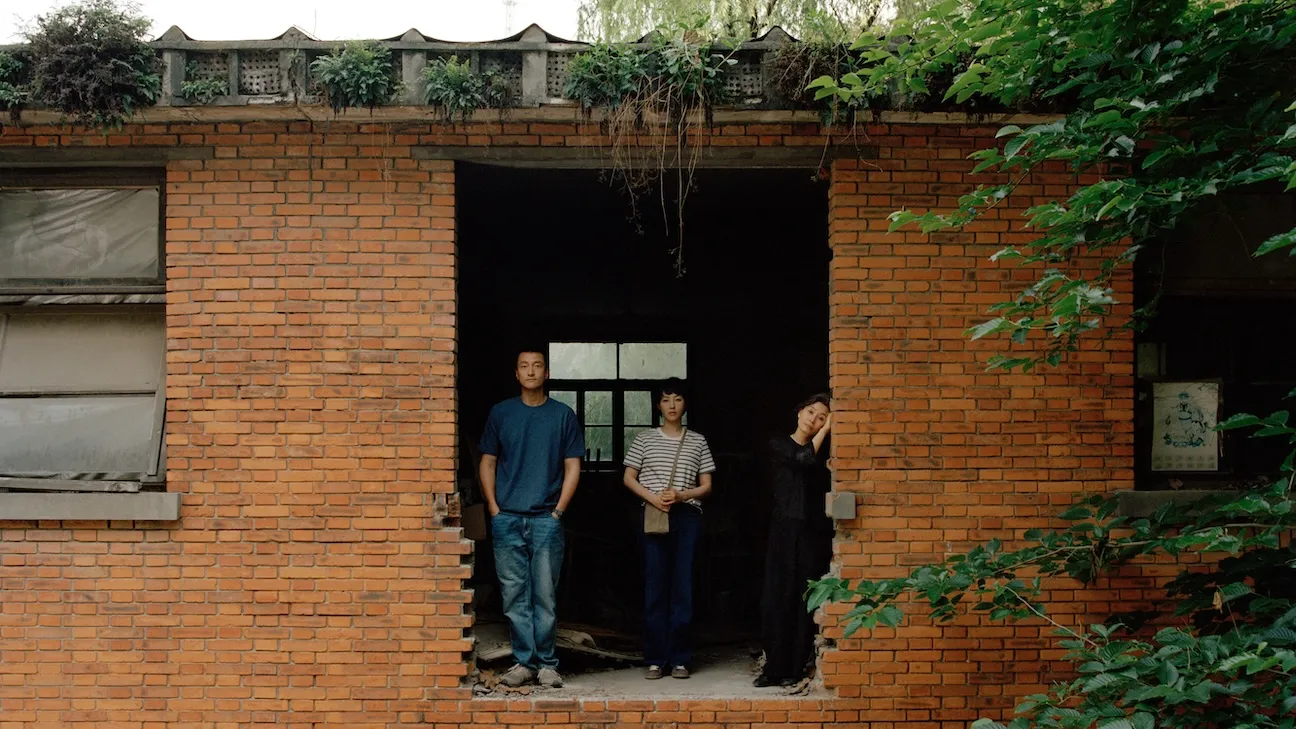
Chunshu’s linguistic break mirrors the civic split of her hometown. Back in Chengdu, she looks at the familiar with the gaze of a visitor. The city keeps remaking itself, and the transformation sharpens her distance. Zhang sets her inner confusion onto streets and structures.
Layered commercial complexes rise beside pockets of decay. A sign reading “Palme d’Or Estate” signals ambition with a wink, while the ruined sound stages of the Emei Film Studio sit in silence. The studio becomes a sign, a husk of an earlier dream and a figure for Chunshu’s derailed career, an echo of local storytelling left behind.
Her turn toward Putonghua came from coaching aimed at broad appeal. The standard tongue gave her opportunity, then sealed her apart. A meeting with the retired filmmaker Du draws that bargain into focus. The city answers like a palimpsest. New glass. Old brick. A map of a fractured self.
Performance and Proximity: The Human Cartography
Mothertongue houses its heat under the surface. Strained pauses and cautious distances carry the scenes. Chunshu works to rebuild by learning a new map of people and places. Her reunion with her mother, Lijuan, moves through a dialect barrier and through a separate, busy romantic life. The bond remains, yet time and language thin the thread.
Another strand sits with her former acting coach, Zhang Mei. Memory loss arrives as a second severing, a profound cut that language cannot repair. With Dongdong, Zhang Mei’s son, the film draws a countercurrent. Two solitary fortysomethings wander Chengdu and learn how to stand near each other. Push. Pull. It feels unsentimental and true.
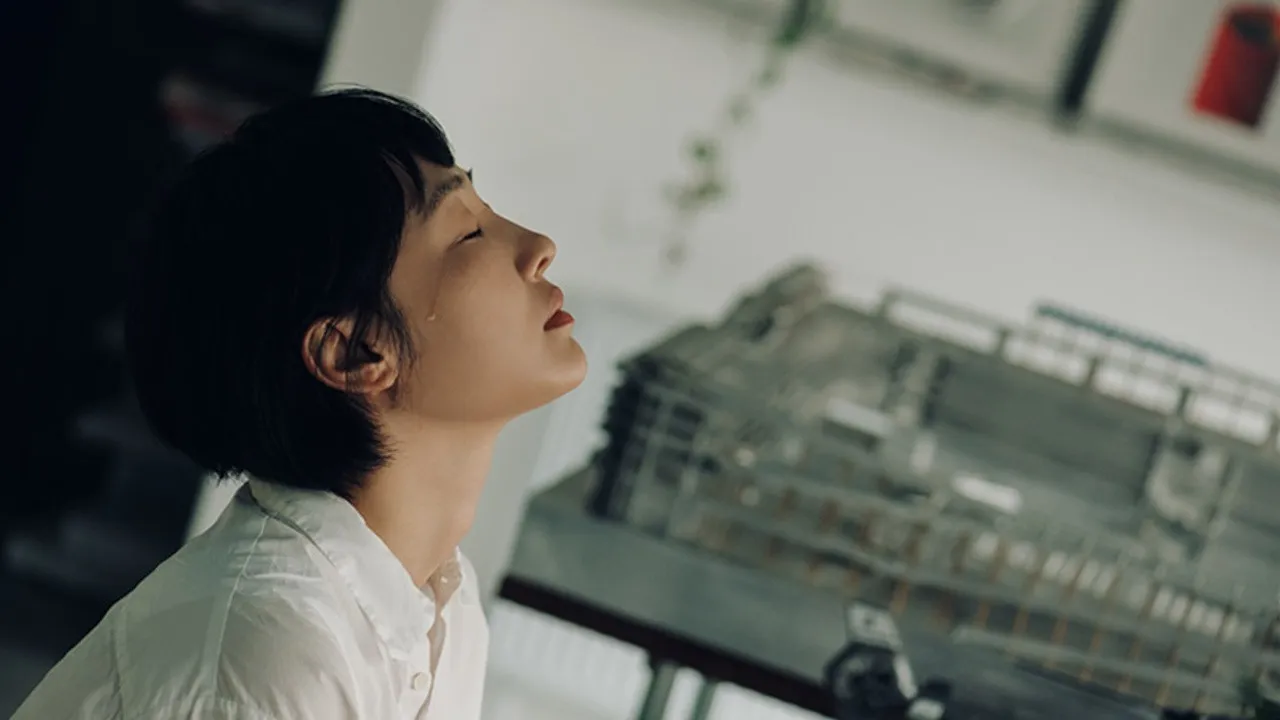
Bai Baihe carries this with minimal gesture. A look across a cafe table, a long walk, a pause that extends. The restraint removes spectacle and leaves weight. Ordinary encounters acquire pressure. Daily life turns into drama one breath at a time. Dry aside: few films make waiting for a bus feel like a moral choice.
The Expressionism of Pacing: Style and Substance
Zhang Lu holds to an observational mode that defines the film. The pacing turns deliberate, even shambling. Viewers used to brisk momentum may read drift. The directorial stance converts that drift into argument, a meditation stretched across scenes. The runtime exceeds two hours and sets the commitment in plain view. Dialogue thins to essentials.
Silence opens space between people and outlines barriers that words fail to cross. The track of sound quiets to serve those gaps. Cinematographer Piao Songri composes frames that place Chunshu small against complex urban planes. Expressionistic framing turns mise-en-scène into psychology. Towers and canals press against a solitary figure.
The camera moves with restraint. Motion feels purposeful, a guide for attention rather than a chase after plot. Lighting works in a noir register. Pockets of darkness hold doubts. Strips of neon and window glow sketch edges of choice. Chiaroscuro carves faces and corridors, and the image carries the argument about identity.
The genre lineage is clear: noir suspicion, thriller vigilance, a city that performs as accomplice. The modern deviation rests in the patience of the look. No rush to reveal, only the pressure of time. The direction treats pace as design, a precise choice that sets the film’s form and its thought.
Mothertongue is a Chinese drama film written and directed by the Korean-Chinese filmmaker Zhang Lu. The movie tells the story of an actress named Chunshu (played by Bai Baihe) who is forced to return to her hometown of Chengdu, Sichuan, after a career setback due to her inability to speak the local dialect. Confused and feeling disconnected from her mother and the rapidly changing city, she begins a search for a new life, which includes a deepening relationship with a newcomer named Dongdong (Wang Chuanjun). The film premiered at the 38th Tokyo International Film Festival on October 29, 2025, where it competed for the Tokyo Grand Prix. Distribution outside of festivals is handled by Beijing Monar Films.
Credits
Title: Mothertongue (Original title: 春树)
Distributor: Beijing Monar Films (International Sales)
Release date: October 29, 2025 (World Premiere at the Tokyo International Film Festival)
Running time: 122 minutes
Director: Zhang Lu
Writers: Zhang Lu, Liu Shuyi
Producers and Executive Producers: Peng Jin, Jianxin Huang
Cast: Bai Baihe, Wang Chuanjun, Liu Dan, Peng Jin, Liu Shuyi, Wang Hongwei, Huang Jianxin
Director of Photography (Cinematographer): Piao Songri
Editors: Liu Xinzhu
The Review
Mothertongue
Mothertongue excels as an atmospheric study of identity fragmented by language and place. Zhang Lu masterfully employs composition and silence, transforming Chengdu into a map of the protagonist's internal exile. The film trades plot for atmosphere, rewarding patient viewers with a subtle yet potent portrait of cultural disquiet. It is a visually arresting, if deliberately protracted, examination of the cost of assimilation.
PROS
- Striking compositions and expert cinematography.
- Rich exploration of language, cultural change, and identity.
- Bai Baihe conveys profound conflict through minimal action.
- Effective use of silence and space to build emotion.
CONS
- Deliberately slow, rambling nature may challenge some viewers.
- Lacks conventional narrative arcs or forward momentum.
- The two-hour runtime occasionally feels stretched.







