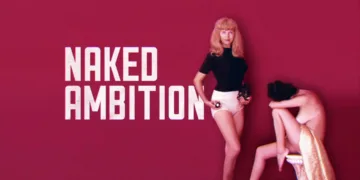























Naked Ambition, the documentary by Dennis Scholl and Kareem Tabsch, traces the unsettled life of Bunny Yeager at the fault line of mid-century American morality. Yeager began as a striking model and then claimed the camera, becoming a leading pin-up photographer of her era. Her rise unfolded in the conservative 1950s, a time when public desire from women met suspicion.
The film frames her career as a vital intervention and argues that her images reframed female sexuality. Her photographs show models with agency and playfulness. Many male contemporaries presented passive figures; Yeager’s pictures assert presence. She kept a suburban home, earned the household income, and stood as a study in contradiction. The portrait suggests a period’s quiet conflict between domestic duty and self-expression, the soul trying to breathe through the rules that name it.
A Commercial Eye, A Lyrical Archive
Her shift from model to photographer produced a shared vocabulary with her subjects. The pictures often reveal confident, active, joyful women and unsettle the notion of the pin-up as a still commodity. Her perspective nurtured intimacy. The rapport reads on the body line and the face that relaxes into mischief.
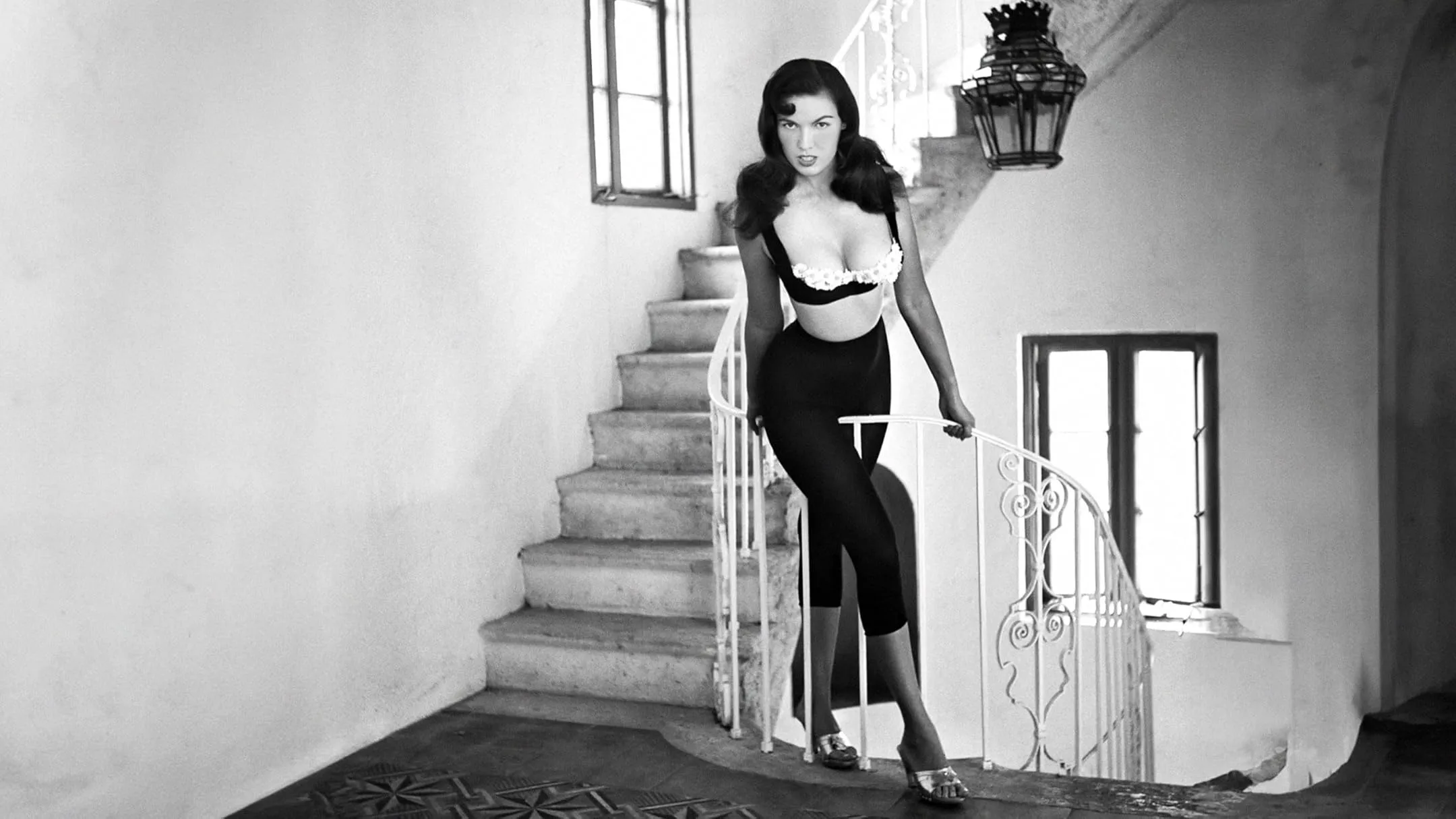
The film dwells on her collaboration with Bettie Page, a union that generated era-defining images, including the tropical safari park sessions and the 1954 Christmas shoot. Publication in Playboy’s early years amplified the work and gave both women lasting recognition. Yeager served as the magazine’s first female photographer, and her disciplined commercial eye helped shape its visual language.
A question remains. Artist or artisan of commerce. The tension gives the pictures a grain that will not smooth out. The archive she built favors women as subjects with intention, and art critics and historians now reexamine these photographs, lifting them from the quick category of “cheesecake” into a storehouse of cultural memory. The prints read like hymns to autonomy written in sunlight and shadow, yet the hymn keeps asking who leads the choir.
The Dullness of Devotion and the Inheritance of Guilt
Scholl and Tabsch take a gentle approach. The documentary relies on abundant archival reels, Yeager’s photographs, and a circle of admiring interviews that include Dita Von Teese and Larry King. The tone feels amiable and celebratory. The film runs a little over seventy minutes, and the sweep feels brief, as if deep currents pass under a thin crust of ice.

The strongest philosophical thread arrives in the treatment of her private life. Yeager managed a busy Miami suburban home as a mother of two while working in a controversial arena. The most affecting material comes from her daughters, Cherilu Duval and Lisa Irwin Packard, who speak in divergent keys. One reads the nudes as exploitation. The other finds empowerment and a legacy worth guarding.
The split inside the family suggests a mirror that reflects and divides at once. The subject of the camera becomes the instrument through which the children read their world, and the image leaves a ridge of meaning that never quite settles. The mention of her husband Bud’s tragic end adds a dark seam to the story and stains the bright surfaces of ambition with a shadow that lingers.
The Enduring Echo of Autonomy
Bunny Yeager’s significance rests on the capture of female beauty and sexuality on terms she set for herself, against strict social limits. She stood behind the camera and returned the gaze. Her career tracks the rise of cultural permissiveness, with strong presence in the 1950s and 1960s and a quieting during the 1970s as explicit material grew. She lived to see new generations rediscover and reevaluate her photographs.
The central achievement announces that a publicly displayed female body can express joy and self-possession, a seedbed for later forms of sexual freedom. The film’s critique feels light at times, yet it places Yeager in a pivotal position and shows how her vision reshaped popular visual culture. The images offer women a way to inhabit their own likeness. The echo keeps sounding, as if the shutter never quite closed.
Naked Ambition is a documentary film about the life and groundbreaking career of photographer Bunny Yeager, who revolutionized pin-up photography during the conservative 1950s. The film premiered in a limited theatrical release in the United States on September 12, 2025. It examines Yeager’s role in popularizing the bikini, helping discover Bettie Page, and shaping the visual style of Playboy magazine. The documentary includes interviews with figures like Dita Von Teese and Larry King. It is currently available to buy or rent on various video-on-demand platforms, including Amazon Video and Fandango At Home, and may be available to watch in select theaters.
Credits
Title: Naked Ambition
Distributor: Music Box Films
Release date: September 12, 2025 (Limited U.S. theatrical release)
Running time: 73 minutes (1h 13min)
Director: Dennis Scholl, Kareem Tabsch
Writers: Dennis Scholl, Kareem Tabsch
Producers and Executive Producers: Dennis Scholl, Kareem Tabsch, Jeff Friday, David Miller
Cast: Bunny Yeager, Dita Von Teese, Larry King, Bruce Weber, Guinevere Turner, Hugh Hefner, Bettie Page, Dian Hanson, Richard Rosenzweig, Eric Shiner
The Review
Naked Ambition
Naked Ambition functions as a necessary and gentle tribute to Bunny Yeager, a photographer whose commercial work contained a subversive, joyful spark of female autonomy. While the documentary, structured as an affable biography, often sacrifices deep critical analysis for straightforward celebration, it powerfully succeeds in framing her contradictory life and art. The most compelling aspect remains the intimate, unresolved family dispute over her legacy, injecting a complex, human tension into the celebratory narrative. The film secures Yeager's place as a cultural pioneer who captured a crucial moment of transition in sexual politics.
PROS
- Successfully introduces Bunny Yeager’s groundbreaking role as a female pin-up photographer in a male-dominated field.
- The family interviews (especially the daughters' opposing views) provide compelling human drama and emotional depth.
- Features an abundance of Yeager's vibrant photography and valuable historical footage.
- Effectively highlights the philosophical tension between Yeager's domestic life and her professional boldness.
CONS
- Prioritizes celebration over a rigorous critical analysis of Yeager's photography as an art form.
- The film is quite short (around 70-73 minutes), leaving several important topics and cultural shifts underdeveloped.
- Includes tangential segments, such as an unrelated anecdote from Larry King, which wastes precious screen time.
- The tone tends to be overly focused on praise, shying away from a more complex, nuanced portrait of her commercial ambition.