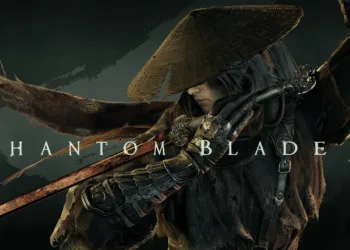














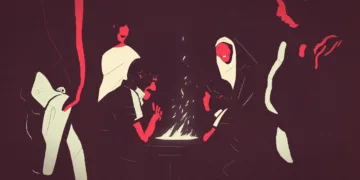


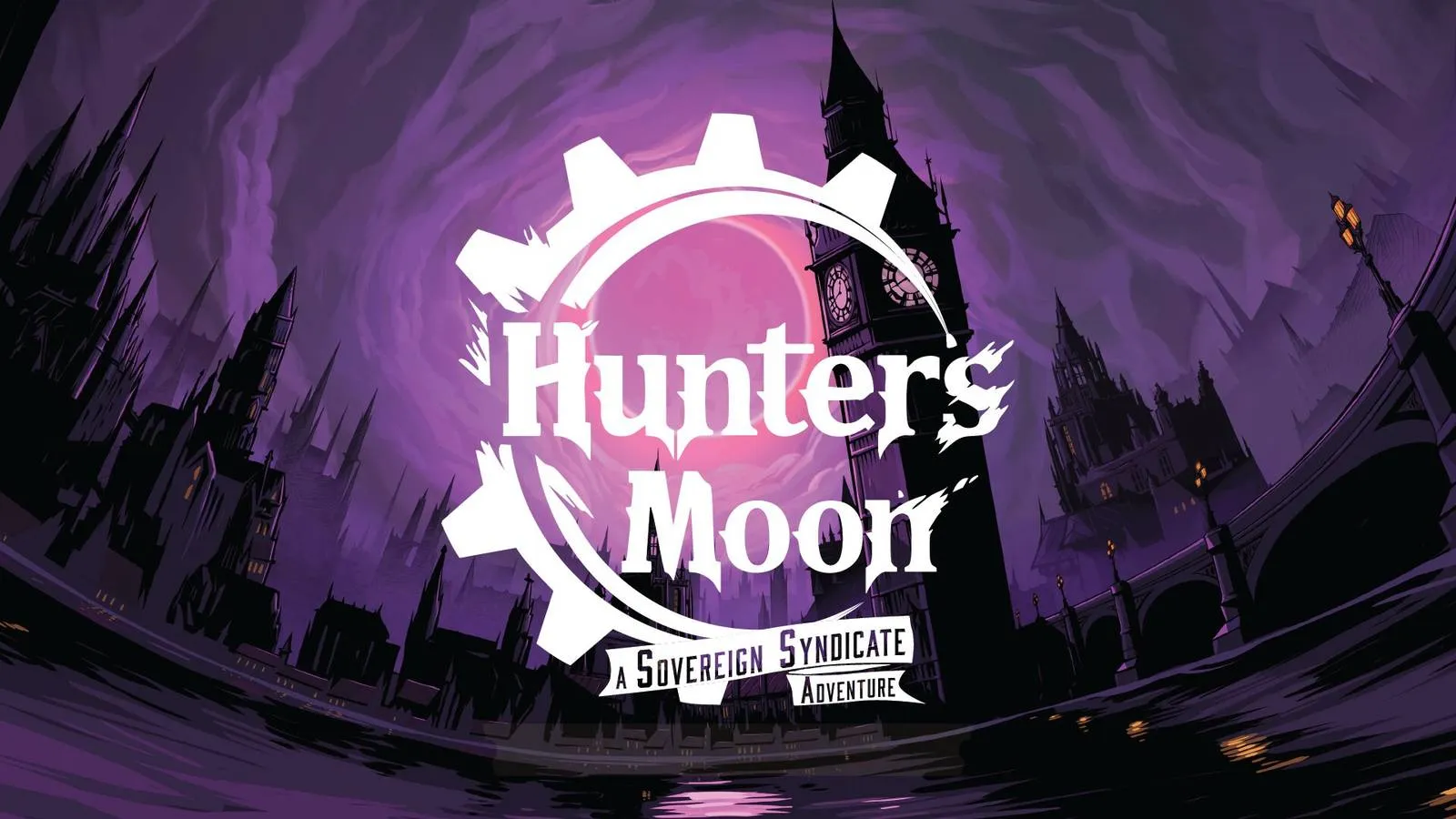

Hunter’s Moon: A Sovereign Syndicate Adventure places the player in an alt-Victorian London that already belongs to a shared global imagination, shaped by Gothic literature and period dramas. This standalone roguelite deck-builder branches off from the story-driven RPG Sovereign Syndicate and keeps its world and cast in place. A dark, painterly art style frames everything, thick with soot, gaslight, and rusted steel, so the first impression comes through as a visual study of industrial decay.
The city itself functions as a cultural text. Grotesque urban ruin, a strange contagious fog, and warped lifeforms turn London into a body infected by its own corruption, both literal and biological. Players step into the roles of Syndicate agents who operate from the airship The Starling, a mobile base that suits the idea of investigators moving through a polluted capital.
Their work consists of running missions, scavenging for resources, and tracing the origin of the spreading blight. The design moves away from philosophical wandering toward a combat-heavy, replayable roguelite structure that uses this richly drawn backdrop as a stage for strategic survival. Exploration feels desperate and improvisational, a tour through a familiar historical setting reshaped by supernatural horror for an audience that already knows London as a symbol.
Strategy and Survival: The Mechanical Narrative
The core structure of Hunter’s Moon builds on risk management, a mechanical narrative that matches the severity of its world. Each run aims for three completed missions and a final boss fight that secures a cure, echoing a colonial-era hunt for hidden knowledge or resources under extreme pressure. The player selects one of four Agents, each marked by a distinct deck, a signature ability, and a companion that acts on its own in battle. This arrangement introduces strategic variety and asks the player to read and relearn each different style of play.
Mission layout follows a non-linear format that uses travel cards or a branching map to determine movement. The player chooses routes and gains some control over the mix of encounters, such as combat, resource events, or story moments, and these choices require a constant weighing of short-term survival against long-term progress. That structure feels close to field reporting or exploratory writing, with each selected path functioning like a chosen thread in an ongoing story of this alternate London.
Progression unfolds along two tightly linked tracks. Ship Upgrades use salvaged materials to repair rooms on The Starling and grant enduring, shared bonuses to the crew, such as extra health or access to card removal. At the same time, agents gain XP that feeds into Talent Points for passive, character-specific buffs and sharper specialisation. Across all runs, the Doom system presides as a rising difficulty modifier that works as a soft timer. Enemies grow stronger and the game discourages repetitive grinding, pushing the Syndicate further into the corrupted landscape and pressing the agents toward risk.
The Double Bind: Vigor, Nerve, and Deck Integrity
Turn-based combat will feel familiar to players experienced with deck-builders, since it uses energy to play attack and defense cards. Hunter’s Moon shapes its own identity through the double pressure of Vigor (Health) and Nerve (Sanity/Resource). A run ends the moment either value drops to zero. Nerve receives particular emphasis, because it functions both as a currency for powerful cards and as a measure of psychological resilience. The lack of automatic health regeneration between fights promotes extreme caution and a sense of scarcity, which turns even small skirmishes into events with clear narrative weight.

Companions deepen this structure. They fight beside the agent, with a separate health pool, and their survival and behaviour become another factor in each decision about card play. Tactical planning stretches past the single hand of cards and begins to include the whole micro-ensemble on screen. The deck-building tools sit at odds with this sophistication in one key respect. Adding and upgrading cards comes easily, yet cutting out weak options proves extremely difficult and depends on locating a rare, specific merchant during a mission. The system feels intentionally restrictive and forces players to haul unwanted cards through run after run, an echo of the corruption that clings to this version of London.
The difficulty curve reflects its own cultural tension. The game seeks a wide audience while still echoing regional habits around punishing design. Once a powerful agent build comes together, runs can feel markedly easier and players may feel that early challenge slipping away. The closing stretch brings a sharp spike in difficulty that can create a grinding, jarring finish and disrupt a sense of steady mastery.
Visual Poetry and Technical Friction
Presentation forms a clear highlight and uses the game’s cultural influences with precision. Stylised painted art calls to mind the grim beauty of works like Darkest Dungeon combined with the dense architectural dread linked to Lovecraftian horror, an enduring presence in modern Western gothic media. Character portraits and enemy designs sit in the same visual language, expressive and unsettling. Sound then supports this look with equal care.

The decision to include full voice acting for nearly every conversation stands out as a rare luxury for a roguelite. Voices that sound smoky, tired, and worn fit the environmental mood and turn brief encounters into compact dramatic scenes. Eerie ambient music and sound effects such as shifting fog and distant machinery deepen the oppressive atmosphere and give the narrative a sense of life. Story material arrives through mid-run quests, random events, and voiced narration, which together paint detailed scenes with concise writing.
At this meeting point between powerful presentation and strong ideas, technical problems step in. The game suffers from recurring performance issues that include softlocks and turns that never resolve during combat. This creates a deep sense of frustration. Players often have to reload and replay an entire encounter from the beginning, a penalty that feels unearned and breaks the tension built by the game’s strongest systems. Persistent technical friction interrupts the connection between narrative and mechanics and prevents the experience from reaching its full potential.
The Review
Hunter's Moon: A Sovereign Syndicate Adventure
This game is a richly atmospheric and challenging deck-builder. The fusion of gothic visual storytelling with the strategic pressure of the Vigor and Nerve dual-resource system is genuinely compelling. Agent specialization and full voice acting elevate the sense of immersion and consequence. However, the game is frequently undermined by technical instability, particularly the recurring combat softlocks, which force frustrating restarts. It is a solid, intelligent design that falls short of its potential due to these pervasive, unpolished elements.
PROS
- Immersive, full voice acting
- Beautiful Gothic/Steampunk art style
- Unique Vigor/Nerve resource management
- Deep Agent specialization options
- Strategic map choice system
CONS
- Frequent combat softlocks (technical issue)
- Difficulty trimming decks (limiting constraint)
- Inconsistent difficulty curve